
A Passion for Civil War History, Artifacts and Preservation
By Paul T. Scott · Originally published August 2020 · p. 17
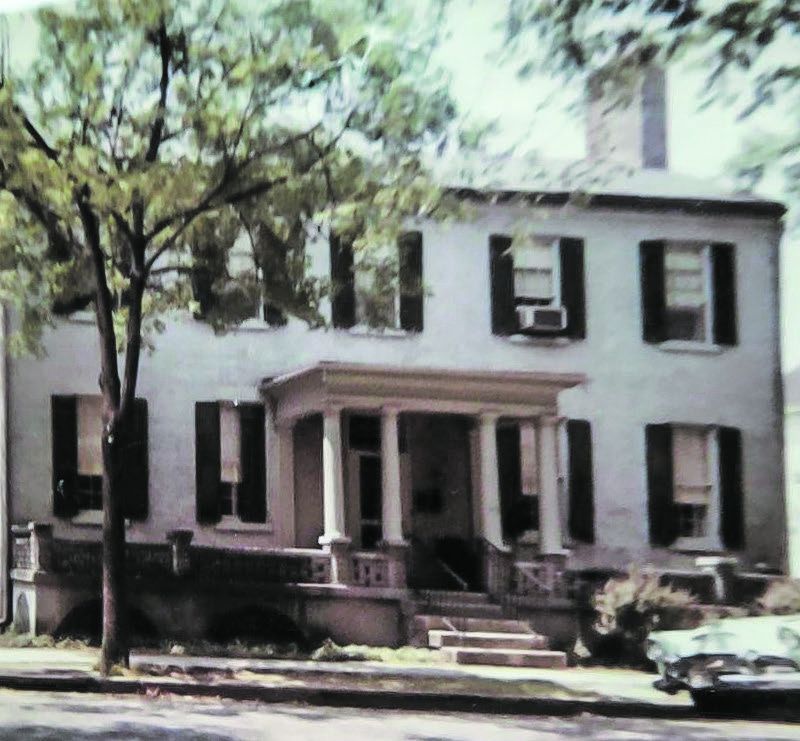
Growing up in the town of Fredericksburg, Va., having forebears with military service, and my own and varied experiences led me to take the challenge of service on the Board of Directors of the Central Virginia Battlefields Trust (CVBT). What possesses one to serve a cause where there is hallowed ground to save with few funds available before the blade of the bulldozer obliterates it? Experiences and understanding. In 1946, my dad, D. William Scott Jr., moved back to Fredericksburg with his wife, Margaret, and his sons, David, age 5, and Paul, age 3, and settled into the old family home with my grandparents at 1100 Charles Street. There was still damage to the rafters from two shells received during the Battle of Fredericksburg. The house has been in the family since 1872 and was the home of two Confederate veterans and their ancestors. As children, we roamed the streets, absorbing its history and taking much for granted. Though an elder cousin warned us not to go up on the third story of the home, since there was “Yankee blood” on the floors up there, we explored the upper reaches of the house and certainly believed we found the gory traces of the war. Like many other homes, the house had been
The Scott family’s home at 1100 Charles St., Fredericksburg, Va.
CWN used as a hospital during the Civil War since the wounded streamed back into town from the Battles of Fredericksburg, Chancellorsville, and the Wilderness, for hospital treatment. At about age 6, I noticed that my dad had an old gun stashed in a sock in his top dresser drawer. He said it was a “horse pistol” that had belonged to Capt. Doggett. Occasionally, I asked dad to take it out of the sock to show me. I held it in awe, thinking of what it had seen and where it had been. Capt. Doggett took two revolvers off to war as an officer in Company B, 30th Virginia Infantry. He had been an organizer of its predecessor, the Fredericksburg Grays, in 1859. Being an ardent “secessionist” at age 45, he went to war with his unit. On September 17, 1862, near Dunker Church during the Battle of Antietam, he was wounded. Family lore has him saying, “keep on a fight’n boys, my guts are dragging the ground.” He was absent on a surgeon’s certificate beginning March 3, 1863, and on July 30, 1863, he was declared unfit for service for six months. On September 5, 1863, he was assigned to duty at Camp Lee. In 1864, he took command of Virginia reserve forces near Fredericksburg, and on September 9, 1864, he became provost marshal of the town. On March 14, 1865, he retired to the invalid corps. In the 1950’s, there was a push to update Fredericksburg. As a youngster exploring its streets, I saw various buildings torn down for “modernization.” Even as a child, I thought what a shame, this town is erasing its own history and destroying what remained of “the old.” How could they be preserved? I wondered. In 1949, dad purchased three acres on Aquia Creek in Stafford County and constructed a cottage for summer vacations. While walking along the mud flats, my brother and I found white oxidized three-ring
Minié balls. When we asked dad about them, he explained that Aquia Landing was a major supply depot during the Civil War. With this tantalizing information, we returned for many searching trips. After finding a pepperbox pistol in front of our property and a three-branch guard and pommel from a Union cavalry saber, my addiction was complete. My brother and I purchased an army mine detector through a military surplus catalog and began our organized search for Civil War relics in Stafford County. We were fortunate to have permission to go into the Rhode Island camp on Mt. Ringgold Farm in the White Oak area and Camp Aleman, a New York camp owned by Joe Davenport at Kelly’s Bottom in Falmouth. We found U.S. buckles, cartridge box plates, eagle plates, canteens, buttons, and bullets, as well as chimney bricks at the end of the hut sites constructed by the Yankees. These properties are now housing subdivisions, and all the tent holes have been bulldozed. There were dozens of Stafford County campsites that suffered the same fate over the ensuing thirty to forty years. Even a redoubt on the road to Aquia Landing was bulldozed. Such senseless acts have been beyond my comprehension and helped to fuel my passion for land preservation. Of the hundreds of hut sites in Union camps in Stafford County, most have been destroyed except those saved for the Stafford Civil War Park near Brooke. Against the odds, Glen Trimmer, D. P. Newton, and other key supporters preserved the land, hut sites, and redoubts and placed reproduction cannons there. After graduating from the University of Virginia in 1965, I entered military service and was commissioned a lieutenant in the United States Army Medical Service Corps.
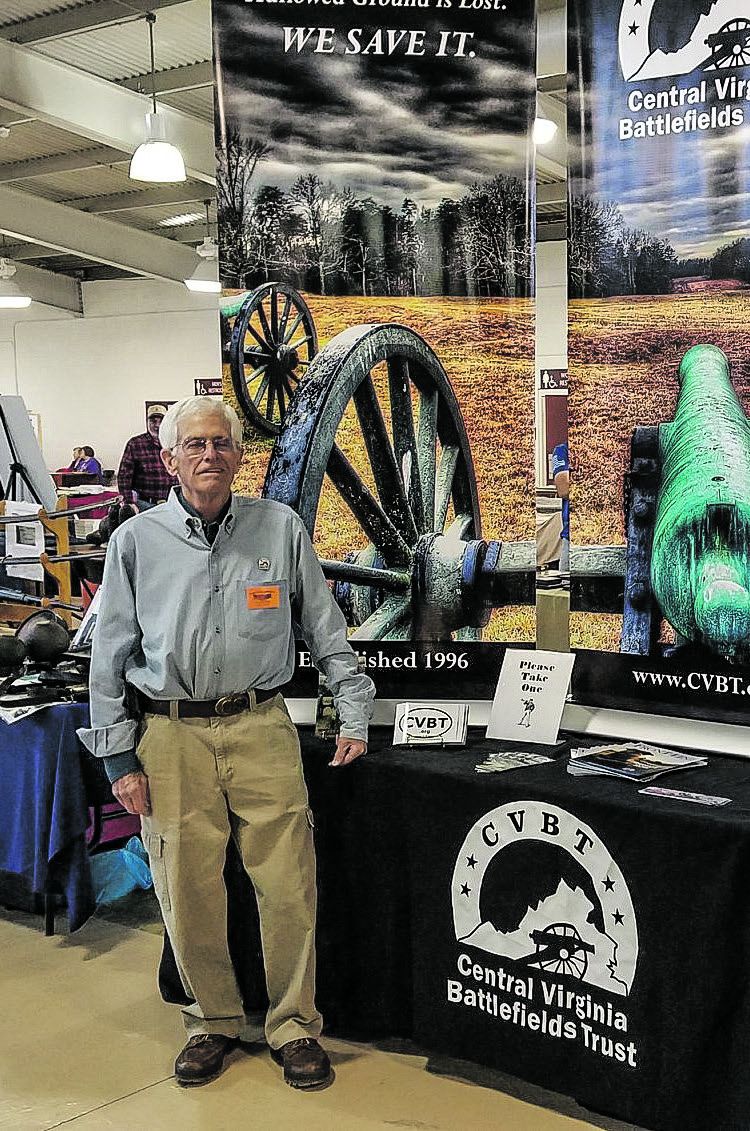
After six weeks of intense training, I reported to the 1st Battalion, 27th Infantry Regiment to assume the duties of a Medical Platoon Leader. In January 1966, the regiment deployed to Vietnam. My experience as a field medic often made me think of the Civil War soldiers and all they endured. In 1967, at the end of my active duty military service, I entered law school at the University of Richmond on the GI bill. I returned to my hometown and practiced law for 44 years and retired in 2014. During that time, I joined Historic Fredericksburg Foundation, Inc. and served as its president for a year. Years earlier, my brother, David, and I had been given the “gun in the sock” and made it a part of our collection of Civil War artifacts. When we had to divide this collection, our parents waited for a fight to break out. But it went peaceably with each set of relics decided by the toss of a coin. I was fortunate to receive “the gun in the sock” and discovered it was an 1860 Colt Army revolver. It had few matching serial numbers, a replaced wedge, loose loading lever, and no cylinder scene. But with its provenance it is a special piece to me. After a little research, I discovered that the pistol’s one-time mate is still in the extended family, in the hands of a cousin. Through the Civil War Roundtable of Fredericksburg, I met Civil War authors and historians, including Robert Lee Hodge, Bradley Gottfried, Chris Mackowski, and Eric Wittenberg; all have been active in battlefield preservation. In 2018, I was invited to join the Board of Directors of CVBT. As chairman of the Partnership and Outreach Committee, I have the pleasure of meeting many relic dealers and publishers when I set up the CVBT display table at various Civil War shows and other events. What attracted the armies of the north and south to clash here is the same reason it attracts development: proximity to Washington, D.C. Since its formation in 1996, CVBT has preserved over 1,300 acres. We should remember that preservation is not only for battlefields hallowed with the blood spilled by Americans, both North and South, but also for the preservation of green space. Given our location, it may be some of the only open land that our children and grandchildren will enjoy in the future. Central Virginia Battlefields Trust saves Civil War battleground to preserve the memory and meaning, sacrifice and stories of the men who fought at Fredericksburg, Chancellorsville, The Wilderness and Spotsylvania. Learn more: www.cvbt.org.