
Into the Valley of Death: Lt. Horatio D. Yeager and the 153rd Pennsylvania at Gettysburg
By Daniel Glenn · Originally published April 2020 · pp. 10–11
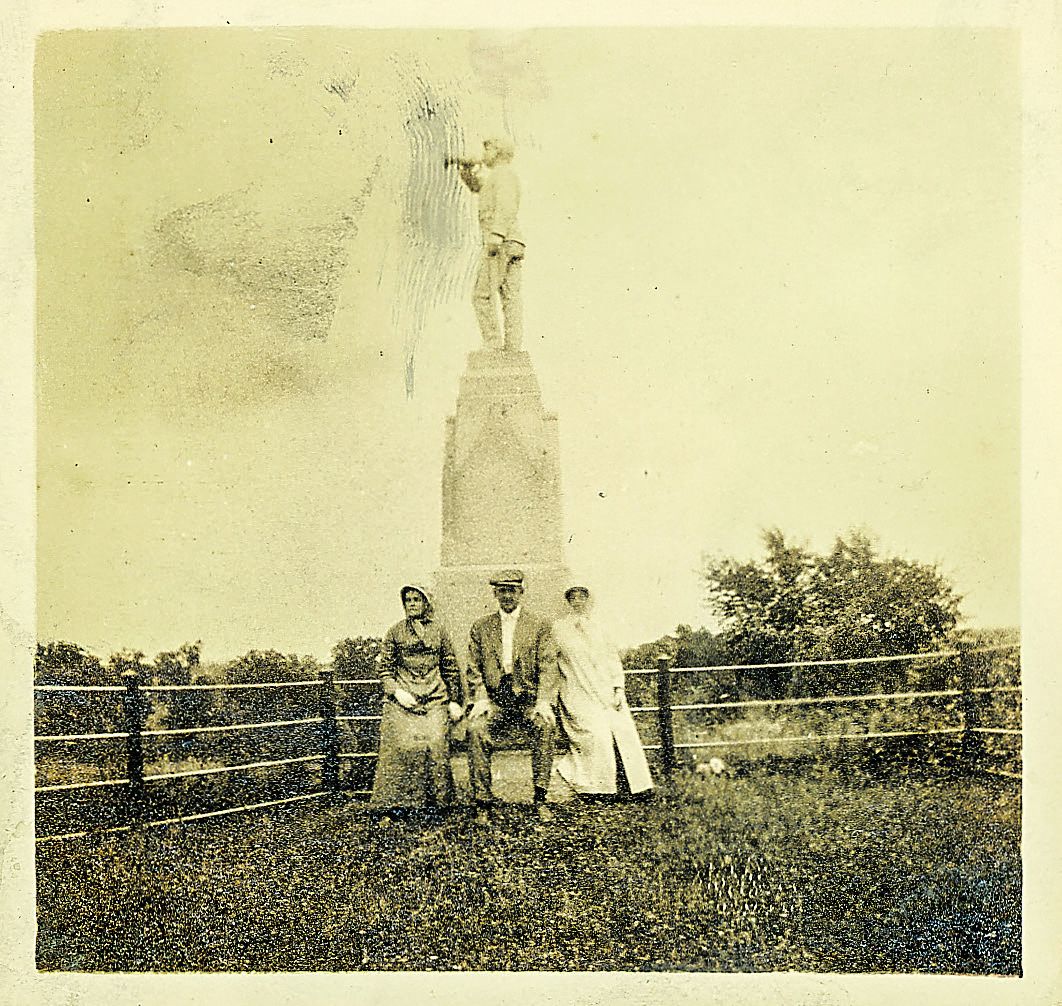
It was a crisp day in September 1889 when a procession of Union veterans and assorted spectators ascended a small incline called Blocher’s Knoll on the outskirts of Gettysburg, Penn. As they walked, they came in sight of a sixteen-foot tall monument topped by a bugler. Heralded by patriotic songs and a sea of spectators, the surviving members of the 153rd Pennsylvania Volunteer Infantry, some of whom limped from wounds sustained twenty-six years before, gathered around the newly erected monument. As the music died down, one veteran, 1st Lt. Horatio D. Yeager, stepped forward and addressed the crowd. “There is the proof of our labors and of our love to the fallen comrades who went down, beneath those awful volleys, into the valley of death, that you and I, and our Country, its freedom and flag should live,”
he stated. “Let this day, its acts, its deeds, live in the heart of each and every Comrade present and be remembered through life even down to the Shadows when death ends and closes over all.” Like so many present, Yeager remembered the events of July 1, 1863, with painful clarity. The youngest in his family, Horatio Yeager was raised on a farm in Catasauqua, a small rural community in eastern Pennsylvania. After graduating from Van Kirk’s Academy in 1851, he worked in a number of jobs including clerking, wholesale, and a general mercantile business. In April 1861, Yeager surprised his mother with a letter saying, “I am now going to write to you on a subject which I never have done before. I have made up my mind to go and fight for my country and our Government and the Constitution.” Yeager assured
Yeager saved this star cut from the regimental flag of the 153rd Pennsylvania Volunteers.
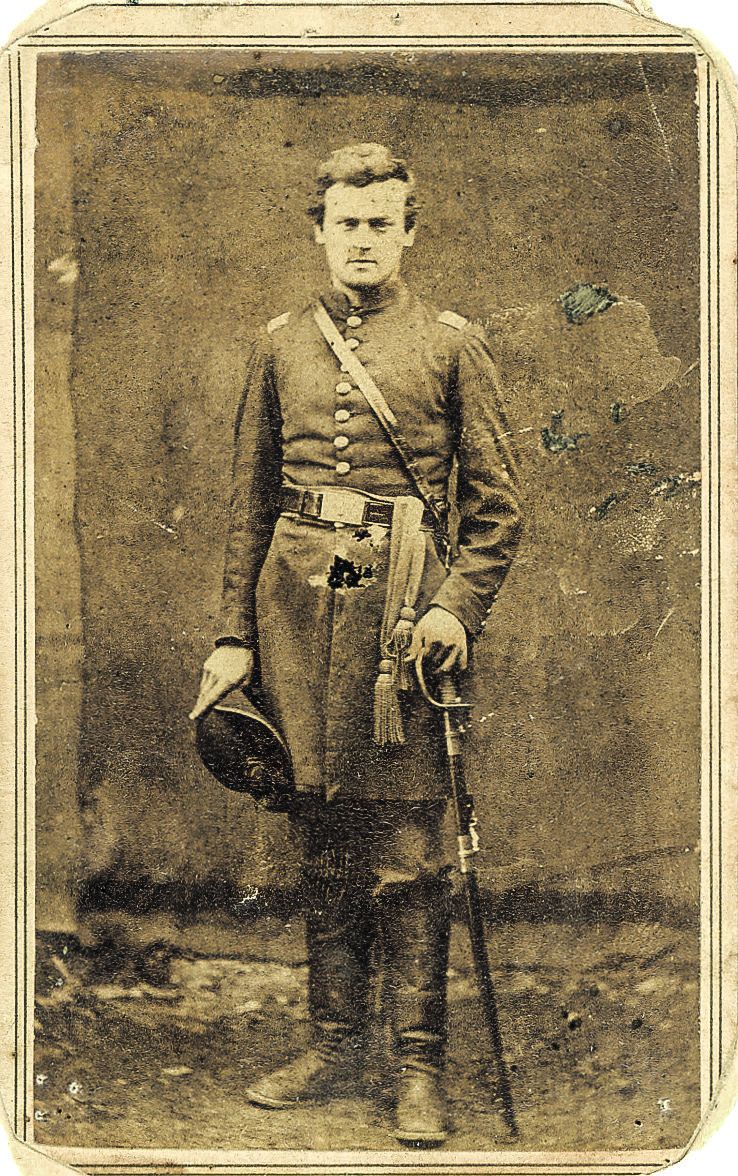
On April 25th, 1863, Yeager sent his family a letter and carte de visite, writing, “Inclosed you will please find my Photograph which I had taken in camp but it is not a good one at all but must do for the present as I have no better to send you, but be carefull [sic] and let no one steel [sic] it from you.” J. Clyde Millar.
his mother he was not afraid of death, writing that he would only have to die once, and he might as well “die in the Battle Field as any other place.” On April 25, 1861, he travelled to Philadelphia to enlist in the 17th Pennsylvania Volunteers. He saw almost no action during his three-month enlistment as a private, and in July he returned to civilian life. Yeager mustered into the service again in October 1862, this time as 1st Lieutenant in Co. C, 153rd Pennsylvania Volunteers, a nine-month regiment assigned to the First Brigade, First Division, XI Corps. This service would thrust the young man into two of the war’s bloodiest battles. During his enlistment, Yeager regularly kept his family up to date on his affairs. However, it seems that they were not as diligent, and the lack of word from home was a continual source of worry and annoyance. “I have not received a letter from any of you for nearly two month[s]… . Have you all turned secession[?]” he asked his parents. “This is enough to discourage anyone, particularly a soldier.” He even threatened to “kick” one friend at home “like fury” for not writing. The men of Yeager’s company viewed him highly. “Our Captain wants to resign,” Yeager wrote proudly, “and the men want him to do so providing I will be Captain of our Company.” In
May 1863, he became acting captain of Company C, and although he was never officially promoted, he went by “Captain Yeager” for the rest of his life. The great admiration between Yeager and his company was mutual. “You never saw a better set of men in your life,” he wrote. The fondness he and his men felt for one another made losing some of them all the more difficult. After one soldier died of disease, Yeager wrote, “I done all for him I could but he was only sick 3 days [and] then went the long journey home.” The 153rd first saw action in the Battle of Chancellorsville, May 2, 1863. Forming the far right end of the Union line, the 153rd caught “a perfect hail of lead” from rebel troops under the command of General Stonewall Jackson. Outnumbered and outflanked, the Pennsylvania volunteers fired only one volley before retreating with the rest of the XI Corps. The regiment sustained 85 casualties, and several dozen, including Col. Charles Glanz, were captured. If Yeager ever wrote home about the engagement, the letter does not survive. As the 153rd marched into Gettysburg, its commander reminded the men that their nine month enlistment had ended and that if “there was a man in ranks who did not wish to go into battle; he should step out.” Although he was incorrect and they still had time left in their enlistment, no one did. On July 1, 1863, the regiment was tasked with defending
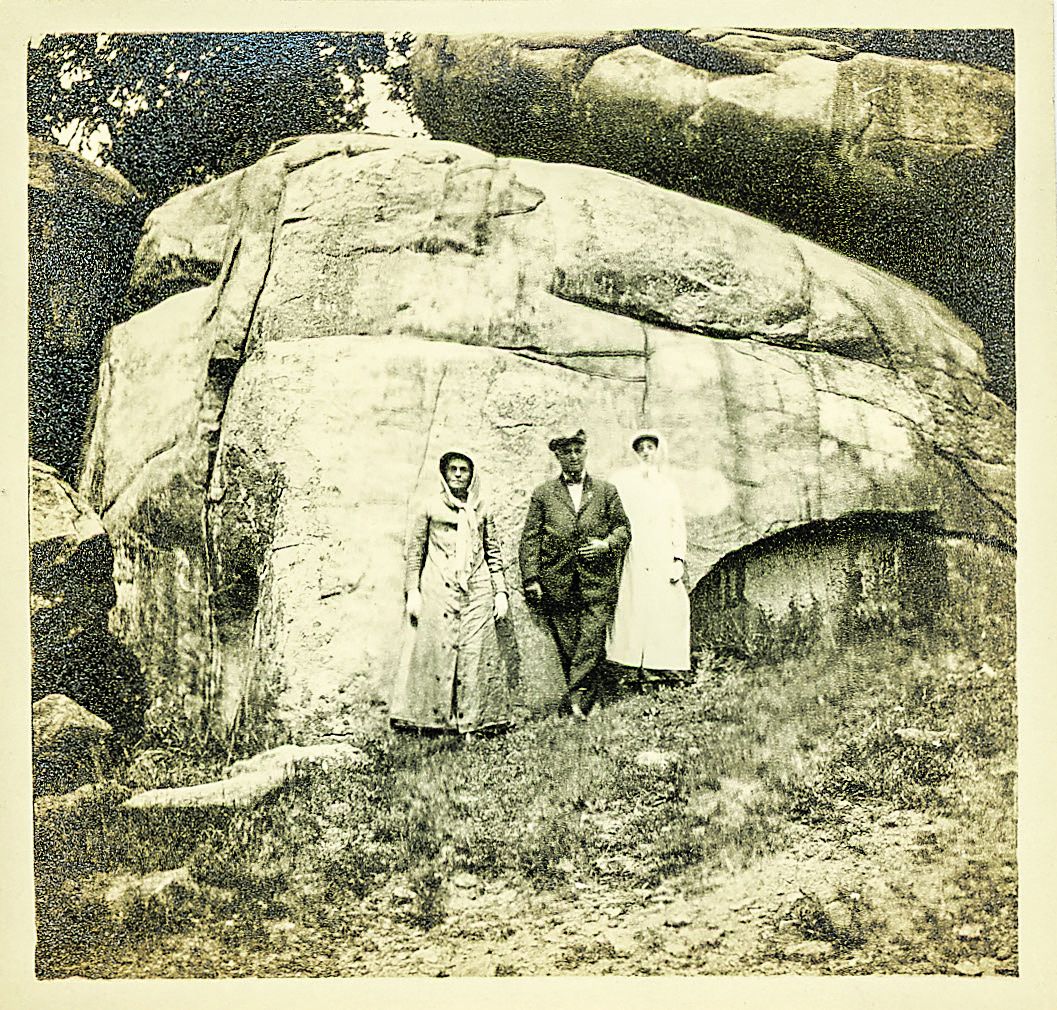
These two photographs show Lieut. Yeager’s daughter, sonin-law, and granddaughter visiting Devil’s Den and the 153rd’s monument on Blocher’s Knoll in the early twentieth century.
Blocher’s Knoll, known today as Barlow’s Knoll, after Francis Barlow, their division commander. The knoll overlooked a small stream called Rock Creek north of town, a prime position for cannon and skirmishers. It was here that Yeager’s regiment would, as he’d put it earlier, “show our pluck,” as they faced repeated assaults from several Confederate regiments from Georgia. Yeager took a Minié ball to the hip, but stuck to his post for over an hour. As the 153rd struggled to hold its position in the line, men went down by the dozens. “They were piled up in every shape,” one private observed. “I stood between those two lines of battle, viewing the windrow of human dead composed of my old comrades.” By the end of July 1, nearly half the regiment had been killed, wounded, captured, or was missing. Withdrawing with his men toward Cemetery Hill, Yeager was hit by a second Minié ball in the left leg. As his leg gave way, those around him recalled the lieutenant still “urging his men to retreat or they would be taken prisoners.” His company far ahead, and the air thick with smoke, Yeager crawled to a nearby farmhouse, most likely the one owned by Thomas Scott, where he was held as a prisoner of war by rebel soldiers. After his release on July 4, he finally received medical attention. Luckily, unlike forty-one of his comrades, he survived his wounds, but for Yeager, the war was over. He spent the next three weeks in a hospital, possibly the Adams County Almshouse, before returning home.
Despite his survival, Yeager’s family received a horrifying surprise when their hometown newspaper, the Easton Argus, reported him dead. Although his wounds prevented his return to manual labor, Yeager accomplished a great deal after the war. Following his discharge, he joined a lumber business that eventually bore his name: H.D. Yeager and Co. He worked as a school director for eight years, was active in Republican Party politics, and was the master of ceremonies at the 1889 dedication of the 153rd’s monument at Gettysburg. Yeager continued his active involvement in the local community until heart disease did what Confederate fire could not; he died October 14, 1907, at the age of seventy-one. Sources: William R. Kiefer, History of the One Hundred and Fiftythird Regiment Pennsylvania Volunteers Infantry (1909) • Samuel P. Bates, History of Pennsylvania Volunteers, 1861–5 (1869–71) • Jeffrey D. Stocker, “We Fought Desperate”: A History of the 153rd Pennsylvania Volunteer Regiment (2014) • Portrait and Biographical Record of Lehigh, Northampton and Carbon Counties, Pennsylvania (1894) • Lochard H. Lovenstein, In Lieu of a Draft: A History of the 153rd Pennsylvania Volunteer Regiment (2012) Yeager’s pension file and military service record, National Archives. Yeager’s letters and photographs are from the collection of Jonathan W. White.
Daniel Glenn is co-editor of Untouched by the Conflict: The Civil War Letters of Singleton Ashenfelter, Dickinson College with Jonathan W. White (Kent State University Press, 2019). He has published articles in Military Images, Connecticut History Review, The Lincoln Forum Bulletin, and The Federal Lawyer. A graduate of Christopher Newport University, he now studies law at William & Mary Law School.