
American Battlefield Trust In The News
Originally published April 2020 · pp. 1–6
The American Battlefield Trust has no shortage of exciting programs on the horizon for this spring! Whether you are looking for volunteer opportunities, partnerships to provide exceptional experiences for underprivileged classrooms, or opportunities to introduce talented young people to preservation advocacy, it’s a fantastic time to be involved in the battlefield protection movement.
Volunteer at Your Favorite Battlefield this Park Day Well more than 100 sites across the country are poised to participate in our 24th annual Park Day. This nationwide effort invites volunteers of all ages to give back to their communities by helping with upkeep and maintenance at local historic landmarks. In 2019, some 7,000 volunteers donated approximately 25,000 service hours on much needed projects at sites that stretched across 32 states and the District of Columbia, from Maine to California. Find a participating site near you at www.battlefields.org/parkday.
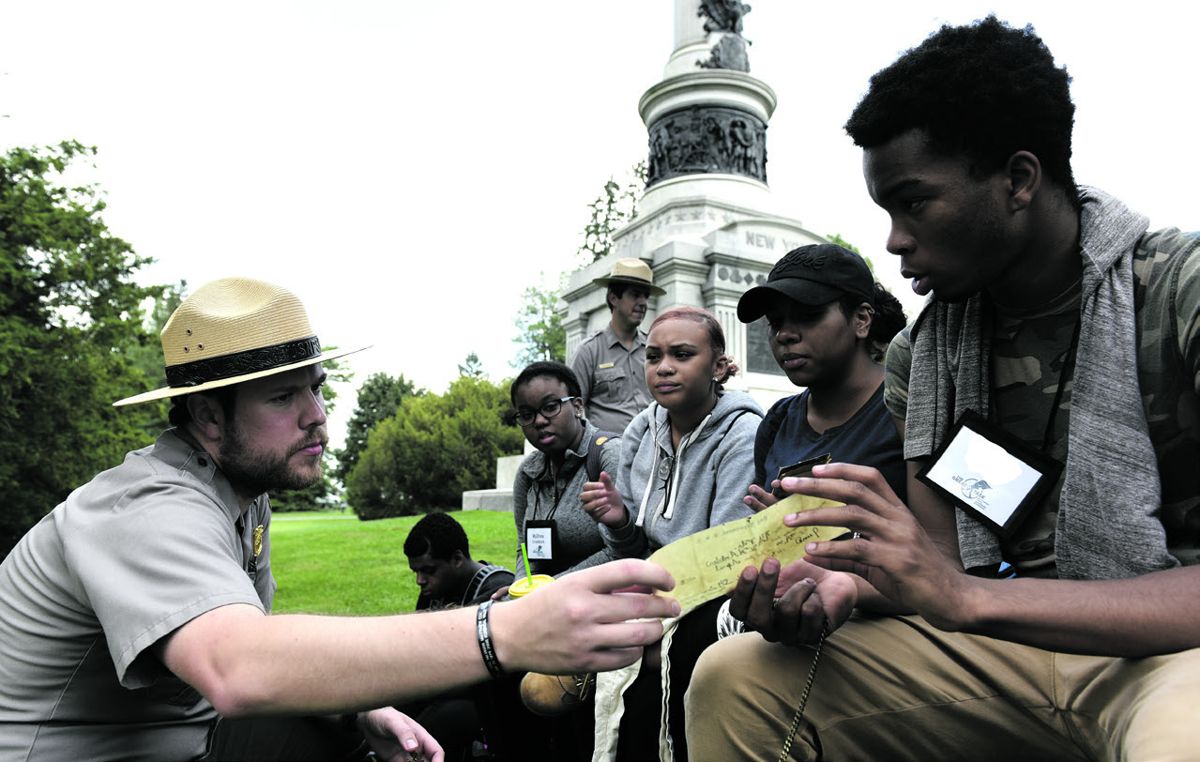
Introducing the Great Task Youth Leadership Program We are also thrilled to announce a new partnership with Gettysburg National Military Park and the Bowe Stewart Foundation that will extend and expand the park’s dynamic, award-winning Great Task Youth Leadership Program over the next five years. Expansion plans for the partnership include: a virtual component designed for those who cannot physically make it to Gettysburg, but that will also better prepare those who can, the addition of at-risk youth from Baltimore, Md., and Chicago, Ill., among other key cities and regions, classroom and library materials for participating organizations, and the application of this leadership and service model to other American battlefields. Geared for at-risk student and youth organizations from grade levels 7 to 12, the Great Task offers intensive leadership and character-building experiences that go beyond traditional curriculum-based field trips. By utilizing the battlefield as an outdoor classroom, participants are immersed in stories of leadership, heroism, and civic responsibility embodied by those involved in, and affected by, the battle. “The education goals of the American Battlefield Trust and the National Park Service at Gettysburg are one and the same: to create model programs for the next generation of leaders to learn directly from America’s battlefields,” said Trust chief historian Garry Adelman. “We are proud to join forces to make that happen for an ever-broadening circle of youth.” Applications for the program will be accepted through April 30 for one or two-day excursions from July through October. The site visits will be customized to match the mission and objectives of each youth organization. To learn more, visit www.battlefields.org/great-task.
Seeking our 2020–2021 Youth Leadership Team We are also now accepting applications for the next class of our Youth Leadership Team, a group of high school students from across the country who are passionate about American history. This year-long program is an opportunity for students to learn the ins and outs of our mission and serve as ambassadors for the Trust. They participate in a “Lobby Day on Capitol Hill”, attend our annual conference during the summer, and energize their local communities about the importance of our mission. During the year, each team member is responsible for a preservation or education project in their hometown area. Our current Youth Leadership Team is hard at work completing their projects. Owen is hosting a history day to highlight the Civil War and Revolutionary War history in Yorktown; Sarah is taking a group of her peers to experience a history day at the Olustee battlefield in Florida; and Jessica is putting together a history-based game show for her school to participate in. If you are interested in being part of our next class (or know someone who is), please help spread the word about the Youth Leadership Team. Applications are open until April 30th, 2020. Applicants must be aged 15-18 and be able to travel independently in order to participate. Further details and application materials are available at www.battlefields.org/ylt.
Uncovering Charleston’s Hornwork Just below the surface of one of the most popular parks in
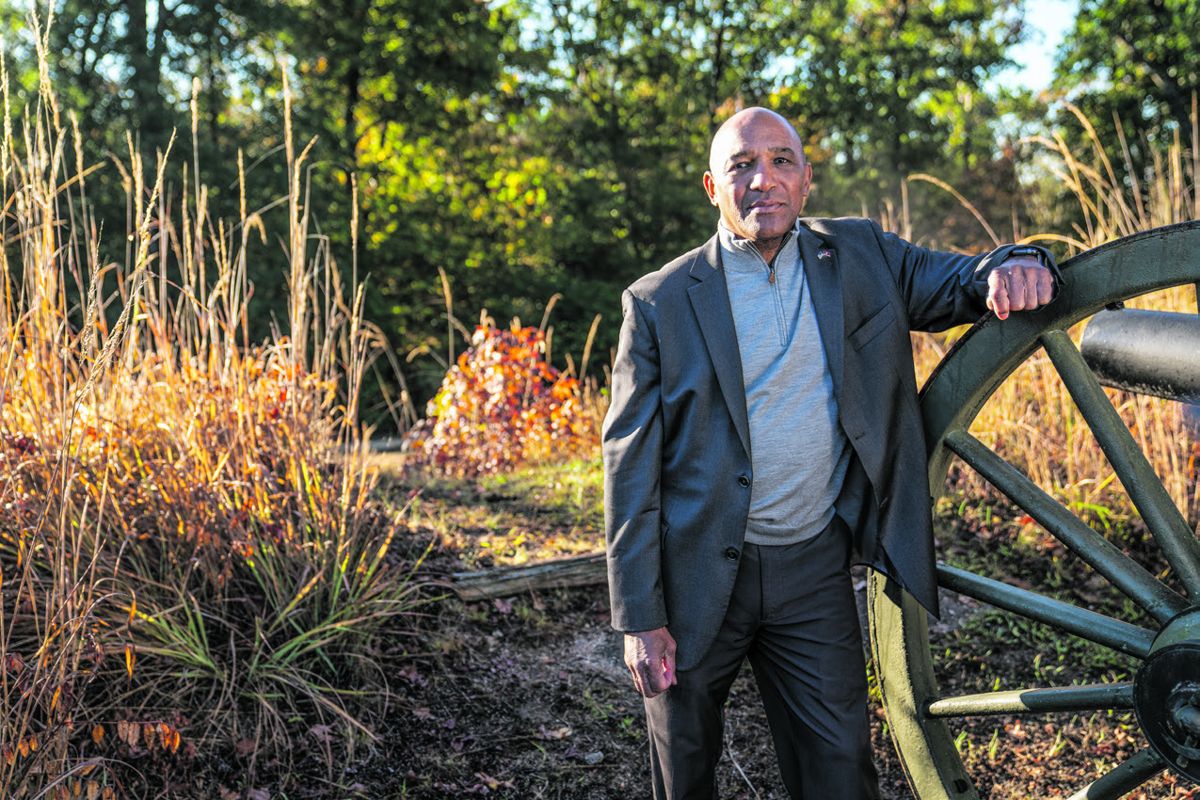
Lt. General Ronald Coleman (USMC, retired) outside Fort Harrison on the New Market Heights battlefield, today part of Richmond National Battlefield Park.
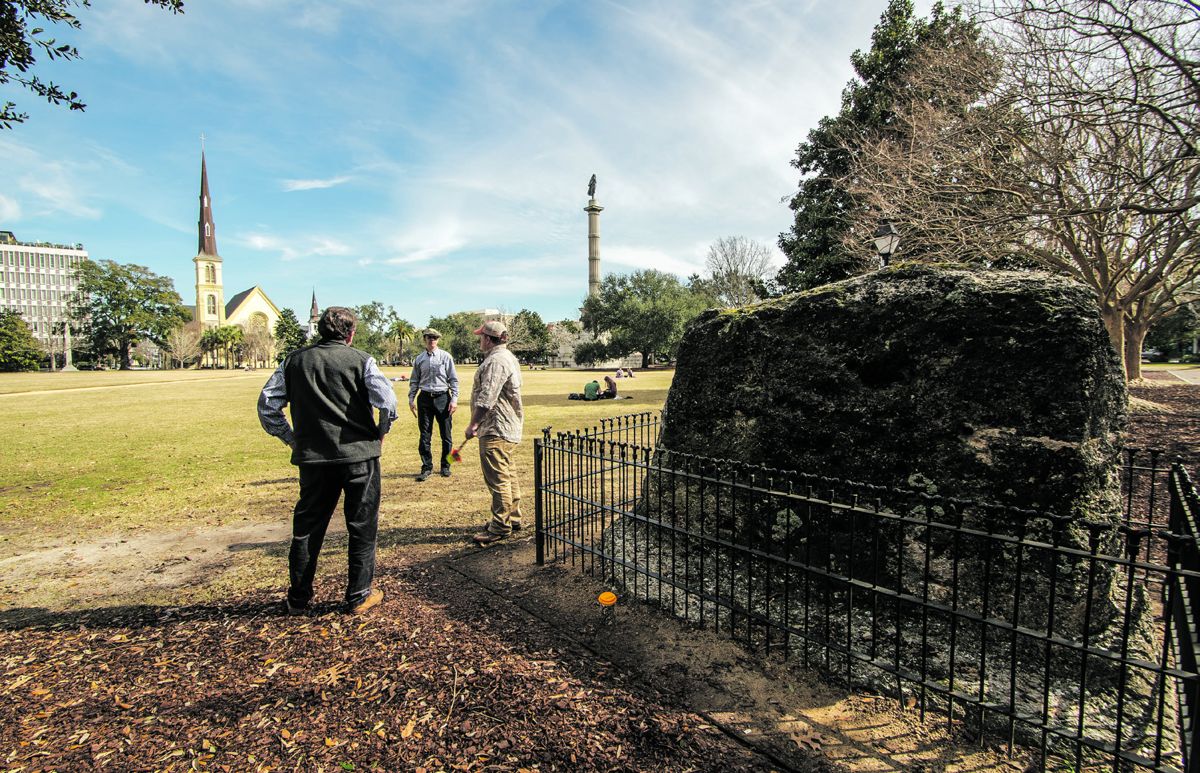
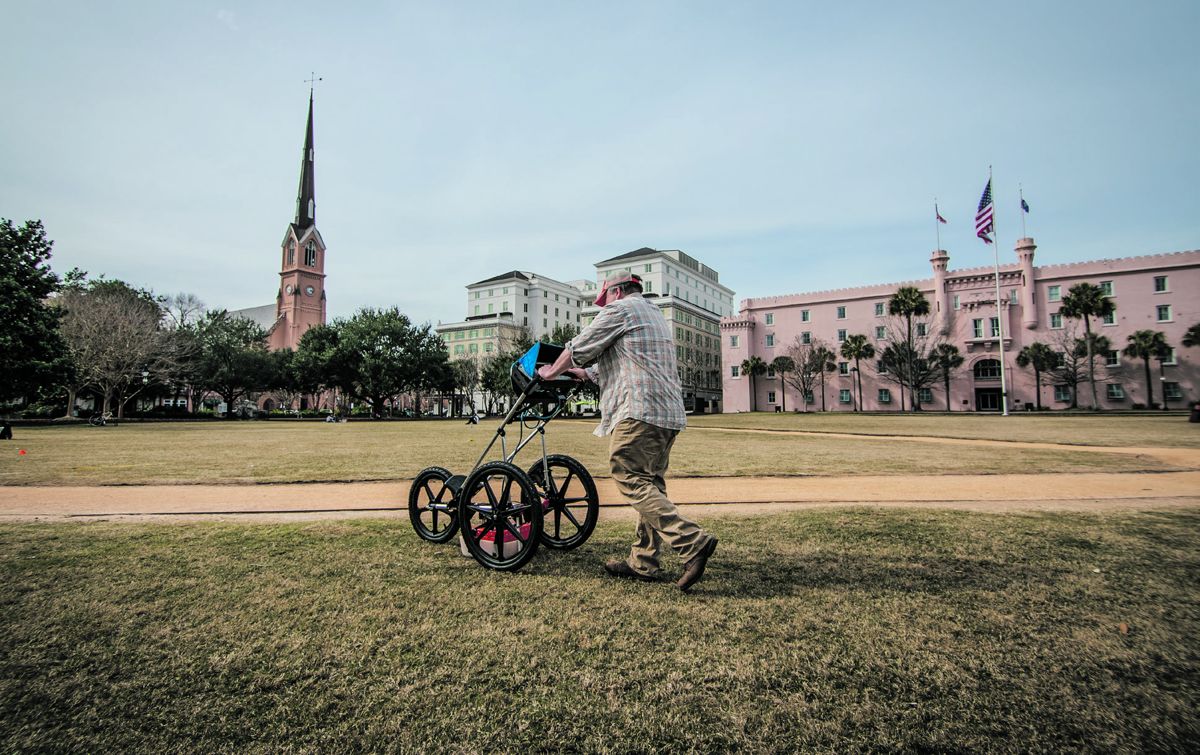
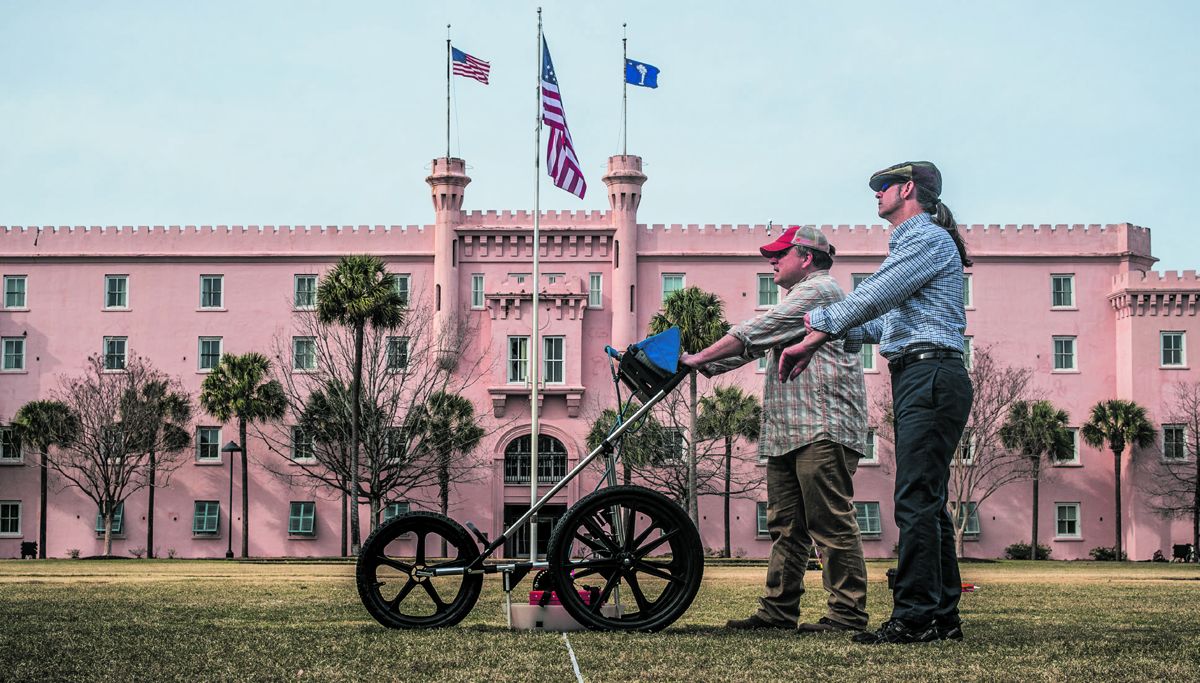
Charleston, lies a significant archaeological and historical treasure that demonstrates the resilience of early Charlestonians in defending their country from European invasion attempts. In early February, The Liberty Trail, a joint project of the Trust and the South Carolina Battleground Preservation Trust (SCBPT), leveraged modern technology, local experts, and graduate students from the Clemson/College of Charleston Historic Preservation Program, to document the exact footprint of this fortification in Marion Square. The Hornwork, built in 1758, anchored an intimidating defensive line around colonial Charleston. Constructed of tabby, a mixture of shells, sand, and lime, the structure was a massive 30-foot tall fortification spanning three city blocks. The Hornwork and its surrounding ditch or moat occupied a space measuring approximately six to eight acres. While a remnant remains visible in Marion Square today and archaeologists know its approximate outline, this project is the first to completely document the exact footprint of the Hornwork and provide educational resources to explain its significance. Trust president Jim Lighthizer noted that ultimately this work will yield a gateway experience for The Liberty Trail, a statewide network of Revolutionary War sites proposed by the partners. “We envision a state-of-theart augmented reality program to allow Marion Square visitors to see the Hornwork and where it fits on the modern landscape. Traditional interpretive signage will further educate visitors.” Learn more at www.thelibertytrail.org.
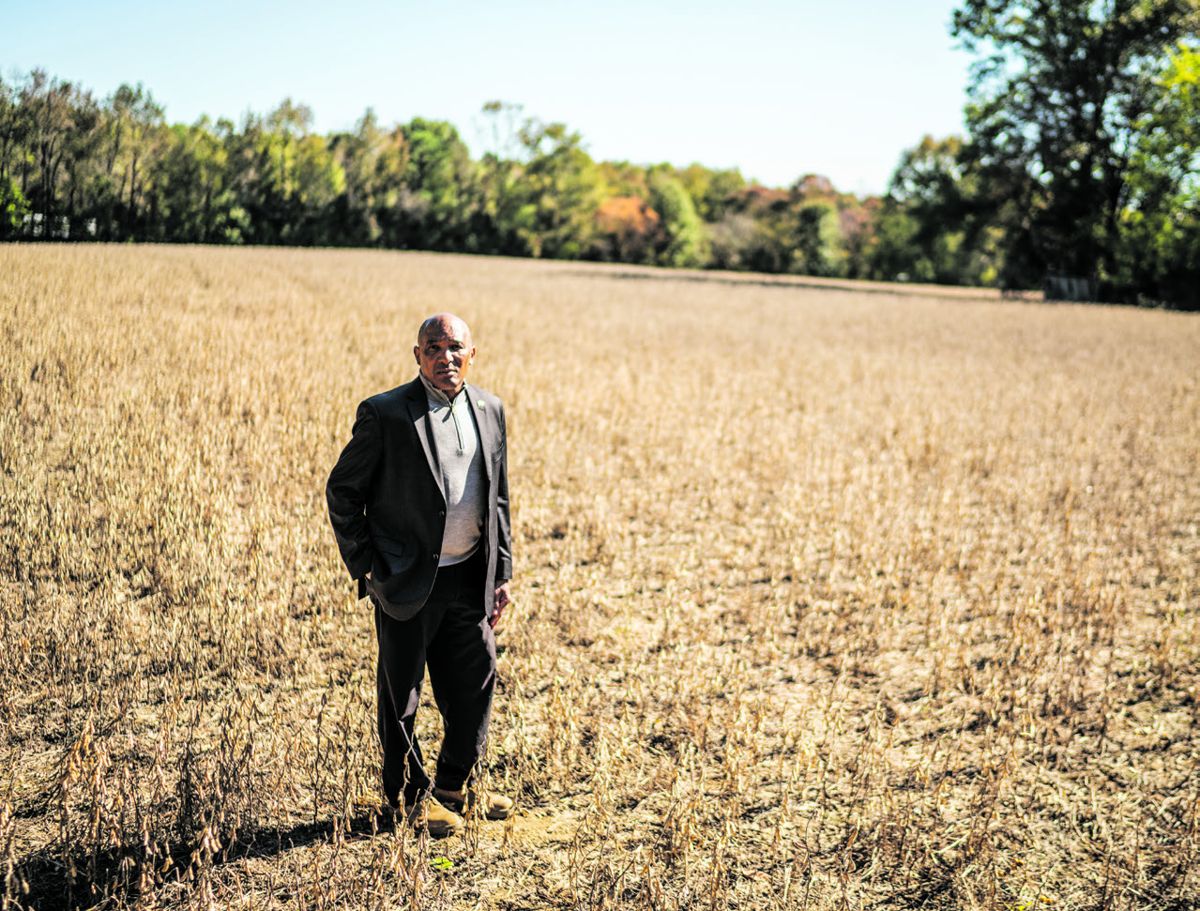
Discovering a Warrior Legacy Among the many untold stories of exceptional valor in American history is the powerful example of the United States Colored Troops (USCT) at the Battle of New Market Heights, near Richmond, Va. For their actions during that Sept. 28, 1864, engagement, 14 black Union soldiers received the Medal of Honor. To tell this story, the American Battlefield Trust debuted a new video in which retired Marine Corps Lieutenant General Ron Coleman brings viewers to New Market Heights to follow in the footsteps of the remarkable USCT assault by visiting the portions of the battlefield protected by the Trust. As only the second African American to attain the rank of three-star general within the Marine Corps, Coleman acknowledges a powerful debt owed to the black men who volunteered to fight for the Union. Their legacy was continued by later generations of black soldiers and sailors, including the World War I Harlem Hellfighters and Tuskegee Airmen of World War II, up until the career of Coleman himself. “Without them, I wouldn’t be here. I’m standing on a lot of shoulders,” the general said. The film is part of the Trust’s Warrior Legacy project illuminating the deep connections that today’s veterans and active duty military retain to their historic counterparts, and how the landscapes of historic battlefields can be used to bridge those eras. The Trust is committed to creating powerful content that bridges the gap between modern servicemen and women and their forebearers in uniform, and showcasing the dedication with which its many veteran members support the protection of battlefields as monuments to those who have answered the call to our country’s service. A group from LNESC/LULAC (League of United Latin American Citizens), an after-school program in Philadelphia, visits the Soldiers’ National Cemetery with Ranger Dan Vermilya. They are working through an activity on the difficulty but importance of identifying soldiers after the battle and creating a national cemetery, which provides opportunities to discuss the leadership of Lincoln, and the duty and sacrifice of the soldiers buried there. (Sarah Nell Blackwell)
Students from Clemson and College of Charleston conduct a ground-penetrating radar survey of Marion Square in downtown Charleston, S.C. Marion Square was the location of the Revolutionary War-era “hornwork,” part of the defenses of Charleston. The original Citadel appears in the