
The United States Christian Commission and it’s Coffee Wagons!
By Professor Earnest Veritas · Originally published September 2019 · pp. 18–19
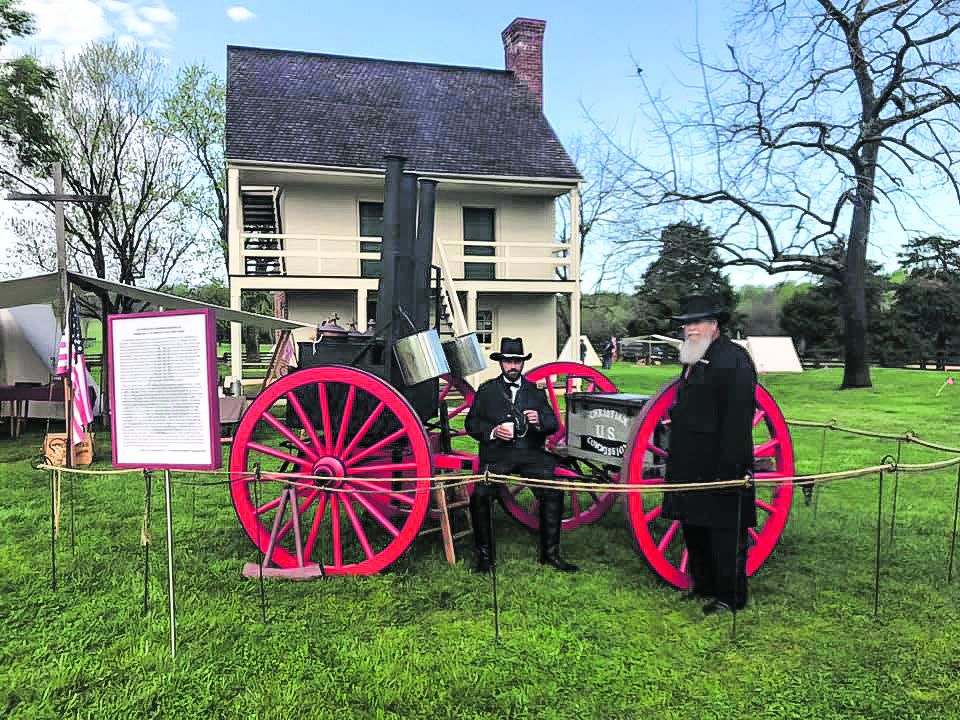
Professor Veritas had the pleasure of having coffee from the United States Christian Commission coffee wagon and interviewing Chaplain Alan Farley. The Professor enjoyed the coffee as he got the coffee wagon’s story at the 154th anniversary of the surrender at Appomattox Court House. He was fascinated by the intertwined history of the Commission and the coffee wagon; both then and now. Here is what Chaplain Farley had to say:
History of The United States Christian Commission Soon after the start of the Civil War, Young Men’s Christian Association (YMCA) leaders became concerned with the religious and spiritual needs of the soldiers in the nearby camps. Vincent Colyer, a member of the New York City YMCA, began spending time visiting nearby encampments where soldiers were stationed temporarily, on their way to the battle front. Colyer mingled with the soldiers, offered words of encouragement, and handed out religious tracts and specially printed pocket hymnals. Since few camps had chaplains, the chaplaincy then being in its infancy, Colyer’s ministrations were welcomed by both the soldiers and their officers. As a result of these activities, and the apparent need to extend them, the New York Association established an “Army Committee” with Colyer as chairman, with its mission to provide preaching services, individual religious visitation, and publications for soldiers. In November 1861, at the instigation of members of the board of the New York City YMCA, a special convention of fifty delegates representing fifteen northern state YMCAs met in New York. A “Christian Commission” of twelve members was appointed to devise a plan for the Associations to act as a clearinghouse for all religious work in the armed forces. The work of the Commission was organized at the national level. Local Associations were encouraged to support the Commission while maintaining their own activities. Many Associations merged into local branches of the Christian Commission or resolved themselves into army committees to facilitate the Commission’s work. The national organization established an office in Philadelphia; the Associations of Baltimore, Boston, Buffalo, Chicago, Louisville, New York, St. Louis, and St. Paul, became regional clearinghouses for the various activities channeled through the Commission. George H. Stuart, founder and first president of the Philadelphia Association, and then chairman of the YMCA’s Central Committee, was designated as Chairman of the Commission, a post he held throughout the war. The method of operation was the appointment of “delegates” who served on a volunteer basis for terms averaging six weeks with no monetary remuneration. The general aim of the Commission was “to promote the spiritual and temporal welfare of the soldiers in the Army and the sailors in the Navy, in cooperation with the Chaplains.” Its early activities included publication of a collection of familiar hymns, bible readings and prayers, devotional meetings in the camps, the organization of a “working
Christian force” in every regiment, and aiding and supporting chaplains. Though originally devised to provide spiritual sustenance, the activities of the T Commission soon expanded into the physical and social realm, making the Commission a valuable agency of wartime relief. A newspaper report of its first annual meeting described the objects of the organization as, “the promotion of the intellectual, moral and religious welfare of the Army and Navy, by suggesting needful national legislation and administration, securing well-qualified chaplains, encouraging Sabbath observance, promoting temperance, multiplying libraries, reading-rooms, and gymnasiums, and endeavoring to arouse the sentiment of the nation to a sense of its obligations to this class of citizens.” Delegates, serving both at the front and behind the lines, established tents as social centers with stationery and periodicals provided, distributed emergency medical supplies, food, and clothing, and operated canteens and lending libraries. A special work of compassion performed by delegates of the Commission was assembling records of those buried from prisons and in certain major battle areas. Prisonerof-war work, that was to figure more prominently in YMCA war work in later conflicts, also began during the Civil War. The establishment of the Commission was a pivotal moment in the history of the YMCA movement in North America. It was but nine years old, being started in New York in 1852; worldwide it was only seventeen years old, following its formation in England on June 6, 1844. The work of the Commission provided the medium for largescale cooperation between the
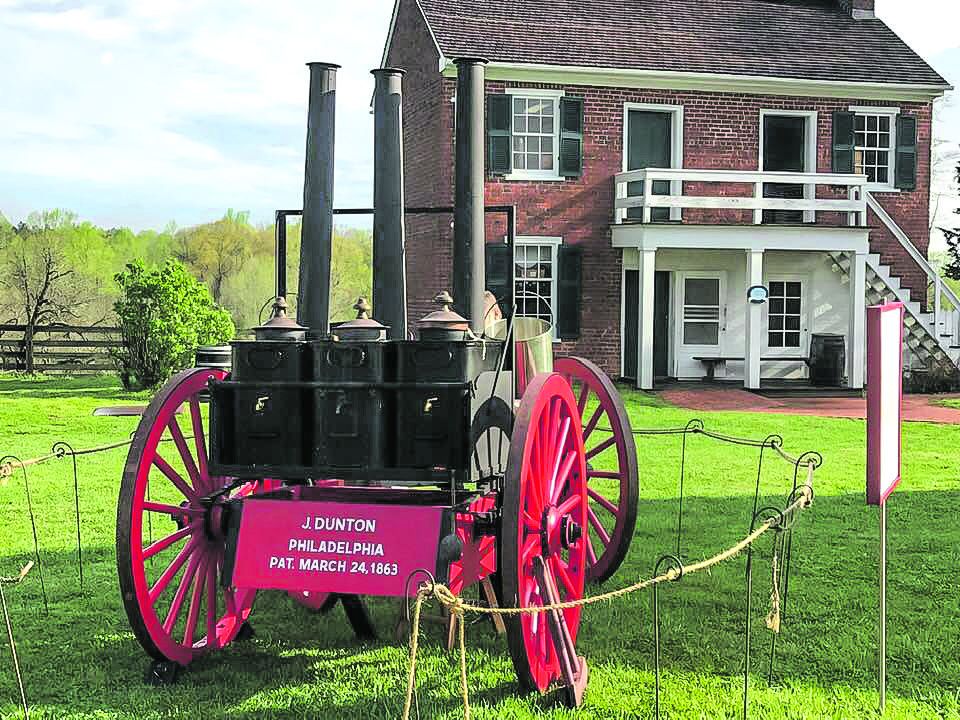
Association and the general public and was significant in creating prestige for the YMCA movement. The value of the services rendered was recognized by civil and military authorities during the war and afterward. Two very important advancements resulting from the efforts of this growing movement were: care of soldiers with the first formation of dietary kitchens in the hospitals, and the invention of the coffee wagon. The first major advancement was brought about by Annie Wittenmyer from Iowa, sanitary agent for that state, who realized wounded soldiers could not survive and properly heal from wounds and sickness on hardtack biscuits and salted pork. She had the idea of starting a dietary kitchen where wholesome, healthy food could be prepared. She contacted the Christian Commission, which was already trying to get fresh fruits and vegetables into the hands of the soldiers, expressing her concern and telling them she would supply the ladies to do the cooking, if they could supply the kitchen equipment. The partnership was an overwhelming success; with thousands of lives saved that might not have been saved otherwise. The second advancement in the welfare of the soldiers was the invention by Jacob Dunton, a graduate of the Philadelphia College of Pharmacy, who became a wholesale pharmacist. His first coffee wagon was built in 1864; he had received a patent for it in March 1863. Many years ago, the Museum I helped start, The National Civil War Chaplain’s Museum, heard about an antique “coffee wagon” in the Virginia Beach area. The people who had it were looking for some museum to adopt it. We tried and tried to make those arrangements but for various
Annie Wittenmyer reasons we were not able to bring the effort to fruition. During the 140th and 150th observances of the Surrender at Appomattox, the wagon was present. A gentleman by the name of Larry McGrane had found the wagon, patched up one boiler, and obtained permission to use it. In early 2018 I (Chaplain Farley) received a photo of the wagon sitting on a trailer in a storage lot, uncovered and unprotected from the elements. It was rotting away. My attempts to reach Mr. McGrane proved futile, because of many personnel changes in the organization possessing the coffee wagon. Finally, after much prayer, the Lord, using our local congressman, provided a phone number for the director of the ASYMCA. Yes, in fact they did own a replica Civil War coffee wagon, was the answer to my inquiry. After several weeks of conversations, emails and again a change in personnel we managed to sign an exclusive 5-year use agreement to use the wagon and “maintain it.” In mid-June 2018, we traveled to Virginia Beach to pick up the coffee wagon. Our hearts sank as we saw its true condition. There was no way to maintain it; it would have to be fully restored. The wagon was built in 1961, by the inmates at Lorton Federal Prison. It was paid for by the Chase and Sanborn Coffee Company, and was built for the Civil War centennial celebrations. It was a piece of our nation’s history! As we looked it over, there were wheel spokes being held in their hubs only by the paint on the outside of the spoke. The outer skins of all three boilers were rusted with huge holes eaten where the fire would not stay under the boilers. The copper pots in the boilers had to be replaced because they were soldered with lead-based solder; they would be replaced with restaurant grade stainless steel. The limber sub-frame needed total replacement. The deck holding the limber chest to the sub-frame was warping up on the ends and needed replacing. The foot boards for the driver were rotten. The whole thing needed a complete repainting. We estimated the restoration cost to be between 10 and $12,000. Many have asked why go to all this time and expense? It is very simple, really. Of the two (possibly three), coffee wagons built in 1864, nothing still exists. Guns, cannons, uniforms, and battle-fields remain, many flags still remain, and even a submarine remains, but nothing of these coffee wagons remains. They performed well and provided an invaluable service to help alleviate some of the suffering and needs of the soldiers. This reproduction wagon is 58 years old and still has a story to tell. We want to help it do that. Since taking it to the Gettysburg reenactment in 2018, to the present, the interest has been overwhelming. Spectators are in awe and take selfies with it. Even reenactors who have been in the hobby over 20 years have never heard or seen anything like it. For them to get a cup of fresh brewed coffee from it, that is shear ecstasy. Soldiers lined up to get coffee bring a sense of what it might have been like for them so many years ago. The other reason we are so passionate about restoring this wagon is the ministry of the U.S. Christian Commission that we get to retell. Their love of Christ and for their fellow man is also a story that needs retelling and retelling. We believe the Lord allowed us to get this coffee wagon for a time such as this to tell the story of their devotion to Him and this nation. More information about the coffee wagon and where it will be; about Chaplain Farley’s portrayal of a Civil War Chaplain; and his portrayal of the United States Christian Commission is available at: rmjc.org.