
R.E. Lee Statue
By John Sexton · Originally published September 2019 · pp. 28–29
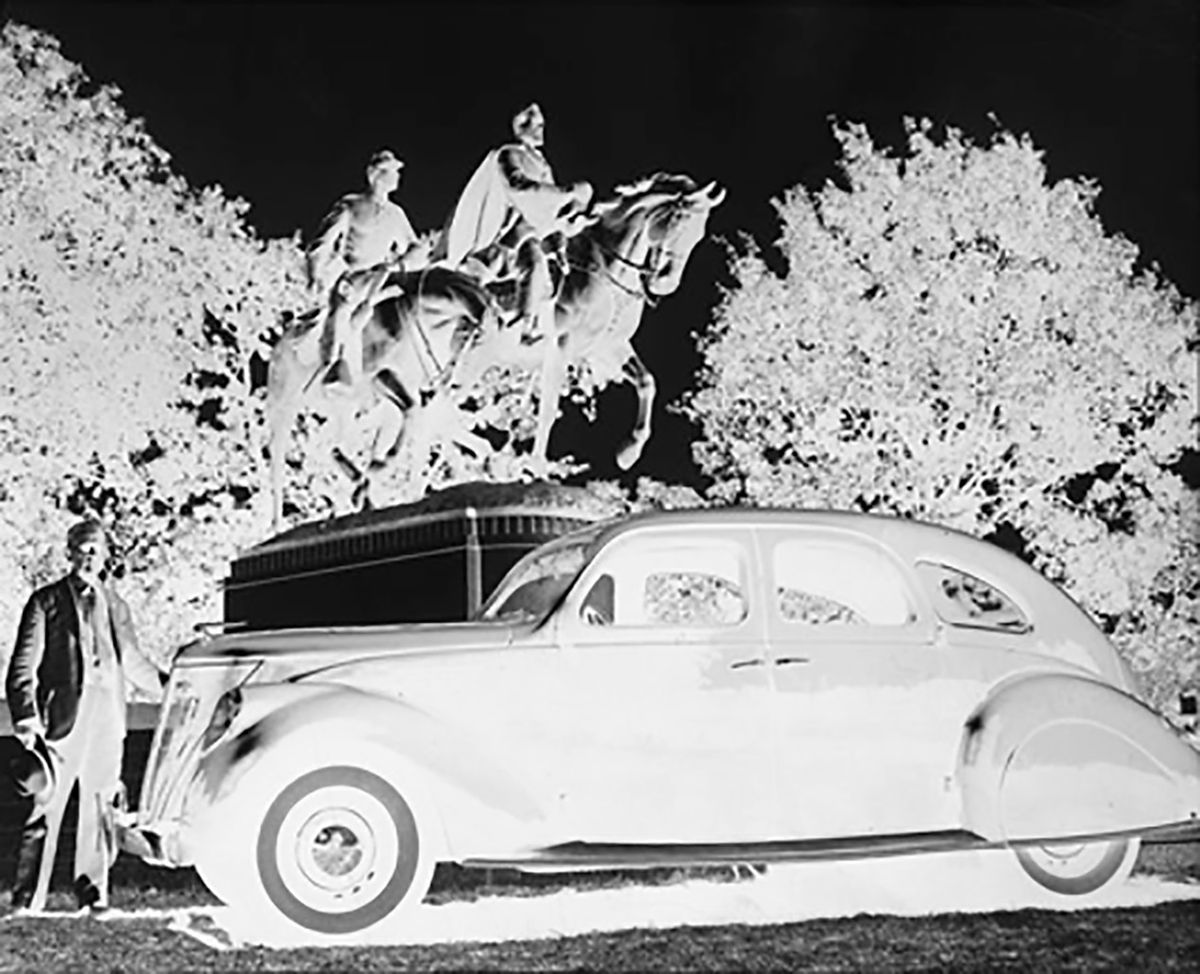
The truly fantastic monumental Alexander Phimster Proctor equestrian statue of Robert E. Lee was sold June 5, 2019, by FSO Auctions in an online sale that generated a winning bid of $1,535,450 ($1,435,000 plus 7% buyer’s commission). The buyer was Holmes Law Firm, Addison, Texas, according to several news stories. Addison Attorney Ronald L. Holmes, possibly represented a client but there has been no comment to date. Alexander Phimister Proctor (1860-1950) was a renowned sculptor, sought by many cities, art patrons, and institutions for his monumental bronzes. His Robert E. Lee sculpture is one of his best known along with ‘Pioneer Mother’ in Kansas City, ‘Pair of Tigers’ guarding the entrance to Nassau Hall at Princeton, Theodore Roosevelt’s equestrian statue as a Rough Rider in Portland, Ore., and many others. Proctor was the first sculptor to create monumental equestrian sculptures portraying cowboys and Indians. His works immortalized statesmen, pioneers, lawmen, women, and animals. Today, Proctor bronzes grace cities from New York, Princeton, N.J., and Washington, D.C., to Chicago, Dallas, Denver, San Francisco, and Portland, Ore. Proctor collaborated with America’s most famous sculptor Augustus SaintGaudens (1848–1907) in creating the equestrian portions of General John Logan’s statue in Chicago and General William Tecumseh Sherman’s statue in New York City. Among the “Big Three” of Western sculpture of this era— Proctor, Frederick Remington (1861–1909), and Charles Russell (1864–1926)—Proctor was the only one with formal art training, and his output was prolific. Remington and Russell bronzes currently bring in millions of dollars and for pieces only 30-40 inches. A Saint-Gaudens postlife reduction of the “Victory”
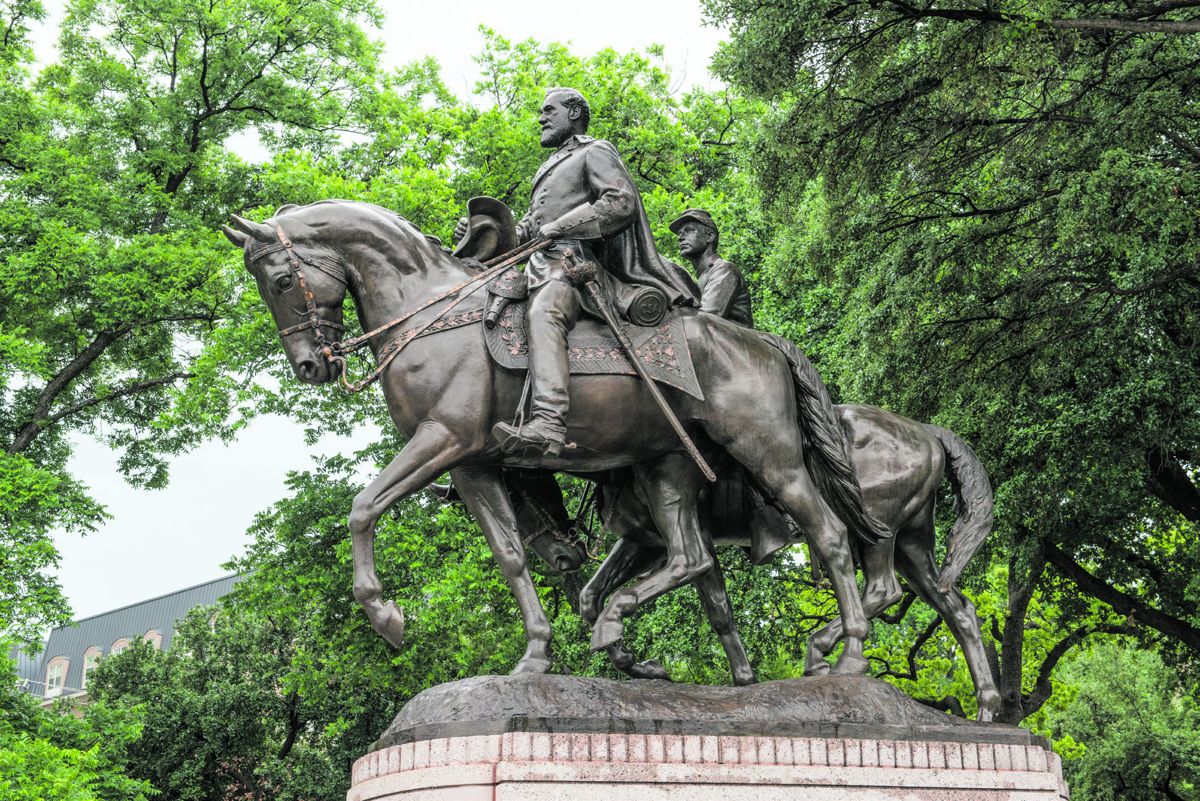
“Equestrian statue of Confederate General Robert E. Lee, astride his horse, Traveller, in the park that surrounds the headquarters of the Dallas Park Board in Oak Lawn section of Dallas, Texas.” This large monumental sculpture shows General Robert E. Lee riding his horse, Traveller, slightly ahead of another smaller horse with a young man, who represents all Confederate soldiers. The horses appear to be moving at a slow and steady pace. Proctor studied several photographs of Confederate soldiers to create this composite version of the young soldier’s face; he also studied many photographs of General Lee to sculpt the face and used Lee’s original uniform as a model for the clothing. General Lee holds his famous slouch hat in his hand while the soldier behind wears a kepi. (Library of Congress)
portion of New York’s Sherman monument sold at Christies for over $2,000,000 in 2017. Proctor is not as well-known as Remington, Russell, or SaintGaudens. There are however many good sculptors who are not household names worldwide who have similar comparable sales on small pieces, whose monumental pieces have sold for much more than the price achieved in this restricted online auction with only four “approved” participants. I keep my pulse on the Civil War marketplace and was totally unaware of this auction; I just happened to be in Dallas a few days later and saw it in the news. Dallas lost a true artistic treasure. Just as I was unaware, many serious buyers outside Dallas were unaware as well. I emailed one very important Dallas art and historical collector who had no knowledge of the sale. In my opinion, if Dallas had done their due diligence and consigned this into an art auction where it would have received national and international exposure, even with the stated restrictions, the price realized would have been higher. Indeed, it is almost impossible to get realistic market value from only four “approved” bidders in an auction company not associated with art world. From LSO Auction website: “Lone Star is a full-service firm providing a full range of auction services to all levels of government: city, county, state
“Alexander Phimster Proctor 1936” signature on the bronze base.
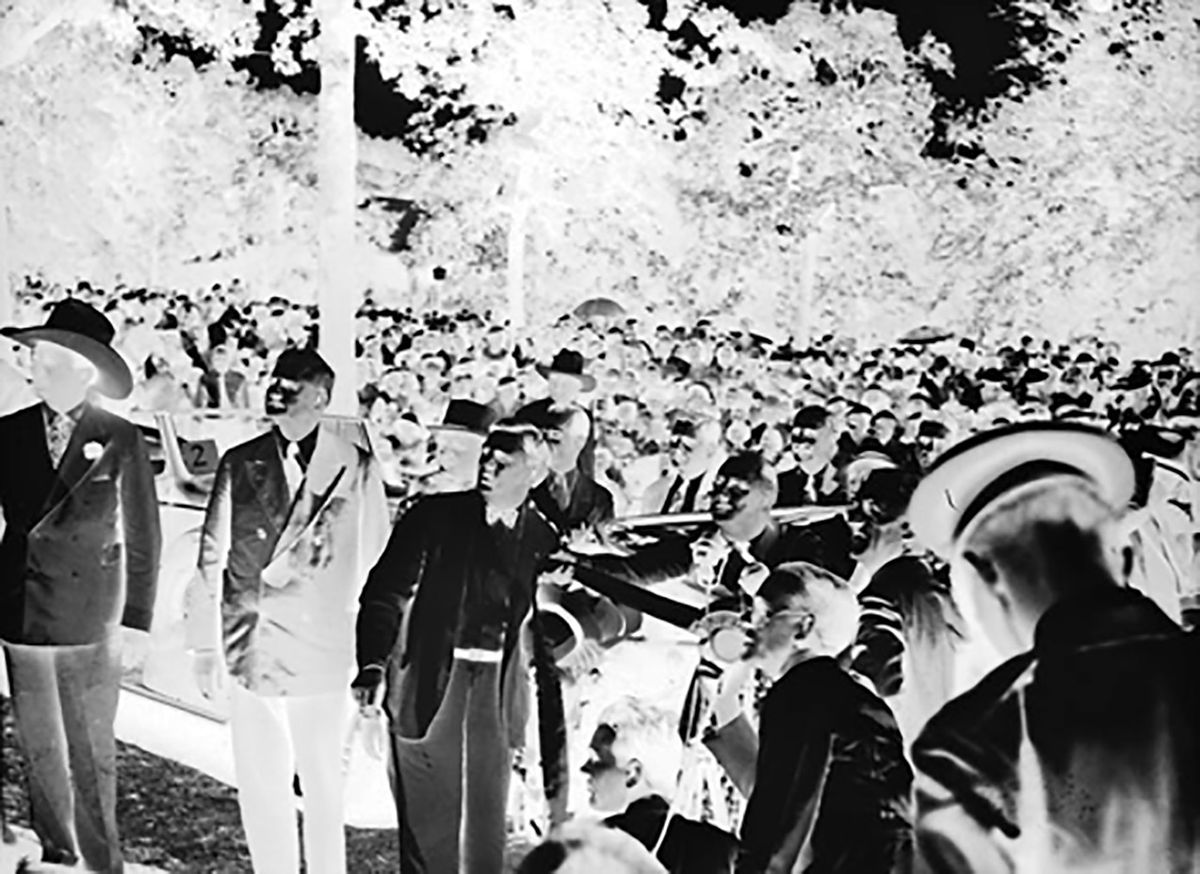
Dallas society attended the June 12, 1936, unveiling.
and federal. We have sold virtually every type of commodity for various government entities in cities around the U.S… Lone Star sells the jewelry, gold and silver, fine art, antiques and collectibles seized and forfeited nationally for the U.S. Marshals Service as well as forfeited vehicles locally in several USMS districts. In addition, we sell surplus vehicles, heavy equipment, and miscellaneous surplus for the State of Texas….unclaimed contents from safe deposit boxes… surplus vehicles and equipment, police pursuit vehicles, unclaimed property, impounded vehicles, seized vehicles, office equipment and furniture and much more.” The controversy over Confederate, and other politically “out of favor,” monuments has brought an interesting new set of appraisal assignments to me. Most Confederate monuments have little intrinsic value as art as many were mass produced by just a few companies whose cast metal soldiers were sold for Union and Confederate memorials with only minor differences to insignia designating US or CS. This was not the case with the sale of this over-life, 6,500 pound, 9 x 5 x 12 foot bronze which has great artistic merit by a renowned sculptor. This Lee is among the greatest equestrian statues extant. Taliban/ISIS and other groups in the Middle East recently and currently remove “offensive” monuments by demolition or putting them into the international art market. You cannot change history, but you can take it out of public view. Regardless of political views, more Confederate monuments will be coming to market. A few have been privately sold and relocated, most are just removed from public view and stored. I am not aware of an auction of similar property previously. Appraisals of mass-produced monuments entail a “production cost” approach to reproduce, or cost to remove and re-install. Appraisals of fine art sculptures such as Proctor’s bronzes are valued like other fine art by a comparable sales approach. At least four bidders wired the $50,000 deposit required by Dallas City Council for bidding in the sale of the Lee bronze. Other terms of sale stated, the monument had to be removed within five days and the buyer “agrees to enter into a Bill of Sale with the City that will require that he/she shall not publicly display the item in the City of Dallas, and that the purchaser shall secure this restriction contractually with any subsequent purchaser if the Sculpture is later sold.” These restrictions no doubt limited participation. This first monumental Proctor bronze ever marketed may have sold for more if it were offered in a more art-savvy venue such as New York City. John Sexton is certified appraiser with International Society of Appraisers (ISA-CAPP) and Accredited senior appraiser with American Society of Appraisers (ASA). He authenticates and evaluates other rare and valuable historic items as well. His website is www.civilwardealer.com. He is coauthor of the book Confederate Bowie Knives (2012) by Jack Melton, Josh Phillips and John Sexton, that was published by Mowbray Publishing, Inc. Send “Ask The Appraiser” questions and photographs to [email protected].
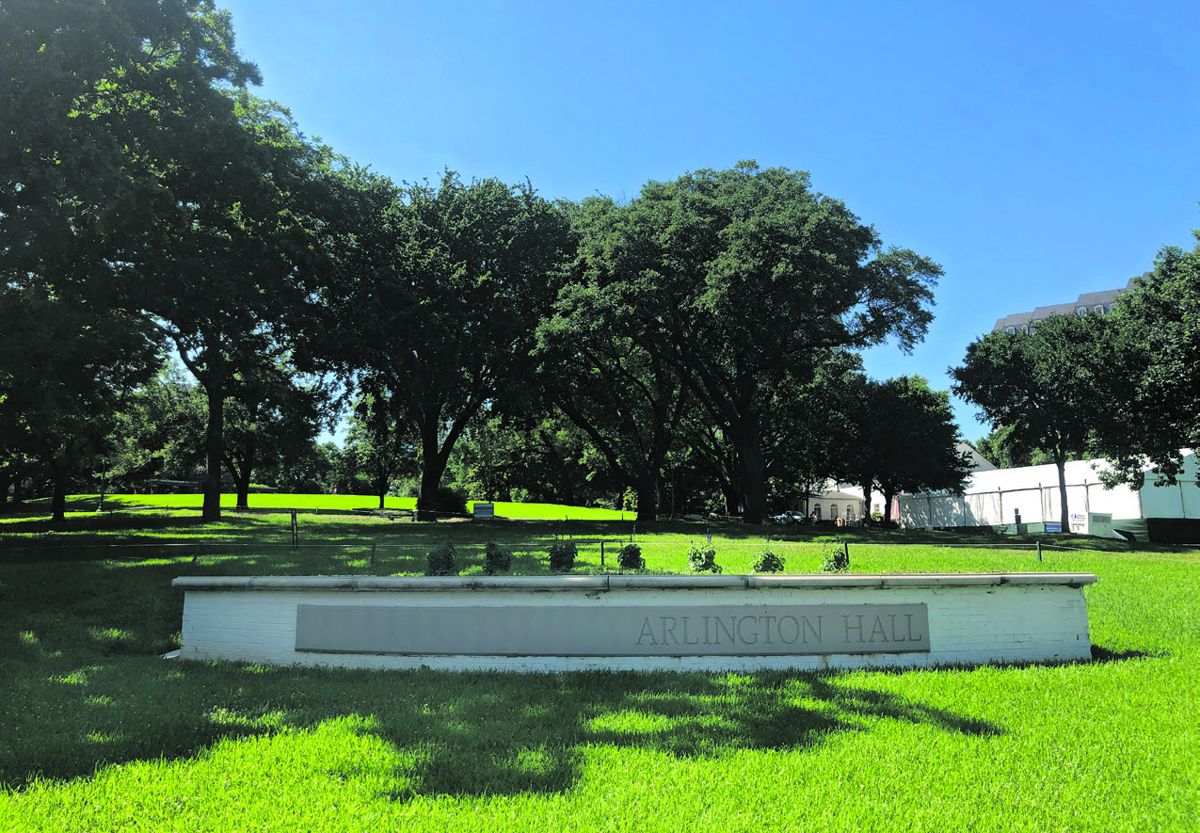
Photo taken June 8, 2019. Every remnant of masonry of the memorial has been removed, Robert E. Lee’s name was removed, but “ARLINGTON HALL” remains. Will the National Park Service be removing Robert E. Lee’s name from “Arlington House, Robert E. Lee Memorial” in Virginia? Arlington Hall in Dallas is a very popular venue; it is a 2/3 scale version of Arlington House. Arlington Hall is still on Lee Street, but the City of Dallas is planning on changing it as well as all other streets named after Confederate associated figures.