
New Monument to the 1st Maine Cavalry Dedicated at Mount Defiance Historic Park in Middleburg, Virginia
By Joe Bordonaro · Originally published September 2019 · pp. 30–31
From June 17-21, 1863, a series of three battles were fought to screen the Confederate Army of Northern Virginia’s advance toward the Maryland and Pennsylvania. General Joseph Hooker, commander of the Army of the Potomac, was desperately trying to find out where General Robert E. Lee’s Army of Northern Virginia was, and where it was headed. General Lee’s cavalry screen was trying to prevent General Hooker’s cavalry from obtaining this vital information. A battle at Brandy Station, Va., June 9, 1863, while showcasing the new-found expertise and aggressiveness of the Union cavalry, did not remove the screen that Confederate General J.E.B. (Sharon Bondroff)
Stevens Bunker, Christopher Wilson, Mike Scheibe, and Jimmy Ford-Bey (l-r, top to bottom) pose by the monument after installing it. (Tracy Gillespie)
Stuart’s cavalry was placing around their army’s movements. When Hooker decided that something was up, on June 13th, he ordered his army to leave its positions on the Rappahannock River, near Fredericksburg, Va., and move northwest towards Maryland. When Hooker learned of the fall of Winchester, Va., on June 15, he ordered his cavalry chief, Alfred Pleasonton, to pierce Stuart’s cavalry screen along the Blue Ridge Mountains and locate the present position of the Confederate infantry. Union General Judson Kilpatrick’s cavalry brigade led the advance and ran into Colonel Thomas Munford’s Confederate troopers near the village of Aldie, Va., on June 17, resulting in four hours of tough fighting. Both sides made mounted assaults. When Kilpatrick was reinforced in the afternoon, Munford withdrew toward Middleburg. The 1st Maine Cavalry lost its leader at the Battle of Aldie. Colonel Calvin Douty was shot and killed by dismounted Confederate cavalrymen posted behind a stone wall alongside the Snickersville Turnpike. His death was soon avenged, however. As Private William Howe remembered: “Then the second charge and the most irreversible ever known was made by the old First Maine Cavalry.” Howe went on to describe the savage charge that carried the day. “Inside of two minutes the life of this indomitable hero was avenged, the heights captured, and Colonel Douty’s body recovered from that point where I last saw him in life.” (Source: http://maineatwar.bangordailynews.com/2013/06/13/ahero-charges-to-dusty-glory-ataldie/ ) There is a monument to the 1st Massachusetts Cavalry at Aldie, but none for the 1st Maine. Also on the 17th, General Pleasonton ordered the 1st Rhode Island Cavalry to take the next town to the west, Middleburg. They did so, but were later overwhelmed by mounted Confederates, losing some 225 Rhode Islanders in the fight. Two days later, Col. J. Irvin Gregg’s Brigade of Federal cavalry was ordered to retake Middleburg and press on to the west. Gregg’s men easily drove
Confederate cavalry out of the small town, but then ran into a strong defensive position Stuart had created on nearby Mount Defiance which included artillery. Another tough back-andforth cavalry fight developed, in the course of which General Stuart’s well-known Prussian aide, Heroes von Borcke, was severely wounded in the throat. Once again, the 1st Maine Cavalry played a crucial role in the fighting. Stuart, seeing additional Federal reinforcements arriving, retired further west to the town of Upperville. On June 21, Union cavalry once again made a determined effort to pierce Stuart’s cavalry screen. The largest of the three battles, one in which Col. Strong Vincent’s V Corps Federal infantry brigade became involved, was similarly inconclusive. Once General Lee’s Army of Northern Virginia passed over the Potomac River, Stuart’s mission was complete. Despite the lack of any clear victory by either side, the
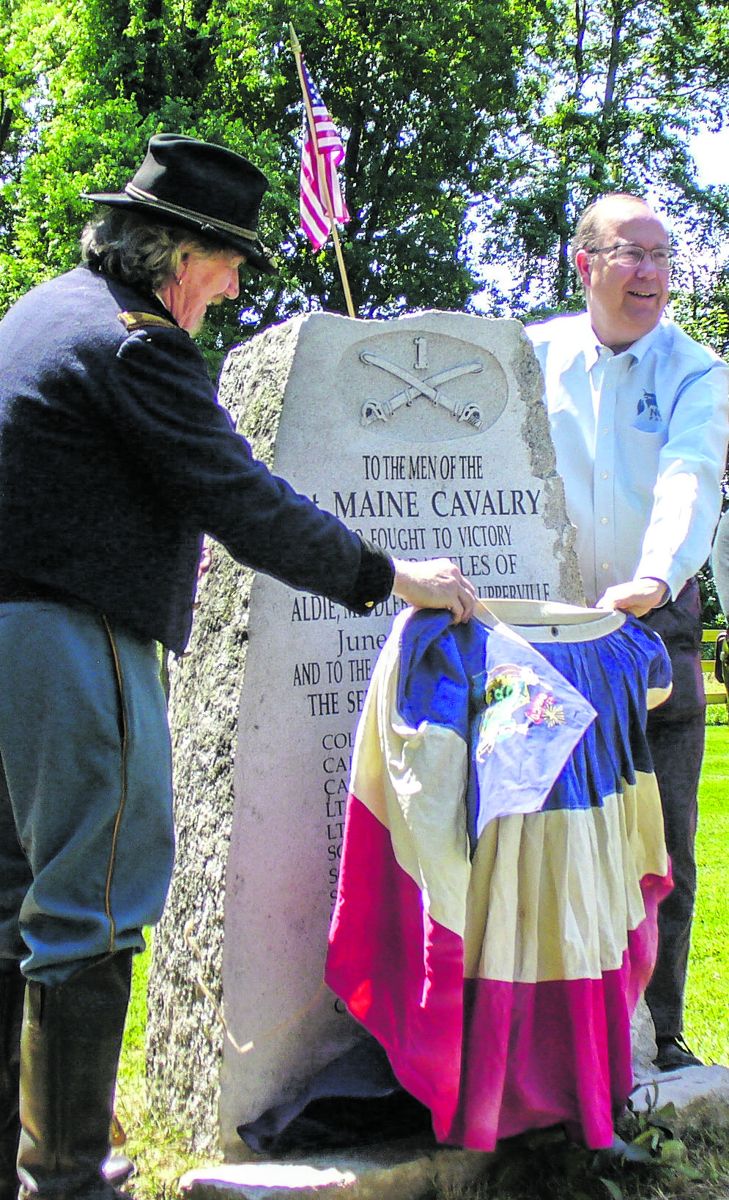
Stevens Bunker and NoVaParks Commissioner unveiling the monument.
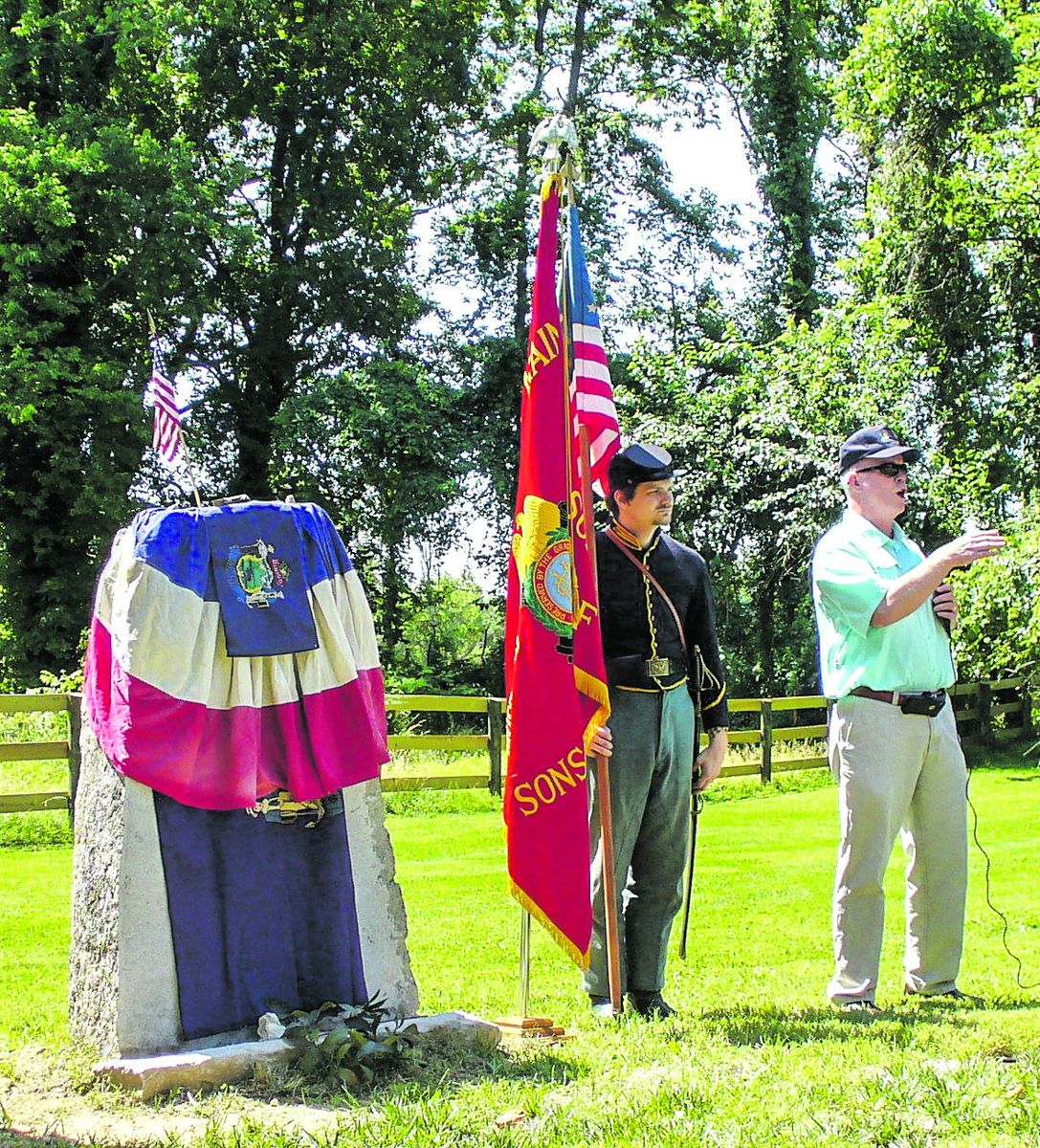
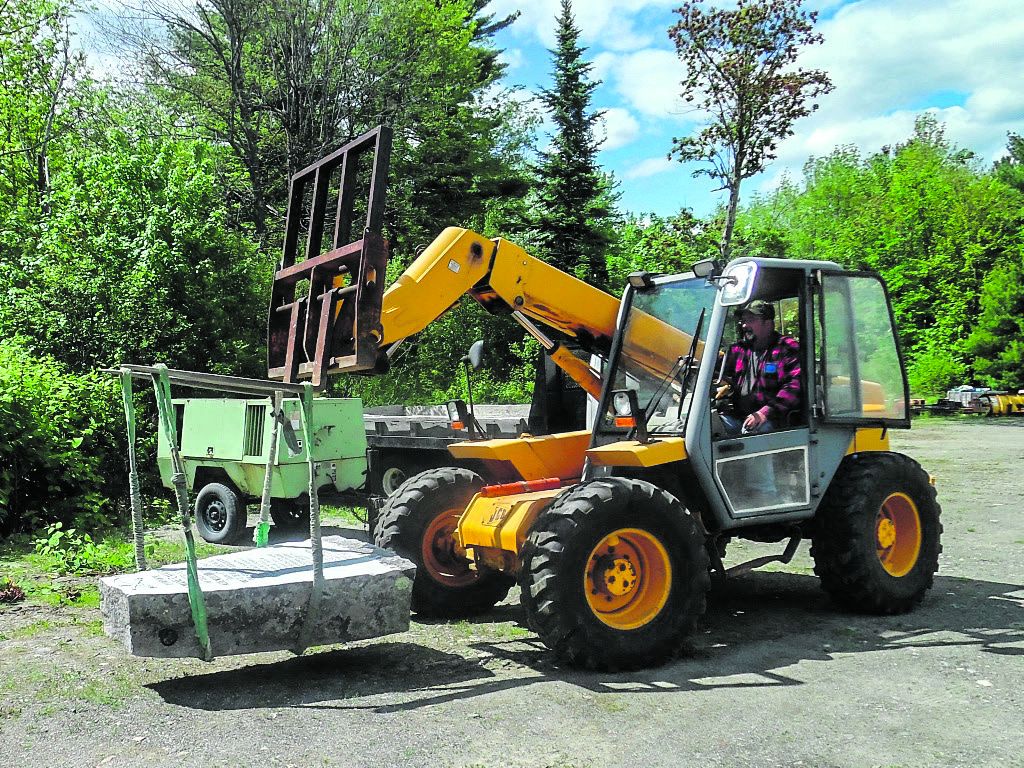
Confederate objective of screening Lee’s army from Hooker’s knowledge was achieved. Both sides suffered heavy casualties in men and horses; these casualties, and the lack of rest after suffering them, played an important role in Stuart’s ability, or lack thereof, to perform the new missions the Gettysburg Campaign placed upon him. As for the 1st Maine Cavalry, their participation in the three battles led to 17 deaths, adding to the long roster of casualties they suffered during the war. The regiment has the sad distinction of having lost the most men of any Federal cavalry unit in the war. Until this year, none of the Maine men lost in these three battles had a monument to recognize their “last full measure of devotion.” That is no longer the case, thanks mainly to the efforts of Stevens Bunker, of Maine, a long time reenactor, and founder of the Co. A, 1st Maine Cavalry, reenacting group. Bunker located and obtained a large, 3,000
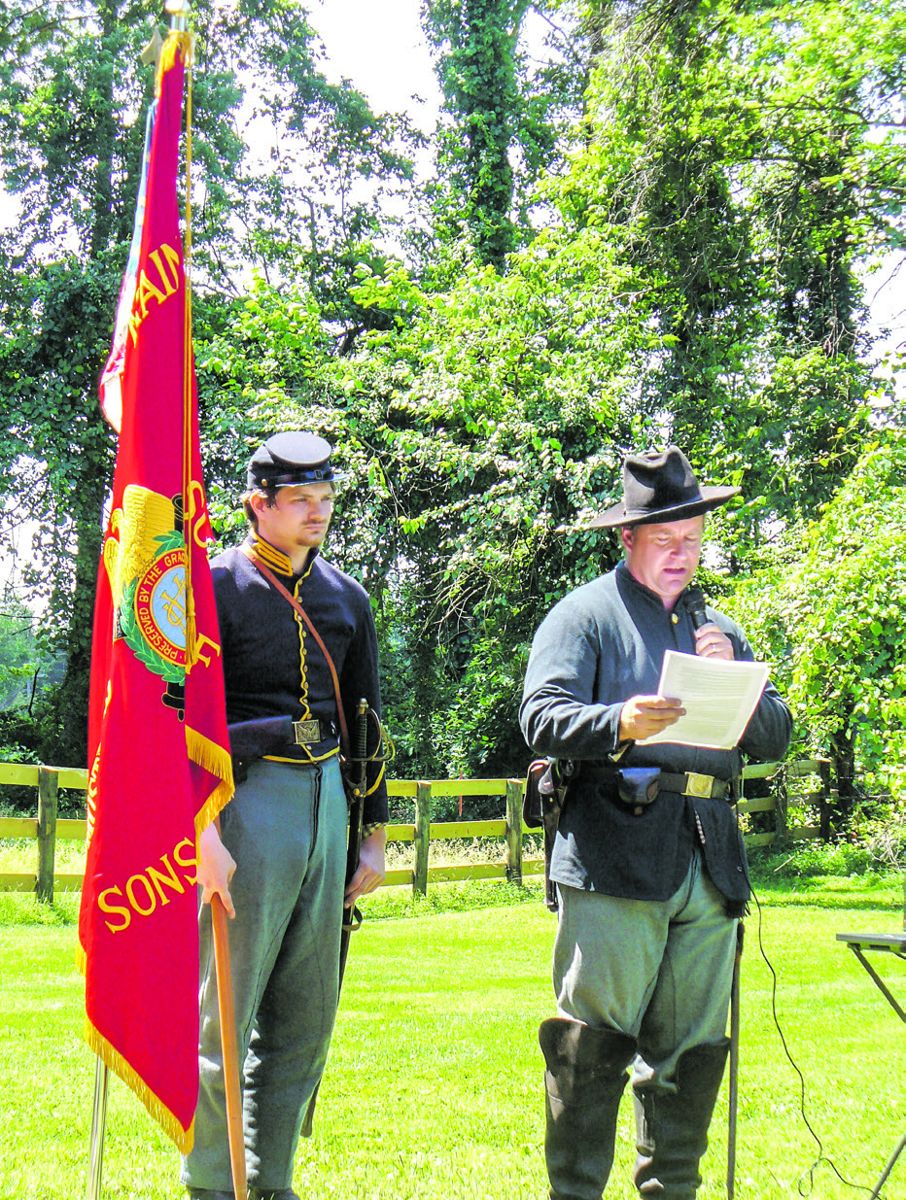
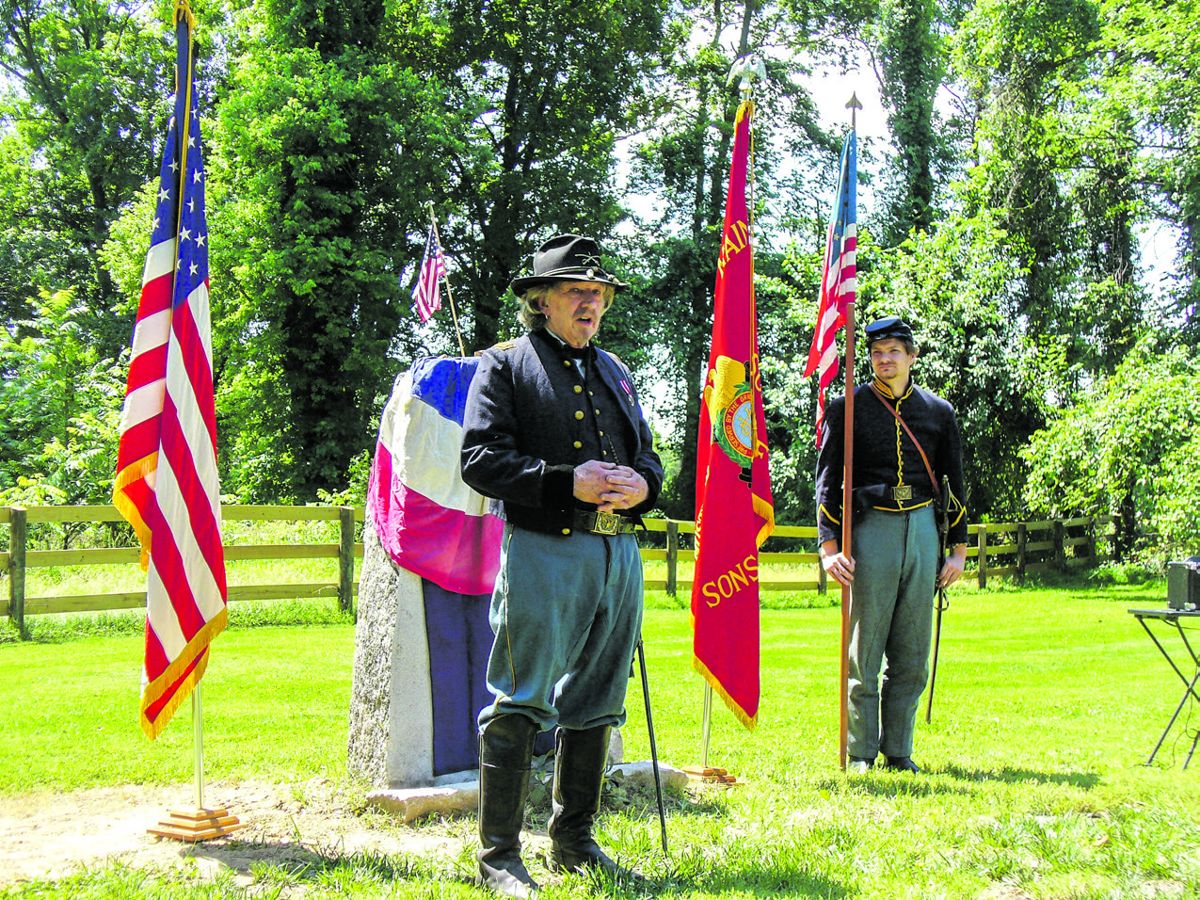
pound piece of Maine granite. Next, he persuaded his friend Dave France to sandblast the lettering on the monument. Bunker did some handwork on the finish and on the sabers engraved on the monument. Bunker also included a ring on the monument’s side for tying visiting riders’ horses. Transporting the stone to Middleburg on a rented truck, Bunker, assisted by Mike Scheibe, Chris Wilson, and Jimmie Ford-Bey, excavated a place for the monument on Mount Defiance, poured concrete for the foundation, and mounted the monument. On June 22, 2019, with the assistance of Tracy Gillespie and Michael Nardolilli, of NoVaParks, the new monument was dedicated. The ceremony was well attended by members of the public, and featured appropriate remarks from Diane Logan, of the American Battlefield Trust, several Sons of Union Veterans from Maine, who helped with the project, historian Bob O’Neill, and Stevens Bunker. The new park at Mount Defiance now has an excellent focal point and the monument will serve to remind Americans of fierce fighting on the site during the Gettysburg Campaign. Joe Bordonaro is a USAF veteran (1973–1977), Glassboro State College graduate (1980), Catholic school teacher (St. Joseph’s ProCathedral, 1983–1988), and retired public school teacher (Mullica Township School, 1988–2009). He has been involved with Civil War reenacting/living history since 1999. Joe began submitting articles to the Civil War News in 2005 and has been covering events for the News on a regular basis since 2016. Joe lives in Mount Laurel, NJ, and has been married to his wife Karen for 29 years. If you wish to contact Joe, you may send an email to [email protected]. (Joe Bordonaro)