Charleston’s First Memorial Day: Forgotten No More
By Stephen Davis · Originally published October 2019 · p. 17
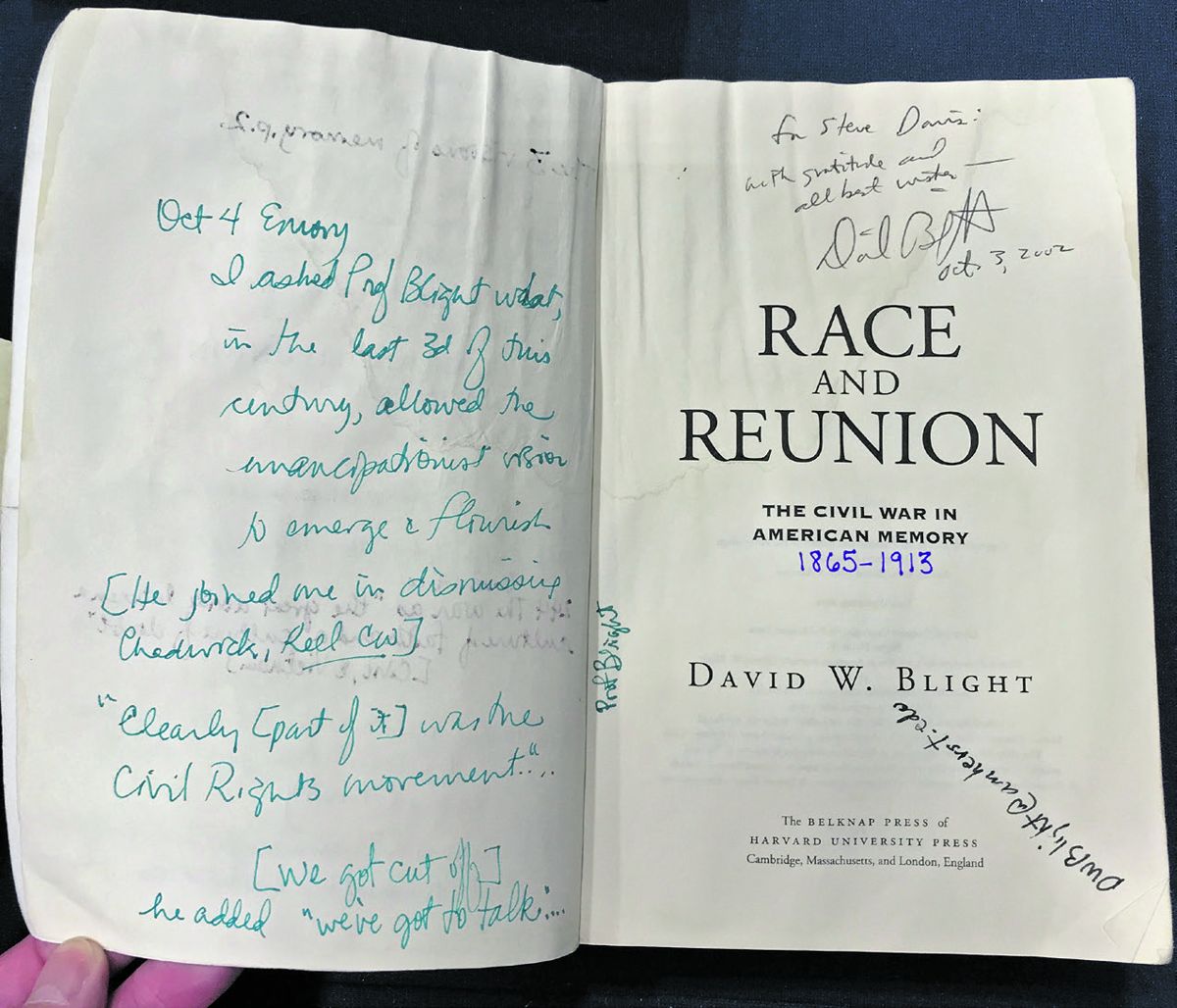
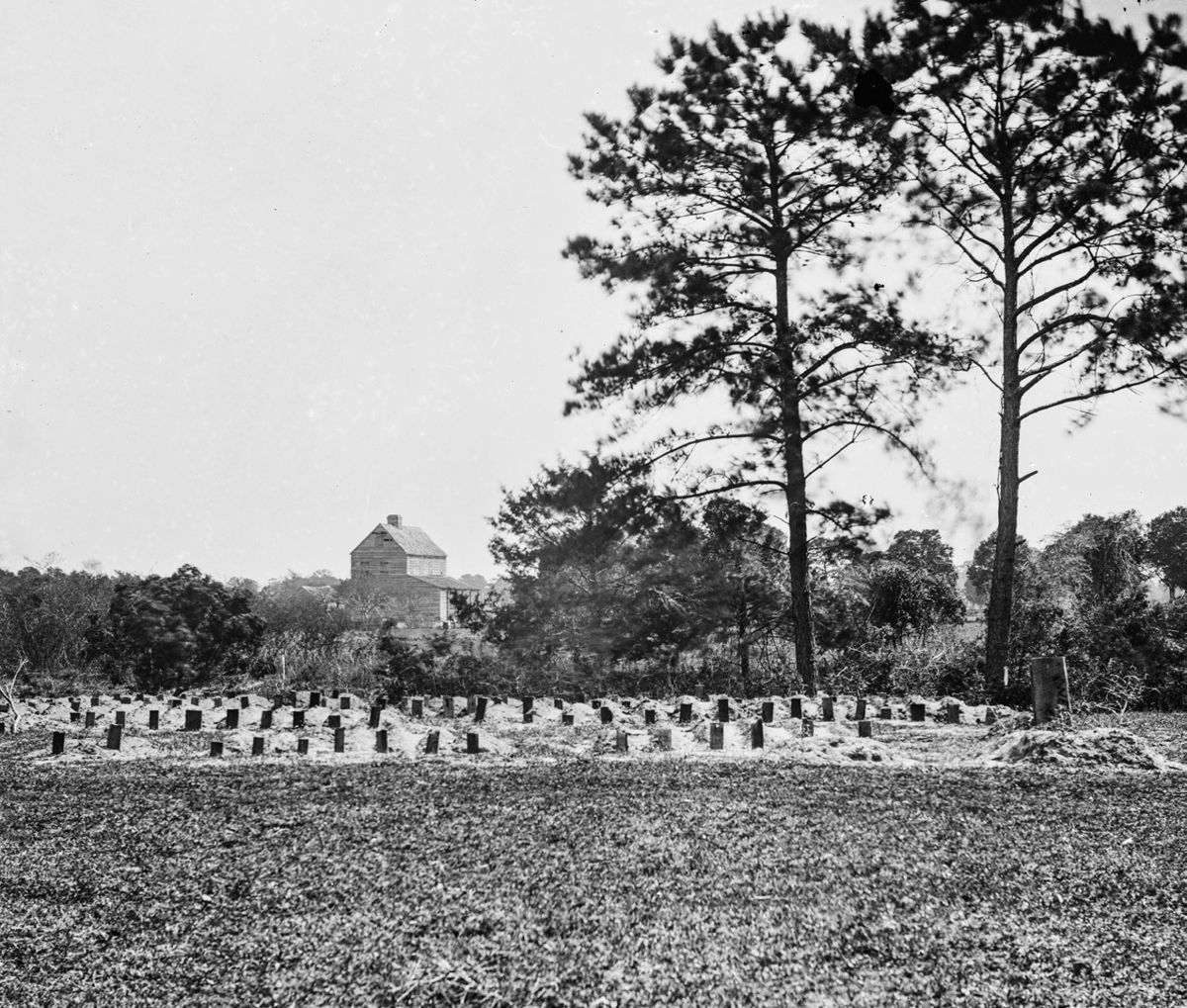
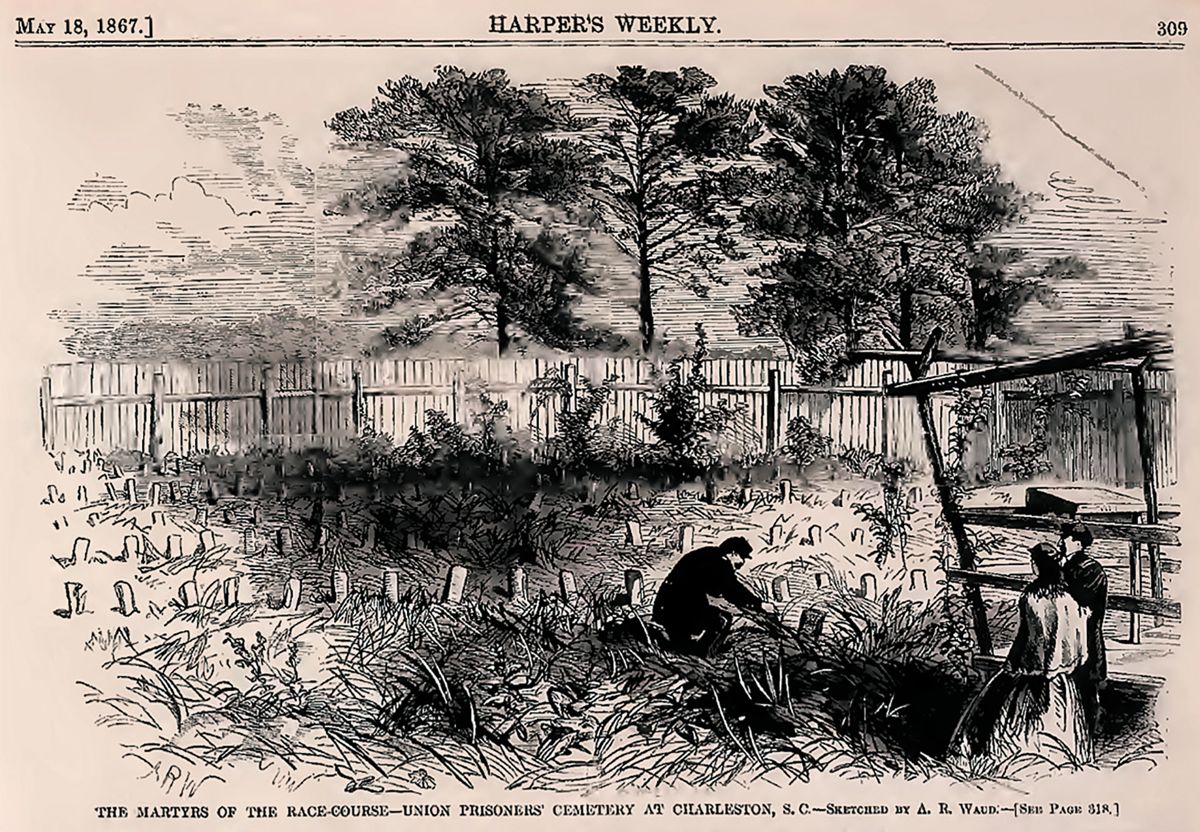
Charleston’s First Memorial Day: Forgotten No More By Stephen Davis Special to Civil War News History, if you’ll pardon a digression, can be like a rock ‘n’ roll hit. An artist writes and records a song, but it only catches on when, say, the Beatles cover it on one of their albums; I’m thinking of Chuck Berry’s “Rock and Roll Music” here. Let me explain. Forty years ago I read Paul Buck’s The Road to Reunion 1865–1890. Here, from page 116: Especially did it seem fitting that the lonely graves of Federal soldiers buried in the South should be remembered. Small groups of Unionists, sometimes an individual alone, performed the rite in communities scattered throughout the South. Frequently Negroes joined in bringing flowers to the graves of their deliverers. One such occasion transcended others in importance, and, attracting nation-wide attention, introduced the idea of Memorial Day to the North. In Charleston, South Carolina, on May 30, 1865, James Redpath led a throng of Negro school children to the bleak spot near the city where rested the remains of several hundred Union soldiers in four long trenches. Quietly the ugly mounds were covered with flowers strewn by black hands which knew only that the deceased they were honoring had raised them from a condition of servitude. Road to Reunion was published in 1937, so knowledge of Charleston’s freed people honoring the graves of Northern soldiers has been around a good while. In his book Confederate Charleston, Robert Rosen featured a woodcut illustration of a Northern soldier tending graves of Union prisoners buried at Charleston’s Race Track, whose grounds during the war had been turned into a POW camp. Rosen rightly terms this observance “the first Union Memorial Day ever.” The illustration was published in Harper’s Weekly on May 18, 1867; Rosen’s book was published in 1994. Now for the Beatles part. “For years, the ceremony [at the Race Track] was largely forgotten,” writes Brian Hicks in the Charleston News and Courier. “It had been mentioned in some history books, including Robert Rosen’s ‘Confederate Charleston,’ but the story gained national attention when David W. Blight, a professor of American history at Yale, took an interest. He discovered a mention of the first Decoration Day in the uncataloged writings of a Union soldier at a Harvard University library.” Dr. Blight wrote about his discovery in the New York Times a few years ago. “The largest of these events,” speaking of blacks’ commemoration ceremonies, was “forgotten until I had some extraordinary luck in an archive at Harvard.” I never met John, Paul, George, or Ringo, but I remember very clearly the day I met David Blight. In October 2002 Emory was hosting a multi-day conference on lynching and racial violence in America. I heard that Professor Blight, then at Amherst, was scheduled to participate in a panel. I was teaching a course at Oglethorpe University on Americans’ memory of the Civil War, and was using Professor Blight’s Race and Reunion: The Civil War in American Memory (2001) as my class text. I wanted him to sign my copy. So I got out of work that morning to drive to Emory. I got there early and sat on the front row so I could catch his eye when he walked in. David Blight was Professor of History and Black Studies at Amherst, so I looked for an African American. Instead this white gentleman walked onto the podium and finally I guessed it was Professor Blight. I walked up, introduced myself, and asked if he would inscribe my book. He kindly agreed as I opened my paperback. He remarked that its pages were brown and waffled. I explained that while preparing material for my class I had taken his book to the beach and dropped it in the surf. He turned excitedly to the professor next to him: “HE TOOK MY BOOK TO THE BEACH!” We talked on till we were cut off. I noted that before I left the podium he remarked “we’ve got to talk.” Professor Blight and I exchanged e-mails for a while afterward. So David Blight covered Paul Buck’s rendition of the Race Track commemoration, and made it a national hit. Actually, the story can be traced back to the Charleston Daily News of May 2, 1865. In an article titled, “The Martyrs of the Race Course,” the paper related that on the day before, a huge crowd had gathered to consecrate the burial ground of 257 Union soldiers. An estimated 10,000 people were in attendance, “mostly of the colored population.”
African Americans, newly freed in Charleston, had organized as “Friends of the Martyrs” and the “Patriotic Association of Colored Men.” They had worked to improve the burial grounds. Then they arranged a big public dedication. James Redpath, General Superintendent of Education in occupied Charleston, assisted. The ceremonies included a procession into the cemetery, where everyone carried a floral bouquet. “The colored children, about twenty-eight hundred in number, marched first over the burial ground strewing the graves with their flowers,” the newspaper declared. Then came the Patriotic Association—one hundred men. Two hundred more represented the Mutual Aid Society, an organization formed for seeing to the proper burial of “poor colored people,” as the Charleston Daily News attested. A Psalm from the Bible was read, a prayer delivered, a hymn sung. School children sang “The Star Spangled Banner” and “America.” “The graves at the close of the procession,” the Daily News article concluded, “had the appearance of a mass of roses.” Jack Melton and I are working on a book of photographs depicting Charleston in the war, similar to our recently published 100 Significant Civil War Photographs: Atlanta Campaign. Look for this book, 100 Significant Civil War Photographs: Charleston in the War, and other stories when our book is published later this year.