
This And That
Porter Alexander’s Critique of the Seven Days
By Gould Hagler · Originally published November 2019 · pp. 24–26
Porter Alexander’s Critique of the Seven Days “I think that one defect in Gen. Jackson’s character as a soldier was his religious belief.”—E. Porter Alexander Last month I recounted the story of E. Porter Alexander’s Fighting for the Confederacy and how the book came to be. In addition, I related an anecdote about audacity. In the spring of 1862, Alexander, and the entire Confederacy, knew relatively little about Robert E. Lee, the new commander blocking McClellan’s path to Richmond. A fellow officer predicted to Alexander that the new chief was “audacity personified.” The forecast proved right. Lee displayed boldness in great abundance, greater sometimes than Alexander thought prudent. The editor of this long lost work, Gary Gallagher, wrote that one characteristic making the memoir an interesting read and a valuable resource for historians is the writer’s candor. The work contains numerous blunt assessments of the army’s record and the performance of its officers. One example of this candor is Alexander’s account of the Seven Days Battles. Looked at one way, this 1862 series of battles in late June and the first of July was an astonishing success. Lee’s counter-offensive drove McClellan from Richmond, knocked the Federals off balance, and opened the way for a war of maneuver in which Lee and his army held the initiative for a full year. Viewed another way, the battles were a keen disappointment, as Lee was aiming for more: the destruction of McClellan’s army and a morale-killing setback— and possibly a knockout blow— to the Federal war effort. Why did the offensive succeed? And why did it fail? Let’s answer the first question briefly: Lee’s audacity, McClellan’s caution, and Hood’s Texas Brigade at Gaines’ Mill. For the second question, let’s see what General Alexander had to say. One defect that he stressed was the poor organization of the Army of Northern Virginia. Except for the three divisions under Stonewall Jackson, “all… divisions received orders direct from Gen. Lee….” There were “too many independent commands to be efficiently handled by the commanding officer.” This flaw led to problems throughout the fighting. Again and again Alexander lamented the uncoordinated, piecemeal attacks in which the Confederates failed to use all their available manpower. Of the June 30 fight at Glendale, Alexander wrote, Longstreet and A.P. Hill “fought for all they were worth….” However, they fought alone, as “five other divisions, close up to the enemy, stretching off to our left, heard [the sounds of battle] & listened, & went into bivouac for the night without pulling a trigger.” Alexander wrote that the artillery “was even in worse need of reorganization.” Each infantry brigade had one battery attached to it, and this “scattering of commands made it impossible
General William Nelson Pendleton. (Library of Congress)
(Library of Congress)
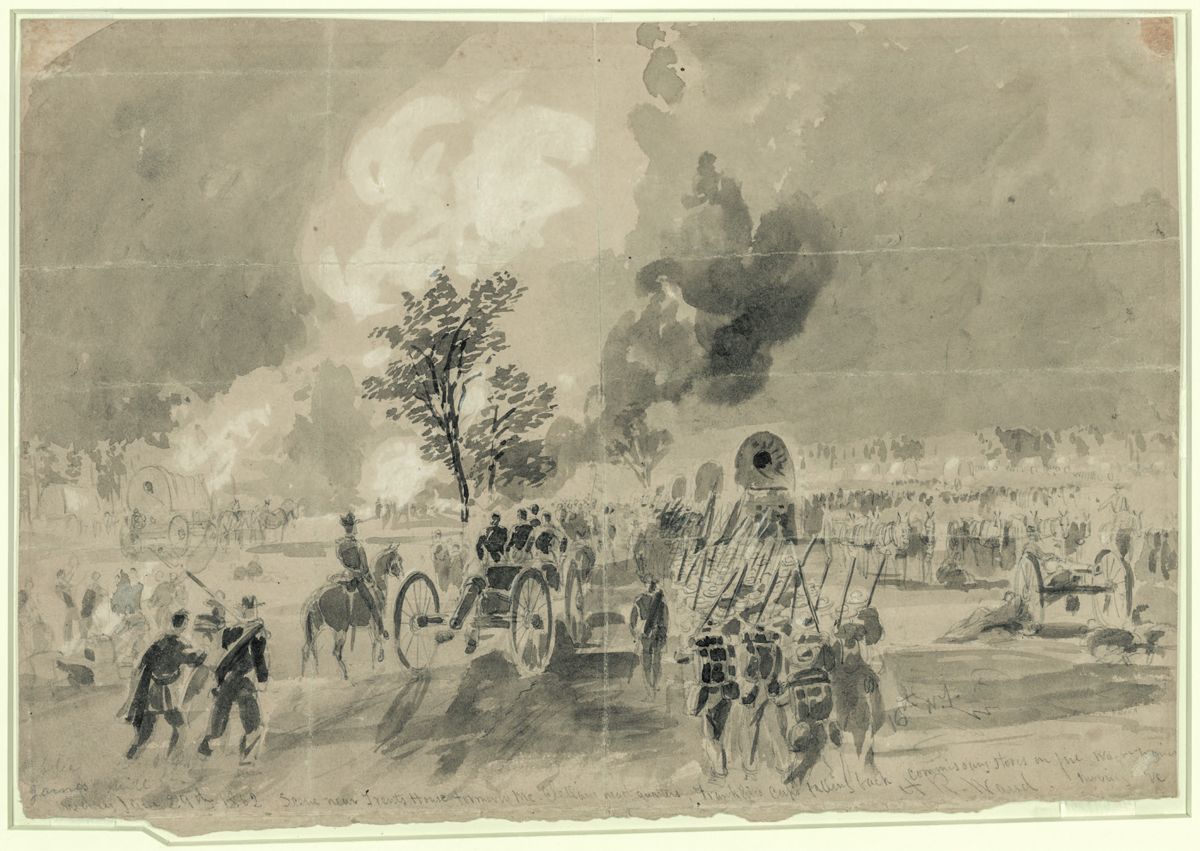
ever to mass our guns in effective numbers.” There were a few batteries in reserve “under old Gen. Pendleton.” More about Pendleton later, when the assessments get more personal. We must keep in mind that no one North or South had experienced war on this scale or led armies as large as the ones facing each other east of Richmond. Alexander put it this way: “As yet we were green & had to learn by experience.” This inexperience applied to the generals and to privates as well. On June 26, When two green regiments of A.P. Hill’s division advanced into the valley of Beaver Dam Creek, “with its swamp & felled trees & creek & race—all within 200 yards of Fitz John Porter’s entrenched 20,000— they knew too little of war to turn back, but plunged on down & into the entanglement. There is no wonder, as the Federal officer wrote, their dead laid ‘like flies in a bowl of sugar.’” One aspect of this inexperience was poor staff work. Of the Confederate experience in general Alexander wrote that “Scarcely any of our generals had half of what they needed to keep a constant & close supervision on the execution of important orders.” This inadequacy plagued the Confederacy throughout the Seven Days and throughout the war. The buck stops with the boss, of course, and as much as he admired Robert E. Lee, Alexander would not exempt the general from criticism for his lax oversight of his plan. “No commander of any army does his whole duty who simply gives orders, however well considered. He should supervise their execution, in person or by his staff officers, constantly, day & night, so that if the machine balks at any point he may be most promptly informed & may most promptly start to work.” During the Seven Days Lee was frustrated that his orders were not being obeyed. Alexander pointed out that Lee should have been, but was not, “receiving reports every half hour or oftener, & giving fresh orders as needed.” The candid Alexander wrote that “the truth of history…ought to be told in justice to Gen. Lee.” Porter Alexander reserved his severest criticism for Stonewall Jackson. He recounted “how upon several occasions in the progress of the fighting…, Gen. Lee’s best hopes & plans were upset and miscarried…& he was prevented from completely destroying & capturing McClellan’s whole army & all its stores & artillery by the incredible slackness, & delay & hanging back, which characterized Gen. Jackson’s performance of his part of the work.” Stonewall was late to the party because he observed the Sabbath on June 22. “Gen. Jackson started down to Richmond for a personal conference with Gen. Lee on the approaching event [i.e., the planned attack on McClellan], by rail, on Saturday, June 21. The train was due to arrive in Richmond about daylight Sunday morning & the conference might easily have been held on Sunday. But Gen. Jackson was unwilling to travel on Sunday, at least when such momentous events were in hand. So he left the train at Louisa C.H., spent the rest of the day and night with a friend, attended church, two or three times the next day, Sunday, & then, after 12 o’clock Sunday night, mounted his horse & rode the balance of the way to Richmond, about 60
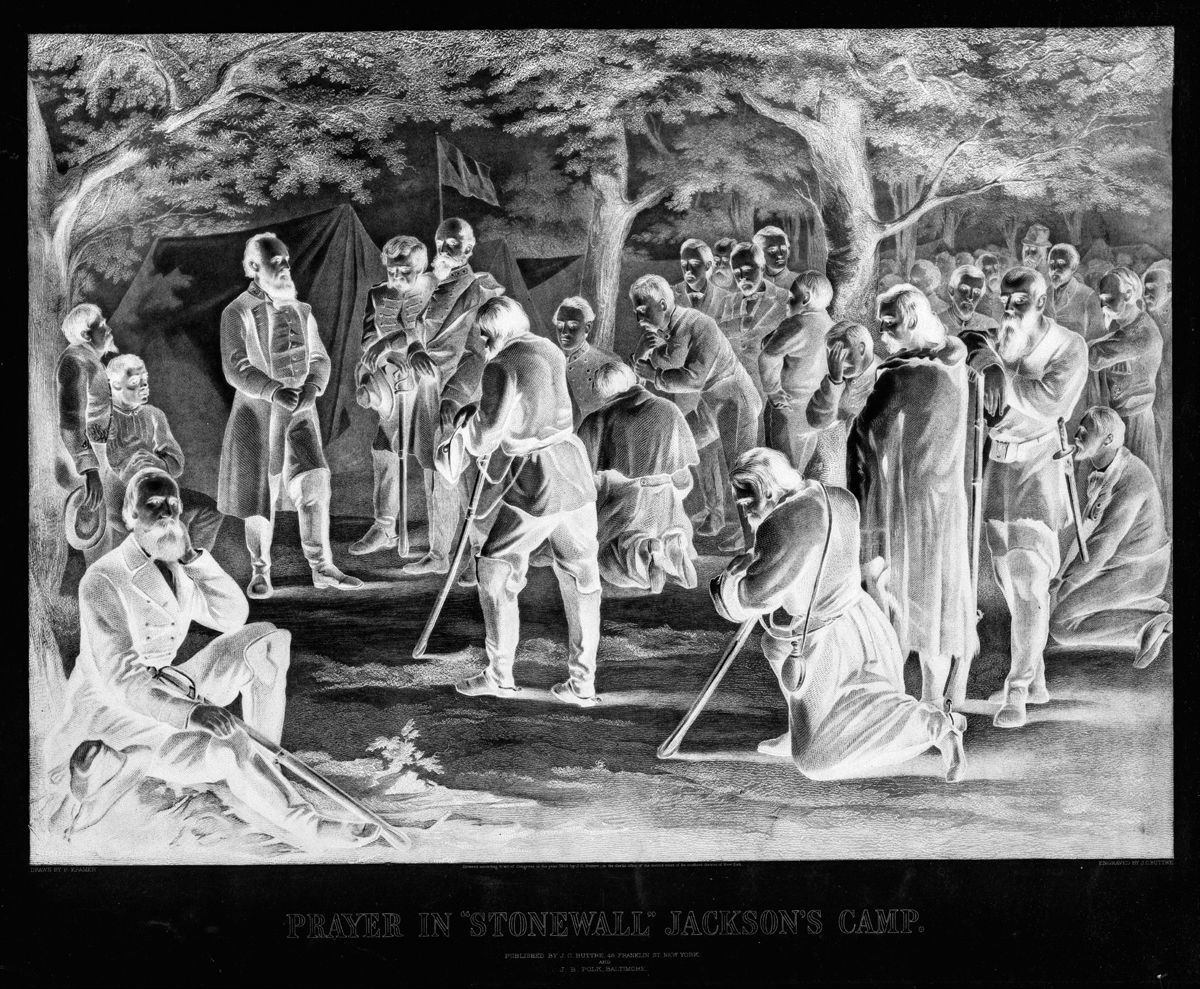
miles….” Jackson met with Lee and other generals on Monday, then returned by horseback to his command. Alexander figured that “the time of the conference & the time of his return to his command, all were from 24 to 48 hours later than they need have been.” Moreover, Stonewall exhausted himself. This long, two-way ride, the first leg of which was begun at 1:00 o’clock on Monday morning, after the conclusion of the Sabbath, was the beginning of the intense bout of fatigue that plagued Jackson during the Seven Days. Concerning Jackson’s religious fervor Alexander offered this remarkable commentary: “For myself I think that the one defect in Gen. Jackson’s character as a soldier was his religious belief. He believed, with absolute faith, in a personal God, watching all human events with a jealous eye to His own glory—ready to reward those people who made it their chief care, & to punish those who forgot about it. And he specially believed that a particular day had been set aside every week for the praise of this God, & that a personal account was strictly kept with every man as to how he kept this day & that those who disregarded it need expect no favors…. And I see in Gen. Jackson’s whole conduct during the Seven Days a sort of faith that he had God on his side & and could trust to Him for victory without overexerting himself & his men.”
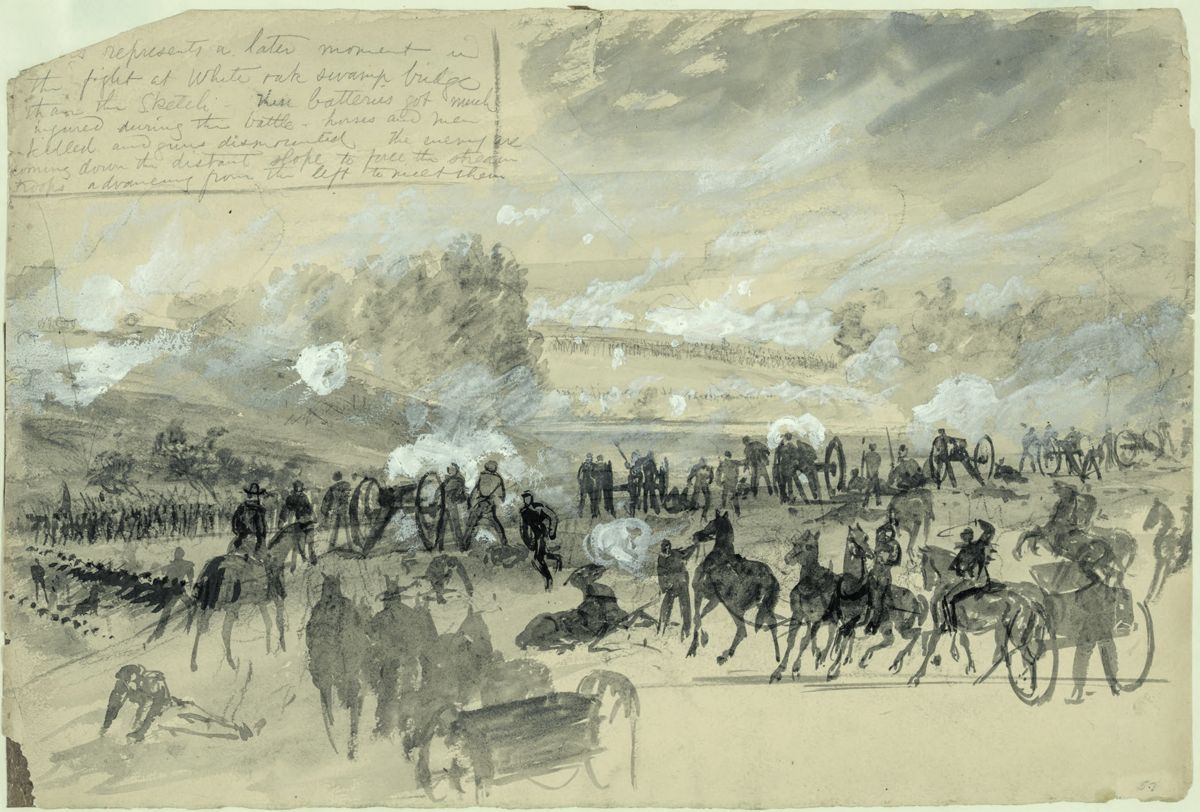
Alexander also blamed the Sabbath observance for Jackson’s inaction on Sunday, June 29, the fifth day of battle. Jackson prayed, Alexander asserted, while General Magruder fought at Savage’s Station. Fatigue immobilized Jackson when he was not engaged in prayer. Alexander’s most vivid example of this is the episode at White Oak Swamp on June 30. Gen. Wade Hampton found a way to bridge the swamp and to get troops into the fight on the other side. Alexander described Jackson in a near stupor, too beat to respond or to give orders. He was unable even to say “go ahead” when Hampton asked permission to lead his own brigade across the swamp and into battle. Jackson nodded and mumbled but gave no meaningful reply. “Gen. Hampton waited for further remarks, until the situation seem awkward, & then went back to his brigade.” Alexander relayed a scandalous rumor about Jackson’s inactivity that circulated in the army, quoting an article written by Gen. D.H. Hill, Jackson’s brother-inlaw, who obviously gave some credence to this rumor. Hill wrote: “I think that an important factor in this inaction was Jackson’s pity for his own corps, worn out by long & exhausting marches, & reduced in numbers by many sanguinary battles. He thought that the garrison of Richmond ought to bear the brunt of the fighting.” Regarding this statement by Hill, Alexander commented: “This seems…a most remarkable excuse to be tendered by a friend.” Alexander blamed the religiosity more than the fatigue: “I don’t think [the] excuse that his inaction was due to physical exhaustion will at all bear analysis. For three successive nights & two entire days, since the battle of Gaines’s Mill, he had been in camp near that battlefield. He had especially done nothing all day Sunday—although every hour then was precious. My own solution of the matter is that he thought that God could & would easily make up for any little shortcomings of his own & give us the victory anyhow.” (Alexander did not reconcile this assessment with his description of the episode at White Oak Swamp, one which gives an impression of a general past exhaustion and nearing a state of catalepsy.) Some Confederate officers who are often criticized for their performance at the Seven Days— Magruder, Holmes, and Huger, for example—get little attention in Alexander’s analysis.
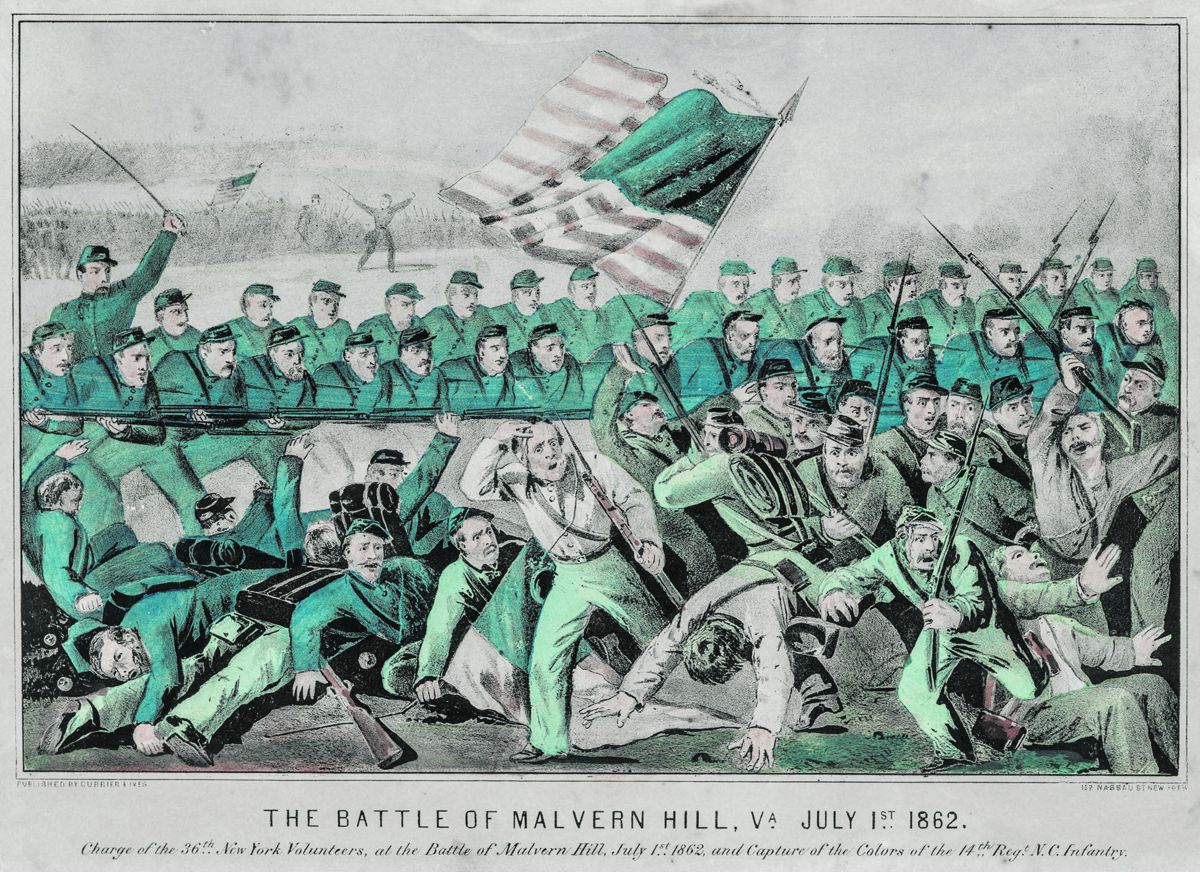
But let’s return to “old General Pendleton,” who did merit some biting commentary. The Confederates’ artillery was spread, battery by battery, among the army’s individual brigades. This system limited the army’s ability to concentrate artillery fire, a shortcoming that was especially harmful at Malvern
Hill. Gen. William Pendleton commanded the artillery reserve, several battalions comprising 20 or so batteries. What did Pendleton do with this force on July 1, when Lee’s infantryman charged against a murderous fire from Federal infantry and powerful artillery? Nothing, according to Alexander. “He reports that he could neither find Gen. Lee nor any place on the field where he could get in with his guns. His report will convict him of having practically hidden himself out all day where nobody saw him, & no orders could find him.” Alexander’s words of criticism were not reserved for these actors on the historical stage. He also had something to say about the writers of history. On one page, after explaining his intention to describe Jackson’s failings, he added: “But little has been said about this in the press. As compared with Longstreet’s alleged shortcomings at Gettysburg, nothing at all. Gen. Fitzhugh Lee, in his life of Gen. Lee, devotes pages to the latter, & does not remotely refer to the former.” This imbalance was so striking to Alexander that several pages later he raised this issue again. “But there is one thing about the accounts of Gettysburg which any one who has read some recent ones will note, & about which…I would like to say a word. Great blame is attached by some writers to Longstreet about Gettysburg. Gen. Fitzhugh Lee is a typical instance…. But little or nothing is ever said in print of this failure of Gen. Jackson just detailed. Fitz Lee’s book has not one single work about it.” Alexander’s intent was not to denigrate Jackson, and neither was it to absolve Longstreet of all faults. His aim, he said, was historical accuracy. The suppression of Jackson’s failings at Seven Days “robs Gen. Lee of the credit of what seems to me perhaps his greatest achievement. As it was, within a month of taking command he scattered all the tremendous forces concentrated for his destruction & practically deposed McClellan, the ‘Young Napoleon,’ of the Federals.” Afterwards, the Jackson of the Valley returned, and “upon every other battlefield afterward—Cedar Mountain, Second Manassas, Harpers Ferry, Sharpsburg, & Fredericksburg, to his lamented death at Chancellorsville in May ’63— made a reputation unequalled in military annals. And just to think—it was practically all done within less than 12 months.” Gould Hagler is a retired lobbyist living in Dunwoody, Ga. He is a past president of the Atlanta Civil War Round Table and the author of Georgia’s Confederate Monuments: In Honor of a Fallen Nation, published by Mercer University Press in 2014. Hagler speaks frequently on this topic and others related to different aspects of the Civil War and has been a regular contributor to CWN since 2016. He can be reached at [email protected].