
Black Powder, White Smoke
New Gun Digest & Veteran Arms
By Joe Bilby · Originally published November 2019 · p. 8
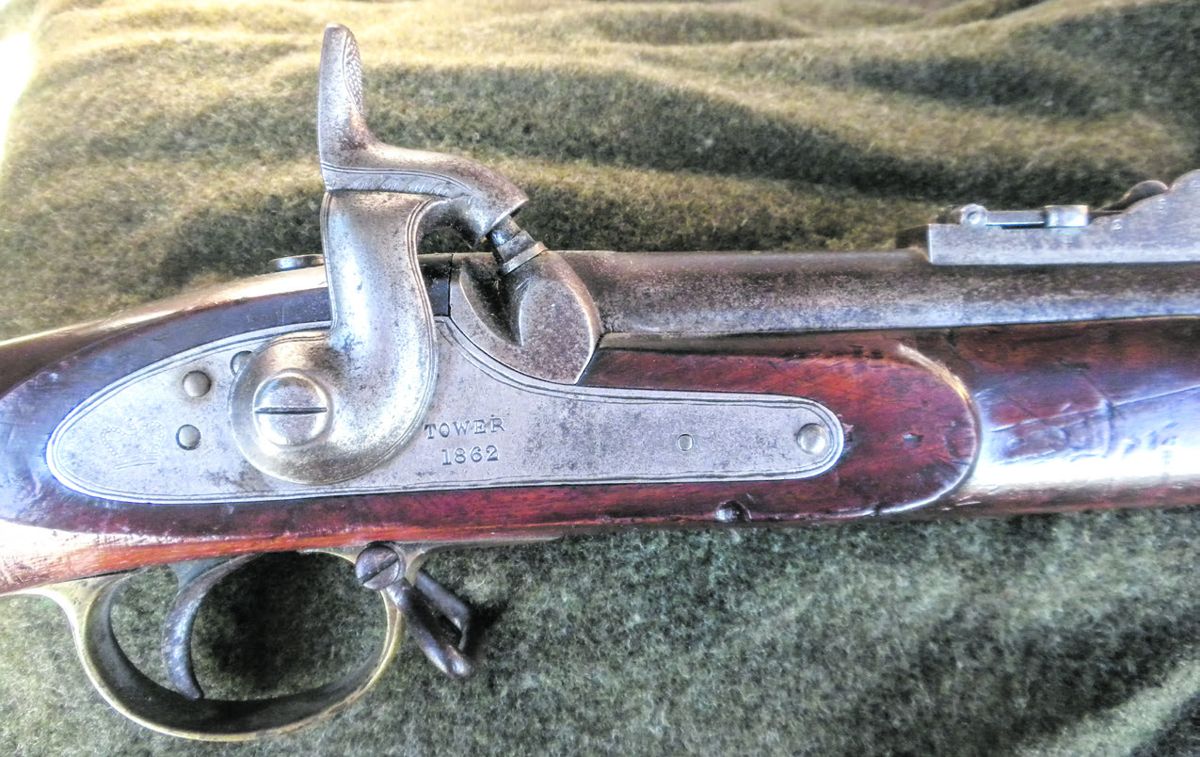
New Gun Digest & Veteran Arms Gun Digest Although I would classify myself as an historian, I admit to often falling into the pit of nostalgia. One example of that nostalgia stimulation is Gun Digest, the annual firearms publication continuously in print since 1946. Each issue covered not only the new firearms and firearms related products for a given year, but also included in depth articles on firearm’s use and history. I got my first copy of Gun Digest as a grammar school kid a decade after the initial edition but managed to acquire previous issues over the years and today have a complete collection on my bookshelf. Each year I look forward to the publication of Gun Digest, and just received the 2020 edition. The editors must have had people like me in mind this year because the current Digest is steeped in nostalgia. In addition to the usual new product announcements and reviews, there are articles on all aspects of firearms, hunting, and shooting, then and now. One I enjoyed in this issue was “America’s Twelve Greatest Shotguns,” which included my own beloved L. C. Smith double gun and the classic Remington Model 1100. Black powder related articles include a story on lever action rifles and six guns that share the same caliber ammunition, a post-Civil War innovation that has seen revivals over the years, and a black powder “Report From the Field” covering recently introduced muzzle loaders, including Pedersoli’s Whitworth and Lorenz reproductions, Pietta’s shortened “Sheriff’s Model” percussion revolvers, and Eras Gone bullet molds, producing historically accurate projectiles to use in your original or reproduction firearms. One piece that caught my attention immediately was on the Enfield P53, which provides the basics of the gun’s development and use, as well as an account of a first-time black powder shooter trying one out. Although I love Gun Digest, I give the piece mixed reviews. The author starts out with an anecdote about the Confederate surrender in 1865 that does not have anything to do with the Enfield, save for the fact that the subject is surrendering one. His assessment that the rifle musket was a potential revolutionary arm in its day due to its accuracy is correct, but the assumption that it revolutionized warfare because of that quality, a theory often espoused by past historians, is not. The idea that the rifle musket changed tactics because it gave the average soldier a gun that was accurate well beyond the range of the smoothbore musket is largely incorrect. While European armies realized the potential early on, and established extensive marksmanship training programs, the United States Army did not embrace accurate long-range shooting until after the Civil War. While astute commanders like Confederate General Patrick Cleburne, a British Army veteran, realized the advantages of the rifle musket, and sharpshooter units in both armies, perhaps most notably the Army of Northern Virginia later in the war, did indeed take advantage of the rifle musket’s attributes as a tactical tool, the overall tactics of the bulk of both armies did not change dramatically, as evidenced by Pickett’s Charge and the Union attacks at Spotsylvania and Cold Harbor. Marksmanship training for most Civil War soldiers was minimal to nonexistent. In some cases, as with the Thirteenth New Jersey Infantry at Antietam, the battle was the first time soldiers ever loaded their weapons. The P53 Enfield’s worldwide use made it the AK47 of its day, and to be fair, the historical and technical information in the article is largely correct, and save for a few minor errors; the Springfield and Enfield did not fire the same diameter bullet until the Union reduced the diameter of its Minié Ball, and prior to that change, the men of the Twentieth Maine had a problem with Springfield ammunition jamming in their Enfields at Gettysburg. The idea posited that Confederate cavalrymen preferred the Enfield Model 1861 musketoon seems unlikely, should a Rebel horseman get a chance to acquire a Sharps carbine. The author admits to having no experience with black powder arms, but he did acquire the assistance of a friend with considerable experience for his shooting test. He used a Pedersoli musketoon loaded with a Minié ball from Dixie Gun Works and fifty grains of Hodgdon Triple Se7en powder (a black powder substitute) and fired the gun at fifty and seventy-five-yard ranges, not the three hundred yard distance he cited as a typical range for Civil War soldiers. I must say, however, despite my nit-picking on the Enfield article, my nostalgia button was pressed by the 2020 Gun Digest and I can heartily recommend it to all readers interested in firearms.
Veteran Arms If you are interested in some unusual reproduction black powder firearms and gear, you might want to check out Veteran Arms, a company that not only sells to historical reenactors and traditional shooters, but also provides props for film and television projects. The Veteran Arms online catalog lists, not only the standard flintlock and percussion guns, but exotic weapons like matchlock muskets and “hand mortars.” If you want to rent a cannon for a special occasion, Veteran Arms seems to be the place to go. For more information and details, see their website at: http://veteranarms.com/eproductionMuzzleloadersandFlintlocks/VeteranArms-LLC.html. Joseph G. Bilby received his BA and MA degrees in history from Seton Hall University and served as a lieutenant in the 1st Infantry Division in 1966–1967. He is Assistant Curator of the New Jersey National Guard and Militia Museum, a freelance writer and historical consultant and author or editor of 21 books and over 400 articles on N.J. and military history and firearms. He is also publications editor for the N.J. Civil War 150 Committee and edited the award winning New Jersey Goes to War. His latest book, New Jersey: A Military History, was published by Westholme Publishing in 2017. He has received an award for contributions to Monmouth County (N.J.) history and an Award of Merit from the N.J. Historical Commission for contributions to the state’s military history. He can be contacted by email at [email protected].