
The Unfinished Fight
English Cartridge Box
By Craig L. Barry · Originally published November 2019 · pp. 10–11
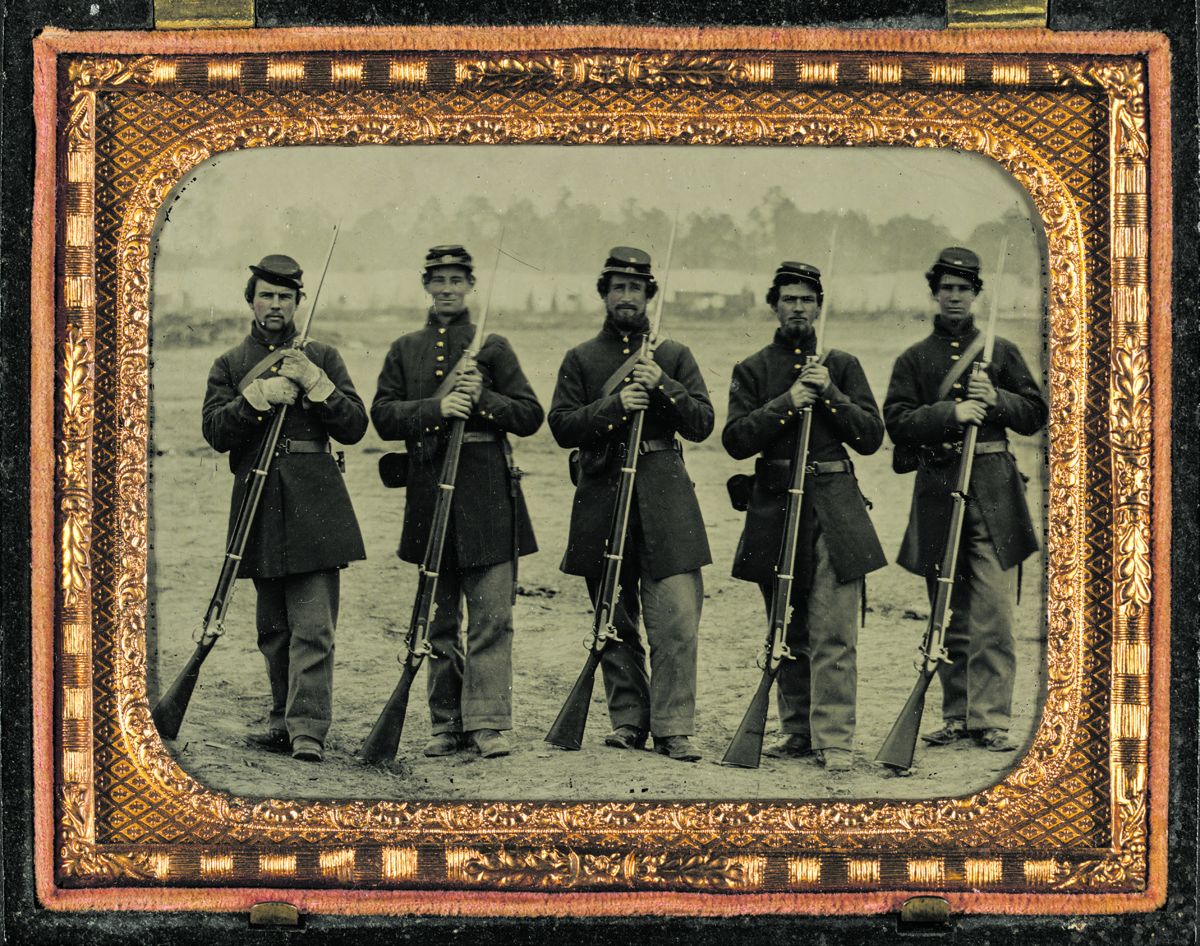
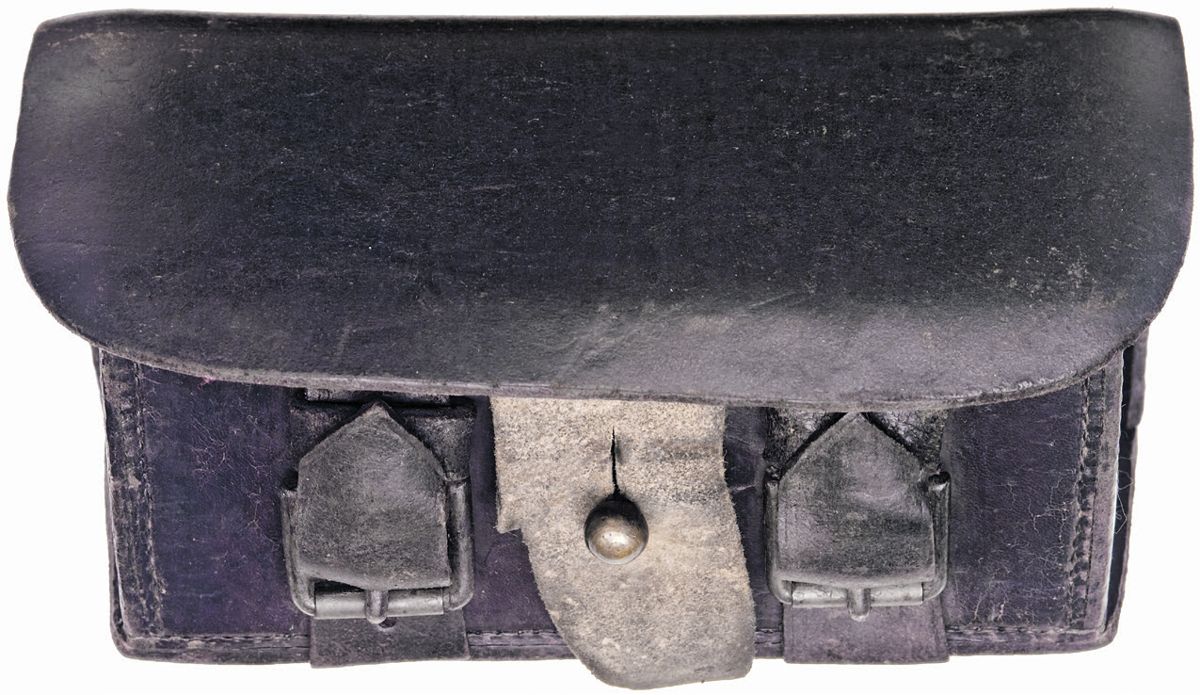
English Cartridge Box A number of the first imported English “accoutrement kits” to arrive in Savannah, Ga., in 1861 were from A. Ross & Co. The equipment was purchased by Caleb Huse, brokered through the well known Commission House of S. Isaac, Campbell & Co. of London. A bit of background on the English cartridge box is in order. First of all, cartridge boxes of domestic (US/CS) manufacture were the most commonly issued accoutrements on both sides, even in the Confederacy. Also, the notion that most imported P53 (long) and P56/58/60 Enfield (short) rifles came with full sets of English accoutrements is simply not supported by any of the existing documentary evidence. As a rule, imported accoutrements were only purchased as immediacy dictated; the imported leathers were much more common in the South where raw materials were in shorter supply. As supplies of domestically made accoutrements became available, these were issued to troops. This is not to say that all imported English accoutrement sets went to the individual Southern states or the Confederate government. For example, in several Union militias there is documented use of full English accoutrement sets issued very early in the War, specifically in Massachusetts and New York. A few regiments of (nine month) recruits from the Massachusetts Volunteer Militia received London Armoury Co P53 rifle-muskets along with full sets of English accoutrements, including bayonets, frogs, scabbards, buckle slings, and snake buckled waist belts, some of which came from captured blockade runners. The Commonwealth of Massachusetts sent buyers who reached England in May 1861 just ahead of US and CS government purchasing agents. The buyers, Francis Crowinshield and Charles McFarland, immediately entered into a contract with Archibald Hamilton, the agent for Sinclair, Hamilton & Co, to buy London Armoury P53s. They also purchased 10,000 full sets of English accoutrements at the same time. The accoutrements were purchased for the same reason as the P53 rifle-muskets, the lack of Federal equipment in mid-1861 made them unavailable to individual state militia. Confederate purchasing agent Caleb Huse was right behind the two Massachusetts buyers. In fact, Huse was waiting in the lobby to see LACo Superintendent Archibald Hamilton when the Massachusetts buyers left. The men ran into Caleb Huse on their way out, which must have been awkward. In his May 21, 1861, letter to Josiah Gorgas, Caleb Huse reported: “I propose to take from the London Armoury Company 10,000 Enfield rifles of the latest pattern, with bayonet, scabbard, extra nipple, snap cap, and stopper complete for £ 3, 16s, 6d.” There is no mention of accoutrement sets. While apparently not part of the initial Confederate government contract with Sinclair, Hamilton & Co, there were substantial numbers of Volunteer type accoutrement kits issued to Southern regiments throughout the Civil War. An accurate statement is that the vast majority of English type accoutrement sets were imported to and used by the Confederacy. After leaving London Armoury, Caleb Huse quickly located the commission house of S. Isaac, Campbell & Company of 71 Jermyn Street, London. The Isaacs had been brokering leather accoutrement sets to local Volunteer units since the late 1850s when the firm lost their lucrative contract with the British War Department over some questionable bookkeeping practices. The 2nd Volunteer movement in England began in 1859 to create an autonomous citizen army for the sole purpose of homeland defense. Many S. Isaac, Campbell & Co marked “Volunteer” boxes have been found with known CS provenance. It is necessary to make a distinction between War Department marked cartridge boxes and the “Volunteer kits” from S. Isaac, Campbell & Company.
While purportedly made from the same sealed patterns, there is a wide degree of variation between them. S. Isaac, Campbell & Co was well known for selling previously condemned leather goods that were not able to pass the strict British government inspection. The British Army could afford to be selective and reject sub-standard workmanship since they were not involved in a major war during the early 1860s, but the Confederacy was fighting for its existence and therefore more concerned with functionality than aesthetics. Another important distinction is that most domestically (US/ CS) made military cartridge boxes, except the US pattern 1839, allowed the box to be carried either with a shoulder strap or on the waist belt through two vertical loops on the back. The English cartridge box had no such provision for being worn on the waist belt and could only be carried by a shoulder strap. One reason for this was that the English accoutrements used the shoulder strap to attach the cap pouch, however the practice apparently dates back to the Colonial-era in America. On August 3, 1775, General Howe, Commander-in-Chief of the British Army in America, ordered: “…all soldiers to wear their cartridge boxes over their shoulders, and not around their waists.” His exact reasoning for the order is not documented, but henceforth all British Ordnance Department accoutrement sets featured shoulder slings (belts)
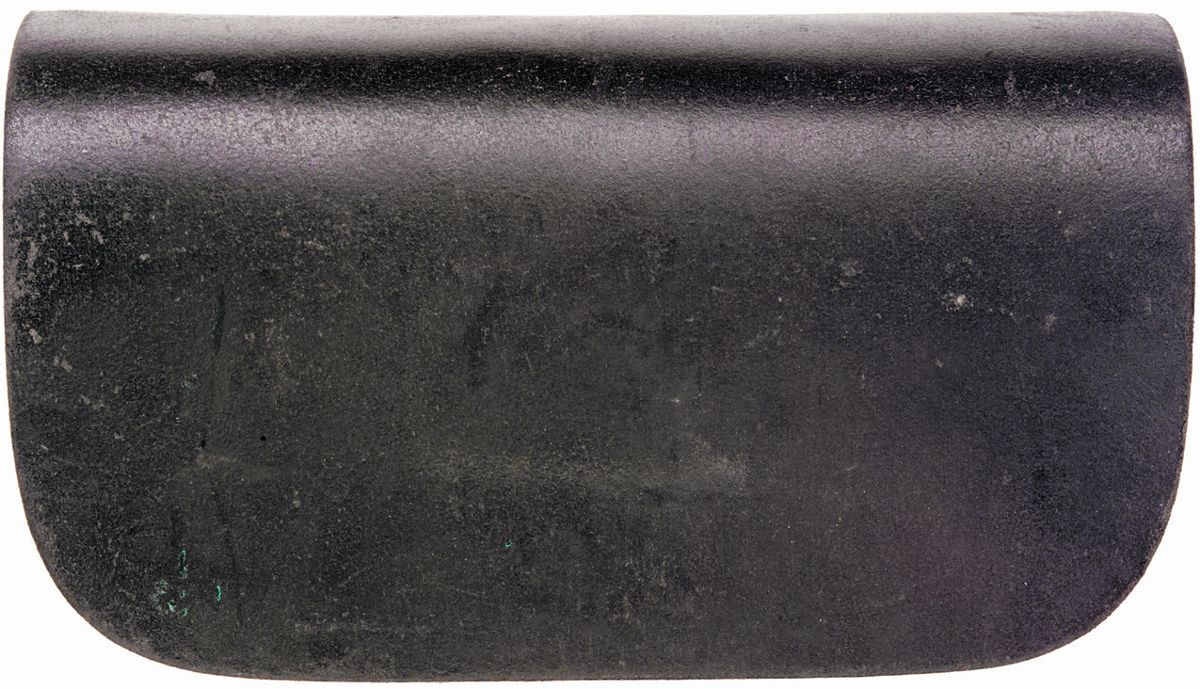
for the cartridge box. Another feature of the English accoutrements was that the cap pouch was not worn on the waistbelt. The British accoutrement set was issued with a second leather bag known as a ball bag or “expense pouch.” This piece was worn on the waist belt where the cap pouch would normally be found in the American system. To the British, a cartridge box and a cartridge pouch were two different things, a distinction not made with US/ CS accoutrements. The English cartridge box was designed to hold and transport a supply of unopened cartridge packs. The rank and file soldier took a pack of ten cartridges from his cartridge box tin, opened it up and placed the ten loose rounds in the “expense pouch.” When that was empty, the soldier would remove another ten round arsenal packet from the cartridge box, open it, and re-fill the expense pouch. As a result the British soldier taking the field with a full cartridge box and expense pouch would have 60 rounds available before needing to be re-supplied. The cap pouch on the shoulder strap had an angled back loop and was either made with white buff leather or black. In contrast, the American (US and CS) cartridge boxes were designed for twenty loose rounds to be packed in the top compartment of the tins while two extra arsenal packs of ten each were carried unopened in the bottom compartment(s). Some CS boxes had a single tin rather than two individual tins like the US patterns. Another interesting thing about the English “system” is that the .58 cal US and CS pattern boxes would not hold the taller English .577 Enfield rounds made in England, but they would fit in the older pattern US 1839 (.69) box. Augusta Arsenal “re-manufactured” hundreds of thousands of imported Enfield rounds to the American system so they could be carried in the “standard” US/ CS designed .58 cartridge boxes.
Craig L. Barry was born in Charlottesville, Va. He holds his BA and Masters degrees from the University of North Carolina (Charlotte). Craig served The Watchdog Civil War Quarterly as Associate Editor and Editor from 2003–2017. The Watchdog published books and columns on 19th-century material and donated all funds from publications to battlefield preservation. He is the author of several books including The Civil War Musket: A Handbook for Historical Accuracy (2006, 2011), The Unfinished Fight: Essays on Confederate Material Culture Vol. I and II (2012, 2013) and three books (soon to be four) in the Suppliers to the Confederacy series on English Arms & Accoutrements, Quartermaster stores and other European imports.