Critic's Corner
Confederate Biography, A to Z
By Stephen Davis · Originally published November 2019 · pp. 40–41
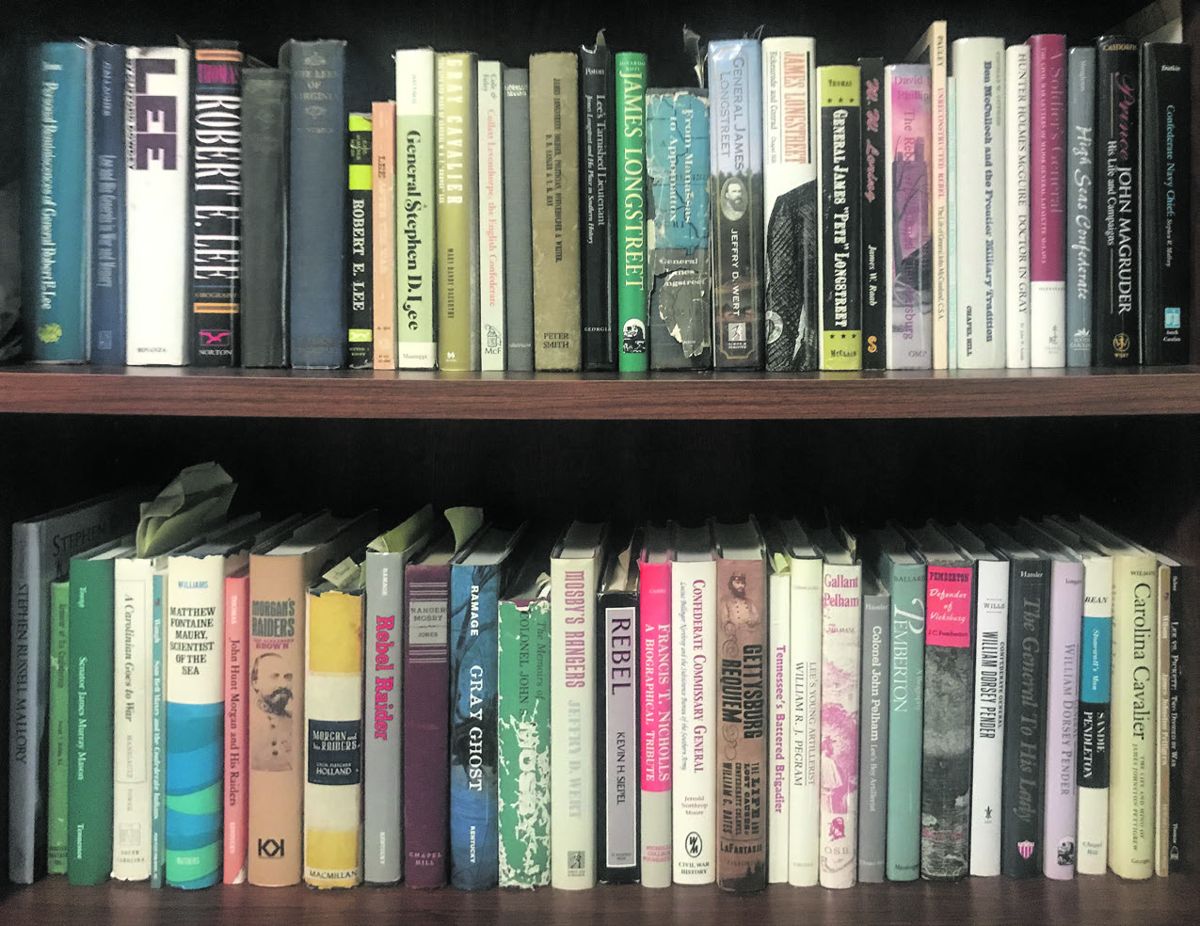
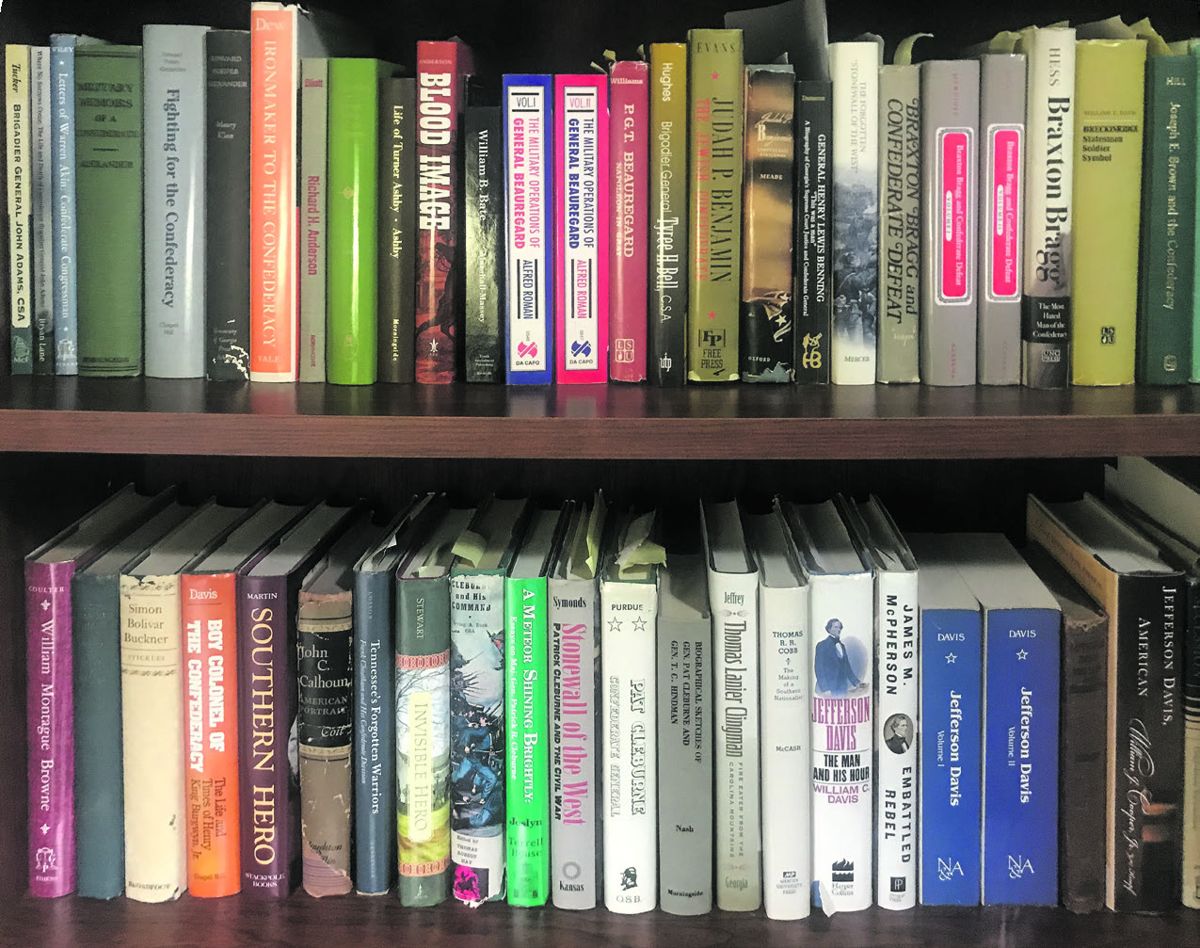
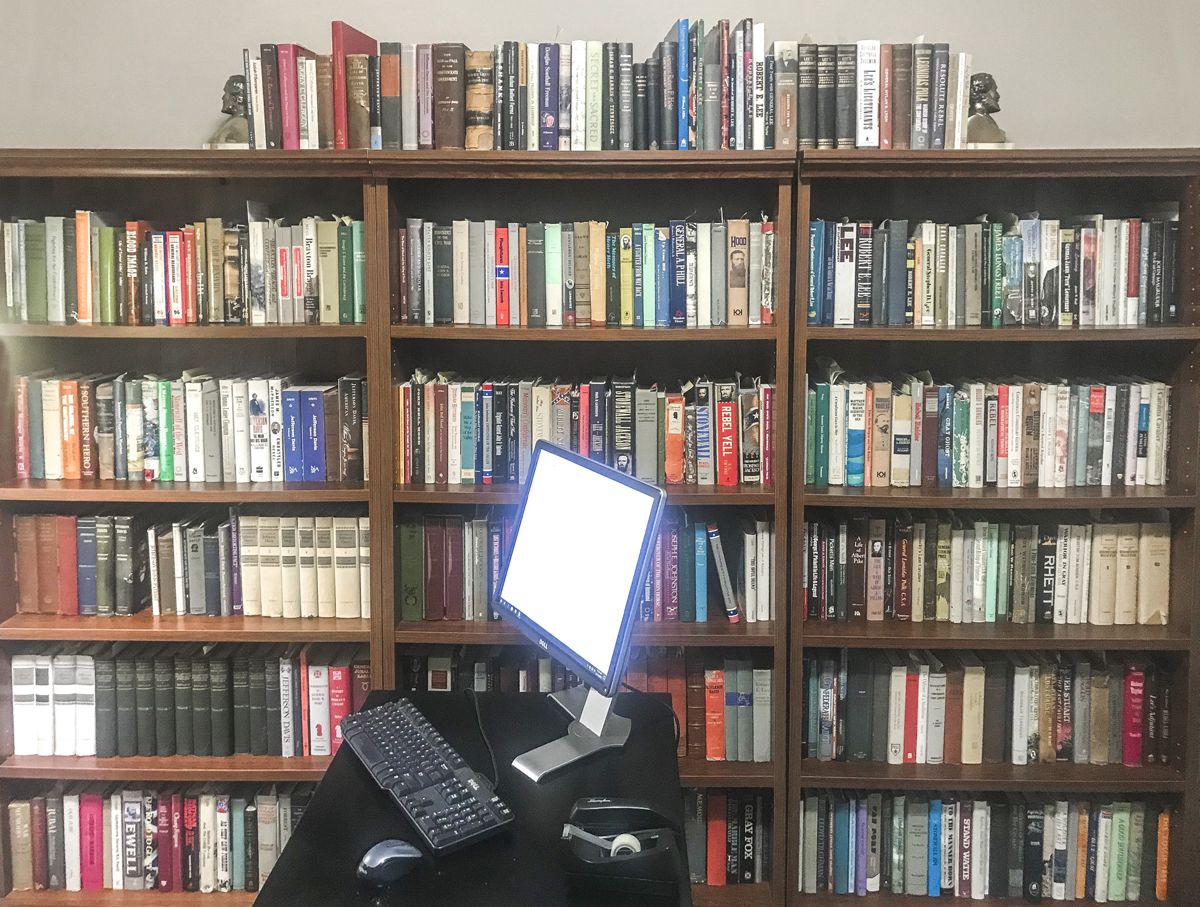
Confederate Biography, A to Z For this issue, publisher Jack Melton asked some of our regular columnists, “What’s on your rolling tray?” The idea came from Michael Shaffer, author of our monthly “The Source” feature, when he told us that he keeps a small rolling tray next to his desk to hold the handful of books that he regularly consults in his research and writing. You’ll see “What’s On My Tray” pieces from Harold Holzer, Stephanie Hagiwara, Joe Bordonaro, Wayne Wolf, and others in this issue. Well, I don’t have a tray so much as a trio of bookshelves to the left of my desk that hold more than four hundred works of Confederate biography which I’ve collected through the years. They literally range from A (Brig. Gen. John Adams) to Z (Brig. Gen. Felix Zollicoffer). The two generals that bookend my collection shared a tragic fate: both were killed in action. Adams was slain in the Confederate charge at Franklin; Zollicoffer was shot during the battle of Mill Springs, Ky., Jan. 19, 1862, when he accidentally rode into Federal lines. I dignify my entire Civil War library—I don’t know; three thousand volumes?—with the ostentatious appellation of “the Brigadier General Clement Anselm Evans Memorial Research Collection.” In this part of it, Confederate biography standouts include my first edition of Douglas Southall Freeman’s four-volume R. E. Lee (1934–35)—I paid all of $31 dollars for it fifty years ago! (All told, I am the proud owner of sixty-six books on General Lee and his family.) Let me highlight a few more of my favorites: • Dunbar Rowland’s ten-volume Jefferson Davis Constitutionalist: His Letters, Papers, and Speeches (Jackson, 1923); • Scribner’s first edition (1904) of General John B. Gordon’s Reminiscences of the Civil War; eleven biographies of Bedford Forrest (from Dr. Wyeth to Dr. Wills).
I proudly own a first edition of Douglas Southall Freeman, ed., Lee’s Dispatches: Unpublished Letters of General Robert E. Lee, C.S.A. to Jefferson Davis and the War Department of the Confederate States of America 1862–1865 from the Private Collection of Wymberly Jones De Renne of Wormsloe, Georgia (1915). Recall that this was Dr. Freeman’s first book. He had taken his Ph.D. in history from Johns
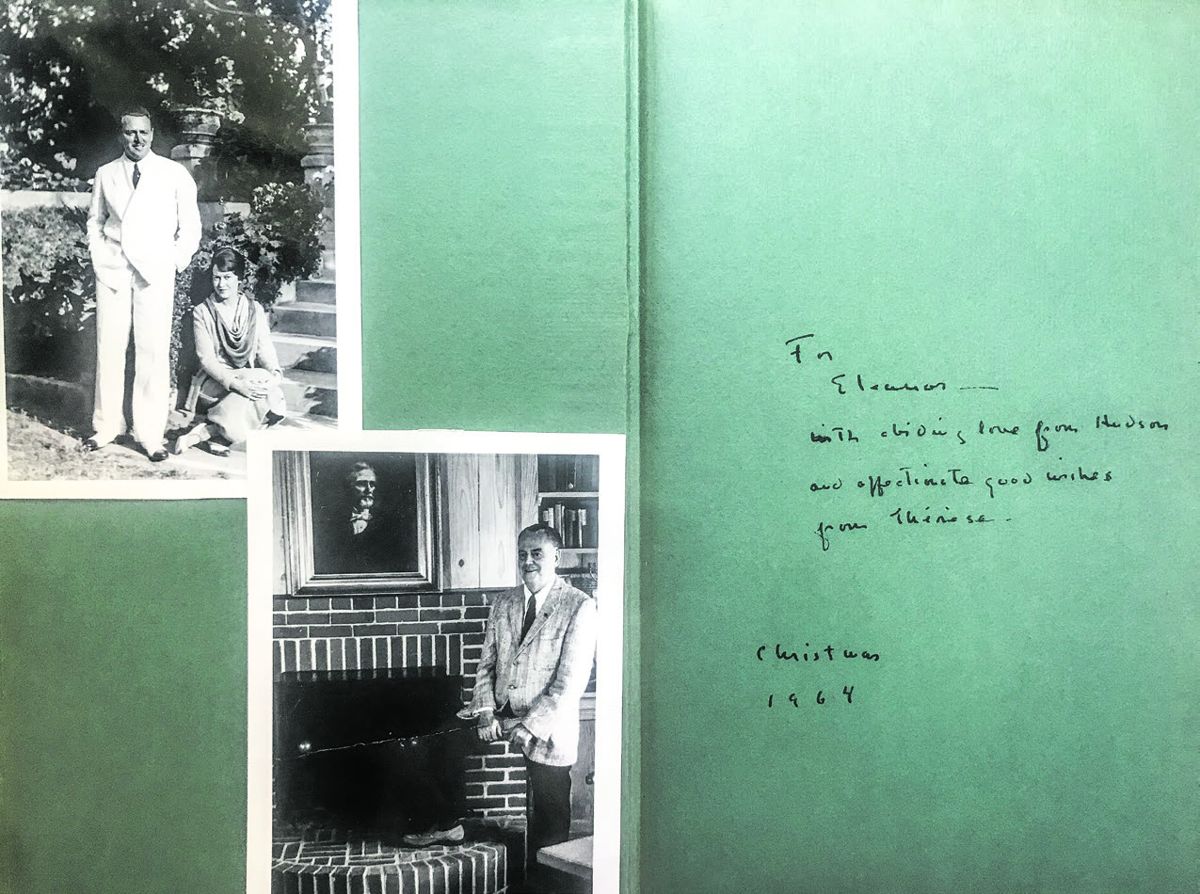
Hopkins in June 1908 at the age of 22. In 1911 he was given this editing assignment, on which he worked four years. You never know what you’ll find at a second-hand bookstore. (I wish there were more of ‘em today.) Through separate purchases I pieced together the three volumes (1955–1964) of Hudson Strode’s biography of Jefferson Davis. In the third, Tragic Hero (1964), I chanced to find that Mr. Strode had written in front For Eleanor with abiding love from Hudson and affectionate good wishes from [indistinct] Lo and behold! Also in the book was a photo of the author standing in his living room, beside his fireplace. Hanging above the mantel is—you guessed it—a painting of President Davis—the same one used on the dust jacket of Strode’s Volume Two (1959). Remember book marbling? It was a colonial-era art form that continued into the nineteenth century, as you can see from the cover of Joseph E. Johnston’s Narrative of Military Operations (1874). Then there’s the peculiarly titled Memoirs of Robert E. Lee. They’re not General Lee’s memoirs, but Armistead Long’s reminiscences about Lee. Decades ago, when in graduate school, I remember leading an undergrad class. Taking roll, I came upon the name of one Army Long. I asked the gentleman if he was descended from Brigadier General Armistead Lindsay Long, late of the Army of Northern Virginia. (He was.) I used to work with physicians. As I look at Daniel W. Barefoot’s biography of Robert F. Hoke (1996), I remember learning at a Georgia Orthopaedic Society meeting that the famed Atlanta pediatric orthopaedic surgeon, Dr. Michael Hoke, was the son of the Confederate general! Fellow bibliophiles will agree that Chapel Hill and LSU stand preeminently among publishers of Civil War books. Not to be forgotten is that a half-century ago,
Indiana University Press turned out its Civil War Centennial Series, with standout reprints such as Jubal Early’s War Memoirs (purchased in 1986 for $22) and Longstreet’s From Manassas to Appomattox ($7.50). I’ve had authors inscribe my books over the years, and seeing their signatures brings back fond memories. I had James Ramage sign his Rebel Raider in 2000 when we both were speakers at Pamplin Park’s symposium on Cavalry Raids and Guerrillas. Other presenters were Ed Bearss (Brice’s Crossroads), Jeff Wert (Mosby) and Brian Wills (Forrest). My paper was titled, “Civil War Cavalry Raids: Just What Did They Achieve?” (More on that later.) What’s even better, my Confederate biographical library continues a-buildin’. Recently I bought from Owens & Ramsey, the Richmond booksellers, Sarah Woolfolk Wiggins’ edition of The Journals of Josiah Gorgas, 1857–1878. (Thanks, Marc!) So there’s your peek into my library—testimonium amoris mei librorum!