
Through The Lens
We’ll Eat Your Mules Up (The Battle of Rocky Face Ridge – Part 1)
By Stephanie Hagiwara · Originally published May 2019 · pp. 14–15
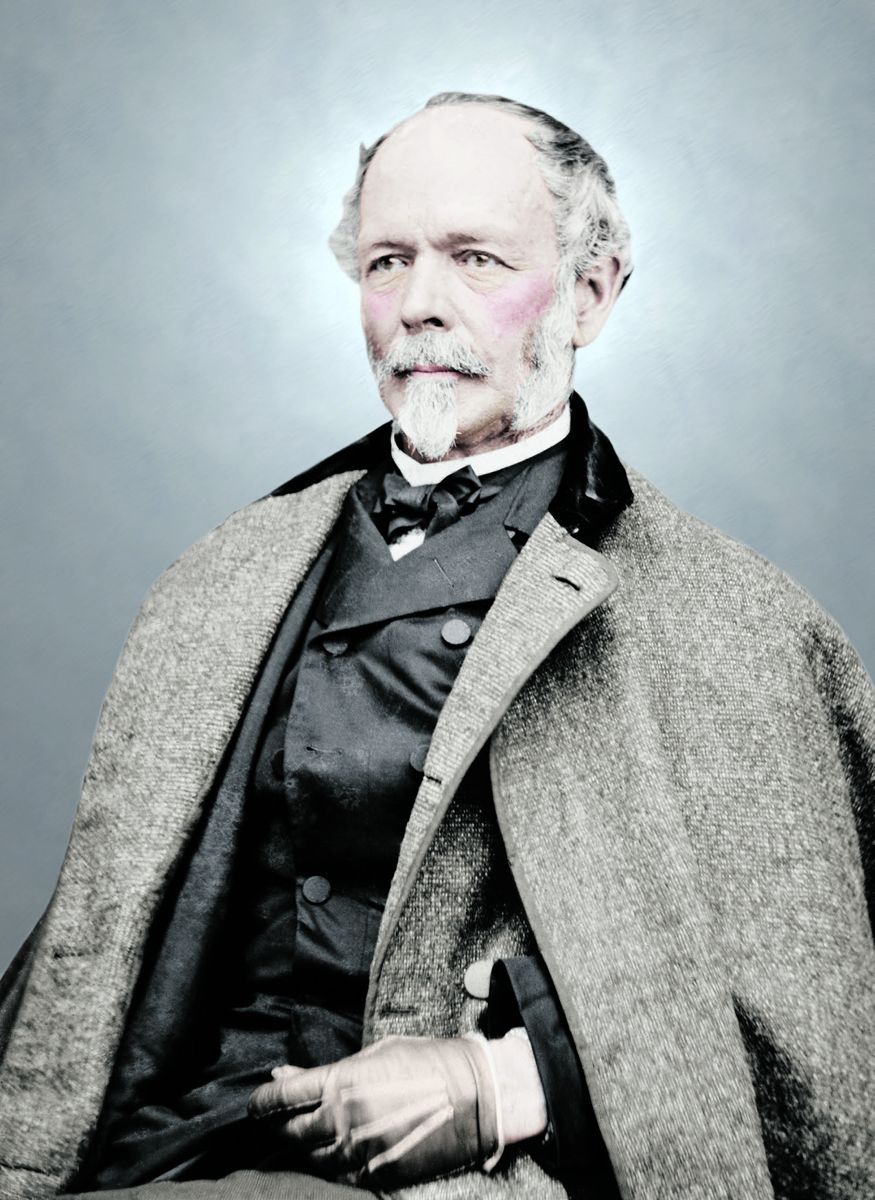
“The U.S. have the means of collecting two great armies— here & in Virginia. Our government thinks they can raise but one, that of course in Virginia.” – C.S. Gen. Joseph E. Johnston. On March 17, 1864, in Nashville, Tenn., U.S. generals Ulysses S. Grant and William T. Sherman agreed on a plan of action. Sherman would push past Gen. Joseph E. Johnston’s Army of Tennessee “to get into the interior of the enemy’s country as far as you can, inflicting all the damage you can against their war resources.” Grant would fight Robert E. Lee’s Army of Northern Virginia. Both Union armies would launch their campaigns on May 5.
In preparation, Sherman was a whirlwind of activity as he beleaguered quartermasters to stockpile the food, ammunition, and equipment required for 100,000 men and 35,000 horses and mules for two months in Chattanooga, Tenn. Railroad deliveries jumped from 79 carloads to as many as 193 a day. Still it was not enough. Civilians and non-essentials were banished from the trains. Livestock were sent “on the hoof.” Soldiers had to walk the last 12 miles. “I’m going to move on Joe Johnston the day Grant telegraphs me he is going to hit Bobby Lee,” he told one of his quartermasters, “and if you don’t have my army supplied, we’ll eat your mules up, sir—eat your mules up!” Confederate Gen. Joseph E. Johnston had taken over the Army of Tennessee after the defeat at the Battle of Missionary Ridge, Tenn. The men were demoralized and were deserting by the
George Weller Juno 11311 S. Indian River Dr. • Fort Pierce, Florida 34982 770-329-4985 • [email protected] thousands. To Johnston’s shock, C.S. Gen. Patrick Cleburne suggested enlisting slaves as soldiers and rewarding them with emancipation. Instead, Johnston adopted a policy of general amnesty for deserters, established training programs, army parades, and sham battles that drew spectators from Atlanta, Ga. Furthermore, the former U.S. Quartermaster General managed to acquire shoes, blankets, extra food, and a ration of whiskey and tobacco twice a week. “Old Joe” had “raised a new spirit into the whole mass,” wrote Pvt. Sam Watkins. Yet, the Confederates did not have a campaign plan. From his winter quarters in Dalton, Ga., Johnston had difficulty convincing the decision makers in Richmond, Va., that due to terrain and lack of local farms, it was not possible to replicate Gen. Thomas “Stonewall” Jackson’s Valley Campaign in the Tennessee / Georgia area. Unlike Sherman, Johnston could not stockpile supplies as he did not have the authority to seize control of the Western & Atlantic Railroad as it was owned by the State of Georgia. Due to mismanagement, it sometimes took 36 hours for a trainload of supplies to travel the 85 miles between Atlanta and his winter quarters in Dalton, Ga. While Sherman geared up, Johnston wrote, “I fear that the government does not intend to strengthen the army.” Lacking the troops and equipment to stage an offensive, Johnston fortified Rocky Face Ridge, the first ridge between Chattanooga and Dalton. The summit ran north-south for 10 miles, 700 feet above the valley, not more than ten to thirty feet wide at the top. Johnston’s men felled trees, built stone breastworks, and cached boulders to augment their ammunition. The railroad ran through a breach at Mill Creek Gap before descending to Dalton. By damming Mill Creek, Confederate engineers created a lake 16 feet deep in places. The Gap was topped with towering cliffs known as Buzzard’s Roost, defended with cannon and infantry. Sherman, observing the spot through a glass, considered it a “terrible door of death.” He
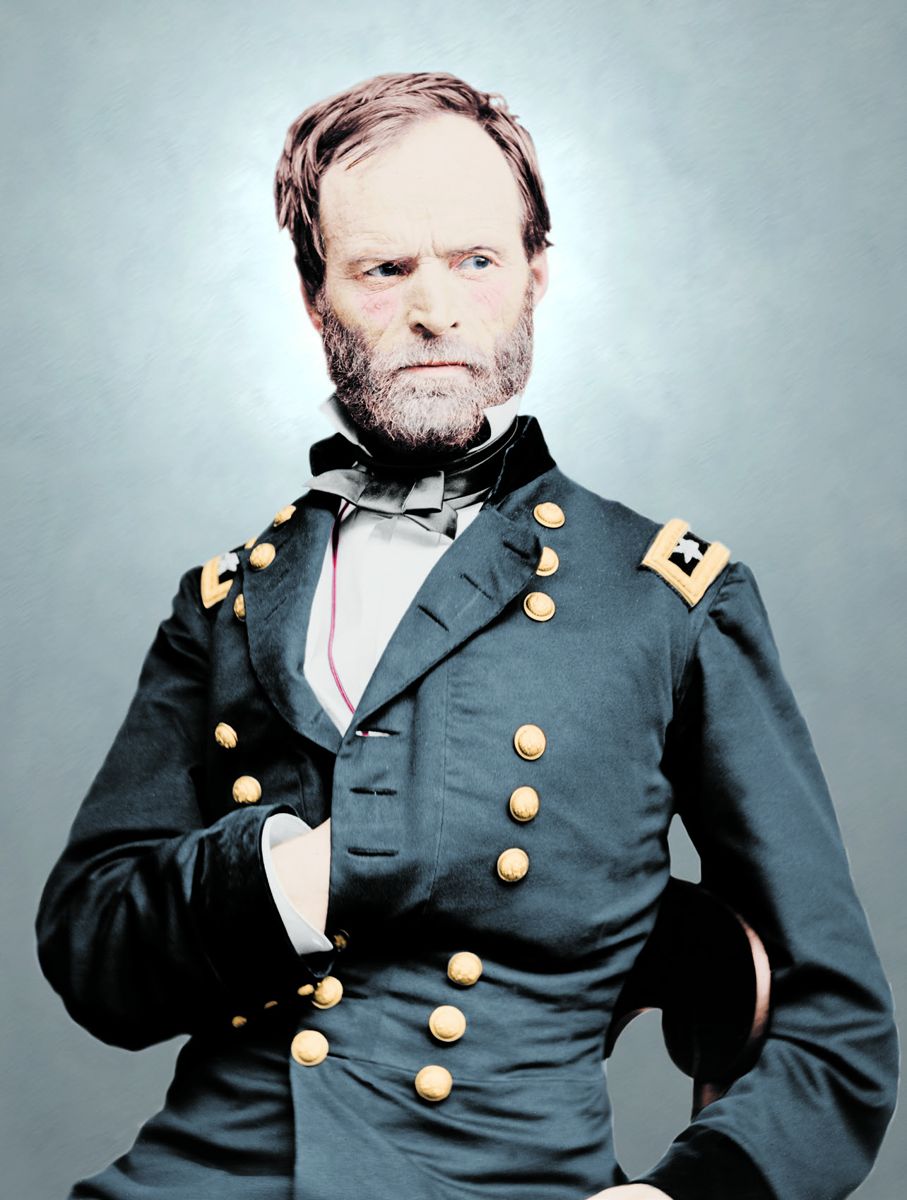
General Joseph E. Johnston, Confederate States of America, Colorization © 2013 civilwarincolor.com courtesy civilwarincolor. com/cwn. (Library of Congress) determined that he would only Face Ridge and Mill Creek Gap. pretend to go through it. At Dug Gap, U.S. Gen. John On May 1, Johnston sent the Geary’s men followed retreating officers’ wives to Atlanta. He Confederate skirmishers through reported a large number of Federal the thick woods and up the mountroop movements to Richmond. tain. There they faced a line of The response suggested that the tall cliffs, “almost perpendicular. Union troops were being moved … It was 15 or 20 feet high and to Virginia and “the activity pierced by some narrow crevicin front of Dalton must be a es we saw their skirmishers pass, deceptive demonstration.” and then their main line opened Sherman’s three armies had furiously upon us, and added to arrived at Chattanooga; Gen our confusion by sending from George H. Thomas’s Army of the top great boulders rolling the Cumberland, consisting of down the mountain side,” de60,773 men and 130 guns, Gen. scribed Lt. Stephen Pierson, 33rd John Schofield’s Army of the NJ. The Confederates held their Ohio, consisting of 13,559 men ground, four against one. As it and 28 guns, and Gen. James B. got dark, the Federals retreated McPherson’s Army of the Tenn., down the mountain. consisting of 24,465 men and 96 The diversion worked. While guns. the Confederates were kept Thomas proposed mov- busy fighting off two armies, ing his army through Snake McPherson’s army was making Creek Gap, exiting at the rear its way through Snake Creek Gap. of the Confederate position, in- Sherman eagerly awaited news of stead of attacking Rocky Face McPherson’s progress. His first Ridge. Sherman decided that report said he was five miles from McPherson’s army would be a Resaca, Ga., and no Confederates better choice to rapidly march were in sight. Sherman pounded through the Gap undetected. his fist on the table until the supThomas and Schofield would per dishes rattled, and he shouted, demonstrate south of Mill Creek “I’ve got Joe Johnston dead!” Gap at Dug Gap. The Battle of Rocky Face The Battle of Rocky Face Ridge will continue in Part 2 next Ridge was fought on May 7 – 13. month. On May 7, the two diversionary Sources: columns pressed towards Mill Govan, Dr. Gilbert E., A Creek Gap from the north and Different Valor: The Story of Dug Gap from the west. On the General Joseph E. Johnston, May 8, Thomas sent men to- C.S.A. ward the north end of Rocky Woodworth, Steven E.,
Nothing But Victory: The Army of Tennessee 1861–1865 McDonough, James L., William Tecumseh Sherman: In the Service of My Country: A Life Time-Life, Battles For Atlanta: Sherman Moves East Stephanie Hagiwara is the editor for Civil War in Color.com and Civil War in 3D.com. She also writes a column for History in Full Color. com that covers stories of photographs of historical interest from the 1850’s to the present. Her articles can be found on Facebook, Tumblr and Pinterest.