
The Unfinished Fight
Tea and Tea Substitutes
By Craig L. Barry · Originally published May 2019 · pp. 10–11
“If this is coffee, please bring me some tea; but if this is tea, please bring me some coffee.” The joke in the heading about tea and coffee was credited to Abraham Lincoln who might have retold it but he did not come up with it. While Lincoln was a tea drinker, this one was an old joke by the time he was in office; a version of the same joke also appeared in the London magazine PUNCH, but the earliest recorded use was in the published notes of the 1853 Massachusetts constitutional convention. Henry Laurens Dawes used the tea/coffee joke to set up a political debate with the Whigs over some legislation, so perhaps it was an old joke even then.
Available online at http://booklocker.com/books/9403.html Amazon.com and Barnes & Noble. Hardcover, 534 pages.
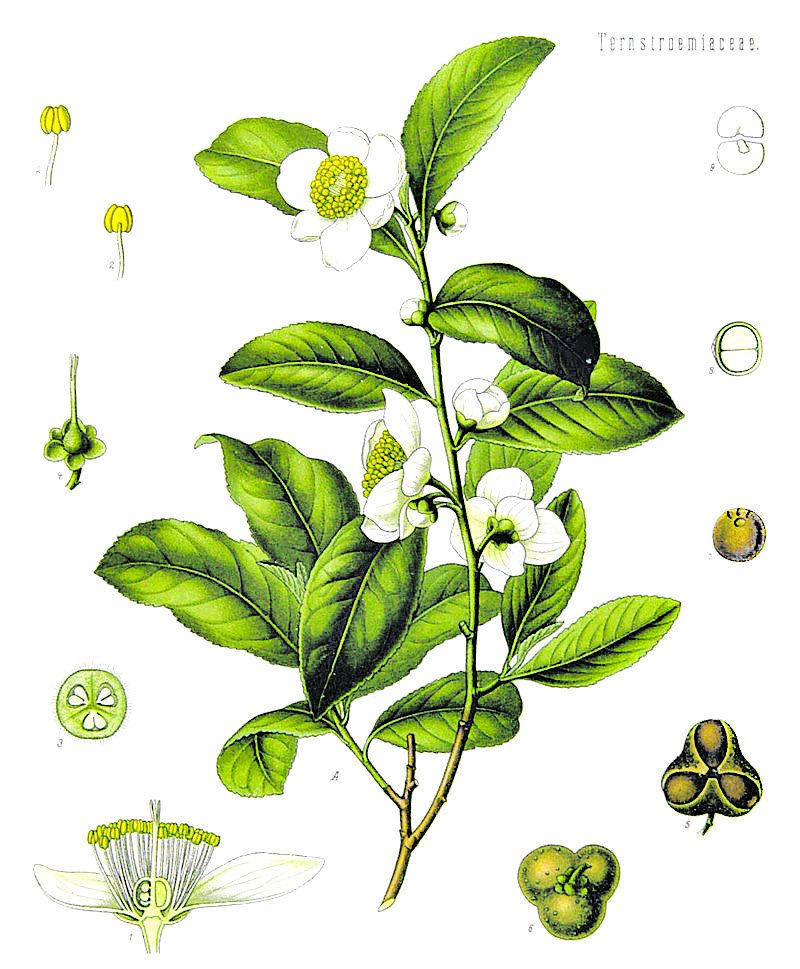
Coffee and tea were both immensely popular hot beverages during the antebellum era. Tea was the original “favorite” when America was a collection of British colonies; however, in the early-to-mid 1770s it became somewhat un-patriotic to enjoy tea to the same degree as before. South American coffee (mostly from Brazil) gained a foothold and consumption continued to rise. It increased fivefold from 1790 to 1860; by that time three pounds of coffee were imported for every one pound of tea. This figure is somewhat deceiving in that a pound of tea produces more cups of brewed beverage than a pound of coffee, but the point is the same. Tea lost its dominance as America’s favorite hot beverage to coffee and the gap between them would only get wider as time went on. In fact, the rise of coffee over tea was a worldwide phenomenon during the nineteenth century. The key to the success of coffee and tea was at least partially in the smell, appearance, and taste, but more importantly, the stimulating effects from the caffeine contained in both. To better understand substitutes, it is important to understand what was consumed to begin with. In other words, what kind of tea(s) did Americans in the antebellum Southern states drink? How much did availability change with the Civil War? What kinds of substitutes were in use and when? How were they different? Beginning with tea, New York dominated importation to antebellum America. In June 1860, the Southern port of New Orleans listed six million dollars in coffee imports, but no tea. Negligible amounts may have come in through other ports, but the vast majority of imported tea made the voyage from China to New York. Different varieties of green tea were commonly imported to America before the Civil War. According to Shelley and Bruce Richardson in A Tea for all Seasons (Benjamin Press, Perryville, KY 1996), the tea initially enjoyed antebellum and in the early years of the Civil War was most likely made from …a green tea called Gunpowder. Gunpowder has the best keeping quality of any tea made. It consists of a tightly rolled green leaf. Because of its long life, it was one of the first teas exported for the long clipper ship ride to the Americas…it was lighter and easier to store making it the favorite of frontiersmen and soldiers.
$39.
India and Sri Lanka (Ceylon) are the largest tea exporters today, but these areas were not large tea producers during the 1860s; Japanese imports to America were only a fraction of what the Chinese shipped out until much later in the 19th century. Varieties of China black teas were, of course, in evidence, but they were less common than today.
compared to the richer black teas it is most similar in taste to a mildly bitter, weak green vegetable broth. The flavor is often described as “grassy or astringent.” Green tea and black tea are from the same plant (Camellia sinensis). Green teas are the least processed form of the tea leaf; after brewing they tend to be much lighter in color than other teas. Tea was expensive, and so it was often adulterated with various other leafy plants, a fact noted by Robert Fortune during his visits to China in the 1840s. This must have been a common problem because a method of identifying the adulterant “sloe leaf” in Chinese green tea was provided in the 1863 Godey’s Lady’s Receipt Book. This is an important frame of reference for purposes of evaluating tea and tea substitutes used during the Civil War. Antebellum, every soldier on both sides in the Civil War was a civilian first. By the middle of the War, imported China tea had become a very rare commodity in the South. As with other commodities that were both expensive and in short supply, people sought substitutes. Common tea substitutes used in the Southern states were sassafras, blackberry/raspberry/ huckleberry leaf, currants, willow, sage and, “yaupon.” Yaupon is an interesting plant, a species of holly that grows in abundance around southeastern tidal regions. The substitute tea is made from roasting, then boiling the leaves and stems, then adding milk and molasses to make it palatable. The use of yaupon as a drink originated with Iroquois and other Eastern Native American Indians as part of a purification ritual that ended in vomiting, and the binomial scientific name for “yaupon” is Ilex Vomitoria. Yaupon holly is very caffeine intense and after roasting brews dark like black tea but tastes sour, strong, bitter, and awful. One cup of tea made from this plant contains the caffeine of up to six cups of strong coffee, and possibly more. Other holly leaves were also used. The Oct. 29, 1861, Charleston Mercury ran an article that suggests just how early shortages of tea were a problem. It read: Substitute for Tea – Yopon [yaupon] is excellent…but let me say that the wild thorned leaf holly is the best tea I have ever used. It would take the best of judges to tell it from the best of black tea. Fall is the time to gather the leaves. Make as black tea. Many sources state tea made with yaupon is best diluted with molasses, sugar, and cream, and if so it would take generous amounts to disguise the bitter flavor and prevent an unintended recreation of the traditional Native American vomit ceremony. Sassafras tea is a tonic made from the boiled root of the climbing weed, sassafras. It contains a toxic compound called ‘safrole’ that has been linked to liver cancer in recent years. It is possibly hazardous to consume and should be avoided both externally and internally. Some in the medical community state that, if used occasionally and consumed in small quantity, the amount of safrole in a cup of sassafras tea is not hazardous to humans. There were also period recipes calling for the sassafras blossom, rather than the root, to be gathered, dried, and boiled as a tea substitute, but why risk it? In addition, it sounds like something only a sissy or a poltroon would drink. Other herbal teas taste just as bad and are not toxic. Tea made from the leaves of blackberry, raspberry, and huckleberry seems the closest to Chinese green tea, as far as taste, smell, and color. The berry leaves are not processed beyond simply air-drying and sadly, the berries themselves are not used in the tea.
It might actually make for a tastier beverage if the berries were used, but it would not be tea anymore. The leaves from these particular plants contain about 10% tannins; when brewed the tea has the pale greenish appearance and slightly bitter, astringent quality of poor China green teas. The recipe is simply to crumble a couple teaspoons full of dried leaves into a cup of hot (almost boiling water) and steep the mixture for ten minutes or longer. Judge the readiness of the tea by the scent and color rather than any certain length of time. This brew may actually be an improvement over a few of the scrappier grades of Chinese tea, which are little more than dust and stems. Or if you want something not quite as good but still somewhat like green tea, you could follow the advice of one Southern newspaper article from January 1862, …the best home tea is (an infusion) made of good meadow hay (grass). This says quite a bit about the tea substitutes, doesn’t it? Of course, the problem with all substitutes is that they have no caffeine except yaupon and that particular plant appears to have too much. Further, just as “instant tea” tastes very little like brewed tea; none of the tea substitutes taste like Chinese green tea. Allowing that, since we are not as accustomed to flavors of the best Chinese tea(s) of the 1860s, whatever those may be, the Southern Civil War-era substitutes for it might not make much of a difference in terms of enjoyment. Craig L. Barry was born in Charlottesville, Va. He holds his BA and Masters degrees from the University of North Carolina (Charlotte). Craig served The Watchdog Civil War Quarterly as Associate Editor and Editor from 2003–2017. The Watchdog published books and columns on 19th-century material and donated all funds from publications to battlefield preservation. He is the author of several books including The Civil War Musket: A Handbook for Historical Accuracy (2006, 2011), The Unfinished Fight: Essays on Confederate Material Culture Vol. I and II (2012, 2013) and three books (soon to be four) in the Suppliers to the Confederacy series on English Arms & Accoutrements, Quartermaster stores and other European imports.