
Chambersburg Raid Scouts
By Carl L. Sell Jr. · Originally published May 2019 · pp. 9–33
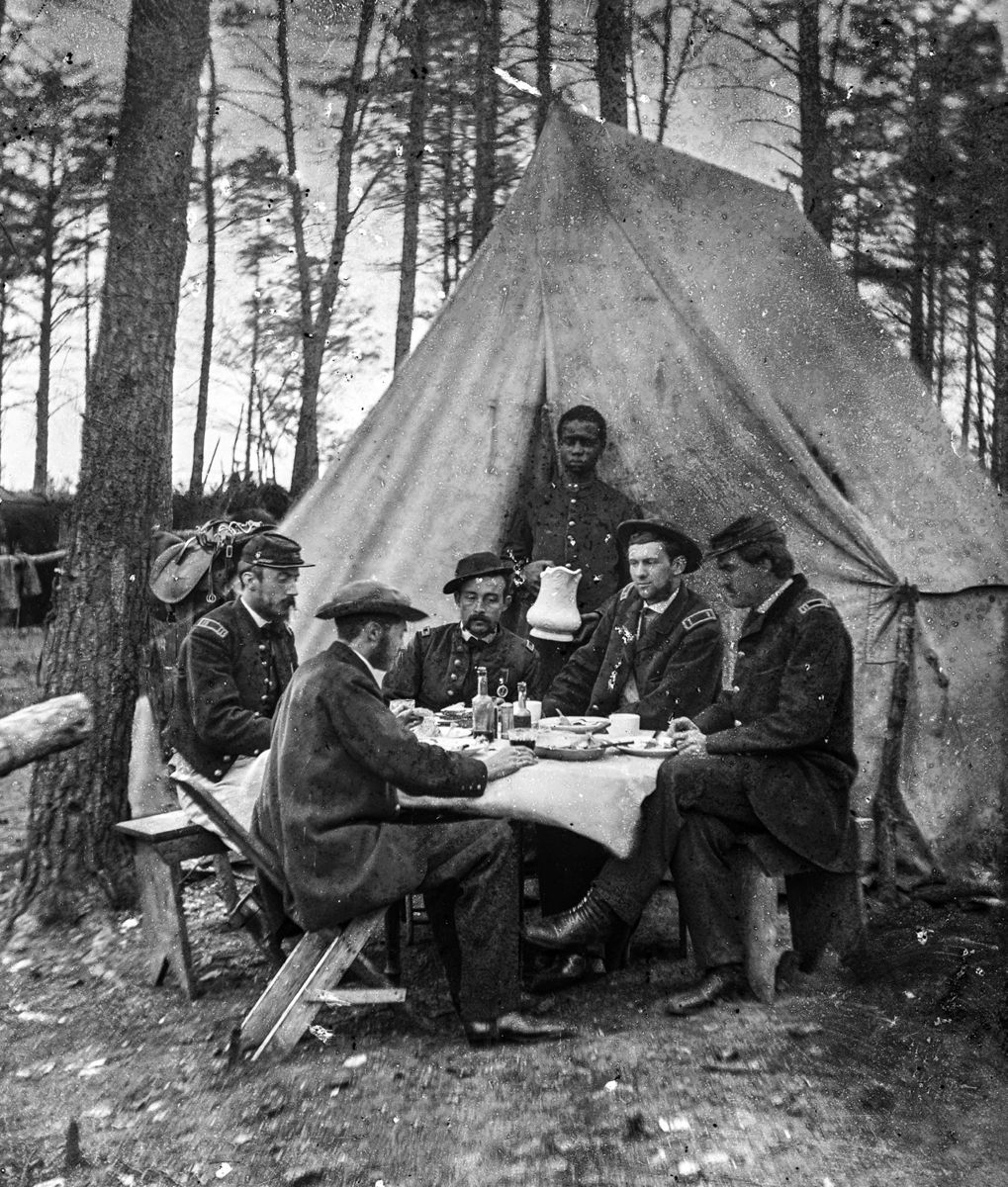
(This story contains updated information about Hugh Logan, one of Jeb Stuart’s scouts for the October 1862 Chambersburg Raid that refutes a newspaper account of his death in the war.) Just days after President Lincoln met with Major General George McClellan on Oct. 3, 1862, near Sharpsburg, Md., to urge Union pursuit of the Confederate Army after the bloody September clash along Antietam Creek, Robert E. Lee ordered Major General James Ewell Brown Stuart to invade Pennsylvania and gather information, horses, supplies, and disrupt the Union Army’s railroad supply route. It was a reprise of Stuart’s June “Ride Around McClellan” outside Richmond in June that gave Lee, who had just taken command of the Southern forces, the information he needed to launch the attack that would end the Union’s Peninsula Campaign designed to capture Richmond. Stuart’s cavalry had not been directly involved at Antietam and thus missed the War’s highest total casualty count for one day. The cavalry, along with a small infantry force, was assigned to protect Confederate artillery during the battle. Afterward, Stuart was charged with protecting the Potomac River crossings from Union cavalry between Harper’s Ferry, Va., and Hancock, Md. There were numerous skirmishes, but no large-scale action. Although McClellan showed no signs of pursuing the Confederate Army immediately after Sharpsburg, General Lee was interested in disrupting the Union’s resupplying its army. He already knew the Union government had established a circuitous railroad route to deliver ammunition and other armaments much quicker than normal wagon trains. Ordnanceladen railroad cars traveled from Washington City to Baltimore, then to Harrisburg, Penn., where they were transferred to the Cumberland Valley Railroad for delivery to Hagerstown, Md., not far from Sharpsburg. Chambersburg, Penn., was a major link in the Cumberland Valley system, so Lee decided to send Stuart to disrupt, if not totally destroy, the railroad there. One of the main targets was the railroad bridge over Conococheague Creek near Chambersburg. The Union army also maintained a large distribution center for supplies at Chambersburg. Along the way, Stuart’s men would capture horses and a limited number of local officials to be used as part of an exchange system. Lee issued orders that pillaging civilian properties was not be allowed. Stuart’s cavalry was bivouacked at the Bower, a large plantation in western Virginia near the Potomac River. Like he did before the June ride, he gave his troopers little time to prepare for another 100-mile round trip. The 1,500-hundred man contingent left early in the morning of Oct. 9 and was across the river before the fog lifted. Once again, he lined up the services of two scouts who knew the route, both coming and going. In the June ride around McClellan, Stuart enlisted the aid of two troopers from Virginia’s New Kent County to guide his party of 1,200 around the Union army east of Richmond This time, Stuart tapped two brothers from Franklin County, Penn., and another scout who was born in Poolesville, Md., to make sure he didn’t get lost. The Logan brothers, Alexander and Hugh, helped guide Stuart into Pennsylvania and Chambersburg, the county seat of Franklin County. Both were Southern sympathizers. Hugh was the most gregarious of the brothers and greeted those he knew when the column arrived in town. Hugh Logan, born in 1825, survived the war with his obituary listing him as a captain in the Confederate army. Alexander’s obituary claimed no association with the military. Another brother, Daniel, had captured John E. Cook, a member of John Brown’s 1859 raiding party who escaped during the government counterattack on the Federal Armory at Harper’s Ferry but had moved to California by 1862. Captain Benjamin Stephen White was one of Stuart’s numerous aides. Before the war, he had been a shopkeeper in Poolesville. His knowledge of that area allowed Stuart to barely escape back into Virginia using a little-known shortcut leading to White’s Ford on the Potomac just above Leesburg. From there, the cavalrymen crossed the Blue Ridge through Snickers Gap and returned to the Bower. Stuart reported to General Lee and had just returned to his command when Union forces started to move into Virginia. In Chambersburg, Hugh Logan recognized and had a conversation with Alexander K. McClure, the editor of the local newspaper and former State Delegate who was a fiery abolitionist. A lawyer, he also had successfully defended Hugh in a kidnapping case. That probably helped save McClure from becoming one of Stuart’s prisoners. Another might be the fact that the Southern horses enjoyed McClure’s corn field while their masters drank coffee, ate bread, and smoked cigars inside his farmhouse. The raiders also left with 10 of McClure’s horses. Years later, McClure was quoted in a newspaper article as saying that despite the interval of torrents of rain, the work of replenishing the Confederate army with boots and clothing, arms and ammunition from the town’s public warehouses and private stores went on without intermission. No outrages were committed and no property was destroyed in mere wantonness. In the main the attention of Stuart’s cavalry was directed toward the horse stalls of the farmers and the stables throughout Franklin County were swept of all the best animals they contained. Many southern riders helped themselves at warehouses that contained uniforms, equipment, and weapons. One report said they appropriated 700 muskets, 400 pistols, and 468 boxes of ammunition. Many of the boys left with new boots. The railroad depot house was burned, along with the warehouses and roundhouse. The bridge over the creek escaped destruction, apparently because the raiders believed local reports that it was made of iron. The wooden structure was burned during the Gettysburg campaign in 1863. Hugh and his wife, Mary Laurette Martin Logan, already had seven children when the war started, two girls and five boys. Hugh lived until 1898 and is buried in Woodstock, Va., along with his wife, who died in 1915. Hugh was reported by the New York Herald on Jan. 1, 1864, as having been captured in Woodstock, Va. The Cleveland Plain Dealer said that Logan was surprised while eating at the home of a farmer and made an attempt to escape. He was wounded by a pistol ball and gave himself up. The Trenton State Gazette said he was wounded in the right arm and thigh. The paper called him a “regular outlaw” and deemed his capture as being of great importance. The Philadelphia Inquirer reported in its Oct. 10, 1915, edition, quoting McClure, that Hugh Logan had been killed in one of the war’s last skirmishes. In reality, he had been a coach maker before the war and a merchant afterwards. Little is known about his younger brother, Alexander (1832–1900), who died at Dayton in Rockingham County, Va. He and his wife, Sarah Wolfinger Logan (1829–1901) had five children, three girls and two boys. White led Stuart’s column to safety on Oct. 12 when he directed the force along the shortcut from the Barnesville Road to the Chesapeake & Ohio Canal towpath that parallels the Potomac River. They crossed the Darnestown Road, then went between a creek and a quarry to a point on the towpath just north of White’s Ford. Union cavalry, infantry, and artillery were hot on the Confederates’ heels at that point. Helping the escape was a ruse by Colonel Rooney Lee that convinced the 99th Penn. Inf., made up of raw recruits, that it was about to be overwhelmed by a superior force. White was born in Montgomery County, Md., on March 11, 1828. He married Sarah Ellen Nichols
White on February 27, 1851, in Montgomery County and they had three children before Sarah died in 1856. White then married Mary Elizabeth Mead White on Dec. 6, 1858. The union produced five more children, four girls and a boy. Elizabeth died Feb. 11, 1897, and is buried in Union Cemetery in Leesburg, Va. White joined the Confederate army and was commissioned a lieutenant in the cavalry on Nov. 16, 1861. After the Chambersburg Raid, Stuart sent White to Richmond in charge of prisoners captured during the mission. He was permanently transferred to Stuart’s staff in October 1862 and served as a scout in Loudoun County and surrounding areas on both sides of the Potomac. White was seriously wounded in the neck at Brandy Station in June 1863 but continued on in the Gettysburg campaign. On the way back, McClure claimed he ran into both White and Hugh Logan in Chambersburg. After returning to Virginia, Stuart put White in charge of a horse infirmary on the Tye River, halfway between Charlottesville and Lynchburg. In January 1864, he reported back to Stuart’s staff and was sent on a mission to cooperate with Colonel John Singleton Mosby’s Forty-Third Battalion to collect cavalry arms, particularly carbines, which had been captured from the enemy. At the end of the war, White was paroled as a major in Winchester on April 24, 1865. He then lived and worked in Baltimore before moving back to Montgomery County in 1883. Just two days after Stuart’s force returned to Virginia, Union Private Samuel W. North, from Mercersburg, stationed with Co. C, 126th Penn. Inf., near Sharpsburg, wrote this letter home: We have been most crazy on account of the rebel raid into Franklin Co. The idea of 2,500 cavalry passing through one end of our lines capturing horses and clothing, passing around
New
Civil War Artillery Book New 392 page, full-color book, Civil War Artillery Projectiles – The Half Shell Book. For more information and how to order visit the website www.ArtillerymanMagazine.com or call 800-777-1862. $89.95 + $8 media mail for the standard edition.
the whole army and then unmolested going back into Virginia at the other end of our lines is the most ridiculous slur on our Generals and army ever heard of… It would be hard to describe the effect it has had on the 126. The Chambersburg boys were wild. They say they don’t blame the rebels but give them credit for the way the thing was accomplished and for the way they treated our people, but they curse our officers and the way the army is commanded.” Young lieutenants on Stuart’s staff, Channing Price and Chiswell Dabney, wrote their mothers telling of the woolen socks, overcoats, pants, coats, and boots they were able to obtain. One resident told a newspaper reporter that the scene at the warehouses “looked like a dressing room. After the war, the Cumberland
Valley Railroad extended south to Hagerstown in 1873, and, in 1882, connected to the Shenandoah Valley Railroad from Hagerstown to Roanoke, Va., making passenger and freight service available from New York City to Roanoke. Carl Sell has written a book updating information about Jeb Stuart that includes proof that he communicated with Richmond during his ride to Gettysburg in 1863. All proceeds from the book are earmarked for the preservation of Stuart’s statue on Commonwealth Avenue in Richmond that recently was restored by the StuartMosby Historical Society. Sell also has written books about his great grandfather and great uncle, both of whom survived Pickett’s Charge. He can be reached at [email protected].