Battle of Hampton Roads Commemorated at Mariners’ Museum’s Monitor Center
By Bob Ruegsegger · Originally published May 2019 · pp. 26–27
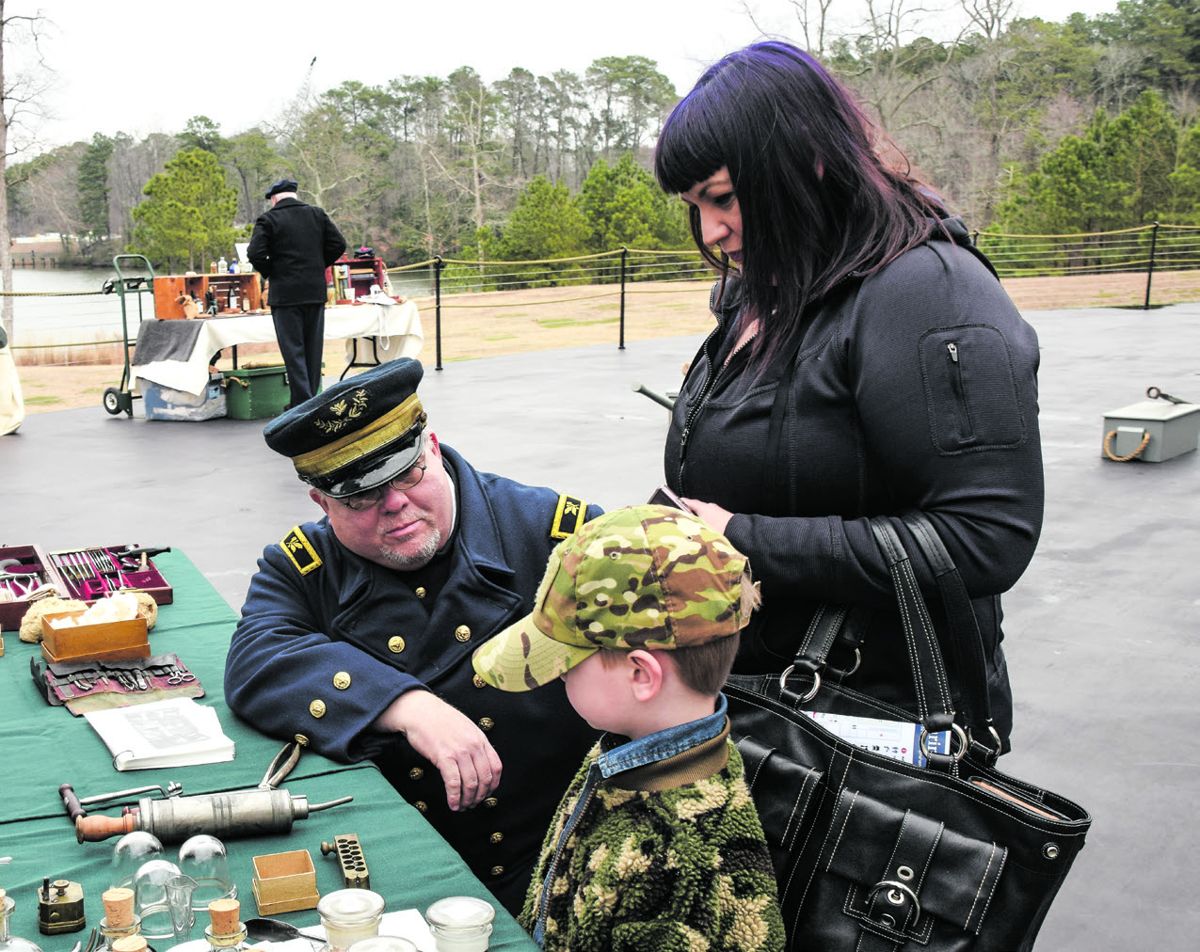
The 157th anniversary of the Battle of Hampton Roads was commemorated at the Mariners’ Museum’s Monitor Center on March 9th. Reenactors, interpreters, lecturers, and museum staff welcomed visitors to the Monitor Center to reflect upon a pivotal episode in American history that forever changed naval warfare. Two ironclad warships, the CSS Virginia and the USS Monitor, dueled each other and fought for
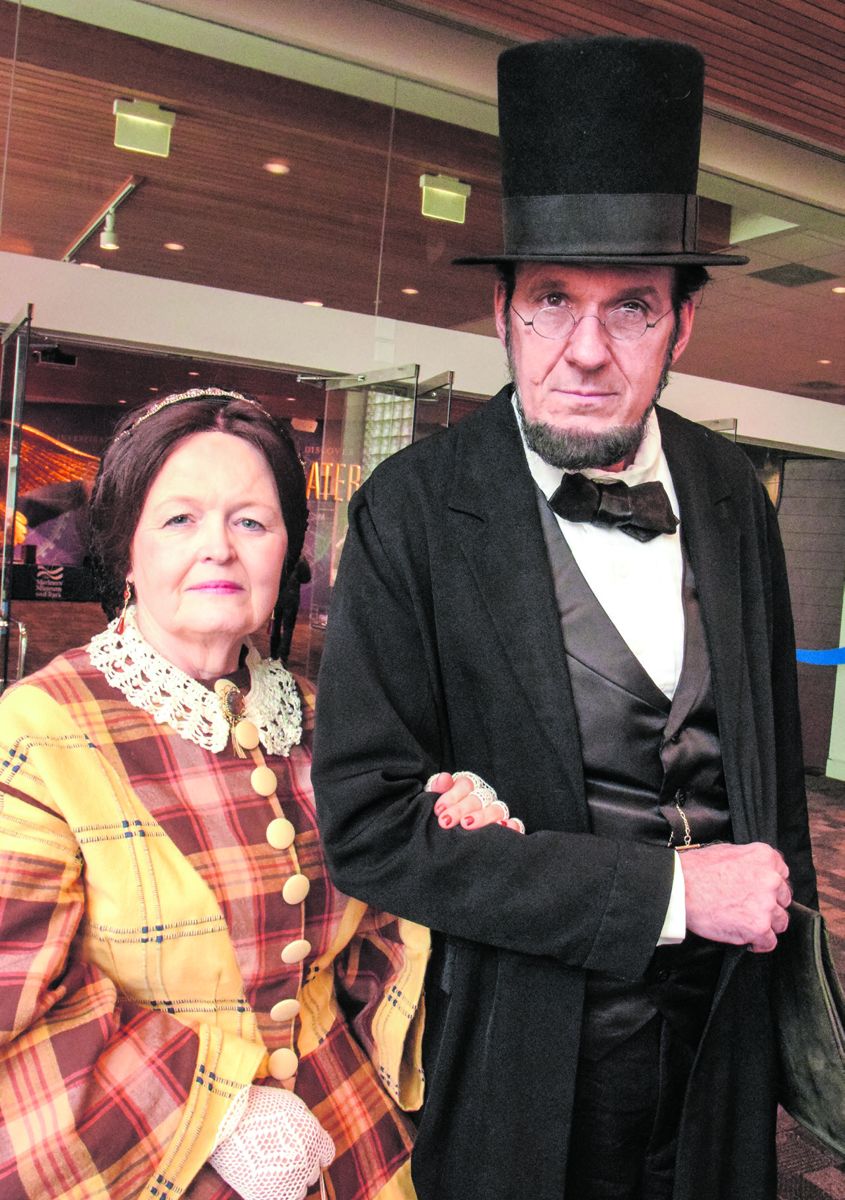
George Buss as President Lincoln “Some folks say it was a draw because the ships withdrew, but the fact that the Merrimac [CSS Virginia] did not occupy Hampton Roads after the battle was significant,” observed Lincoln. (Bob Ruegsegger)
the control of Hampton Roads early in the Civil War. The Monitor Center embraces a plethora of artifacts and exhibits that focus on the development of both ironclads and the battle’s particular significance to the Hampton Roads area, Virginia, and American history. On March 8, 1862, the Confederate ironclad CSS Virginia, on her trial run, steamed out of the Elizabeth River, into Hampton Roads, and began attacking the Union ships. As the tide dropped, the CSS Virginia withdrew back into the Elizabeth River to refit. The next day, the ironclad CSS Virginia steamed into the harbor to finish off the Union fleet. The Union concern was that if the CSS Virginia completed the task of destroying the Federal fleet, there was nothing to stop the Confederate warship from sailing out into the Chesapeake Bay, then up the Potomac River to attack Washington, D.C.—potentially terminating the war in favor of the South. On the evening of March 8, after the CSS Virginia had withdrawn, the USS Monitor steamed into Hampton Roads, just in time to protect what remained of the Union fleet. The Monitor battled the Virginia to a draw, and was called “the little ship that saved the nation.” “Every March 9th we try to commemorate the fact that the Monitor performed that service to our nation,” said Howard H.
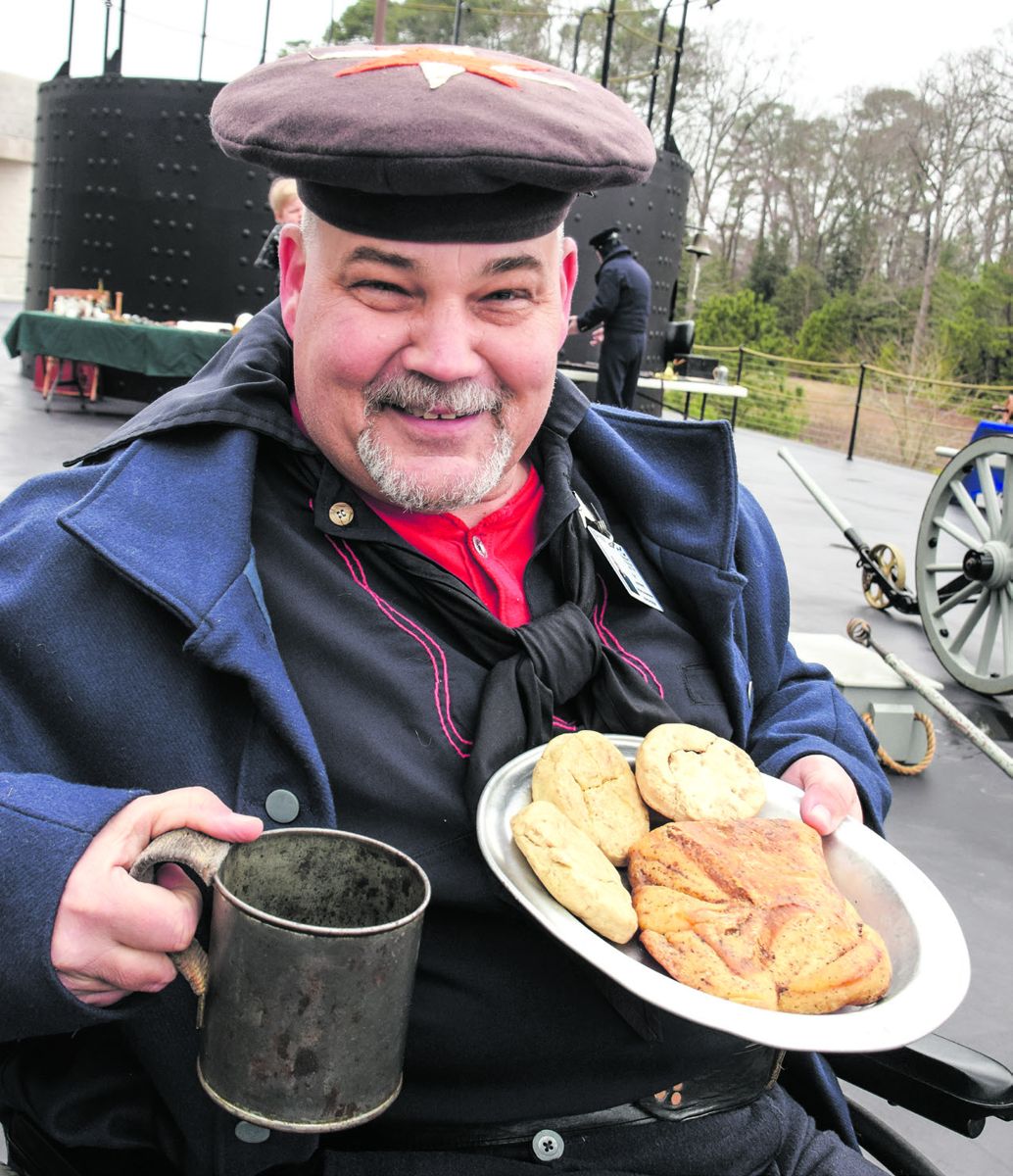
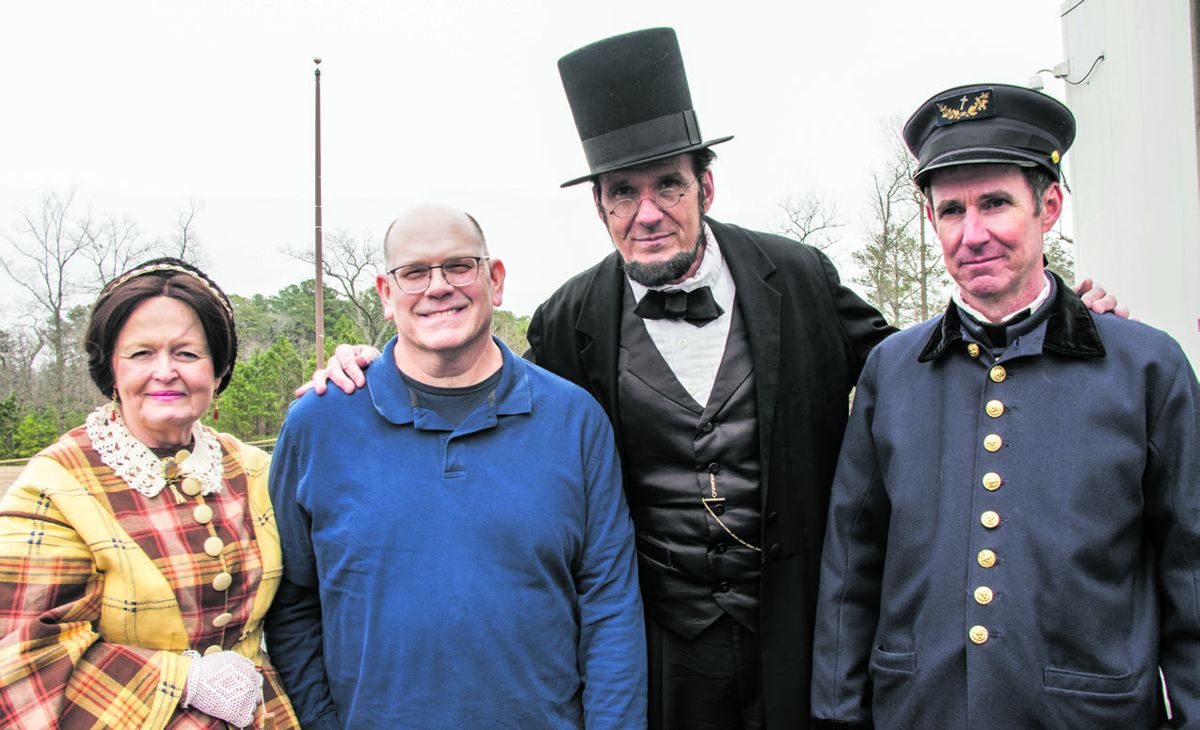
Hoege III, president and CEO of the Mariners’ Museum. Hoege characterized the quality of interpretation at the event as “fantastic.” He cited a variety of “community partners” as contributors to the annual event, including the Fort Monroe Authority, Casemate Museum, and the Yorktown Historical Society. “Our local partner, NOAA, has an office right next door to us. We have Newport News Historic Homes with us,” said Hoege. “This is really a community effort even though we’re focused on the Battle of Hampton Roads.” While most interpreters who participate annually are regional, there is one very notable exception, George Buss. He resides in Freeport, Illinois, “Lincoln Country,” when he’s not publicly engaged in portraying Abraham Lincoln. For 15 years, Buss has been “sharing the Lincoln legacy” as a costumed interpreter with Mariners’ Museum visitors during the Battle of Hampton Roads event. This year Buss and his wife Mona portrayed the first couple, President and Mrs. Lincoln. “Some folks may remember this as the Battle of the Ironclads. It changed the course of United States history so it’s worthy to be remembered,” said Buss [as Lincoln]. “Folks sometimes confuse a commemoration with a celebration. This is not a celebration,” noted Buss. “This is a time to remember who we are, where we’ve come from, and that government, that last best hope of democracy on Earth, still exists.” George Buss, as President Lincoln, has favorably impressed museum staff members, visitors, and other historical interpreters. Wisteria Perry, manager of communication and community outreach for the Mariners’ Museum, has been among the George Buss admirers for years. “I absolutely love him. I love him so much that I actually took him out to several schools here in Newport News,” said Perry. “He did multiple presentations with fourth graders. It was a phenomenal thing,” she said. “They were just starting their Civil War section so it was an introduction.” Kurt Eberly, an interpreter with the Tidewater Maritime Living History Association, had an opportunity to interact with George Buss as President Lincoln aboard the replica of the USS Monitor constructed by the Apprentice School at Newport News Shipbuilding on the Monitor Center grounds. “The Lincoln that the Mariners’ Museum invites from Illinois is the best Lincoln interpreter that I’ve ever seen,” said Eberly. “He’s the right age. He’s the right height. He knows everything about Lincoln. He’s has the accent. The outfit is perfect,” said Eberly. He’s just like a Lincoln brought back to life. It’s amazing.” On a number of occasions, President Lincoln came to Hampton Roads during the Civil War. When the President arrived at Fort Monroe on May 6, 1862, the CSS Virginia and USS Monitor were still in contention for control of Hampton Roads. “He stayed for about a week in May of 1862 at Fort Monroe in Quarters Number One visiting our Union stronghold at Fort Monroe,” said Fort Monroe Park (Bob Ruegsegger)
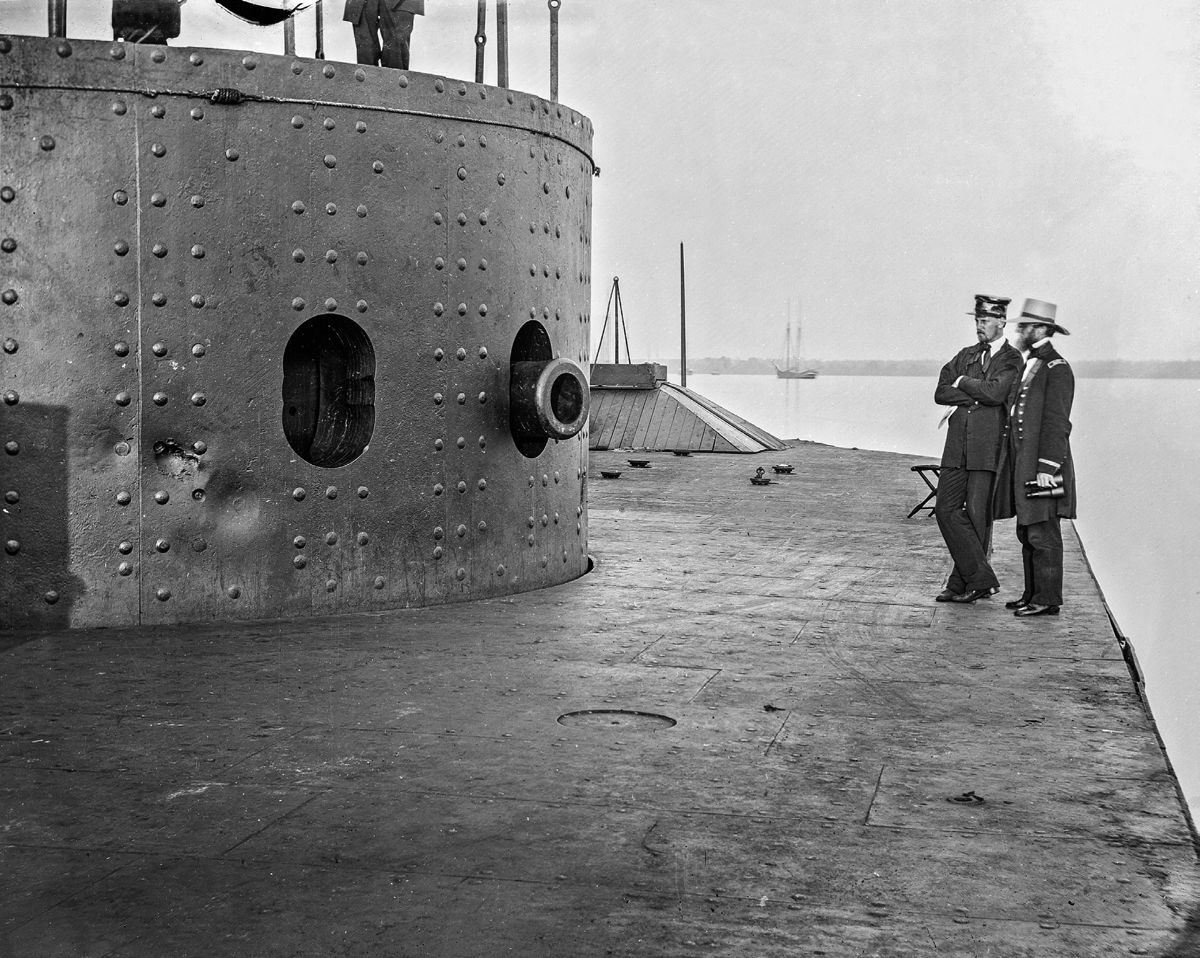
Ranger Aaron Firth. “He was planning an attack on Norfolk to recapture the Gosport Navy Yard.” Lincoln met with Commodore Louis Goldsborough and General John E. Wool to plan and launch an amphibious landing at Ocean View to capture Norfolk and the Navy Yard. The plan proposed by the President worked. It deprived the Confederates of the Navy Yard, and it provoked destruction of the CSS Virginia by Confederate forces. President Lincoln returned to Hampton Roads in February 1865 aboard the steamboat River Queen to meet with Confederate representatives at the Hampton Roads Peace Conference. “It was right in the harbor off of Fort Monroe as well,” Firth noted. “It was unfortunate for us that the peace negotiation didn’t come to fruition,” he said. “They were definitely trying to find a way.” Lincoln’s primary objective in prosecuting the war had been to preserve the union. Confederate representatives, as a condition of peace, insisted that the Confederacy must be recognized as an independent state. President Lincoln refused to accept that provision, and the war continued for two more months. A presidential visit is indubitably the highlight of any commemoration. The Battle of Hampton Roads Commemoration proved to be no exception. Interpreter George Buss brought the 16th President to life for visitors, living historians, and museum staff members. “The things that I admire most about President Lincoln were his compassion, his political savvy, his intelligence, and his kindness to people,” said Mona Buss who interpreted Mary Todd Lincoln at the event. Bob Ruegsegger is an American by birth and a Virginian. His assignments frequently take him to historic sites throughout Virginia, the Mid-Atlantic, and the Southeast. His favorite haunts include sites within Virginia’s Historic Triangle—Jamestown, Yorktown, and Williamsburg. Bob served briefly in the U.S. Navy. He is a retired educator and has been an active newspaper journalist for the last twenty years. (Library of Congress)
The Monitor and Merrimac [CSS Virginia]. Artist: J. O. Davidson. Published by L. Prang & Co. Boston, 1886. CSS Virginia on the left and the USS Monitor on the right. (Jack Melton)