
Black Powder, White Smoke
Old Lube New Again, Pedersoli Whitworth Gear, NJ Rifle Musket
By Joe Bilby · Originally published March 2019 · p. 8
Old Lube New Again, Pedersoli Whitworth Gear, NJ Rifle Musket Beeswax Returns In my December 2018 column, I wrote about problems British troops had during the Sepoy Rebellion in India when their Enfield P53 rifles fouled up so badly after a few shots that reloading became difficult and at times impossible. After analysis, British ordnance experts decided that the problem was traceable to tallow used with beeswax as a bullet lubricant. The tallow’s reaction to the intense tropical heat expanded and hardened it. The problem was solved by eliminating the tallow from the formula and using pure beeswax. Reader and SUV expert rifle musket shooter Dick Denney took the story to heart and began to experiment with using beeswax as a bullet lubricant, leaving out other substances. He reported that: “The best mix I found was to cut a cube of beeswax one-inch square and add five drops of mineral oil, stir and pour into a wax paper lined large bottle cap for dipping. It improved my scores and I am certain that I am not becoming a better shot on my own.” So, although we have plenty of effective bullet lubricants to pick from today, if you want to be a true traditionalist, and maybe even improve your shooting a tad, you might want to try beeswax as a retro lubricant.
Pedersoli Whitworth Gear Keeping with the British theme, Buffalo Arms Company is now offering Whitworth hexagonal paper patch cast bullet molds for the Pedersoli Whitworth reproduction. The mold, which uses Pedersoli bullet mold handles, casts slugs in .442 inch diameter weighing 556 grains. It is priced at $223.39. Buffalo is also offering hexagonal felt wads for the Pedersoli Whitworth. They are .451 inch diameter and .236 inch thick. A box of 200 wads costs $39.79. For more on these and other Buffalo Arms offerings check out the company’s website at: https://www.buffaloarms.com/.
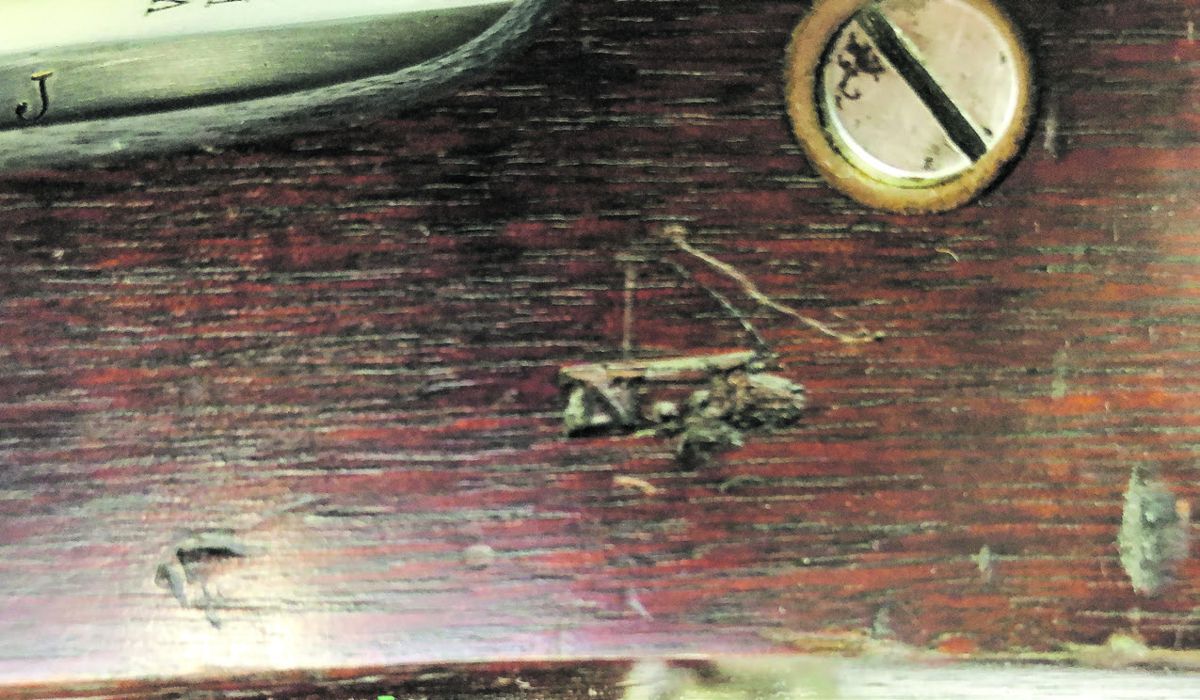
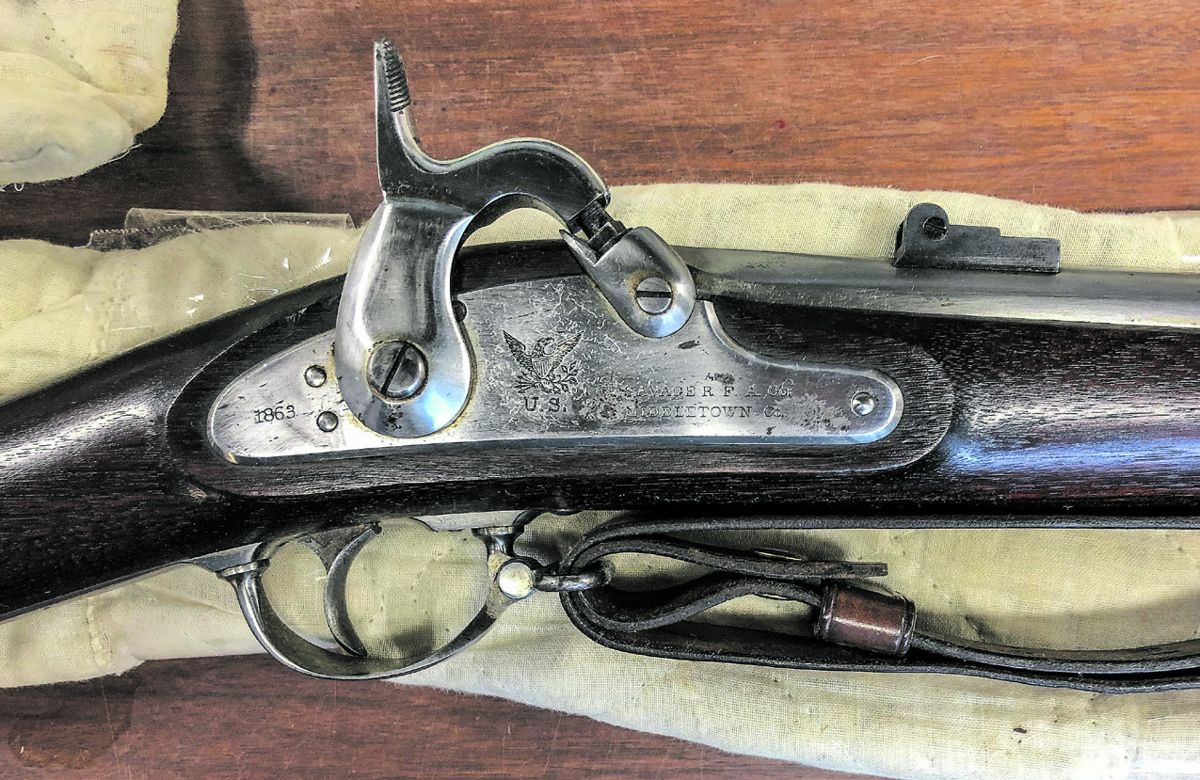
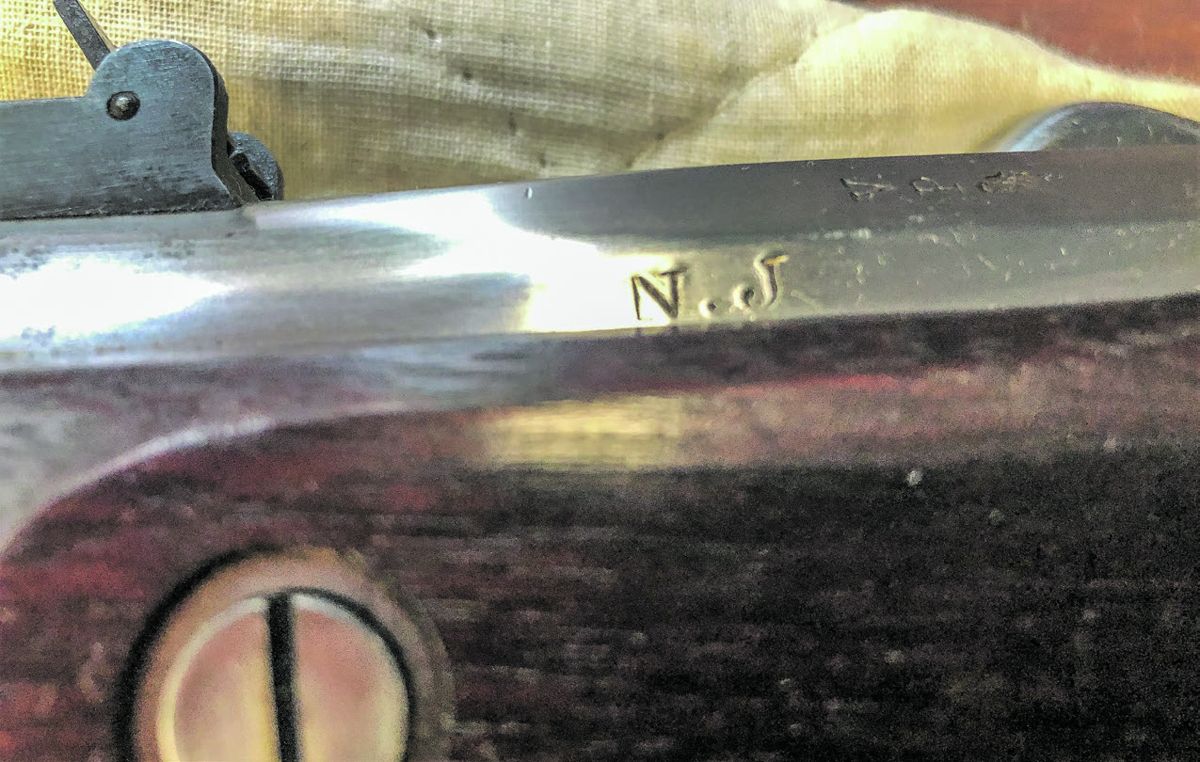
A Model 1861 Comes Home At the outset of the Civil War, the M1861 Springfield rifle musket was the standard U.S. infantry weapon. Due to the massive increase in manpower, Union army soldiers were subsequently armed with whatever was available, however, including obsolete smoothbore muskets and foreign made weapons of varying quality. By mid-war, availability of the standard arm had increased dramatically, as Springfield Armory boosted productions and contracts were awarded to private gunmakers. In 1863, New Jersey Adjutant General Robert Stockton, with the approval of Governor Joel Parker, was reforming the state’s militia, and in the process created the New Jersey Rifle Corps. Although units of the old smoothbore musket armed militia still existed, recruits to the new organization were issued distinct uniforms and promised up to date rifled arms. Initially, the Rifle Corps was less than a stunning success, with only six of the authorized fifty companies organized by the end of the year, but those companies were deployed to control a riot that broke out between employees of two rival railroads in November. In order to properly arm the Rifle Corps, New Jersey purchased over 9,000 rifle muskets in 1863 and 1864. The first two orders, in July 1863, were to New York arms merchants Schuyler, Hartley and Graham, for 2,500 and 1,500 Colt “Special Model” 1861s, paid for with Federal promissory notes. After delivery of the initial Colt order in January 1864, however, the state’s Quartermaster General cancelled the second one. It appeared that Colt, or Schuyler, Hartley and Graham, was trying to dispose of guns that had failed Federal inspection by selling them off to unsuspecting customers. Unfortunately for them, New Jersey had a very sharp Quartermaster General in Lewis Perrine, who saw to it that each weapon was taken apart and carefully inspected by “a competent person” at the state arsenal in Trenton. Perrine reported that “the inspector rejected a great number of parts.” He added that he had “allowed the contractors in every instance to replace the parts rejected for defects with perfect parts.” He did not provide details on why the second Colt contract was cancelled, although one would assume that there was a lack of “perfect parts” to replace the inferior ones. None of the other contracts, for standard Springfield pattern M1861 rifle muskets, to J.T. Hodge and A.M. Burton of the Trenton Locomotive and Machine Co. in Trenton, or Savage Revolving Firearms Company of Middletown, Conn., were cancelled, so it is safe to assume that those contractors either supplied satisfactory arms or had a ready supply of functional parts. Accepted guns were stamped “NJ” on the barrel and stock opposite the lock to indicate state ownership. In January 2019, one of those rifle muskets returned home, as a generous Midwestern donor disposing of his father’s large arms collection contacted the National Guard Militia Museum of New Jersey in Sea Girt and asked if that institution was interested in receiving an “NJ” marked Savage M1861 rifle musket. Savage delivered 2,200 rifle muskets to the
New Jersey state armory in 1863. The rifle, in almost perfect condition will be on prominent display at the museum. The New Jersey Rifle Corps and the militia were combined into the National Guard in 1869. They continued to use the M1861 rifle muskets Stockton purchased until 1875, when they were replaced with breech loading Springfield rifles. The rifle muskets were stored and sold to legendary firearms dealer Bannerman’s in New York City early in the 20th century. This rifle musket was apparently one of them.
Joseph G. Bilby received his BA and MA degrees in history from Seton Hall University and served as a lieutenant in the 1st Infantry Division in 1966–1967. He is Assistant Curator of the New Jersey National Guard and Militia Museum, a freelance writer and historical consultant and author or editor of 21 books and over 400 articles on N.J. and military history and firearms. He is also publications editor for the N.J. Civil War 150 Committee and edited the award winning New Jersey Goes to War. His latest book, New Jersey: A Military History, was published by Westholme Publishing in 2017. He has received an award for contributions to Monmouth County (N.J.) history and an Award of Merit from the N.J. Historical Commission for contributions to the state’s military history. He can be contacted by email at [email protected].