
Library of Congress Civil War Photographs
By John Sexton · Originally published March 2019 · pp. 32–33
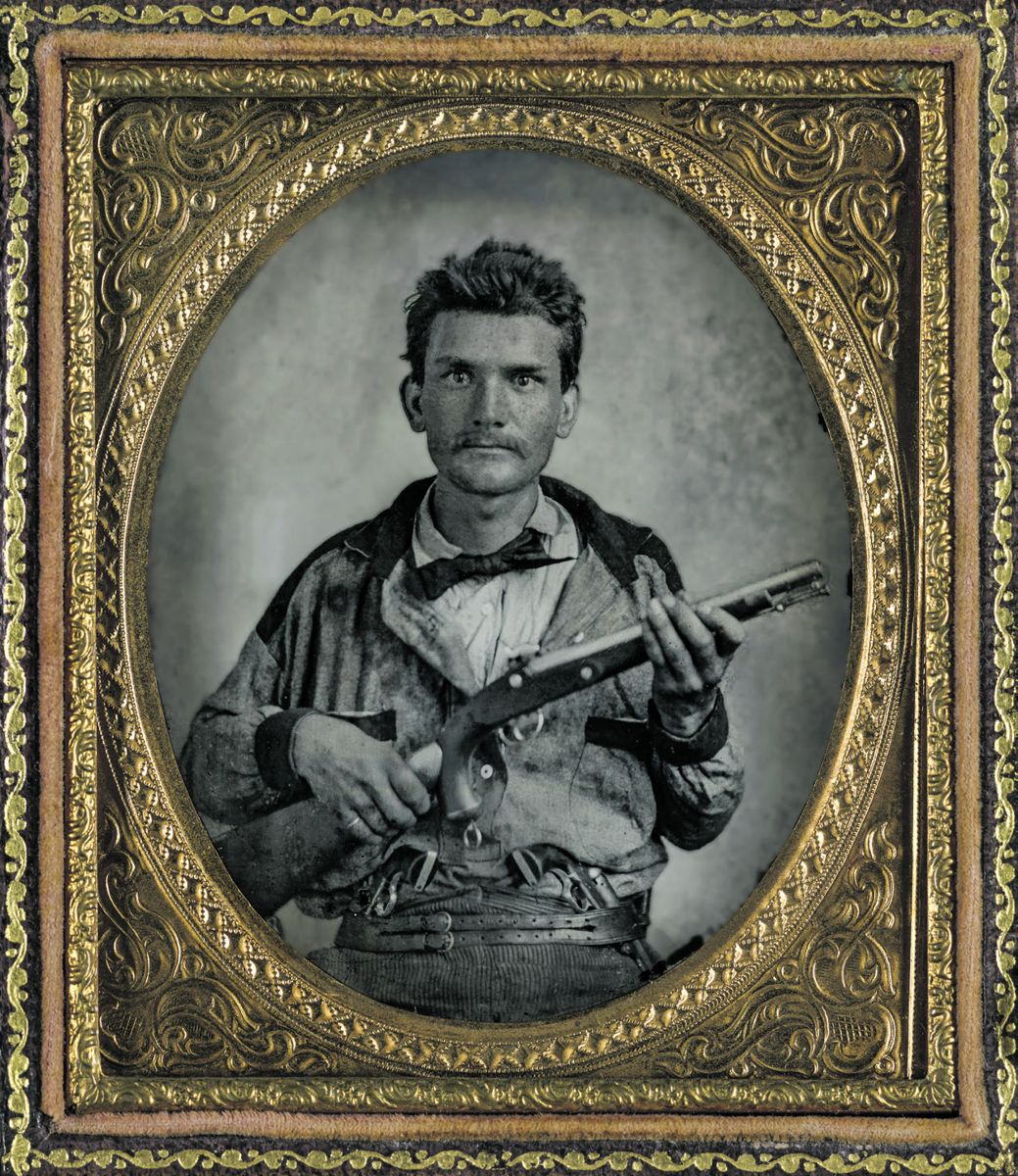
Not only has this sixth-plate ambrotype been published in numerous publications, it was also featured in episode 4 of Ken Burns’ 1990 Civil War documentary. The soldier was unknown in all publications and in the documentary until Patricia Mullinax, wife of well-known Confederate authority Steve Mullinax (1946-2012), recognized the image from other family photographs, as she was a Pollard. Stephen Pollard (1830–1899) posed wearing battle shirt, roller buckle belt with two Colt Model 1849 pocket revolvers, and holding a M1855 pistol carbine with attached stock. Stephen Pollard was member of the 7th Confederate States Cavalry Battalion, formed mid-1863, and served to the end of war in Eastern Tennessee and Western Virginia. This is a rare instance, where a Civil War image was identified from other existing images. Ironically, Steve Mullinax (1947–2016) is buried in same cemetery as Pollard, Liberty Church Cemetery, Temple, Ga. Patricia is also an historian and authority on West Georgia history.
Library of Congress Civil War Photographs I have been currently involved in writing captions for an absolutely fabulous group of Civil War photographs owned by the Library of Congress given by Tom Liljenquist and sons. This remarkable group of photographs can be seen on the Library of Congress website. Most of the photographs are unidentified but exhibit wonderful aesthetics, with the finest detail and hand-tinting by the artists who made them. Many images have good provenance and history, some just have oral history, some have old tags, and some have new tags. My assignment was to delve into the purported provenance and determine if the information was reliable and qualified. I also identified the arms, uniforms, and equipment displayed. Many of these photographs have been known for years and published in early texts with incorrect identification or attribution that is difficult to prove. Comparable images for size, subject matter, and condition usually bring a premium price if identified. Often, images are sold with an identification that cannot be qualified. Often written identifications in the back of photographic cases are not original. A mundane sixth plate ambrotype of an enlisted Union infantryman in fine condition might sell for $125, but if that soldier was a battlefield hero or received the Congressional Medal of Honor, that same image might bring $2,000. The same can be said with other commonly “enhanced” Civil War items. We discussed in an earlier article where a fine condition foot officer’s sword ascribed to a notable soldier might bring $20,000-30,000 or more, when the same sword with no inscription would sell between $800-1200. Needless to say, due diligence is required when buying expensive Civil War objects, as many more clever fakes and inscribed items that are “suspect” are becoming fairly common in the marketplace. Illustrated in this article are several images showing the difficulties in identification and a few surprises.
John is an certified appraiser with International Society of Appraisers specializing in Civil War memorabilia. He authenticates and evaluates other rare and valuable historic items as well. His website is www.civilwardealer.com. He is coauthor of the book Confederate Bowie Knives (2012) by Jack Melton, Josh Phillips and John Sexton, that was published by Mowbray Publishing, Inc. Send “Ask The Appraiser” questions and photographs to [email protected].
Edward A. Cary, Company I, 44th Virginia Infantry, with his sister Emma wearing fashion of the day, posed for this ambrotype by Charles Rees in Richmond during 1861. Edward was 18 years old when he entered service May 8, 1861; he was killed at the battle of Port Republic June 9, 1862. His beloved little sister was 16 when this photograph was taken. Edward served with his older brother William who was a sergeant in same unit and survived the war. Emma Judson Cary Garland (1845–1918) inked an inscription identifying her and her brother in back of the case late in her life thus preserving identification of a treasured memento that otherwise would be lost to history. This image was retained in the Garland family and luckily Emma inscribed a note placed in the case identifying her long deceased brother. Rarely do such mementos ever have a written description as they were personal to the owners only, and rarely did anyone think of identifying them for future generations.
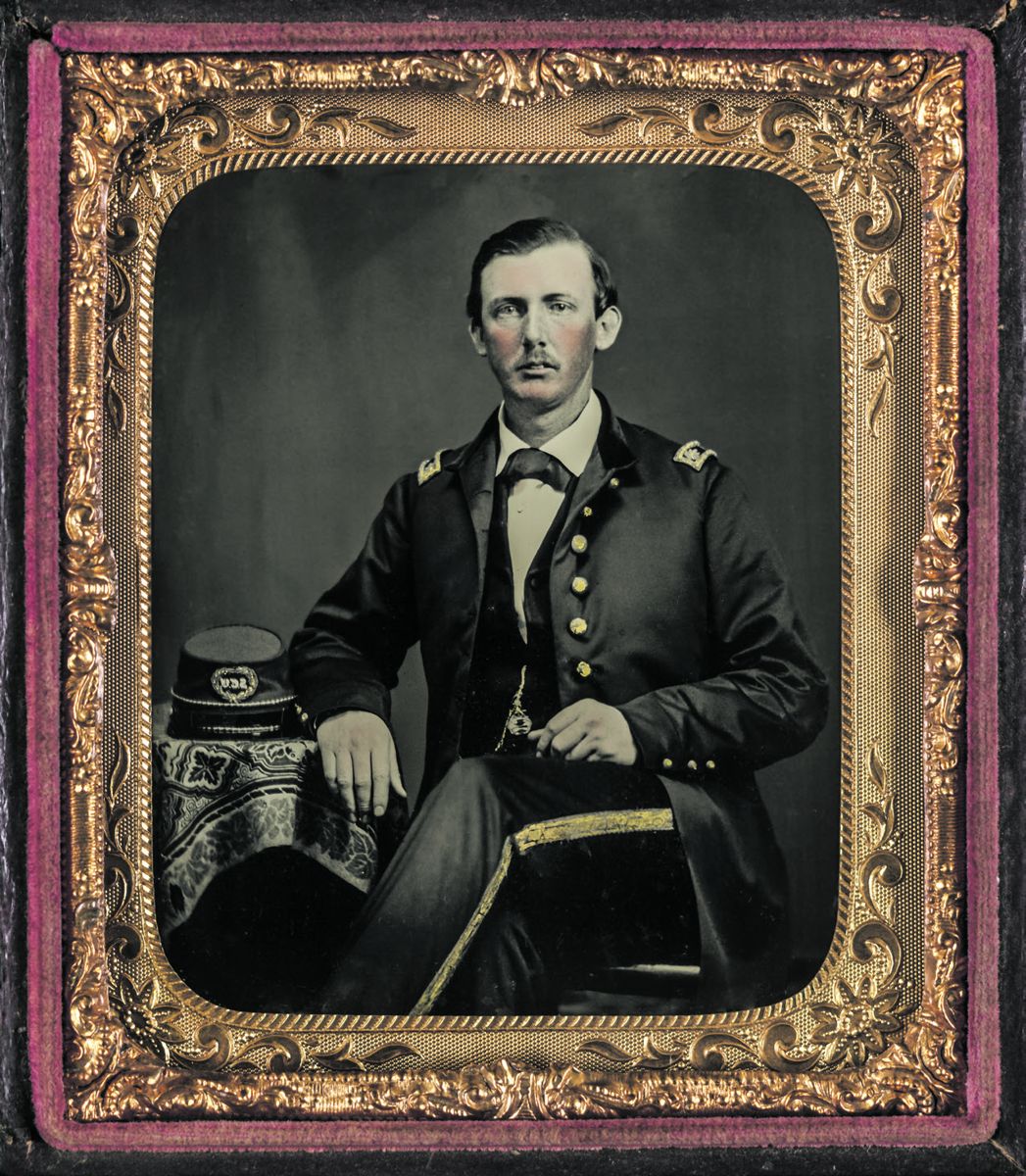
Originally identified in earlier texts as Captain James Dugan Gist (1833–1863), this is more likely his older brother Joseph Gist (1818–1890). Joseph would be 43 years old in 1861 when he entered service as a major, something conveyed by the insignia on his shoulder straps and the approximate date of image. The uniform is also early war as it is still in US style. His brother James was on his staff but never attained this rank, as he died of typhoid fever in 1863. Joseph was later Lt. Colonel of 15th South Carolina Infantry until wounded at Chickamauga. He then retired to his home in Charleston. His kepi has the insignia “SCV” for South Carolina Volunteers. Captain Gist never held this rank, so we now know the family misidentified the brothers, where resemblance of all three is noticeable.
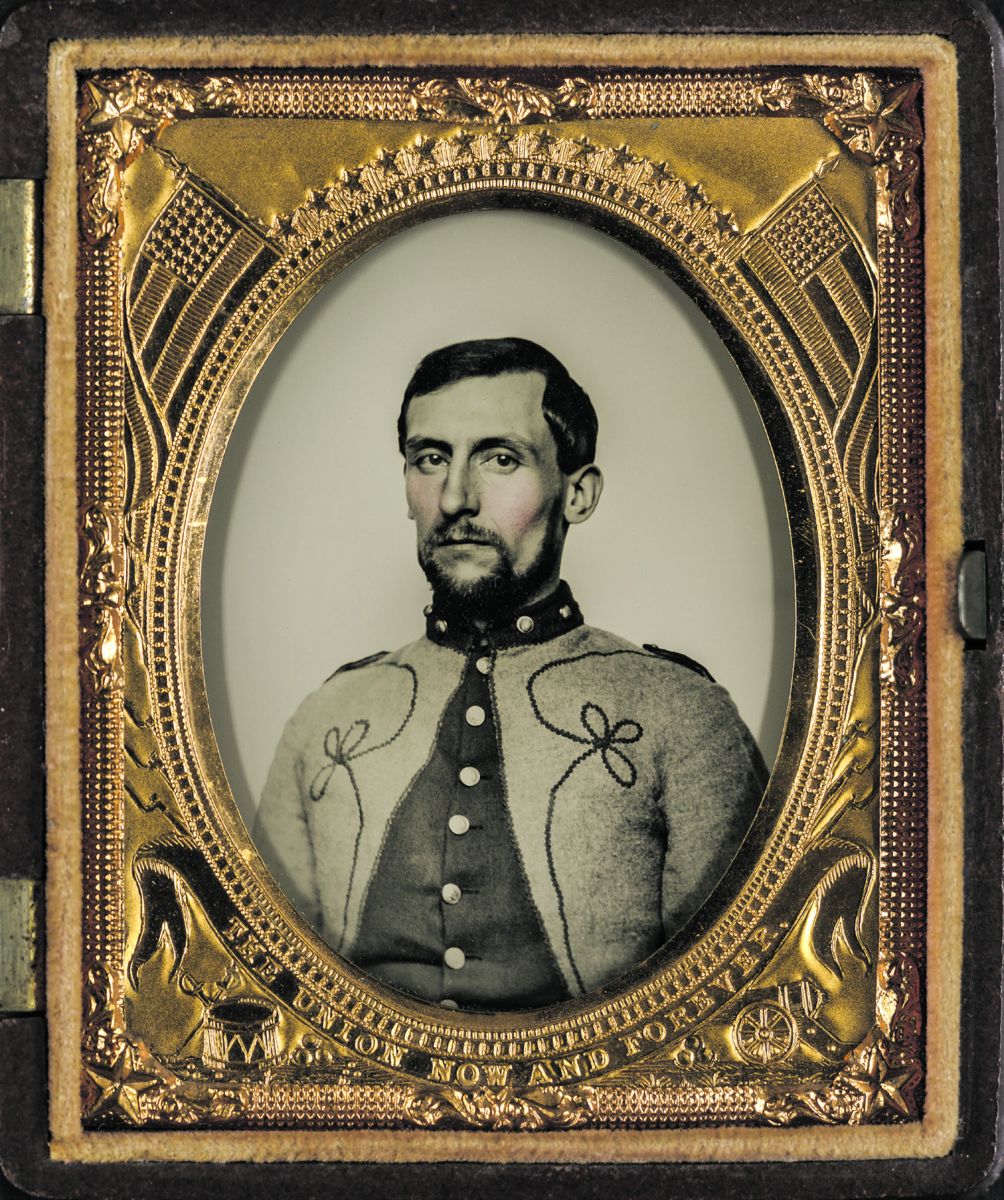
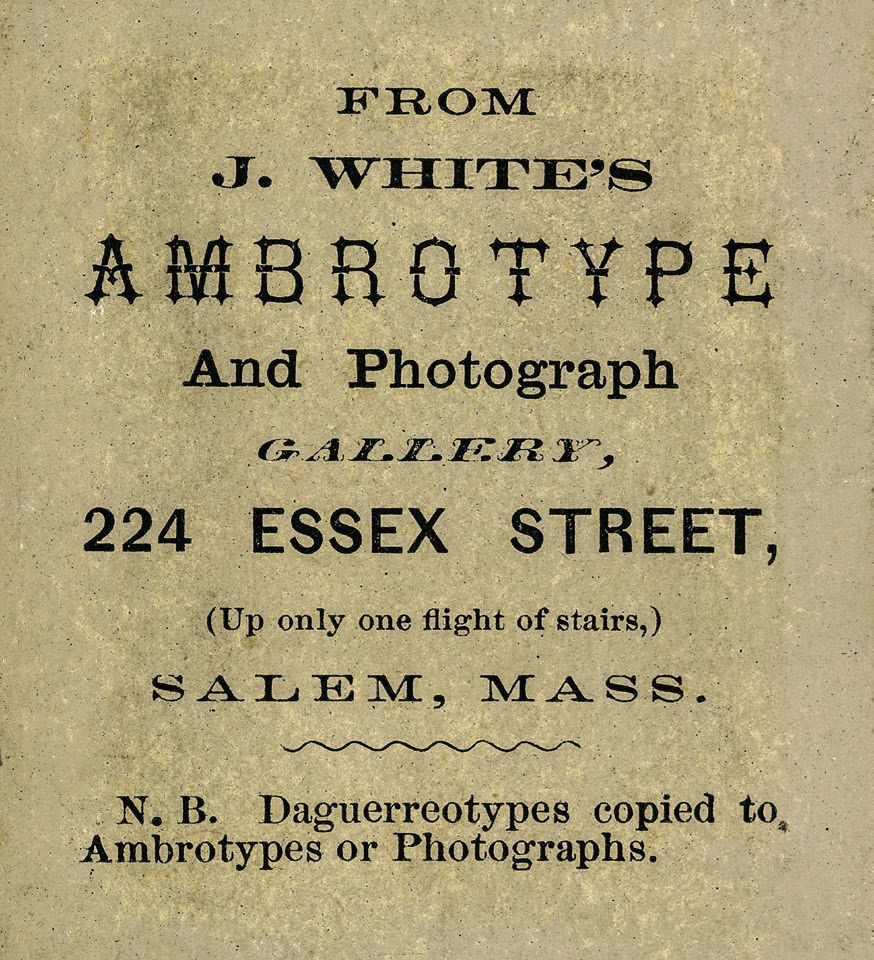
Henry F. Waters, a 28 year old Harvard graduate from Salem, Mass., enlisted as corporal in Company F, 23rd Massachusetts Infantry October 17, 1861. Henry saw action at the battles of New Bern and Roanoke, then served as a medical clerk with his unit in North Carolina at several hospitals. A yellow fever epidemic occurred about the time of his enlistment’s expiration. One biographer of the 23rd reported that, I do not know that he is alone but there are certainly not many whose need is greater than that of Cpl. Henry F Waters of Co. F. He had been, more than 2 years, clerk in the general hospitals. The time for which he enlisted had expired and he might have honorably sought safety in his Northern home. He remained at his post till all around him had been stricken down… Henry knew he was needed as a hospital steward and clerk and, after leaving the Army, reentered service as a civilian clerk and remained at the Foster General Hospital until contracting yellow fever himself, barely escaping death, but returning home to Salem in the autumn of 1865. The 23rd lost 132 men to disease and another 80 killed in action and mortally wounded. After the war Henry became a nationally known genealogist, publishing genealogies of many famous Americans. His papers are found today in the Phillips Library at the Peabody Essex Museum in Salem, Mass., where he was born and this photograph was made. This fine ambrotype is identified from the 1896 published Story of Co. F, 23d Massachusetts Volunteers with a different image of Waters wearing this same distinctive uniform. It would interesting to note if the mat on this image was removed, as the corporal chevrons might then be visible as in the standing view CDV from 1896 text, further supporting the conclusion as to his identity.