
Eccentric Southern Belle Was an Incredible Union Spy
By Bob Ruegsegger · Originally published March 2019 · p. 30
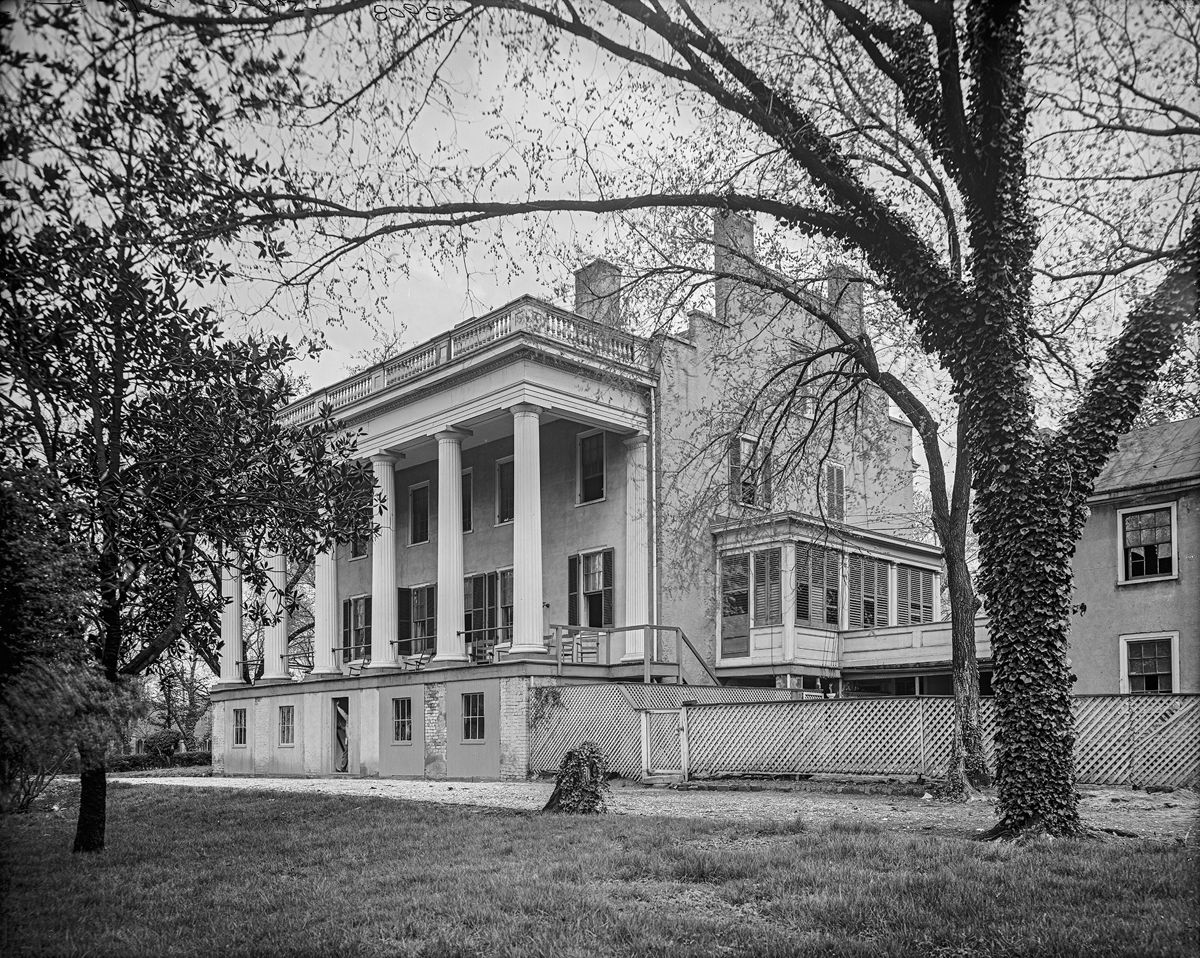
This portrait of Elizabeth Van Lew depicts the Richmond spy as she appeared during the Civil War. (NPS) Van was an invaluable Union spy in the very heart of the Confederate capital during the Civil War. She supplied vital military information to a handful of Union generals; Benjamin Butler, George McClellan, George Sharp, George Meade, and Ulysses Grant were among them. She also supplied captured Union officers in Harwood Prison, Henrico County Jail, and Libby Prison with bribe money, food, medicine, and books. On occasion, Van Lew even harbored escaped Union prisoners in her own home. Throughout the conflict, Van Lew continued to feign dementia by mumbling to herself and singing meaningless jingles as she walked Richmond’s streets dressed in shabby clothing. In order to foster the belief that she was a harmless, guileless incompetent, the former Richmond socialite began wearing the coarse clothing associated with county folk. She wore buckskin leggings with a one-piece skirt and cotton blouse, accented with a large calico sunbonnet. It was hardly the attire generally associated with the duplicitous sophisticates engaged in the clandestine craft of the secret service. Her masterful ruse worked brilliantly for the duration of the war. Crazy Bet, as she was widely known, was from a privileged Richmond family and lived in a three-story mansion on fashionable Church Hill, not far removed from The Capitol, St. John’s Church, and Libby Prison. Generally speaking, especially in the South, the wealthy were traditionally given the benefit of doubt when they espoused peculiar ideas or exhibited questionable behavior. Miss Van Lew’s neighbors made an exception in her case; they decided she was absolutely crazy. Van Lew used the prevailing misconception to her advantage. Although Elizabeth Van Lew was a native of Richmond, she was educated in Philadelphia and became an impassioned abolitionist as a result of her exposure to that sentiment in the City of Brotherly Love. After her father’s death, she convinced her mother to free the nine slaves that her family owned. Her abolitionist stance and her sympathy for the Union cause made her a social outcast and prompted some Confederate officials to keep a watchful eye on Van Lew’s home and her activities. During the Seven Days Battles in June 1862, Van Lew was so convinced, perhaps even hopeful, that Union forces would capture Richmond that she prepared a room in her home for the use of General George McClellan when he seized control of Richmond; his Peninsula Campaign was turned back by General Robert E. Lee and the Confederate defenders. When the great majority of Richmond’s society women made bandages and cared for wounded Confederate soldiers who inundated the city, Van Lew and her mother did the same for Union soldiers. The primary focus for Van Lew’s volunteer humanitarian efforts was the Union officers confined to Libby Prison, a converted warehouse on the James River. Under the noses of Confederate officials, Van Lew brought in books with divided spines that concealed notes and food on plates with false bottoms that hid important messages. Crazy Bet, whose code name was “Babcock,” even managed to place an agent in the home of Confederate President Jefferson Davis. Mary Elizabeth Bowzer, a slave freed by Van Lew, was initially employed to serve at special affairs at the Davis residence in Richmond and eventually hired as a regular member of the household staff. During the course of the war, the Union spy mistress exhausted her family fortune by personally funding her spy network and providing some welcome amenities to Federal soldiers held in Libby Prison. Van Lew was able to convince General John Henry Winder, the Confederate provost marshal of Richmond, to allow her frequent access to Federal prisoners ostensibly to supply them with food and medicines. “I can flatter almost anything out of old Winder,” wrote Van Lew, “his personal vanity is so great.” At dawn on April 3, 1865, Union troops arrived in Richmond. As soon as they arrived, Federal troops began extinguishing fires in an effort to save the city from total destruction. A small contingent of Union troops commanded by Colonel Ely Parker was dispatched to Grace Street on Church Hill to protect the Van Lew family and their property. Much to their surprise, Colonel Parker and his men were greeted with a large Union flag flying above the Van Lew mansion. It was the first Union flag raised over the Confederate capital in four years. Union occupation of Richmond brought an end to the war, but it did little to allay Lizzie Van Lew’s fear of reprisals from Richmond residents who had supported the Confederate cause. To reduce chances of her wartime spy activities becoming public knowledge, Van Lew requested that all documents written by her to the War Department be returned to her. All incriminating paperwork that could be located was returned to Van Lew, and she promptly burned it for obvious reasons. Van Lew’s “occasional journal” kept sporadically throughout the war, an account that numbered greater than 700 pages, has survived in part. The spy mistress’ secret journal was buried on Van Lew property for safekeeping. Only about half the original version remains, but it has provided an authentic wartime chronicle of the Union’s most successful female spy. Van Lew was a social pariah for the remainder of her life. She was never forgiven by those who supported the Confederacy for her aid to the Union cause. For her steadfast loyalty to the Union, she was branded a traitor by those Southerners who opposed Federal aggression. When Van Lew was interred in Richmond’s Shockoe Hill Cemetery, few attended the burial. She was buried vertically because there was little space available in the Van Lew family plot. For years her grave site went unmarked, which was fine as far as the vast majority of Richmonders were concerned. Years later a granite boulder was placed over Van Lew’s grave by the relatives of Major Paul Joseph Revere, the great-grandson of Revolutionary War hero Paul Revere, who Van Lew had helped when he was a prisoner of war in the Henrico County Jail. The bronze plaque affixed to the stone reads: She risked everything that is dear to man—friends, fortune, comfort, health, life itself, all for one absorbing desire of her heart – that slavery might be abolished and the Union preserved.
Eccentric Southern Belle Was an Incredible Union Spy By Bob Ruegsegger Elizabeth Van Lew’s neighbors thought she was crazy, and Van Lew did everything she could to cultivate their low opinion of her mental competence. Whenever she heard them whisper “Crazy Bet” behind her back, she suppressed any hint of an outward smile and grinned with an inner satisfaction.
A bronze plaque affixed to a granite boulder marks the site of Elizabeth Van Lew’s grave in Richmond’s Shockoe Hill Cemetery. Bob Ruegsegger is an American by birth and a Virginian. His assignments frequently take him to historic sites throughout Virginia, the Mid-Atlantic, and the Southeast. His favorite haunts include sites within Virginia’s Historic Triangle—Jamestown, Yorktown, and Williamsburg. Bob served briefly in the U.S. Navy. He is a retired educator and has been an active newspaper journalist for the last twenty years.