The CVBT and me
By Robert Lee Hodge · Originally published June 2019 · pp. 36–37
The CVBT and me By Robert Lee Hodge Is there any chance you will be here in October?—Scott [Fitzgerald] and I have got a grand tour of the Virginia battlefields planned, and although I do not see how I could take in more than two, it would be a great time if you were there. It all came from … seeing Gettysburg, and really, Ernest, it was perfectly magnificent: you could understand every move in the whole battle if you had read about it. You could see the whole battlefield plain as day.—Editor Maxwell Perkins to Ernest Hemingway
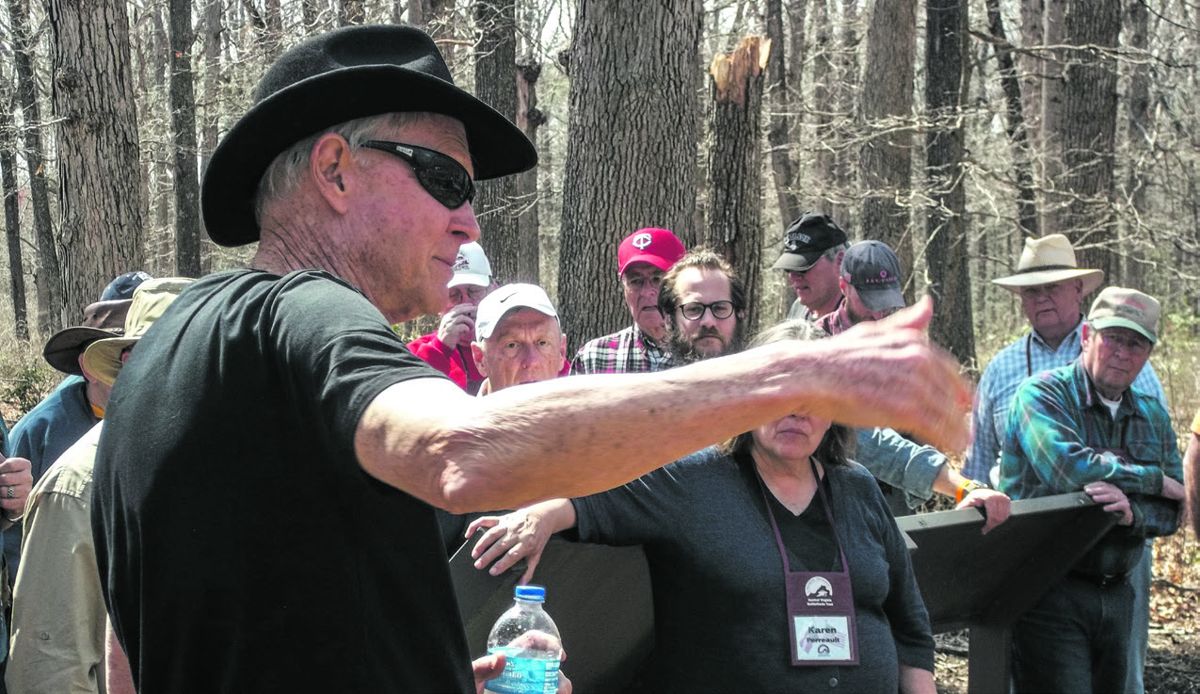
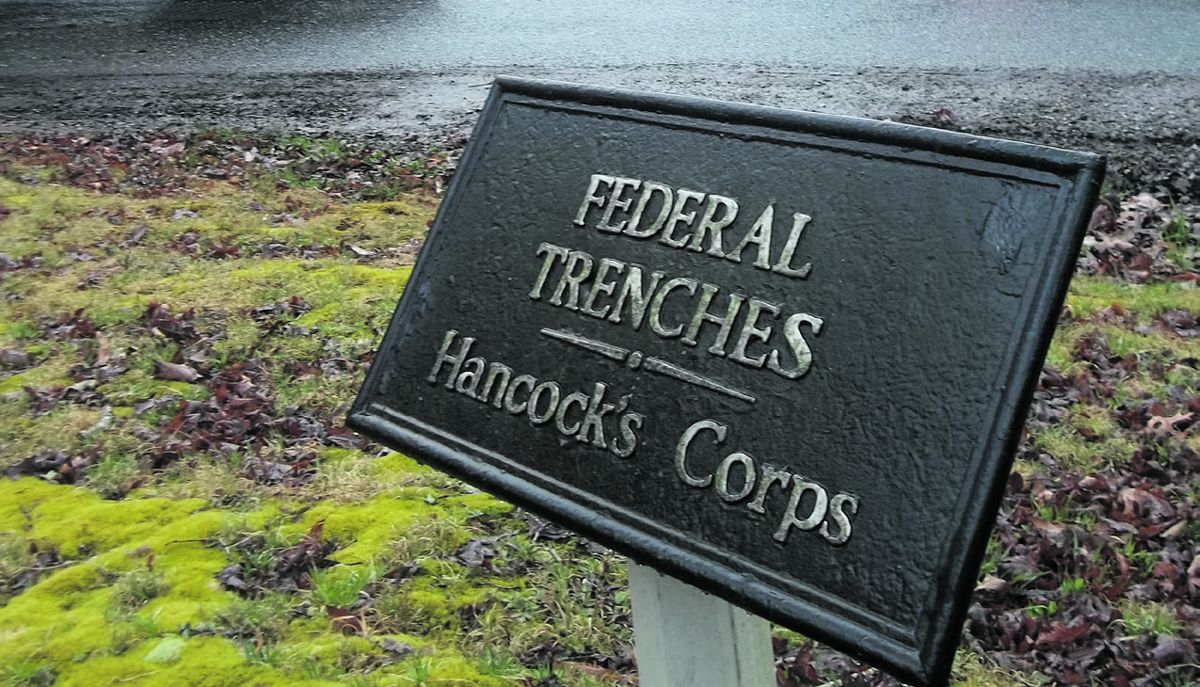
Many then felt, and today still feel, the attraction to America’s Civil War battlefields editor Maxwell Perkins experienced, encouraging colleagues F. Scott Fitzgerald and Ernest Hemingway to walk the land where giants in America’s great fratricide achieved the attention of the world with him. Traversing the famous lands in the footsteps of history brings connectivity to the written word, if you are familiar with the subject through accounts. Winston Churchill had this experience, touring Spotsylvania County’s battlefields in 1929. Britain’s future Prime Minister wrote, “… We have entered the domain of history… Here, south of the Rappahannock, is another wide area of battlefields, on which, perhaps, more soldiers have perished in an equal space than anywhere, excepting round [WWI battlefields] Ypres and Verdun… It was with deep interest that I followed these memorable operations. No one can understand what happened merely through reading books and studying maps; you must see the ground. You must cover the distances in person … Here the campaigns lie one upon the other…The trenches crisscross one another; the monuments of dead commanders and shot-torn regiments are of different years. An earthly palimpsest of tragedy!” Churchill was speaking of America’s bloodiest county, where over 750,000 soldiers fought, and 110,000 fell, in four battles, in a mere 18-months! Most Americans then knew, and some still know, the names of Spotsylvania County’s battlefields, Fredericksburg, Chancellorsville, The Wilderness, and Spotsylvania Court House; all four battlefields are ranked in the top ten deadliest battles of the Civil War. I grew up looking at The Golden Book of the Civil War and dreaming of getting to Spotsylvania County’s battlefields someday. Finally in 1991 I had that opportunity. My naiveté of battlefield protection was smashed and eradicated in June 1991. Standing on Hill-Ewell Drive at The Wilderness Battlefield for the first time, I witnessed homes being built up to the earthworks. Expecting a bucolic environment, where I could get lost in thought and reverence, instead I heard circular saws and hammers building tract housing. The juxtaposition I could not process. How did this happen? I had an epiphany. A sad reality set in. The Wilderness Battlefield was fragile and poorly protected from future destruction. The Wilderness Battlefield was not an anomaly, but the norm. Preservation was a crisis of epic proportions and I had no idea. The battlefields, cemeteries without headstones, were being obliterated rapidly. Preservation became a watchword for me and Spotsylvania County was at “The tip of the spear.” I became an intern with the National Park Service’s Civil War Sites Advisory Commission (CWSAC), the group that reported to congress on the preservation crisis. I learned much. Ironically, these battlefields with national significance are often being destroyed by local governments. They obliterate historic sites through their votes and, all too friendly with the development machine, look to expand their tax-base. When it comes to battlefield preservation, the Federal government has little power. I also learned while working at the CWSAC that the NPS is the financial dregs of the Federal government, comparatively getting “crumbs” to run on. “America’s Greatest Idea,” as Ken Burns said, has serious problems. As our population growth explodes, the parks become increasingly and exponentially “Islands of Green” in an emerging sea of concrete. The NPS also has a $17,000,000,000 back-log in maintenance; acquiring more natural and cultural resources is not going to be priority. Why the preservation crisis? The race between conservation and development has exponentially accelerated over time. Despite the economic crash of 2008 that bought time for preservation efforts Spotsylvania County was the 19th fastest growing county in the United States. Spotsylvania County is just 60 miles from Washington, D.C., and on the I-95 corridor, it has been one of the fastest growing areas for four decades. In Spotsylvania the roads have been increasingly choked with rising traffic congestion. Many of those same roads are where massive armies marched and bled in the 1860’s, posing—a quandary for preservation and conservation groups. As one example, compare the rapid growth of Spotsylvania County with the hard truth that the underfunded NPS owns just 1,500 acres of the 21,000-acre Spotsylvania Court House battlefield, or only 14% of the study area.
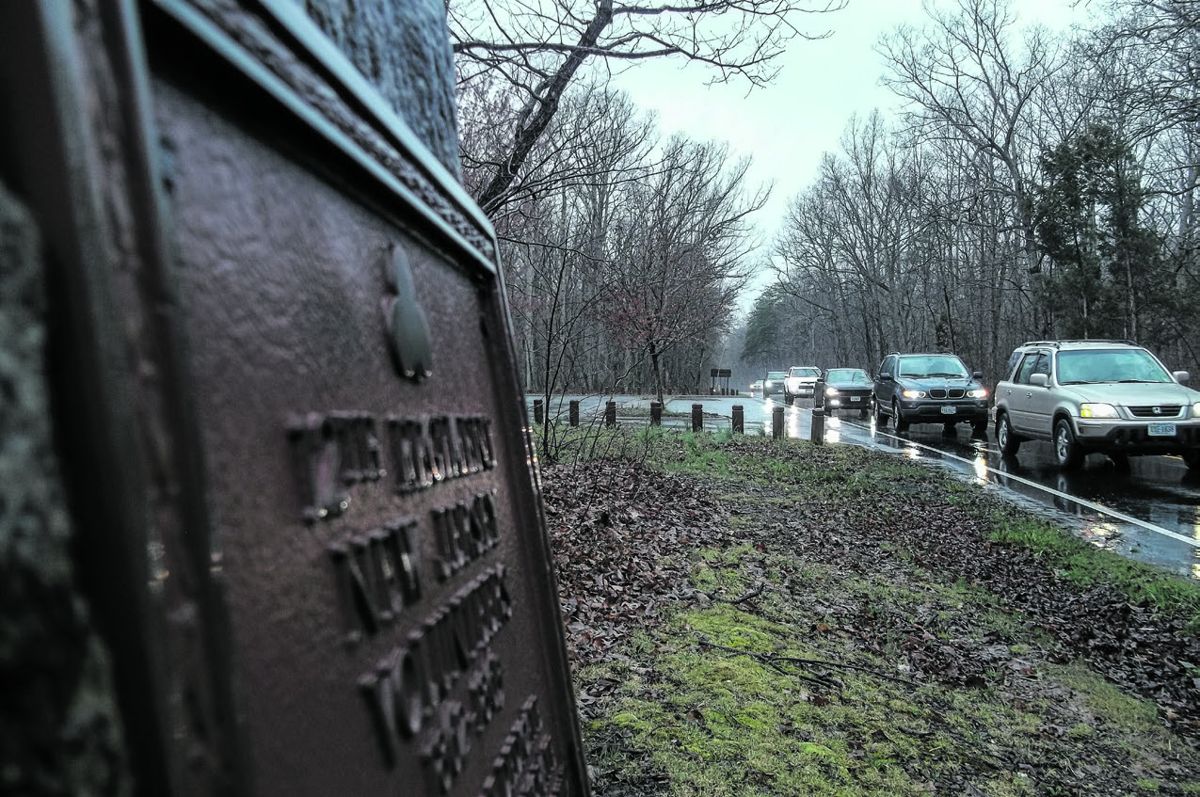
CVBT Thankfully, since 1996 The Central Virginia Battlefields Trust (CVBT.org) has saved over 1,300 acres of “battlefield greenspace” in Spotsylvania County. In 1997 I started associating with the Central Virginia Battlefields Trust, attending an amazing preservation conference hosted by Fredericksburg’s Rappahannock Valley Civil War Roundtable. We toured many threatened battlefield sites in Spotsylvania County. On that battlefield trip weekend many board members of the new CVBT attended, local professionals who grew up in the area and felt called upon to do something about Fredericksburg/Spotsylvania destruction. On that preservation weekend with the CVBT board I witnessed the sobering, hard, reality of the preservation, or more accurately its lack, at Spotsylvania County’s battlefields– including, Second Fredericksburg and Salem Church, parts of the Chancellorsville Campaign. The CVBT were a blessing at a crucial time. At this time I was working for Time-Life Books as a principal Civil War researcher and the upcoming volume was on Fredericksburg. Time-Life used the National Park Service’s huge data collection as the basis of the book. Researching daily in Fredericksburg, I decided to take a break and go west to Chancellorsville. There I saw The Estates of Lee and Jackson being built on top of the battlefield. It hurt to see the “growth.” It appeared the NPS was helpless as development further choked the park. Back at the NPS I vented my frustration to chief historian Bob Krick, who mentioned that a new preservation group might be a savior. I spoke with Bob briefly about preservation fundraisers I had directed in the past and that I would like to do something for that had traditionally green-lightChancellorsville. Bob mentioned ed most development projects rethat next year (1998), Stonewall gardless of battlefield destruction. Jackson’s Flank March anniIt is important for groups like versary would take place on the CVBT to exist. In the preservasame week day it did in 1863, a tion fights at Chancellorsville and Saturday. I developed a CVBT The Wilderness it was important fundraiser for the 100-acre to have a vocal local constituenAshley Tract on Chancellorsville cy. As a growing grassroots orbattlefield for May 2, 3, 1998, ganization, we want to connect that attracted 200 very authentic the local citizens of Spotsylvania, reenactors who brought $37,000 whose investment is paramount, with them! We also had 1,200 to their land, as well as expand spectators, Ed Bearss, Gary our national membership. Power Gallagher, Bob Krick, John in numbers. We have developed Hennessey, and Brian Pohanka. mass marketing campaigns deIt was a cerebral event with the signed to connect people from historic greenspace message at specific locales to the land being the forefront. We paid off 1/10th saved. of the Ashley Tract’s debt that With all the available resources weekend. It was grassroots em- to tell the story, one begins to repowerment and it felt good. alize, not only did our Civil War In 2000 I produced another take place during the industripreservation march attracting al revolution, but also during an 300 authentic reenactors that information age as literacy and generated $57,000 for preserva- data gathering were exploding. tion. Because reenactors were We continue to learn more about coming from all over the country, what happened at any battlefield I wanted to spread the preservaHistory isn’t just about comtion funds out with some money plicated names and dates, more going west, etc. CVBT agreed the importantly it is about the human money could be handled through experience at a specific place. them and gave checks to other A soldier’s letters breathe life preservation efforts while retain- into that space. On any battleing 40% for the Talley Farm tract field there are layers of stories to at Chancellorsville. Ironically learn about, understand, and feel; The Central Virginia Battlefields something impossible if the land Trust was the first group to give becomes a parking lot. $22,000 to Save the Franklin In the Slaughter Pen Farm area, Battlefield (STFB), a battlefield there were threats of an auto aucpreservation effort in Franklin, tion or a school, but the Civil War Tenn. Trust negotiated a preservation With the help of the old miracle as CVBT would provide Civil War Trust, the Virginia $1,000,000 for the Slaughter Pen Department of Historic resourc- Farm protection effort. CVBT es, the Army Corps of Engineers, also saved the area where John and countless others, CVBT has Pelham fought at Fredericksburg. been able to save land at all four Many other parcels are still in Spotsylvania battlefields. play at Fredericksburg. CVBT has played a role in At Chancellorsville, preservasome impressive victories as tionists celebrated a long, hardpreservation advocates, includ- fought, battle, led by the Civil ing assisting the Civil War Trust War Trust, saving what is called in the Wilderness/Walmart fight. “The First Day Battlefield,” when The Chancellorsville First Day several hundred acres of core batBattlefield effort was a hard- tlefield land where 20,000 troops fought modern battle, led by Jim fought, was threatened by deCampi of the Civil War Trust velopment. CVBT has saved that saved 300 acres after an ex- many parcels in the battlefield’s cruciatingly difficult campaign western sector, however many of fighting developers and a more tracts are “up for grabs” Spotsylvania local government at Chancellorsville. The highly vulnerable “Jackson Trail,” that follows the Confederate icon’s famous last march, was once pristine and idyllic, but is now losing integrity because of mass tract-housing. The former Civil War Trust has preformed yeoman service at Chancellorsville, Fredericksburg, and The Wilderness, but nothing at Spotsylvania Court House except inheriting a five-acre easement at Harris Farm, the battle’s final phase. Sadly, the Harris farmhouse stood until a developer bull-dozed it in 2014, and about the only preservationist who “cried ‘foul’” was local Spotsylvania historian, John Cummings. Salem Church / Second Fredericksburg is part of the Chancellorsville Campaign, and had more casualties than Kentucky’s largest battle at Perryville. Perhaps less than 1% of the core battlefield area is saved at Salem Church itself. Salem Church and Second Fredericksburg get overlooked by the heavier fighting where Jackson was mortally wounded. Despite this gross and embarrassing neglect, CVBT saved 20 acres of Second Fredericksburg/ Salem Church in an area called Smith’s Run in 2002. Myer’s Hill A target property the CVBT is now saving is a neglected part of Spotsylvania Court House, an area known as Myer’s Hill that was covered in this year’s March issue. Not only is CVBT pushing ahead with saving Myer’s Hill, recently we also saved 14-acres of Spotsylvania’s battlefield land on the fragile Brock Road, not far from Union General John Sedgwick’s mortal wounding on May 9, 1864. CVBT’s administrative costs are low, at 12%; CVBT’s longstanding motto has been ‘Your green buys green.’ The sooner we pay off our debt on Myer’s Hill, the sooner we can move forward to save more threatened battlefield property in Spotsylvania County. Future When you look at the sobering math of how much is saved (or not saved) compared to how rapidly population expands in a consistently booming area you see the hour-glass sand slipping away. Despite all the good CVBT and others have done, we are in a crisis, fighting to get the needed funds to save more historic greenspace while we still have the time to save it. Obviously there are many Civil War battlefields that need more attention, The Seven Days, Petersburg, Winchester,
Atlanta, Middle-Tennessee, and Charleston, but I believe Spotsylvania County should be at the top of that list, because, Spotsylvania’s battles rank in the top-ten bloodiest battles of America’s bloodiest war. The proximity of these four battlefields to each other emphasizes the connectivity they should have; they should not be islands of green in a sea of concrete, but are something akin to Williamsburg’s Colonial Parkway should connect all four sites to one-another. The area is a small circle of very important history. The battlefield parks have become “dams” to traffic flow; stoplights or widening roads are not the best remedy, only a weak short-term coping mechanism. As expensive as it seems, the compromise of tunnels would be a longer-term investment, but that accelerated ingress and egress would probably ruin historic greenspace west and south of the battlefields. Brock Road, Grant’s main campaign route, is now the main connector between The Wilderness and Spotsylvania Court House; it deserves more investment as an historic greenspace artery.
The impressive reclamation efforts in Franklin, Tenn., suggest there is some hope for a place so damaged by development as Salem Church. Redevelopment of the Salem Church corridor with greenspace sensitivity is still possible. CVBT has saved 1,300 acres, an impressive number, however, when we see how vast the four battlefields are and how little is saved, I hope before all is said and done we can save 13,000 acres in Spotsylvania County. One final perspective, regardless of a battlefield, is that areas that were once, and had always been, greenspace have been overrun in the last 30 years. CVBT pays fair market value for the historic land and work with landowners who want to see their property saved for future generations to appreciate and learn about America’s history. To join CVBT in their cause please visit cvbt.org. What a beautiful world, God, in His loving kindness to His creatures, has given us! What a shame that men endowed with reason and knowledge of right should mar His gifts