
Through The Lens
General Sherman Never Gets Drunk (The Battle of Rocky Face Ridge –Part 2)
By Stephanie Hagiwara · Originally published June 2019 · pp. 14–15
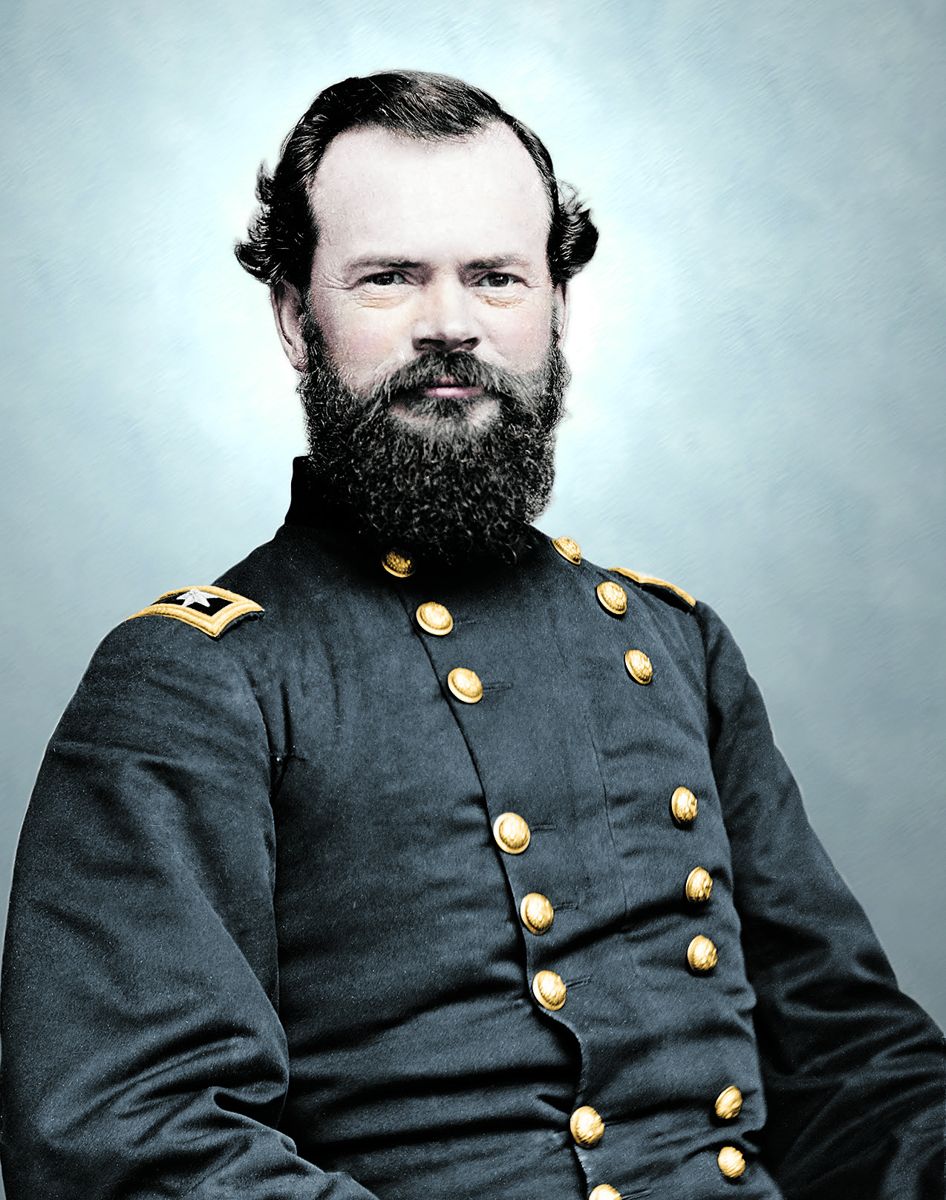
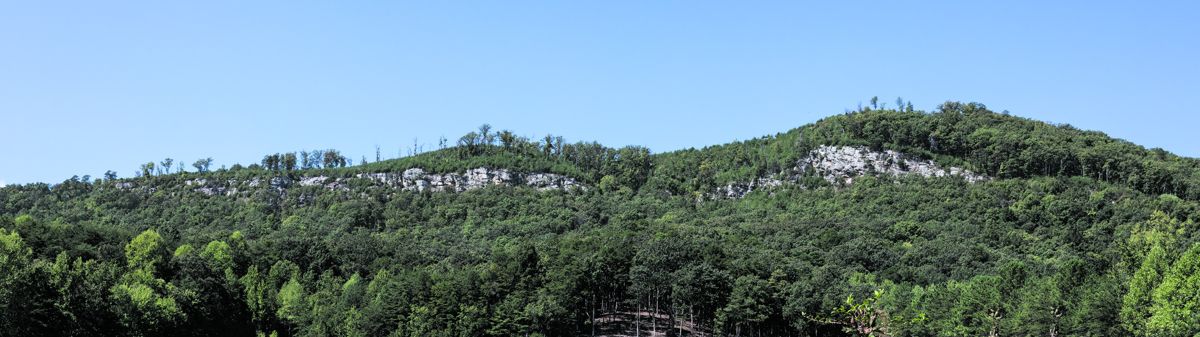
General Sherman Never Gets Drunk (The Battle of Rocky Face Ridge –Part 2) “Well, Mac, you have missed the opportunity of your life.” – William T. Sherman The first fight of the Atlanta Campaign, the Battle of Rocky Face Ridge, Ga., was fought on May 7–13, 1864. U.S. Gen. William T. Sherman planned to push past C.S. Gen. Joseph E. Johnston’s Army of Tenn. headquartered in Dalton, Ga. As the bulk of Sherman’s armies distracted Johnston, U.S. Gen. James B. McPherson’s Army of the Tenn. rapidly advanced towards Resaca, Ga., through Snake Creek Gap. On the evening of the 8th they made camp inside the Gap. By 6 a.m. McPherson’s army was marching towards Resaca. C.S. Col. John Warren Grigsby’s 6th Ky. Cavalry had spent May 8 holding off Union attacks at Dug Gap, Ga. Realizing that the heavily wooded Snake Creek Gap had been left undefended, Johnston’s headquarters sent Grigsby’s cavalry that evening to guard it. The men arrived after dawn to find the Federals approaching the Gap’s eastern entrance. The cavalry fired, momentarily slowing the blue coats. Union skirmishers drove “the enemy like sheep before them.” The 66th Ill., Birge’s “Western Sharpshooters,”
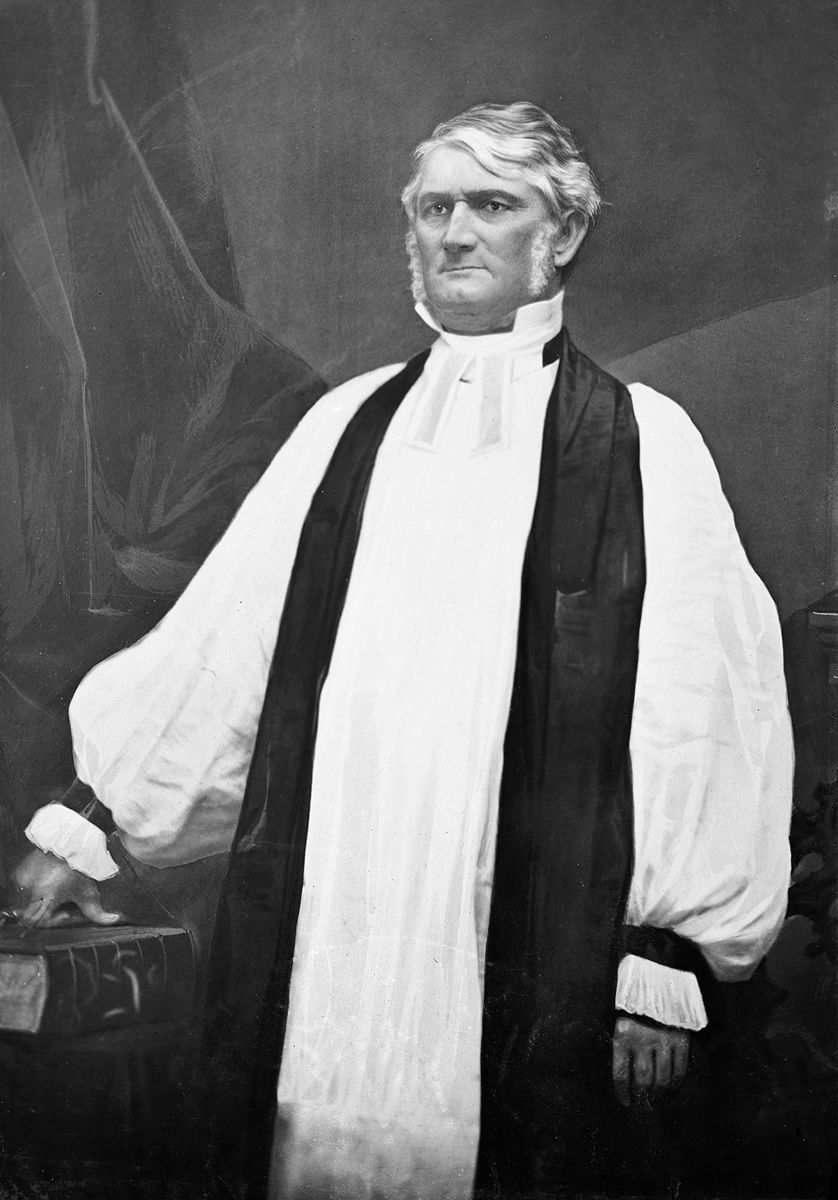
led the way. The sharpshooters, selected for their marksmanship, were armed with 16-shot Henry repeating rifles purchased with their own funds. A few miles outside Resaca, skirmishers from the 37th Miss. slowed McPherson’s approach. This was McPherson’s first significant assignment. Graduated at the top of his class at West Point, he was a protégé of both Sherman and Grant. Both sides considered McPherson one of the most able officers of the War. It was close to 5 p.m. when the over six-foot-tall McPherson scrutinized Resaca’s defenses from a tree stump. The Confederates shot at the officer peering at them through a glass. McPherson could see artillery in the well-fortified line above the swampy ground and presumed the Confederates had a greater force. He anticipated that Johnston would sweep down and cut off his army, “as you cut off the end of a piece of tape with a pair of shears.” In a decision that would later be debated, McPherson decided that, with only an hour of daylight remaining, to retreat to the mouth of the Gap. On May 10 & 11, it rained while Sherman moved most of his army through Snake Creek Gap. U.S. Gen. John Schofield realized that from “a bald hill just in rear of our line” a partial view of the Confederate’s defense could be seen. Sherman and his generals, including George “Rock of Chickamauga” Thomas, Joseph Hooker, John Newton, and staff officers came to look. The gathering of officers attracted fire, causing a “scatteration.” Schofield noticed, “All save two had disappeared, even Thomas having abandoned the field, probably for the first and only time in his life. Still there, were … Sherman and Hooker, … striding round the ground, appearing to look at nothing in particular and not conversing with each other, but seeming at least a foot taller than usual, each waiting for the other to lead off in retreat. After quite a long continuance of this little drama, which greatly entertained Newton and me, the two great soldiers, as if by some mysterious impulse,— for they did not speak a word,— simultaneously and slowly strode to the rear, where their horses were held.” On the evening of May 11, C.S. Gen. Leonidas Polk arrived in Resaca with 10,000 infantry, his 4,000 cavalry having already arrived. Johnston greeted Polk at his headquarters in Dalton, Ga., and, grasping his extended hand and warmly shaking it, said, “How can I thank you I asked for a division, but you have come yourself and brought me your army.” Polk, a cousin of the late President James Polk, had been a cadet with Johnston at West Point. Instead of a military career, Polk rose to become a bishop in the Episcopal Church. Gen. John Bell Hood, who accompanied Polk to Dalton, disclosed that he was interested in being baptized in the Episcopal Church. Hood had lost the use of his left arm and his right leg was amputated four inches below the hip from wounds suffered in separate battles. By midnight in a simple room, lit by a single candle, Hood supported by his crutches, was baptized by the Bishop. Six days later, at the request of Mrs. Johnston, her husband too, was baptized by Polk. On May 13, part of Sherman’s army advanced towards Resaca while U.S. Col. Thomas W. Sweeny, 16th Corps., marched miles upstream to cross the Oostenaula River at Lay’s Ferry. Johnston having realized that Sherman had abandoned attacking the Ridge, moved his army to Resaca, anchoring his line between the Oostanaula River on the left with his right on the Connasauga. Sweeny’s men arrived at noon and stood, under fire, as they waited for boats. The 66th Ind. was tasked with exchanging fire with the Confederate sharpshooters. Pvt. Asahel M. Pyburn spotted the flag of the 47th Ga. Infantry planted at the river’s edge. As his comrades wildly fired at the rebels to keep their heads down, Pyburn stripped off his clothes and swam the 100-yard-wide river. Reaching the opposite side, Pyburn “snatched the flag and swam back” as the enemy blasted the water with their bullets. On his return, flag in hand, and without a scratch, Pyburn was promoted to color bearer. Johnston reviewed the reports of the Federal movements. He knew that he did not have the troops to protect both Resaca and his rear. He met with his commanders to order a scheduled line of retreat. All artillery was removed except four old iron pieces that “were not worth the sacrifice of the life of even one man.” They were the only guns left behind in any of Johnston’s campaigns. Overall, it was one of Johnston’s signature “clean retreats.” On May 14, Sherman, who had spent the night making plans, was dozing on a log underneath a shady tree. “Is that a general?” asked a solider spotting him as he marched. “Yes,” replied the nearby orderly. “A pretty way we are commanded,” the soldier groused, “when our generals are lying drunk beside the road!” exclaimed the soldier, walking off in disgust. “Stop, my man,” said Sherman, jumping up. “I am not drunk. While you were sleeping last night, I was planning for you sir; and now I was taking a nap. General Sherman never gets drunk, sir.” Sources: Govan, Dr. Gilbert E., A Different Valor: The Story of General Joseph E. Johnston, C.S.A. • Time-Life. Battles For Atlanta: Sherman Moves East • Woodworth, Steven E., Nothing But Victory: The Army of Tennessee 1861 – 1865 •
(Library of Congress)
• • •
Polk, W. M. Leonidas Polk, Bishop and General Schofield, John McAllister. Forty-Six Years in the Army Conyngham, David Power. Sherman’s march through the South. With sketches and incidents of the campaign
Stephanie Hagiwara is the editor for Civil War in Color.com and Civil War in 3D.com. She also writes a column for History in Full Color. com that covers stories of photographs of historical interest from the 1850’s to the present. Her articles can be found on Facebook, Tumblr and Pinterest.