Fort Monroe National Monument Hosts Garrison Life Living History Event
By Bob Ruegsegger · Originally published June 2019 · pp. 12–13
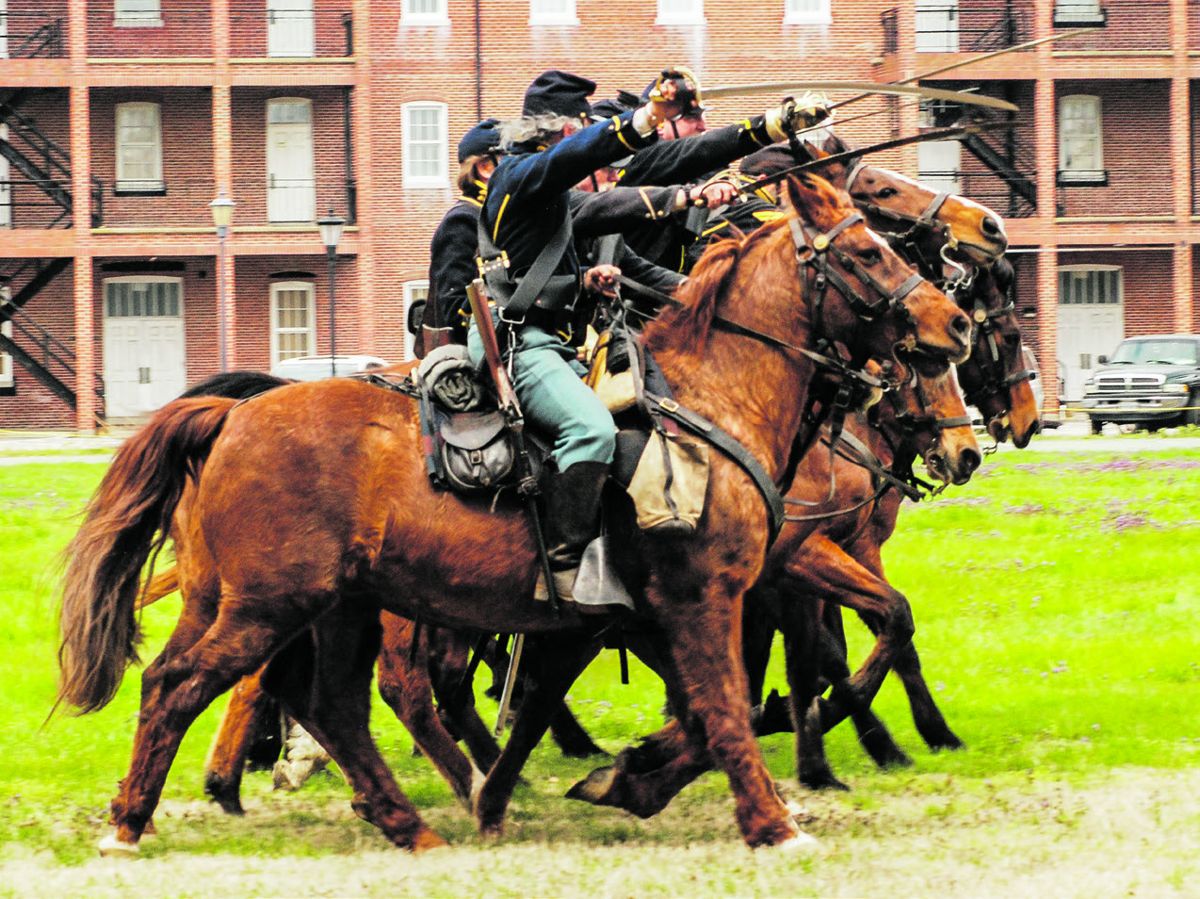
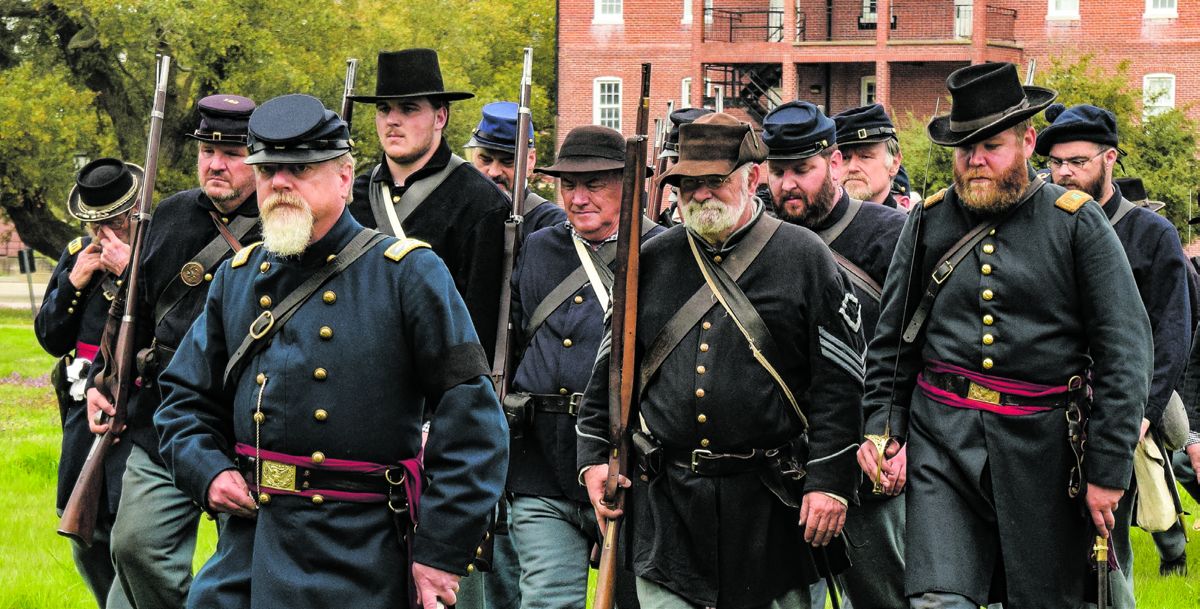
Fort Monroe National Monument Hosts Garrison Life Living History Event By Bob Ruegsegger Scores of living historians and reenactors from New York to Georgia, assembled at Fort Monroe National Monument to participate in the site’s largest living history event since the venerable old fort has been a part of the National Park Service. “I’m very pleased with how the event is turning out. It is, in fact, the largest encampment event the park has ever hosted,” said Aaron Firth, park ranger at the Fort Monroe National Monument. “Certainly, the fort has seen many more men than this during its operational period,” Firth observed. “Since the National Park was established in 2011, this is the largest living history event that we’ve ever fielded.” Firth was not dressed in his National Park Service “gray and green.” He got into the spirit of the event by donning a replica of the uniform worn by Ordnance Sergeant John Livers, the post ordnance sergeant in 1862. “The post flag we raised this morning at morning colors is a brand new garrison flag that we’ve just acquired with 35 stars,” said Firth. It is very appropriate for this event and we’re very happy to have it.” The event interpreted garrison life at Fort Monroe while
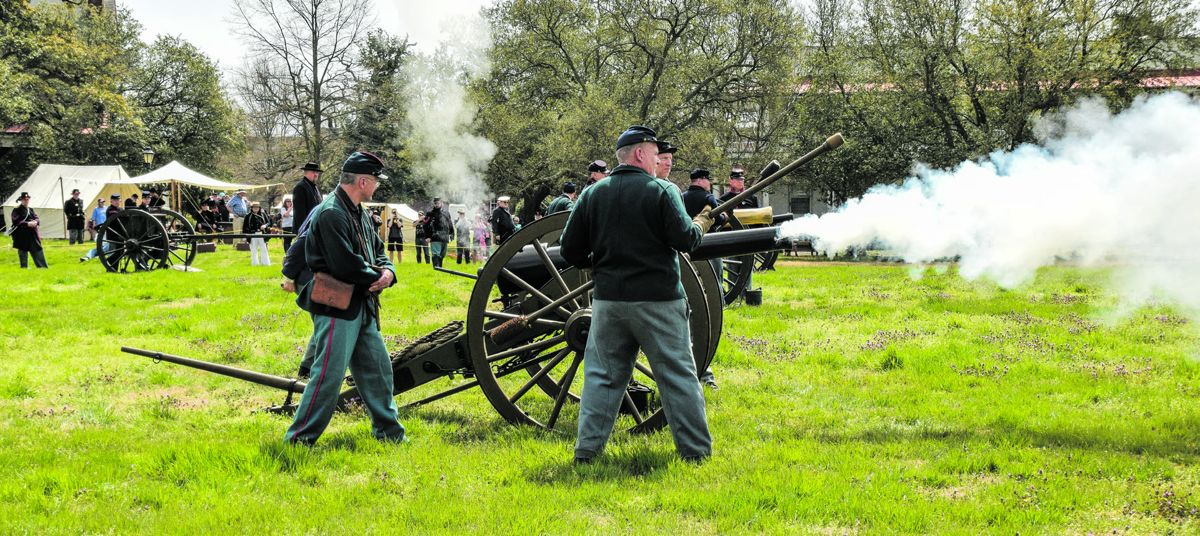
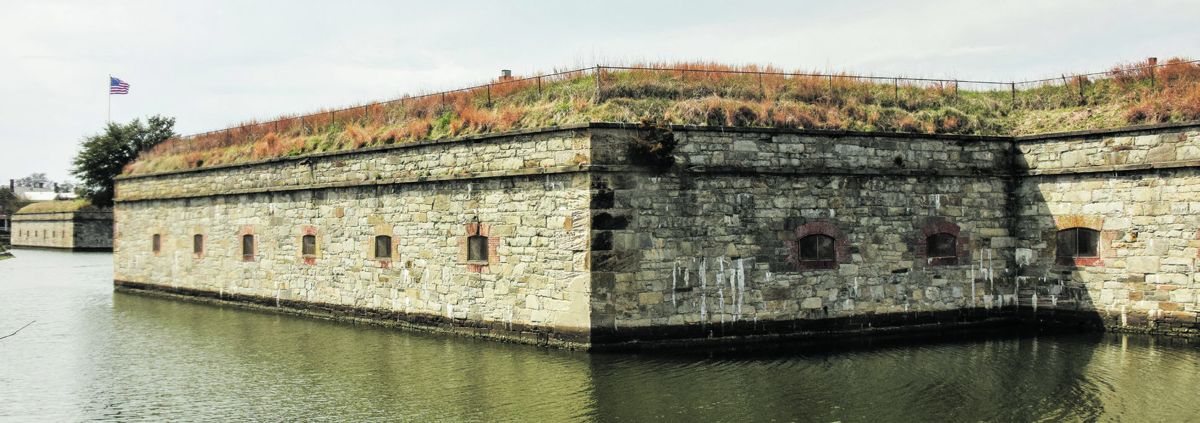
General McClellan’s Army of the Potomac was gathering at Old Point Comfort in Hampton, Va., to begin the 1862 Peninsula Campaign. “It is, and has been, an annual event. We anticipate it will continue,” said Firth. “In fact, it is scheduled for the same weekend next year, the last full weekend in March,” he noted. “We hope to have many of these same soldiers return.” McClellan landed his troops at Fort Monroe and marched northwest up the Peninsula toward Richmond in the spring of 1862. It was the first large scale Union operation in the Eastern Theatre of the Civil War. While McClellan had some success early, his ill-fated campaign failed to achieve its goal to capture Richmond. Newport News resident Kevin Ritton serves as the bugler for the 99th New York Infantry Regiment. Ritton is no stranger to Fort Monroe. “We’re actually trying to promote Fort Monroe as a venue for Civil War re-enacting,” said Ritton. “This is an A-number one site. The post was actually in use during the Civil War. McClellan had his quarters here,” he said. “Just outside the fort, where the town of Phoebus is now, was Camp Hamilton. This is a very important site.” Artillerist Chris Hoggard, a Hampton native, has been familiar with Fort Monroe his entire life. He relishes the opportunity to come out to the fort and participate in the artillery demonstrations with the 4th U.S. Artillery, Battery K. Hoggard was engaged as a gun crew member firing a 3-inch ordnance rifle. “This is a great place. Just look at the quad here. This is a great place to do demonstrations. It’s just built for that,” said Hoggard. “It’s great being on an historic site where they allow stuff like this,” he said. “Some battlefields allow demonstrations, but there are not too many places with the history of Fort Monroe.” Living historian Tony Gabrielli brought Major General Benjamin F. Butler back to life during Garrison Life at Fort Monroe: A Gathering of Steel for the Peninsula Campaign 1862. “You look around and you see the walls and the buildings that were here during the Civil War,” said Tony Gabrielli. “Over there is Old Quarters Number One where General Butler sat in his headquarters.” When three enslaved men fled to Fort Monroe to escape their bonds, Gen. Butler learned they had been involved in constructing fortifications for the Confederates at Sewell’s Point. Butler declared the men to be contraband of war and refused to return them as required by the Fugitive Slave Act. “Somehow word of what Butler had done had gotten around,” said Gabrielli. “From then on thousands of enslaved people came to Fort Monroe. They were set up in contraband camps under the protection of the army,” Gabrielli said. “Fort Monroe became known among them as ‘Freedom Fort’.” Tom Reed of Cockeysville, Md., made the 4 ½ hour drive to Fort Monroe and exchanged his Fort McHenry Guard uniform for that of an artillery artificer to participate in the event. It was his second visit to the historic site. “I love it. This is a great fort. We could probably fit four Fort McHenrys in here,” said Reed. “This is a wonderful fort, and it has a real moat around it. Ours is a dry moat.” “Aaron [Ranger Aaron Firth] did a good job this year with increasing the number of people. Last year, there weren’t too many,” said Reed. “This year, he’s looking at 100 to 150 people so we have a larger crowd which is impressive.” Missy Polonsky of Gloucester, Va., was among the very few women engaged in the
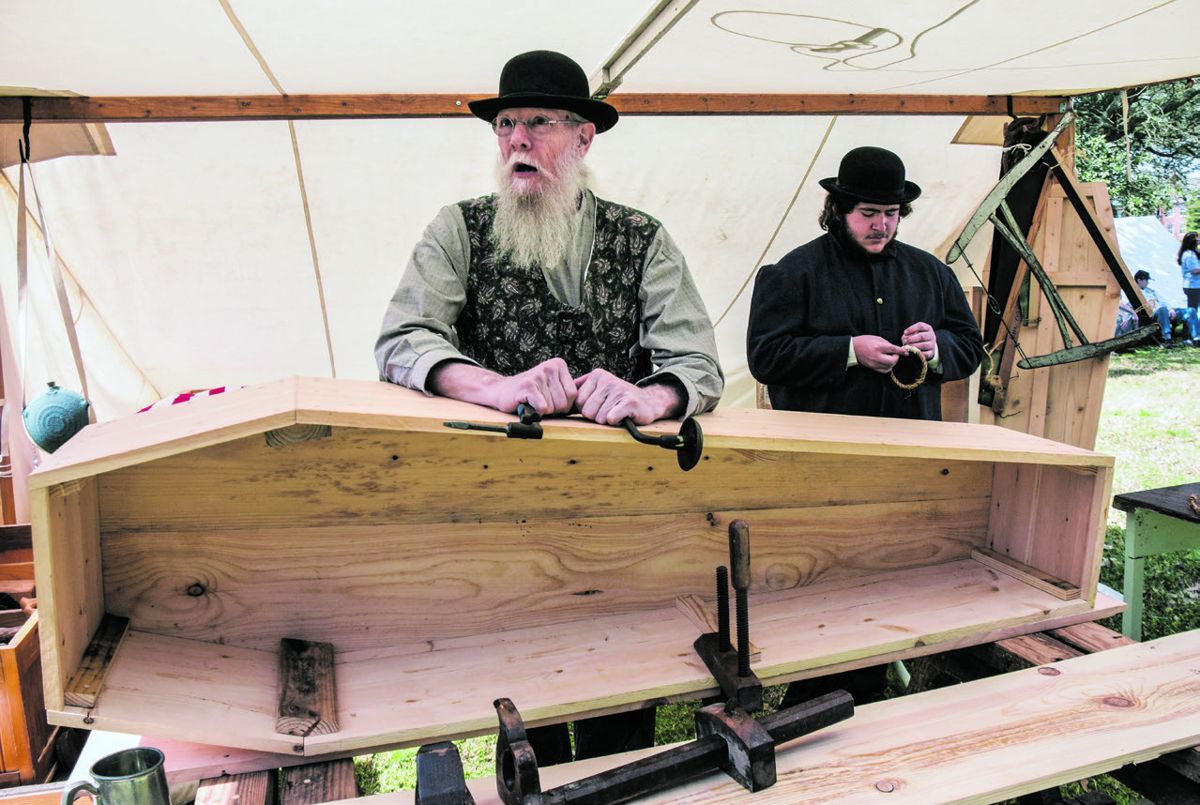
CWH Brigdon casket maker, weekend event as a costumed living historian. “Women,” explained Polonsky “would not have traditionally been in camp. There were a few exceptions, usually paid laundresses attached to the units or married to one of the men.” “Soldiers wrote letters home asking their mothers not to visit them in camp because they didn’t want their mothers exposed to the coarse language,” said Polonsky. “Camps were rough, very, very rough,” said Polonsky. “Most people who came to visit [Fort
Monroe] would have stayed at the Hygeia Hotel,” she said. “It was originally constructed around 1822 when they were first building the fort.” The Proud Hound Commissary, proprietor John Saporito, was set up on the edge of the parade ground. It offered visitors and living historians an enticing look at an important means used by the Union Army to supply soldiers with the necessary provisions,— the chuck wagon. John Saporito of Newport News seized the weekend event as an opportunity to draw public attention to his vintage wagon manufactured by the Weber Wagon Company in Chicago circa 1870. Saporito purchased the wagon from a cowboy in Texas and brought it east. It has a military carriage. “The only thing that might be different here is that this is a postwar configuration in terms of the cabinet,” said Saporito. “The army had various cabinets in the backs of their wagons.”
Saporito is interested in marketing his classic Weber wagon as a working kitchen for wedding shoots, western shoots, or church cookouts. “I cook for re-enacting units as well,” said Saporito. “If they don’t have a cook or they’re looking for someone to cook for the weekend, I’ll provide that service.” Chuck Veit and his associates with the Navy and Marine Living History Association and the U.S. Naval Landing Party re-enacting group came from as far away as North Attleboro, Mass., to share their expertise in naval history and ordnance with event visitors. Veit is also the author of “five different books on unique naval research.” “We’ve been at it about 20 years now,” said Veit. “I’m just happy to get a patch of grass. That’s all we need a patch of grass and people who are interested in learning the history,” said Veit. “We’ve never done anything here at Fort Monroe before. It’s a bit of a haul.” Veit’s unit represented a landing party of sailors put ashore to carry out a variety of missions. They would’ve been engaged in rescuing fleeing Unionists, participating in slave raids to free people, or attempting to capture Confederate officers. “Typically, the Navy would not be in ranks with the Army. We let the Army set up the battle, and we come in from the flanks,” said Veit. “Sometimes we stumble into a battle. That’s something the Navy did that all of the time.” Bob Ruegsegger is an American by birth and a Virginian. His assignments frequently take him to historic sites throughout Virginia, the Mid-Atlantic, and the Southeast. His favorite haunts include sites within Virginia’s Historic Triangle—Jamestown, Yorktown, and Williamsburg. Bob served briefly in the U.S. Navy. He is a retired educator and has been an active newspaper journalist for the last twenty years.