
This And That
Mississippi was in our hands
By Gould Hagler · Originally published July 2019 · pp. 10–11
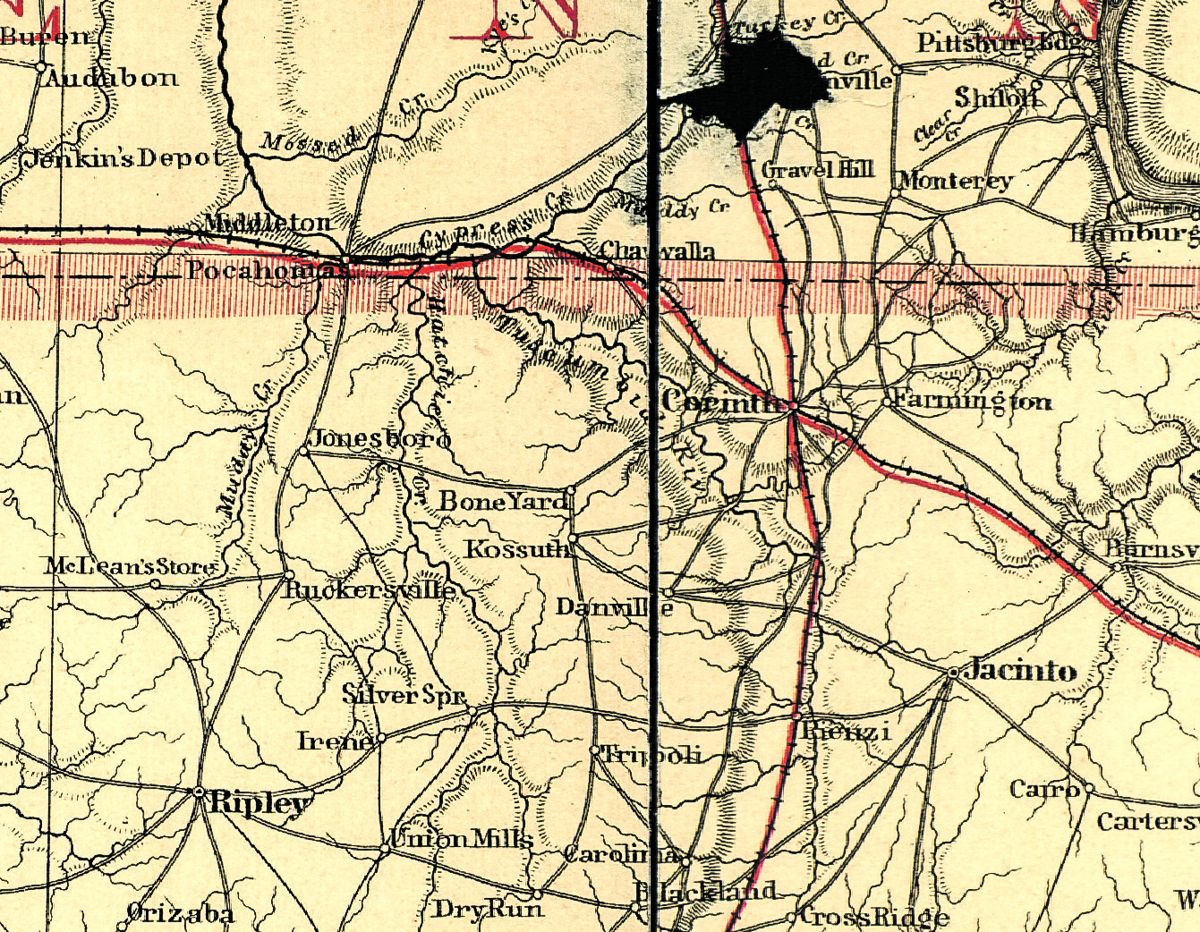
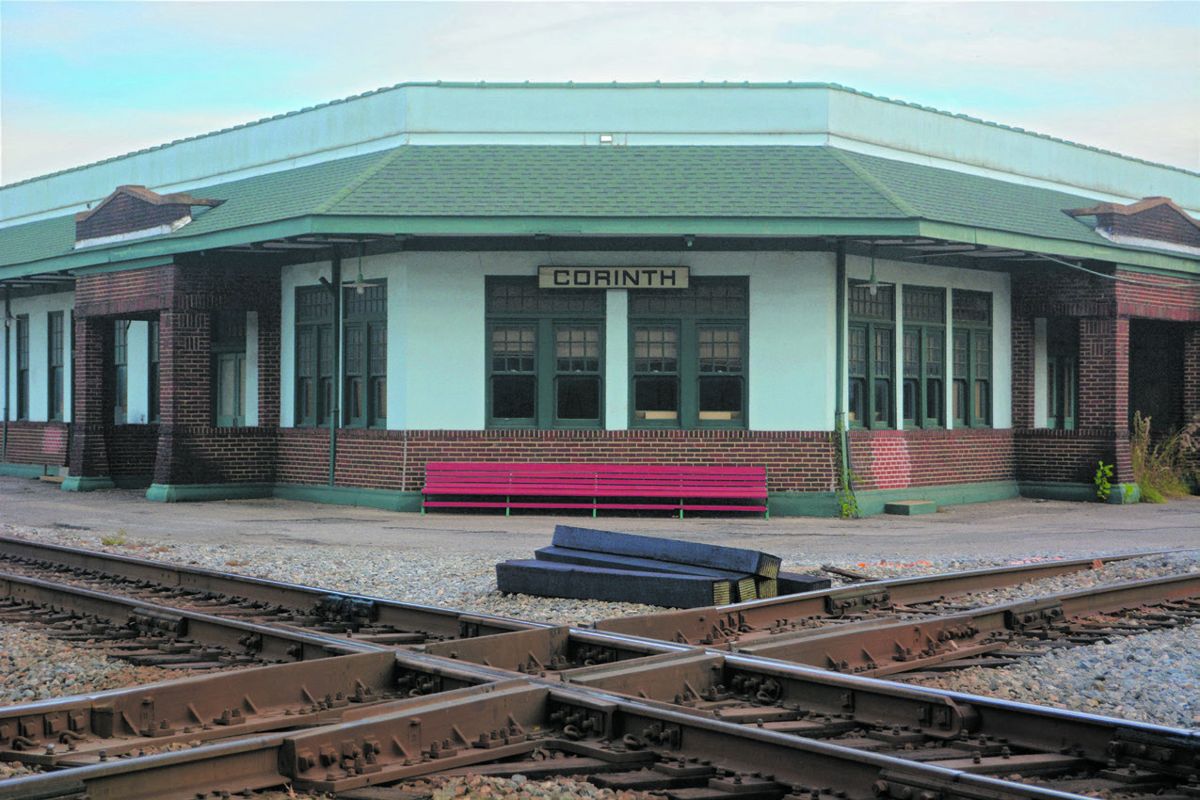
Mississippi was in our hands In May 1862, seven weeks after Shiloh, the Confederates were compelled to evacuate Corinth, Miss. Four months later they tried to take back the important railroad junction, but failed in a two-day battle ending the afternoon of October 4. Under Maj. Gen. Earl Van Dorn, the Southern forces withdrew to the northwest, the direction from whence they came; aiming to cross two rivers, then head south toward Ripley and Holly Springs. The Federals, commanded by Maj. Gen. William S. Rosecrans, followed, hoping to destroy the defeated Confederate army. In this column we will march with Rosecrans’s men in their pursuit and, in addition, take a look at the controversies that arose in this aftermath of the Battle of Corinth. Rosecrans was subordinate to Maj. Gen. Ulysses S. Grant, who commanded the Department of the Tennessee from his Jackson, Tenn., headquarters 58 miles north of Corinth. In his report dated Oct. 30, Grant states: “As shown by the reports [of subordinate officers] the enemy was repulsed at Corinth at 11 a.m. and was not followed until the next morning. Two days’ hard fighting without rest probably had so fatigued the troops as to make earlier pursuit impracticable.” Grant says that he “regretted this,” as swifter pursuit would have been more damaging to the enemy, but he assigns no blame for the delay. His memoirs tell a different story. “General Rosecrans…failed to follow up the victory,” Grant writes, “although I had given specific orders in advance of the battle for him to pursue the moment the enemy was repelled. He did not do so, and I repeated the order after the battle.” Continuing his criticism of Rosecrans’s performance, Grant provides more detail. “Rosecrans did not start in pursuit till the morning of the 5th and then took the wrong road. Moving in the enemy’s country he travelled with a wagon train to carry his provisions and munitions of war. His march was therefore slower than that of the enemy, who was moving toward his supplies. Two or three hours of pursuit on the day of the battle, without anything except what the men carried on their persons, would have been worth more than any pursuit commenced the next day could possibly have been. Even when they did start, if Rosecrans had followed the route taken by the enemy, he would have come upon Van Dorn in a swamp with a stream in front and [a Federal force under Maj. Gen. Edward] Ord holding the only bridge; but he took the road leading north to Chewalla instead of west, and, after having marched as far as the enemy had moved to get to the Hatchie, he was as far from the battle as when he started.” So, according to Grant, the enemy was repulsed at 11 a.m.; Rosecrans disobeyed an order to pursue “the moment the enemy was repelled;” he marched on the wrong road and burdened himself with an unnecessary wagon train; and after a long march he was as far from Van Dorn’s army as when he started. Let’s start with the time of the repulse, a minor but significant question. The earlier the repulse, the longer the gap between the battle’s end and the pursuit’s beginning; moreover, longer fighting would mean more casualties and wearier troops. No report other than Grant’s mentions a time as early as 11 a.m. Most state no time at all, and those that do range from noon until 2 p.m. One Union report states that the Confederates broke through the works and into the town at 11:30. A Confederate brigade commander mentions that he was ordered forward at 11 a.m. The discrepancy is not great, but 11 a.m. is clearly incorrect and the records provide no basis for Grant’s assertion. We next examine the claims that Rosecrans took the wrong road and impeded his progress with a wagon train. A glance at the map shows that the road to Chewalla goes not north from Corinth, but to the northwest. At Chewalla the road bends to the west toward Memphis, crossing the Tuscumbia River at Young’s Bridge and then the Hatchie River at Davis’s Bridge. This is the route taken by Rosecrans, and it is also the route taken by the army he was pursuing. Numerous reports confirm this. In his Oct. 25 report Rosecrans writes that “The enemy blew up several ammunition wagons between Corinth and Chewalla,
(Library of Congress)
Gen. William S. Rosecrans. (Library of Congress) and beyond Chewalla many ammunition wagons and carriages were destroyed, and the ground was strewn with tents, officers’ mess-chests, and small arms.” A detachment commanded by Brig. Gen. James B. McPherson led the pursuit. McPherson’s report states that his command “shortly after daylight on [Oct. 5] started in pursuit of the enemy on the road north of the railroad to Chewalla…when about 6 miles from Chewalla heavy firing was heard in the direction of Davis’ Bridge across the Hatchie River….” (This was Ord’s force that Grant’s memoirs allude to, coming from the north to block the Confederates at Davis’s Bridge.) The report of Capt. Joseph Smith, commanding the 5th Ohio Cavalry, states that he was pressing on Van Dorn’s rear. “At Chewalla,” Smith writes, “I had a severe skirmish with the enemy’s rear guard…. He soon left upon the approach of the main column, and we again pursued him, coming upon him near the Tuscumbia, at Young’s Bridge.” This column could be lengthened unnecessarily with quotes from other accounts. The Confederates took the road to Chewalla. Rosecrans followed. What of the wagon train?
The reports contain no reference to any train except the one belonging to a single division. Rosecrans dealt with this problem on the first day of the pursuit. “Halt your train, turn it out, and park it,” read the order from Rosecrans’s chief of staff. “I am told it is a mile long. Take nothing with you but ammunition and ration wagons. You have left our advance force without a support by your tardy movements. You are in the way of other divisions.” Hours after the start of the pursuit Rosecrans learned of the trouble and ordered it fixed. The Union force was pursuing on the right road, slowed for a time by one division’s wagon train. What was the nature of this pursuit? Federal reports tell of a harried Confederate army with an enemy nipping at its heels. Col. John Mizner commanded the cavalry division. His report, dated Oct. 19, states that his brigades “formed two flanking columns, [with one] moving on the north side [and the other] on the south side of the Chewalla road, making frequent dashes at the enemy’s flanks, harassing them, hanging continually on their skirts, and impeding their retreat….” From McPherson’s report: “After crossing the Tuscumbia and the Hatchie…, the evidences of a most rapid retreat, almost a rout, were apparent. The road was strewn with tents, blankets, clothing, wagons, small-arms, ammunition, six caissons, and a battery-forge, some of them blown up and partially destroyed and others in good condition.” Brig. Gen. John McArthur’s Division marched behind McPherson’s force for much of the pursuit. McArthur’s description is similar to McPherson’s. He writes of “capturing many prisoners and causing the enemy to abandon and destroy much of their property in arms, artillery, ammunition, and camp equipage,” as he followed the route to Ripley before his return to Corinth. Return to Corinth? Yes, at 8:30 p.m. on Oct. 7 Grant ordered Rosecrans to halt the pursuit and return to Corinth. In a midnight dispatch Rosecrans exhorted Grant to reconsider. “We have defeated, routed, and demoralized the army which holds the Lower Mississippi Valley…. All that is needed is to continue pursuing and whip them. We have whipped, and should now push to the wall and capture all the rolling stock of their railroads….. If…you still consider the order to return to Corinth expedient I will obey it and abandon the fruits of a victory, but I beseech you bend everything to push them while they are broken and hungry, weary and ill-supplied.” Grant did reconsider, and told Rosecrans to stay in place until he consulted with General-inChief Halleck. On the morning of Oct. 8 Grant sent a dispatch to Halleck advising him that “Rosecrans has followed the rebels to Ripley…. I ordered Rosecrans to go back [to Corinth] last night but he is so averse to returning that I have directed him to remain still until you can be heard from.” Later that same day Grant changed his mind, telling Halleck “On reflection I deem it idle to pursue farther without more preparation, and have ordered for the third time his return.” Halleck’s reply has an incredulous tone: “Why order return of our troops? Why not re-inforce Rosecrans and pursue the enemy into Mississippi…?” Grant sent Halleck his reasons: inability to subsist on the country; the expected arrival of Confederate reinforcements; and the troops’ exhaustion. Grant told Halleck that there was a possibility of “partial success…from farther pursuit” but predicted that “disaster would follow in the end.” Grant added: “If you say so, however, it is not too late to go on….” Halleck, quite naturally, deferred to Grant’s judgment. In his Oct. 30 report, Grant says this about his order to halt. “When I ascertained that the enemy had succeeded in crossing the Hatchie I ordered a discontinuance of the pursuit…. This I regarded, and yet regard, as absolutely necessary to the safety of our army. They could not possibly have caught the enemy, before reaching his fortifications at Holly Springs, where a garrison of several thousand troops were left that were not engaged in the battle for Corinth. Our own troops would have suffered for food and suffered greatly from fatigue.” We conclude with a discussion of the order referred to in Grant’s memoirs, “specific orders in advance of the battle for him to pursue the moment the enemy was repelled.” No such order is to be found in the records, nor is there any reference to this order in after-action reports or correspondence. The silence in the records is all but conclusive, but beyond that we should ask whether an order of this kind makes any sense, and whether such an order is likely to be issued by a commander 58 miles from the scene with communication slowed because of a broken telegraph line. Specific orders. In advance of the battle.
The moment the enemy was repelled. The battle had not yet begun. Neither Grant nor anyone else knew how long the fighting would last, what time of day or night it would end, how heavy the losses on each side would be, what condition the opposing forces would be in when the battle ceased, or even if the Confederates would be the ones retreating. On Apr. 22, 1865, Rosecrans appeared before the Joint Committee on the Conduct of the War. He testified on the Confederates’ condition after the Battle of Corinth and the subsequent pursuit. “The enemy was exhausted; his cavalry, eighteen regiments strong, gave way everywhere to our four little [cavalry] regiments. Numbers of deserters and stragglers were scattered through the woods in all directions, and were constantly being picked up by our men….” Numerous indications led Rosecrans to the conclusion that “the enemy considered himself thoroughly whipped…. Mississippi was in our hands.” “Mississippi was in our hands,” said Rosecrans, when Grant ordered a halt. Irony abounds. Grant, known for his aggressiveness, was critical of Rosecrans for not being sufficiently aggressive in failing to pursue “the moment” the Confederates were repulsed. On Oct. 8, over his subordinate’s strong protests that continued aggressive pursuit would reap great benefits, he ordered Rosecrans to return. Furthermore, Grant tells Halleck, “your call,” but phrases the choice in such a way that Halleck really had no choice. If the man on the scene (or at least close to the scene) predicts disaster how can a commander in Washington say “go ahead”? At the same time Grant does not defer to the judgment of the general who is in immediate command of the troops chasing Van Dorn. Rosecrans judged his men too tired to begin the pursuit on Saturday afternoon. He was wrong. Four days later, Rosecrans reckoned his men fit for continuing the chase, and judged the Confederates unable to stop the Federals. Wrong again. As time passed and Grant was writing his memoirs, Rosecrans got even wronger. Further reading: The reports and dispatches referenced— and much else that is relevant to the topic—are in the Official Records, Series I, Vol. XVII, Parts I and II. Rosecrans’s testimony on the battle and pursuit is found on pages 20-24 of “Rosecrans’s Campaigns” in Joint Committee on the Conduct
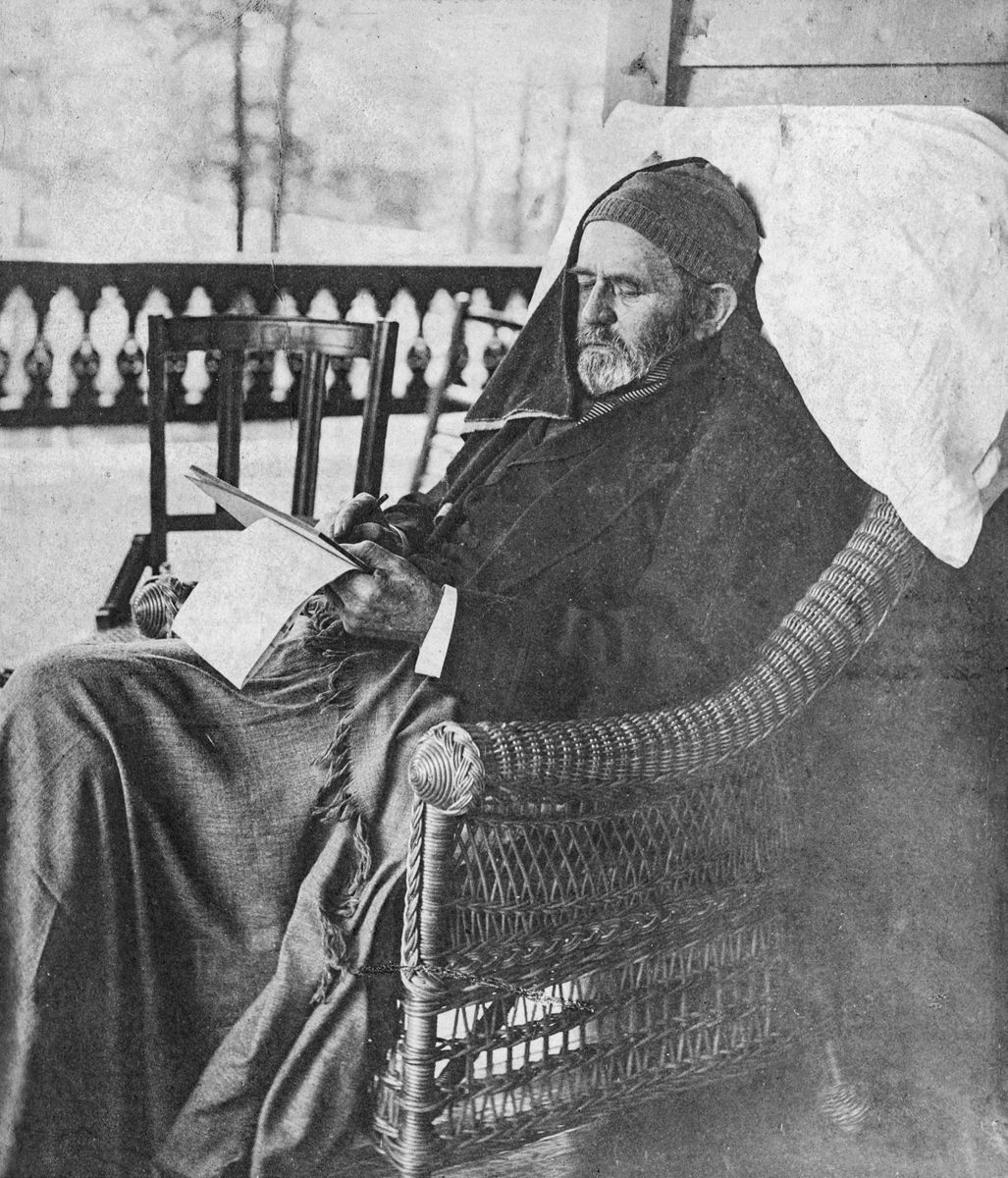
Gen. U.S. Grant writing his memoirs, Mount McGregor, June 27, 1885. (Library of Congress) of the War at the Second Session Thirty-Eighth Congress. His article “The Battle of Corinth” is in Battles and Leaders of the Civil War. All of these documents are easily found online. There are two biographies of Rosecrans: The Edge of Glory: A Biography of General William S. Rosecrans, U.S.A. by William M. Lamers (Louisiana University Press, 1999) and William S. Rosecrans and the Union Victory: A Civil War Biography by David G. Moore, (McFarland & Company, 2014). General Grant and the Rewriting of History, by Frank P. Varney (Savas Beatie, 2013) was reviewed in the February 2019 issue of Civil War News. The subtitle of Varney’s book best describes its contents: “How the Destruction of General William S. Rosecrans Influenced Our Understanding of the Civil War.”
Gould Hagler is a retired lobbyist living in Dunwoody, Ga. He is a past president of the Atlanta Civil War Round Table and the author Georgia’s Confederate Monuments: In Honor of a Fallen Nation, published by Mercer University Press in 2014. Hagler speaks frequently on this topic and others related to different aspects of the Civil War and has been a regular contributor to CWN since 2016. He can be reached at gould. [email protected]. Hagler is a distant cousin of General Grant’s (sixth cousin five generations removed).