
Black Powder, White Smoke
More on Bullet Lube & Weapons for Reenactments and Shooting
By Joe Bilby · Originally published January 2019 · pp. 8–9
In response to my last column on British ammunition problems in India during the Sepoy Rebellion, my friend Bill Adams added that, “They were still using the old formula powder and .568” diameter bullets during the Sepoy Rebellion.” He posited the heat melted tallow in the lube causing the paper patch wrapping causing the bullet’s paper path wrapping to swell, thus increasing diameter. He also cited an 1859 British ammunition manual that claimed “acids in the animal fat also caused the bullets to corrode in warm climates” like India. The original lube was apparently intended as a compromise formula for use in all climates, but the India problems revealed to the British that beeswax worked in all climates.
Bullet Diameters I had always thought that if anyone had consistent ammunition criteria in the nineteenth century, it would be the British, but Bill Adams, my go to Enfield guy, says not so. Bill advised that “an analysis of 100 imported British .577 bullets done back in the 1970’s came up with seven different lengths, seven different diameters, and eight different cavity depths.” These characteristics also led to differences in bullet weight. Bill went on to note that: “There were numerous code/maker’s marks made in the cavities by the compressing rods when the bullets were formed.
Given the wide variations in the quality of powder, bullet diameters, lubes, and other factors, even a good marksman was at a disadvantage. The Confederates certainly tried very hard to develop a system of quality control while making British style Enfield cartridges, but made slow
The Revival of Historical Firearms This subject is not specifically about the Civil War but is interesting as it provides some of the origin story of the muzzle loading rifles used in modern living history presentations, reenactments, and North-South Skirmish Association target shooting. In the early 20th century, there wasn’t much interest in target shooting, hunting, reenacting battles, or creating historical interpretation presentations using the weapons of the past, and, unlike today, no craftsmen were creating custom copies of the arms of yesteryear, nor were any companies making affordable reproductions.
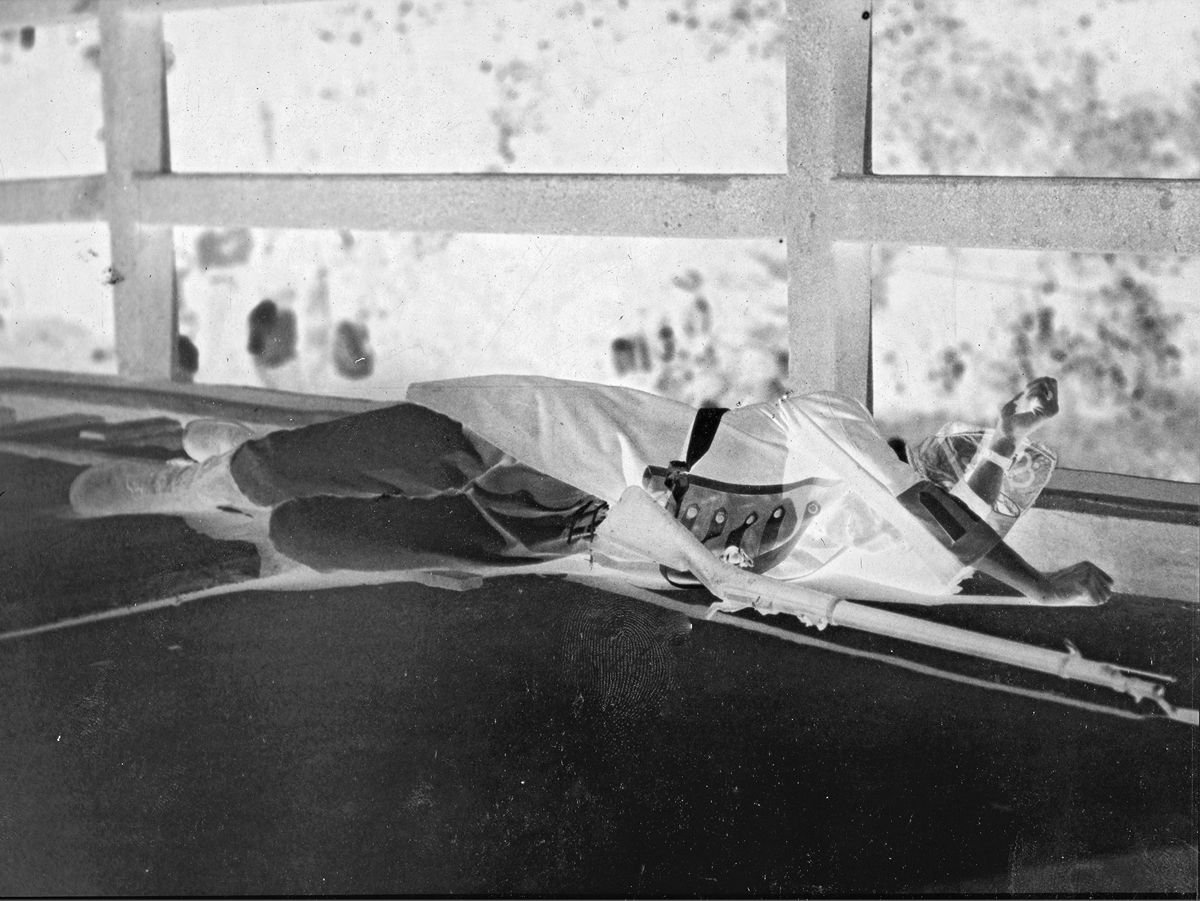
A British casualty, actually a Mass. National Guardsman, lies on Concord Bridge in 1930, his Model 1873 Springfield by his side. (Joseph Bilby Collection)
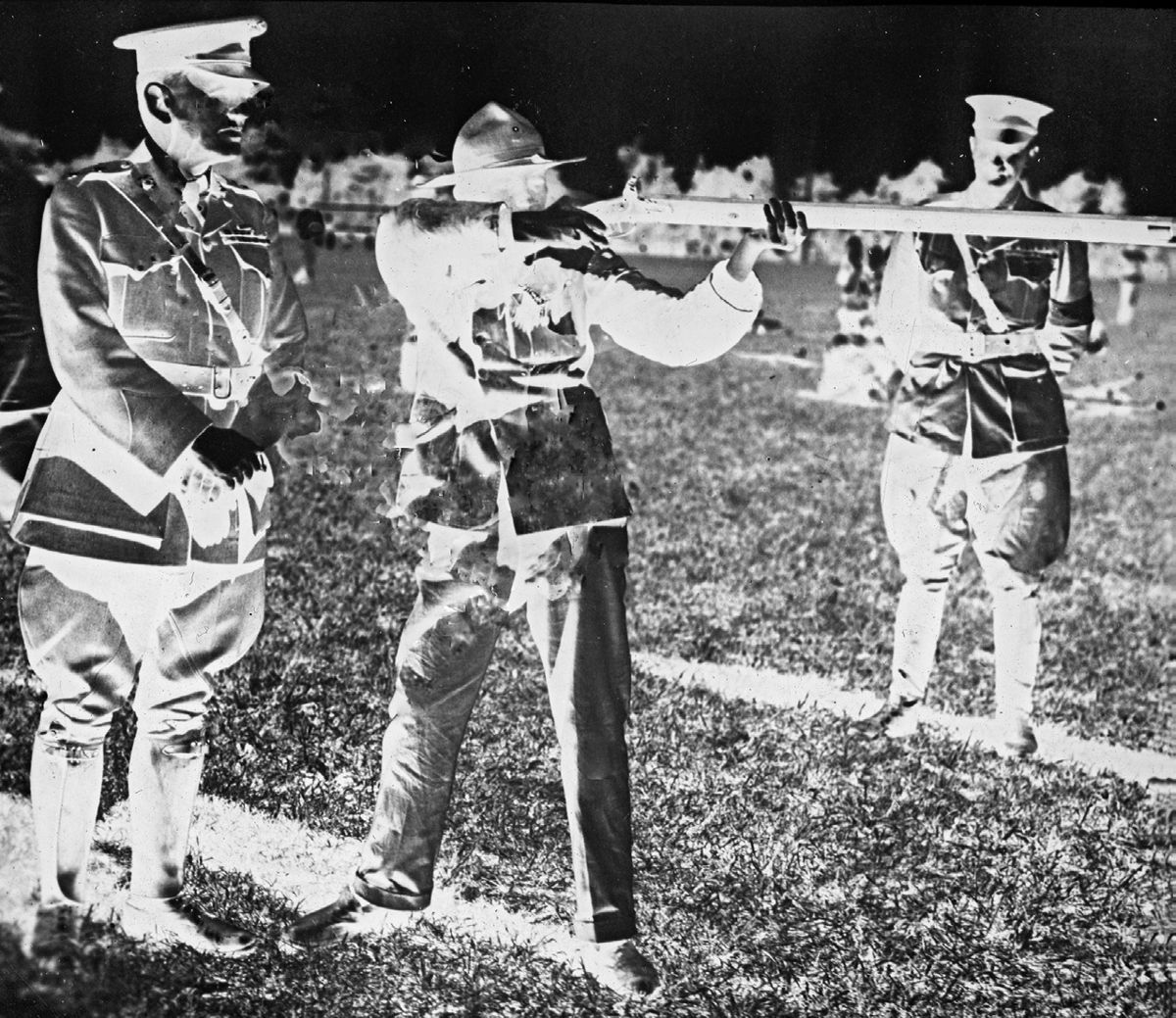
David McDougal takes aim with a Pennsylvania long rifle at Sea Girt, N.J., in 1926.
More on Bullet Lube & Weapons for Reenactments and Shooting Bullet Lube Analysis
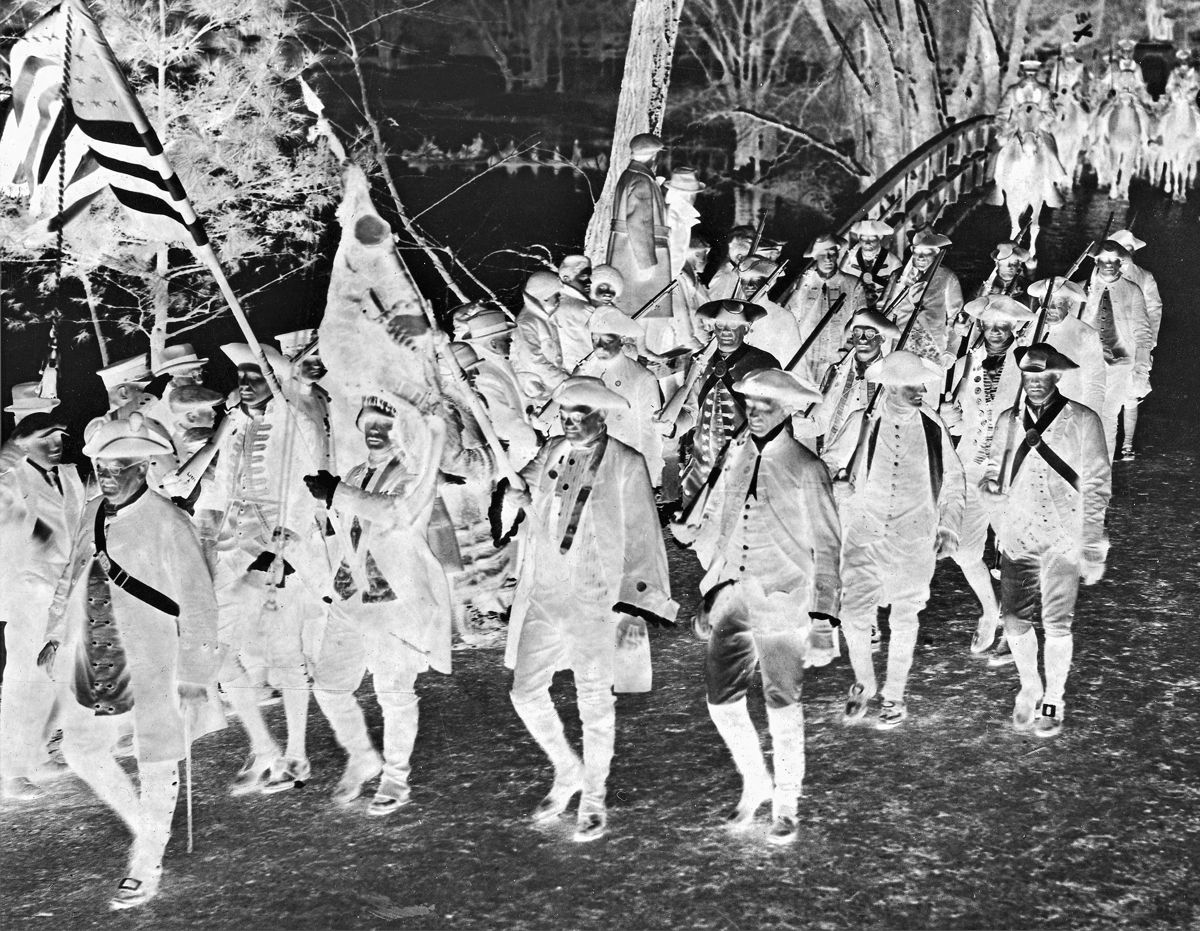
Although there were sporadic attempts at reenactments of historical battles in the 19th century, the modern concept of the art form, while noticeably imperfect, originated with the Sesquicentennial of the American Revolution in 1925. A photograph of the 1925 parade commemorating the Battle of Concord Bridge reveals marching “militiamen” armed with cobbled together muskets featuring the percussion ignition system that was not adopted by the military until the 1840s, although there is one individual shouldering what appears to be an original British land pattern flintlock musket. At the time of the 1930 reenactment, a photograph of a British “casualty,” lying on the “rude bridge that arched the flood” at Concord with his weapon alongside him, reveals it is a Model 1873 Springfield rifle with the 1879 pattern rear sight. In the early 1930s, interest in shooting original and custom-made muzzle loading rifles as sport, whether at targets or for hunting, became more popular and resulted in the founding of the National Muzzle Loading Rifle Association (NMLRA), an organization that still exists with a headquarters, museum, and a range that hosts national shoots in Friendship, Ind. The NMLRA also charters local clubs around the nation. Popular films of the day usually used the readily available trapdoor Springfields as a Civil War arm, and these guns were also, with fake flintlocks attached, seen in stories set in the 18th century. They were readily available and easier for extras to reload. Original weapons were occasionally used in close ups, however, most notably in The Red Badge of Courage. There were plenty of original arms still available at the approach of the Civil War Centennial for both shooters and reenactors, although prices began to rise. Beginning in the 1950s and 1960s, the growth of the North-South Skirmish Association, the Civil War Centennial reenactments, and the formation of the Brigade of the American Revolution, as well as the establishment of muzzle loading hunting seasons in many states, led firearms entrepreneur Val Forgett to establish Navy Arms, which became a major retailer of imported reproductions of historic guns. Navy Arms was later joined by other companies. Before all of this, however, there was a long forgotten precedent set in Sea Girt, N.J., during an interstate civilian and military target match at the N.J. National
Guard range in 1926. A contemporary photo was captioned thusly: “Memories of American pioneers were revived in the great interstate rifle and pistol matches at Sea Girt by the Daniel Boone Match, in which weapons of ancient vintage that kick like the proverbial Missouri Mule are aimed at targets only fifty feet away. It is hard on the shoulders that are not sturdy enough to take the shock of a Dempsey or Tunney punch. The Daniel Boone match was one of the feature events at Sea Girt. Major General John A. Lejeune, Commandant of the Marine Corps, is watching David McDougal, 15-yearold son of Lt. Col. Douglas C. McDougal, try his luck with the obsolete firearm. The lad was the youngest entrant in the match and is following in the footsteps of his father, a nationally known rifleman, shown in the background on the right.” Of course, a Springfield Model 1903 rifle in .30-06 caliber recoiled far more severely than one of “ancient vintage,” but the reporter obviously did not personally compare the two. Joseph G. Bilby received his BA and MA degrees in history from Seton Hall University and served as a lieutenant in the 1st Infantry Division in 1966–1967. He is Assistant Curator of the New Jersey National Guard and Militia Museum, a freelance writer and historical consultant and author or editor of 21 books and over 400 articles on N.J. and military history and firearms. He is also publications editor for the N.J. Civil War 150 Committee and edited the award winning New Jersey Goes to War. His latest book, New Jersey: A Military History, was published by Westholme Publishing in 2017. He has received an award for contributions to Monmouth County (N.J.) history and an Award of Merit from the N.J. Historical Commission for contributions to the state’s military history. He can be contacted by email at [email protected].