
Appreciating the Legacy of General James Longstreet
By Thomas H. Rasmussen · Originally published January 2019 · p. 32
A Civil War fortification on the James River in Virginia
JUNE 1-2, 2019 FORTPOCAHONTAS.ORG
By Thomas H. Rasmussen The Longstreet Society The Longstreet Society, headquartered in the LongstreetPiedmont Hotel, Gainesville, Ga., works to promote greater understanding of the life and times of General James Longstreet, whose support for post-Civil War centrist politics of compromise is essential to our understanding of Reconstruction and relevant today. Founded in 1994, the Longstreet Society is preparing to celebrate its 25th anniversary and welcome visitors to its gardens, library, and museum to enjoy Longstreet’s success as a military leader and his advocacy of compromise and civility in politics. Following defeat of the Confederacy in 1865, General Longstreet participated in a debate about the appropriate response to Northern victory in the War Between the States. Longstreet advocated compromise and civility in public discussion of post-war issues. He favored negotiating with Northern victors about how to implement Reconstruction as well as how to integrate newly freed black citizens into post-Civil War society. Longstreet favored encouraging responsible black leaders and integrating black people into a new political and economic order. Longstreet argued that the best recourse was to join the Republican Party and shape it to Southern ends. “Since the Negro has been given the privilege of voting,” thought Longstreet, “it is all important that we should exercise such influence over that vote to prevent its being injurious to us, and we can only do that as Republicans.” Few Georgians agreed with Longstreet’s message in 1870. However, one-hundred years later in the 1960s, his ideas finally took hold; most white Georgians began to accept that Northerners should be welcome to invest, work, and live in the South and that more harmonious relations between white people and black people were essential. For 100 years after the Civil War, Lost Cause writers unfairly blamed Longstreet for the South’s defeat in the righteous war against Northern aggression. Charges that Longstreet erred in advising General Robert E. Lee on military strategy and battlefield tactics filled the pages of the Southern Historical Society’s papers. Confederate generals wrote their memoirs primarily to defend their own military reputations and to assign blame for battlefield reverses to others, especially Longstreet. General Lee never spoke in Longstreet’s defense. He was ill after the war and never wrote his memoirs before he died in 1870. Subsequently, he became a faultless hero in Southern eyes, the great leader who Longstreet, his trusted confidant and principal military adviser, betrayed. Neither was Longstreet adept at mounting his own defense. He criticized Lee unnecessarily and harshly, never fully appreciating that Lost Cause advocates canonized Lee as the invincible symbol of the Confederacy. Longstreet’s appointments to Federal positions in the 1860s and 1870s opened him to the charge of being a scalawag, a greedy and self-serving beneficiary of Northern patronage. Longstreet’s reputation as a traitor to the Confederacy was complete when in 1874 an interracial militia in New Orleans under his command killed and injured many Confederate veterans protesting harsh Reconstruction policies.
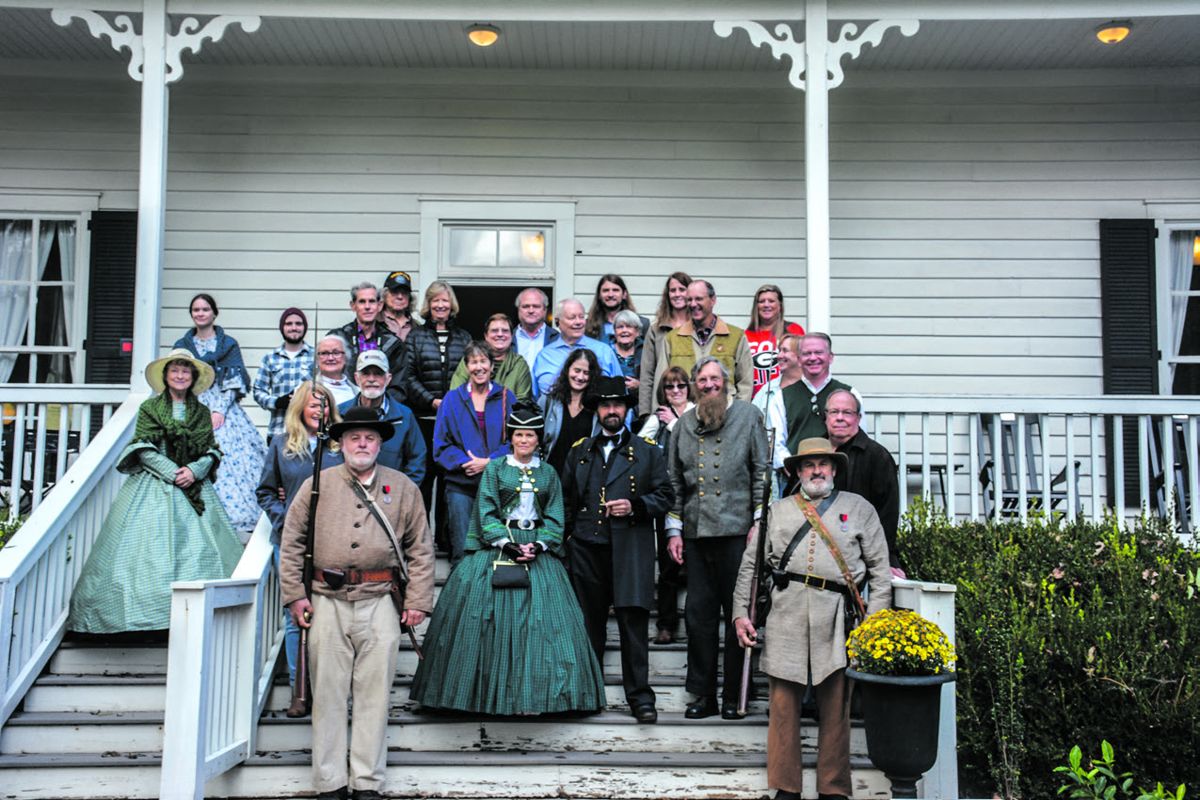
Longstreet left New Orleans in 1875 and lived in Gainesville, Ga., for the rest of his life, presiding over the Piedmont Hotel, tending his vineyards, traveling to Northern veteran’s gatherings, and writing Manassas to Appomattox: Memoirs of the Civil War. Today the Longstreet Society has nearly 300 members and welcomes some 1500 visitors each year, including school groups. To welcome visitors to the 25th anniversary year, the museum holdings are being expanded and presentation improved. Longstreet museum library contains an extensive collection of 19th-century newspaper articles, unpublished papers, letters to and from Longstreet, and rosters of Civil War soldiers for visitors to consult. Longstreet Society annual seminars encourage research on Longstreet’s life and times. Recent seminars in Greenville, Tenn., and Richmond, Va., featured bus tours to important Civil War sites and presentations by important historians. New gardens now surround the hotel, featuring heritage camellias, gardenias, tea olives, other shrubs, and perennials, plants sold in the 1870s catalogs of the Beckman’s Nursery in August, Ga., with which James Longstreet would have been familiar since it was located adjacent to his uncle’s plantation—now the 13th hole of the Masters’ Golf Tournament. On October 27, one hundred visitors enjoyed a festive celebration of General James Longstreet. The day featured conversations between General Longstreet and his friend Ulysses S. Grant (a.k.a. Dr. Curtis Fields), guided tours of the museum and gardens, musicians in costume playing Civil War era songs, and a Sons of Confederate Veterans encampment on the grounds. To arrange tours of the museum and surrounding 1875 heritage gardens, visit longstreetsociety.org or call 770 539 9005. Longstreet-Piedmont Hotel at 827 Maple St., Gainesville, Ga., is open from 10 a.m. to 4 p.m. Wednesday through Saturday.
Want To Advertise In Civil War News?