
A Quaker Goes to War
By Bruce Allardice and Wayne Wolf · Originally published January 2019 · pp. 24–25
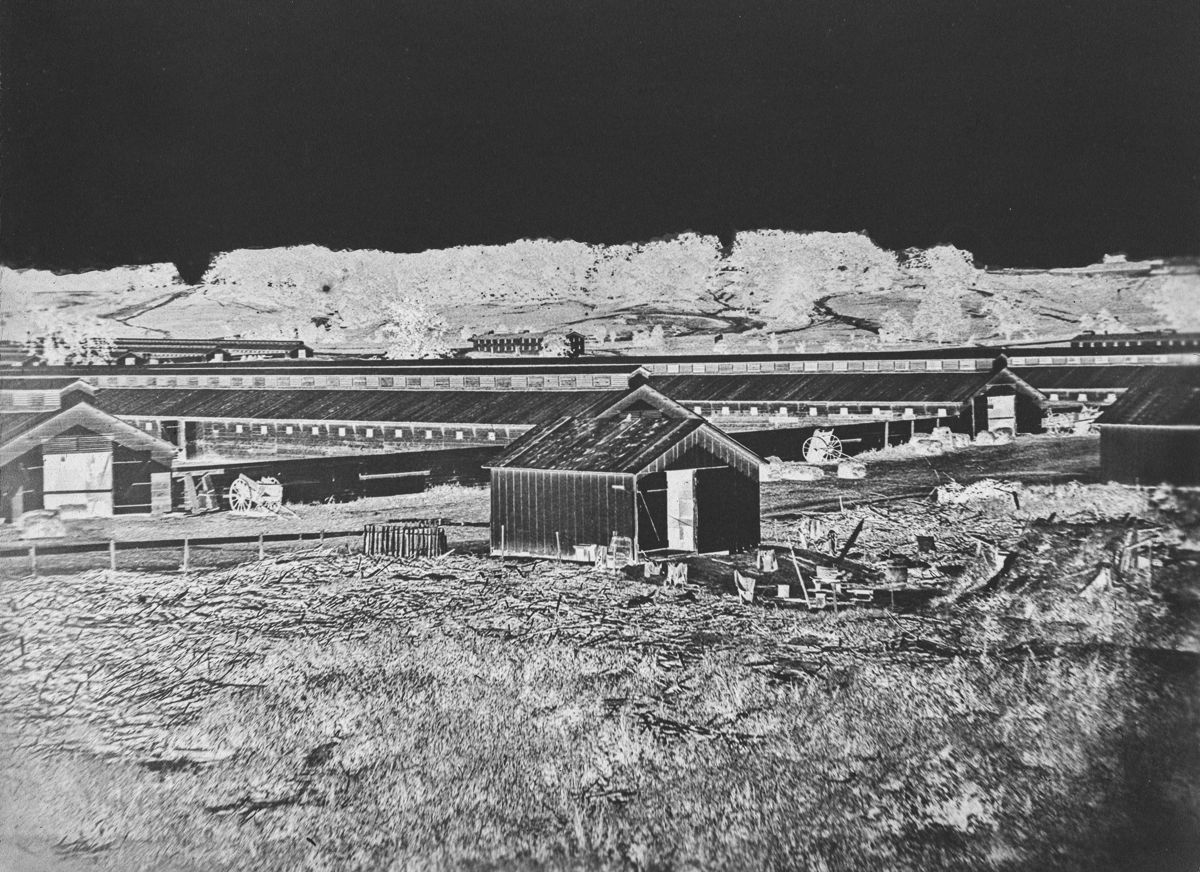
Northern Quakers faced a moral dilemma. They were anti-slavery and pro-Union, to be sure, but their faith dictated that they play only a non-combatant role in the conflict. However, many enlisted in the Union army anyway; one was Amos Sharpless. From a wellto-do Delaware farming family, Amos (1832–1907) received a good education. Prior to the war he farmed and raised stock in Illinois and Delaware.1 In 1862, he enlisted in Benjamin Nields’ 1st Delaware Artillery Battery.2 Amos was soon promoted to 1st Lieutenant. Organized at Wilmington, Del., the first served in garrisons at Washington, D.C., and Suffolk, Va., until 1864, when it participated in the Red River Campaign. The unit mustered out in 1865. In 1862 Amos and his older brother Jehu (1824–1902) purchased the Ashland Mill in Christiana Hundred, Del., which they ran until 1893. Amos prospered and became prominent in the GAR. In 1895 he moved to Pennsylvania, where he died in 1907. Presented here are three wartime letters to his sister Edith Sharpless Cranston (1822–96). All three feature the “thee” and “thine” terminology common to Quakers of the period. In the first letter Amos and the 1st are comfortably camped near Suffolk, Va. He wonders why the Union
A Quaker Goes to War garrison there is so large, when troops are needed for the Army of the Potomac. He appears unaware that Robert E. Lee has launched his army north, heading towards Pennsylvania and Gettysburg.
Camp near Suffolk Va. June 12, [18]63 Dear Sister Thine of the fifteenth was duly received, and I take the present opportunity to reply. We have not changed our camp since I last wrote nor do I think we will soon unless Suffolk is vacated and we retreat to Norfolk in order to send a portion of our force to the Army of the Potomac. Norfolk could be held with a [sic] much less force than is necessary to hold this place, and by falling back in Norfolk we would be able to spare ten thousand men for Hooker or Keyes; it would seem a pity to burn this small town but in case of a retreat it would become a military necessity to do so. The inhabitants here are strongly Southern in principals [sic] but keep very quiet having but little to say on either side of the great National question. Most of them have fathers, brothers and sons in the rebel servis [sic]. The females seem to be the worst rebels we have, not because I suppose their Southern sympathy is stronger, but because they think they can take more liberty on account of their sect [sic]. If it were to become a military necessity to destroy Suffolk the whole country in this section would be as destitute of inhabitants (except contrabands) as though it never was settled. Suffolk is a small town containing I suppose about two thousand inhabitants and was no hamlet before the war quite a business place, but now all has changed. The residents know nothing but war and desolation deprived of all the privileges they once possessed. The merchants here are all Northern men and even they are restricted in regard to who they sell to, not being allowed to see too any of the old residents unless they bring an order from the Provost Marshal. I don’t think this is a very healthy place. There are quite a number of our men sick at this time but principally effected with diarrhea. I believe there is not much news of importance to communicate at this time. There are news of the enemy in force this side of the Black water [River] and consequently we are not troubled much with them. Occationly [sic] our scouts bring in a few prisoners. We have a very pleasant camp here having got the camp of a company that was sent away. They came last Fall and went to a great deal of trouble to make themselves comfortable by building cabins for the officers and stables for their horses and as soon as they moved away we took their buildings. So we have the most comfortable camp we ever had and the men seem to like it better and enjoy themselves more than any camp they have ever been in before. We have filled up the deficiency in our company with detached men from Gen. Cochran’s division so our battery is full. The weather is very warm here as warm as harvest in Delaware. I am well and hoping the few lines may find thee the same. I remain thine very respectfully. Lieut. Amos Sharpless Edith Cranston In the second letter Amos is once again comfortably situated in Camp Barry, an artillery camp northeast of Washington, D.C. He hints that homefolks wanting to evade the Union draft might do so if they raise the $300 commutation fee, though he thinks they should serve voluntarily. Camp Marshall, July 29th 1863 Dear Sister I take the present opportunity to answer thy most welcome letter received some time since. We have moved from our old situation near Suffolk and returned to the vicinity of Washington D.C. The company is in quite good health and not much the worse of our campaign in Virginia. We had several skirmishes with the enemy but were fortunate enough not to lose a man either by disease or otherwise. We have a very pleasant camp where we are now and if it should be our fortune to remain here through the warm season it will be well for us. The prospect for a termination of the war is more promising at the present time than ever before but I think likely should the prospect still continue the three years volunteers will be held until order is entirely restored and peace and quiet prevails. I suppose some of the young men who are liable to conscription in your section are a good deal concerned for fear it may fall to their lot. I think it is the duty of everyone who may be drafted to shoulder his musket and carry it and use it in defense of his government but I judge all who can raise the commutation money will pay it in preference to doing what I think they ought to, defend and preserve the government at any risks and all hazards.. I received a letter from Eler [?] some days ago. He writes me he is well and seems to be in fine spirits. He does not know where Samuel Dixon [a cousin] is but supposes he is with his company somewhere in Rosecrans’ Army [Army of the Cumberland]. I have no idea how long we may remain as long as I desire but we are subject to orders at any moment and consequently may leave in a few days. With these few lines I will close hoping you are all well and that Joseph may escape the draft. Thine very respectfully
(Library of Congress)
Lieut. Amos Sharpless Edith L. Cranston In the third letter Amos expresses the belief that the Confederacy “is on its last legs” and that the war is “nearly over.” Numerous soldiers’ letters expressed this hope, but the war would last more than a year longer. The battery had briefly been sent to New York City to deal with the draft riots. Camp Barry, Washington, Sep. 19th (1863) Dear Sister I take the present opportunity to send thee a few lines to inform thee how I am; We have been moving about considerable these last few weeks, and have arrived at last in our old camp near Washington D.C. We left Camp Marshall where I think I last wrote thee about the 20th Aug. and shipped to N.Y. City where we remained about three weeks and then returned to where we are now. We had a very pleasant trip around by sea to New York although rather tedious as I with about 85 men and 90 horses were nearly a week making it. We were first shipped on a river steamer which was not seaworthy and up on going out to sea found it was too rough for us and we had to about ship and run back to Old Point where we stayed about ten days coaling up and getting more provisions for we had by that time run short as we had only three days rations with us. The storm not still abating we are ordered to put our cargo on another vessel which we did and arrived safely in N.Y. Harbor. We had a very pleasant time there although rather expensive, on last third day week we started for Washington where we arrived on fourth day noon passing through Wilmington about 11 o’clock on third day evening. We had to wait at Newport about fifteen minutes and I went up to the depot and seen the Major [?] and was talking to him some time. He told me that Samuel Johnson [a corporal in Nields’ Battery] was deceased and was to be buried on fifth day. I have not been very well since leaving N. York having had a slight attack of the yellow jaundice but I have got tolerable well again and have gohn [sic] on duty. I have not heard from home since I came here this last time but am looking for a letter from John soon. I don’t know which thee or I wrote the last letter but if I don’t write thee need not hesitate in writing. I suppose Joseph escaped the draft but John Cranston [Sharpless’ cousin] was the lucky one. Major told me his father paid his exemption fee and he is clear until there is another one which I don’t think there will be as I think the war is nearly over although there may be some hard fighting yet but I think the enemy have despaired of their cause and they cannot keep a large army in one place long as there supplies are cut off from the rest and the blockade prevents them from being supplied in the East, I really think the rebellion is on its last legs unless it gets succer [sic succor] from a foreign power which I think there is not much prospect at this time. Please excuse all errors in this hasty written epistle. Write soon and let me know how you are getting along farming and with the dairy this summer and who you have for help since Isaac left you. Thine very respectfully Lieut. A. Sharpless Edith Cranston
Endnotes: 1. A biography of Amos is in Cope (ed.), Historic Homes and Institutions ….of Chester and Delaware Counties, p. 255-256. 2. Benjamin Nields (1831-1917) was a prominent Wilmington lawyer.
Bruce S. Allardice is Professor of History at South Suburban College in Illinois. He is a past president of the Civil War Round Table of Chicago. Wayne L. Wolf is past president of the Lincoln-Davis Civil War Roundtable.