
Walt Whitman in the Civil War
By Joseph F. Wilson · Originally published February 2019 · p. 17
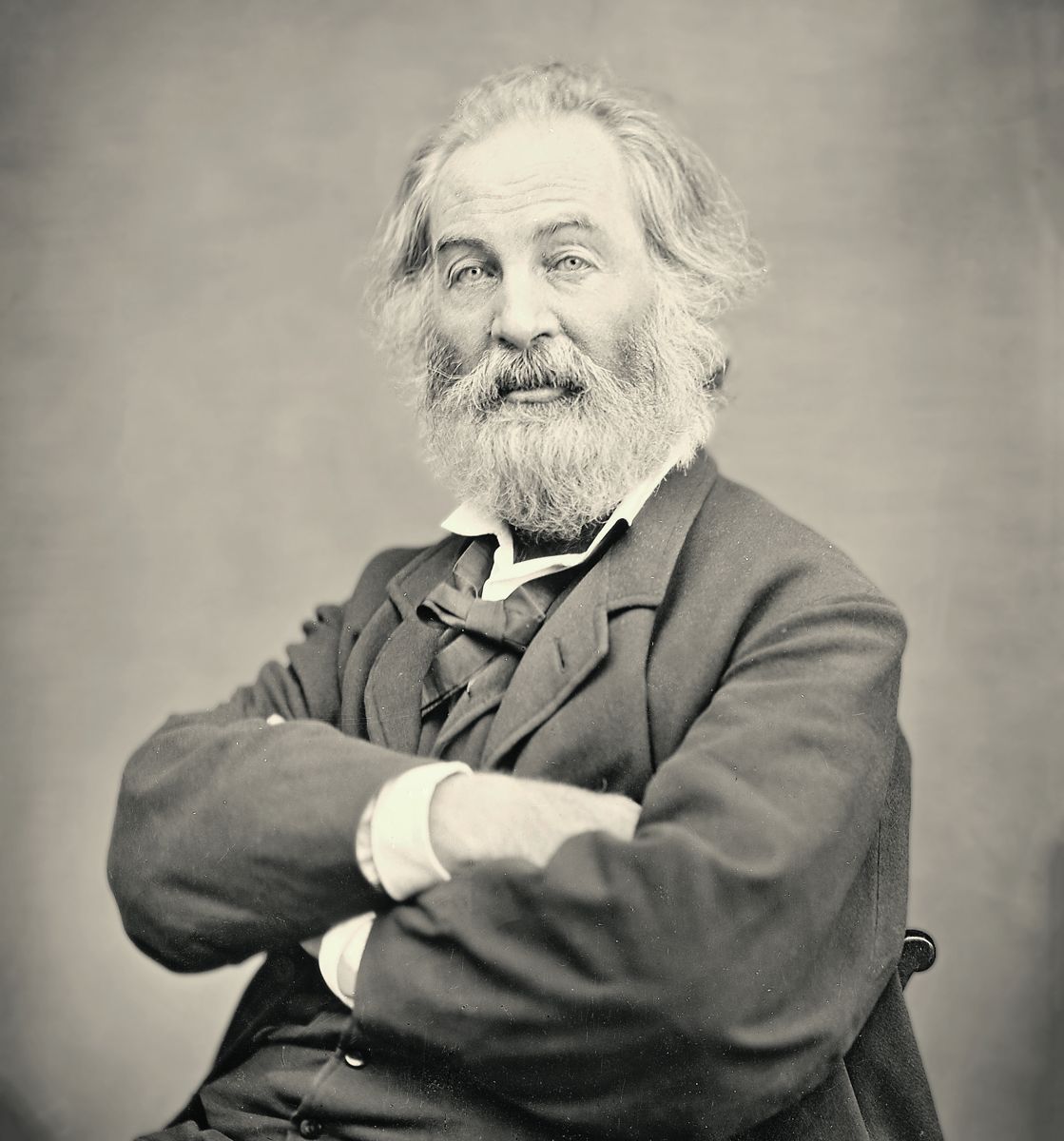
Walt Whitman in the Civil War By Joseph F. Wilson In Pfaff’s dimly lit beer cellar in New York City’s Greenwich Village, Walt Whitman sipped his beer trying desperately to stave off the wave of depression washing over his soul. A melancholy companion followed the moody poet down the steps night after night into the subterranean saloon where a musty odor of stagnant alcohol mingled with the mindless banter of self-styled writers debating mundane and seemingly minor issues. Life still had no direction for the unemployed Whitman. Things weren’t going so well for the aspiring poet; then came the outbreak of the Civil War. As Whitman brooded about the streets of New York, he never suspected how the Civil War was about to bring about a seismic change that drastically changed the direction of his life and career. Whitman would later write, “the Civil War saved me.” On a blustery day in February 1861, the stagecoach Walt frequently rode up and down Broadway suddenly halted as crowds poured into the streets in a fit of excitement. He rose up to investigate the disturbance. Emerging from another coach at the Astor House was the newly elected president, Abraham Lincoln, going to Washington for his inauguration. Whitman watched intently from his perch atop the stagecoach at the man he’d grow to love. With the assassination of Lincoln in 1865, Walt’s poems memorializing the President, “O Captain! My Captain!” and “When Lilacs Last in the Dooryard Bloom’d,” brought instant recognition to Whitman. Only a few days before New York hosted Lincoln, Jefferson Davis took the oath as President of the Confederate States of America. In a few months, the cauldron that had been simmering for years finally boiled over. On the night of April 12, 1861, the cry of newsboys echoing through the streets of New York announced the attack on Fort Sumter in South Carolina. Although most expected the coming war, the opening shots still provoked anger in the New York poet. A still evolving young country locked horns in a deadly Civil War that touched the lives of millions of Americans, including Walt Whitman. The disastrous defeat at Bull Run prodded Whitman to write his first Civil War poem. The poem “Beat! Beat! Drums!,”
was a popular recruiting poem and a call to arms that urged all Americans to rise up to save the Union. Newspapers rushed the piece into print. Whitman himself toyed with the idea of enlisting, but quickly cast aside the thought after telling a friend, “I could never raise a sword or fire a gun at another man.” Walt’s entrance into the Civil War was pure happenstance. The impact of the war on his life wasn’t immediate; the moment came in December 1862, while reading a newspaper at home. The New York newspapers listed the dead and wounded from the recent battle at Fredericksburg, Virginia. Although Whitman had no appetite for war, that wasn’t the case for George Whitman, Walt’s younger brother. George had enlisted with the 51st New York Infantry. Listed among Fredericksburg’s wounded was George Whitman. That paved the way for the poet’s entry into the worst aspect of the bloody Civil War. A panicked Walt immediately packed his bags and set out to find his injured brother. The sojourn south immersed the poet on a journey of self-discovery. Only as a visitor did he ever return to New York. The poet left behind what he termed his “New York Stagnation.” Arriving at Fredericksburg on Dec. 19, Walt was relieved to learn George only suffered a slight wound. For nine days Whitman ate, slept, and lived amongst soldiers. The firsthand look at war resulted in a wealth of material for his collection of Civil War poems, “Drum Taps,” published in 1865. Following his experience in Fredericksburg, Whitman went to Washington where he only intended to stay for ten days before going home. After witnessing badly mutilated soldiers arriving in Washington, he knew he must stay. At last, Walt found purpose in his life. The poet reclaimed his rudder and righted the ship thanks to the brutal Civil War that shook the nation. For three years he made it his ministry to visit the sick, wounded, and dying soldiers in the many Washington hospitals. It was a duty he said, that “gave me the greatest privilege and satisfaction of my life.” A bold statement considering his life, but the ten days he intended to stay in Washington turned into ten years. For three years Whitman canvassed the many hospitals visiting thankful soldiers. A favorite pastime was writing letters home for illiterate soldiers or those too severely wounded to grasp a pencil. On many occasions, Walt gently held the hand of a dying soldier who was all alone and far from home. Walt’s heartfelt letters to his mother told of gruesome scenes he experienced daily in the hospitals that eventually took a toll. In a revealing letter he told her, Oh Mother, I could not keep the tears out of my eyes. What an awful thing war is. My feelings are kept in a painful condition. Things are getting worse as to the amount of suffering. My head feels disagreeable from being in too much. Walt’s being “in too much” brought about a nervous breakdown in 1864 from what would today be called PTSD. During the Civil War years, Walt did as much as anybody in contributing to the war effort. Friends up north thought he deserved a pension of 25 dollars a month for all he did for the boys in blue, and many gray clad soldiers as well. Walt said, “I don’t deserve it.” The bid reached Congress but died on the floor. Historians believe Whitman himself killed the bill. After the war Whitman remained in Washington working in the District Attorney’s office. In 1873, he suffered a stroke that ended his stay in Washington and brought him to Camden, N.J., to live with George for 11 years before he purchased a home on Mickle Street. It was at home on Mickle Street where Walt died in 1892. Walt Whitman is an American treasure and one of our finest writers to ever put pen to paper. Many are well aware of his popular published works including, “Leaves of Grass,” “Specimen Days,” “November Boughs,” and many other writings, but Americans should learn more about the man whose love of humanity and well of compassion ran deeper than most. Walt’s tireless work in the hospitals for three years caring for wounded soldiers is often a backstory of the American Civil War too often overlooked. Few men witnessed the trauma of battle on a more personal level than Walt Whitman. Joseph F. Wilson’s upcoming presentation titled, “Walt Whitman in the Civil War,” will take place on April 1, at 7 p.m. in Civic Hall at Camden County College in Blackwood, N.J. Contact by email at [email protected].