
This And That
Retaliation, Reprisal, and Retribution
By Gould Hagler · Originally published February 2019 · pp. 28–29
Retaliation, Reprisal, and Retribution How the people are to live this winter God only knows. Valley Spirit, Chambersburg, Penn., August 31, 1864 Their will be suffering times in the valley this winter as the yanks have burnt all of the barns from hear down & all of the mills except one occasionly. Letter from David J. Schreckhise to his brother, Oct. 17, 1864 Last month’s column explored the Valley Project’s online archive to see what newspapers in Staunton and Chambersburg had to say about John Brown’s Raid and the election of Abraham Lincoln. We now move forward to 1864. The war has turned hard for the people in the Great Appalachian Valley. In both Augusta County, Va., and in Franklin County, Penn., armies are waging war against civilians as well as against each other. By reviewing the Valley Project’s newspapers and, to a lesser extent, its letters and diaries, this column allows the people who waged this hard war, and those affected by it, to tells us what they did and what was done to them. Union forces under Gen. David Hunter operated against Lee’s communications in the Valley as
Grant’s Overland Campaign began in May. Hunter left much devastation in the upper Shenandoah Valley before retreating to the northwest. The July 8 Staunton Vindicator summarizes the results and lists mills, factories, workshops, stables, and railroad facilities wrecked by the order of “hen-roost Hunter.” The Federals also destroyed private dwellings, complains the Vindicator—as well as the paper’s presses and those of its competitor, the Staunton Spectator, which was out of commission until June 1865. After Staunton, Hunter’s forces “acted in the same fiendish manner. At Lexington they burned the V.M. Institute and Professors’ houses…the private residence of Ex. Gov. Letcher, and destroyed the office of the Lexington Gazette.” According to a letter written by Letcher, published by the Vindicator on July 22, Hunter had assured Mrs. Letcher that her home would not be burned, a trick, Gov. Letcher claims, to prevent Mrs. Letcher from saving its contents from the flames. The Letchers’ daughter tried to save some garments, but an officer “fired the clothing in her arms.” The July 6 edition of the Franklin Repository reports that Hunter’s movements had been “carried out on a grand scale” and “produced a consternation in
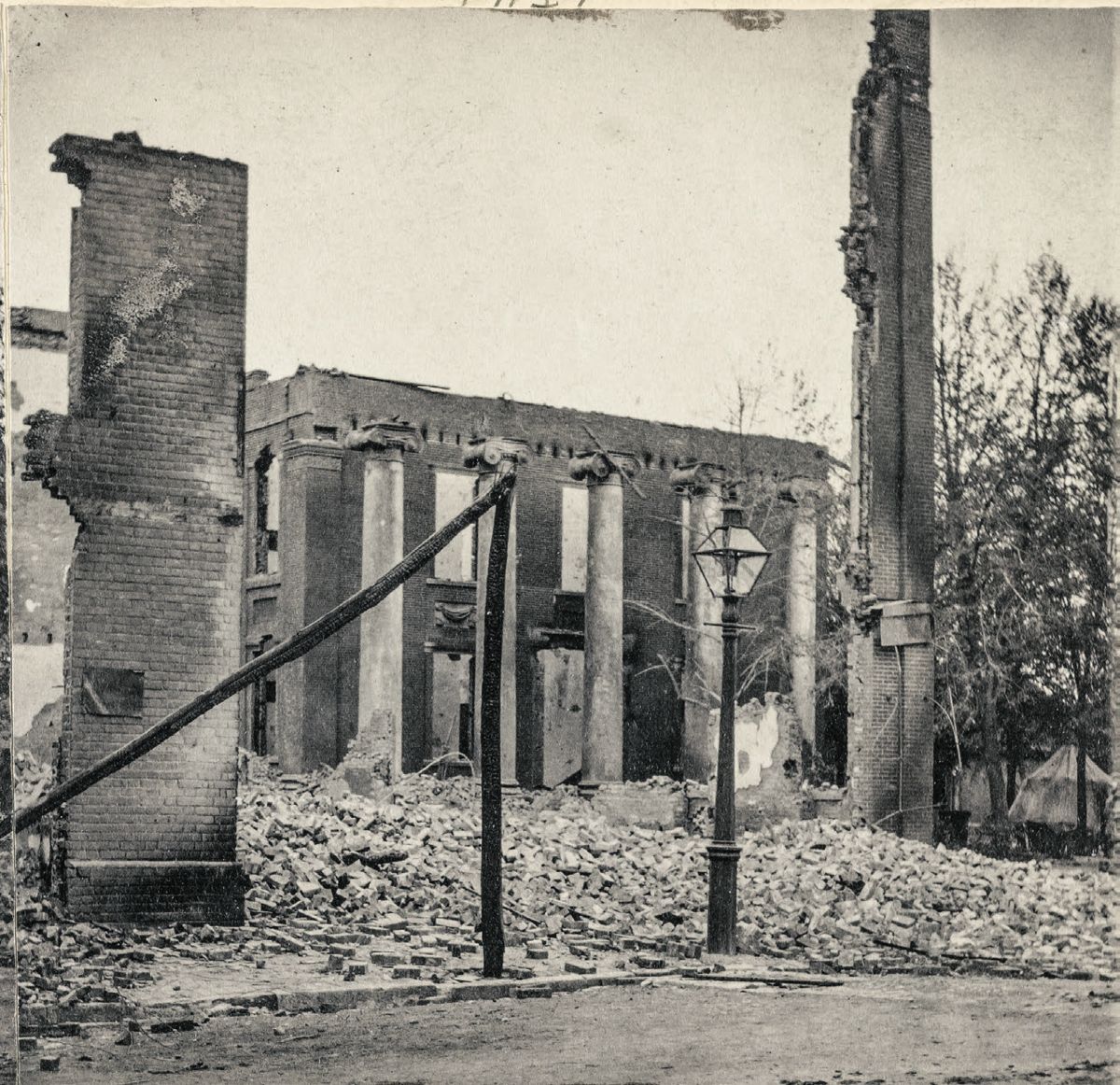
Lynchburg that the rebels of that vicinity will never forget.” The paper further advises that “Rebel accounts agree that the damage done…was very extensive. They say that the scene of desolation and ruin in the neighborhood…is positively appalling. All available supplies for the rebel army was [sic] destroyed, and grain, cattle and other stock confiscated.” As they withdrew to Charleston, W.Va., the Federals left “nothing behind them which they [could] not consume, carry off, or destroy.” The following edition quotes the Lynchburg Virginian, which complained that “The people were stripped of everything… and every species of vandalism that savages could think of was practiced” and that everywhere “the same scenes of plunder and robbery were enacted.” But was the campaign conducted under the rules of civilized warfare? Of course, say the Repository’s editors. “General Hunter has simply subsisted upon the rebels— taking their stock, provisions, and the other articles essential to his army. Just as did Jenkins, Imboden, Jones, Stuart, and other rebel raiders in this section….” The memory of the Virginia editors was short and their arguments were specious and disingenuous. As the Repository puts it, “The case being altered alters the case.” Hunter’s withdrawal opened the Valley as a route for Gen. Jubal Early’s invasion of the North. What does the Repository have to say about Early’s methods of waging war? On July 20 the Repository notes the immense damage done to Maryland by the invaders, and advocates measures to protect the border area of Pennsylvania. Just 10 days later a Confederate force under Gen. John McCausland would put Chambersburg to the torch. Not until the August 24 edition could the Repository report on the conflagration, as its own facilities were burned by “the Rebel fiends” along with the rest of the town. There no significant disagreement about the basic facts of the case. McCausland issued the demand—$100,000 in gold or $500,000 in greenbacks, or he would burn the town; the demand was refused; McCausland immediately ordered the fires lit; and McCausland was acting under Early’s express orders. Was this retaliation, or pure barbarism? “It is untrue, wholly, maliciously false, as broadly stated or insidiously intimated by several journals in this State, that the Union troops have furnished any precedent for the burning and plundering of Chambersburg,” write the editors in the first postfire edition. For various reasons detailed by the Repository, Hunter’s actions were justified “by well-established rules of war.” The government must “bring the rebel authorities to the strictest account” for the atrocity. Lee must “disavow the actions of his corps commander [Early], and bring him to proper punishment….” Otherwise “all mankind [should] hold Lee individually responsible…and no possession of his should be spared.” The Repository does not stop with the commanders: every officer continuing to serve under the “vandal chiefs” should suffer the same fate. “The case being altered alters the case.” As one would expect, the newspaper in Staunton has a different view, as expressed on August 12. “The burning of Chambersburg by McCausland meets with the universal approval of the Confederate press. Just retaliation, though long delayed, has commenced at last, and will continue to be practiced until the corrupt dynasty, which rules at Washington, shall direct its minions in the field to cease their Vandalism, and return to that mode of warfare practiced by all civilized nations.” The Valley Spirit, a Democratic paper in Chambersburg, focuses less on the question of justification and more on the question of blame. The fault lay with the Lincoln administration, which left Chambersburg exposed and undefended, says the paper when it resumed publication on August 31. “To the stupidity of the War Department must we lay the blame for the destruction of Chambersburg. There is no use mincing terms about it.” The tragedy was due to the national government’s “culpable negligence.” Letters and diaries in the Valley archive provide additional information and perspective. One Confederate soldier who was present, Malcolm Fleming, describes the chaos in a letter to his mother. “The scene…baffles all description. Shrieking children & panic stricken men & women running in [every direction] begging assistance.” Another Confederate writes
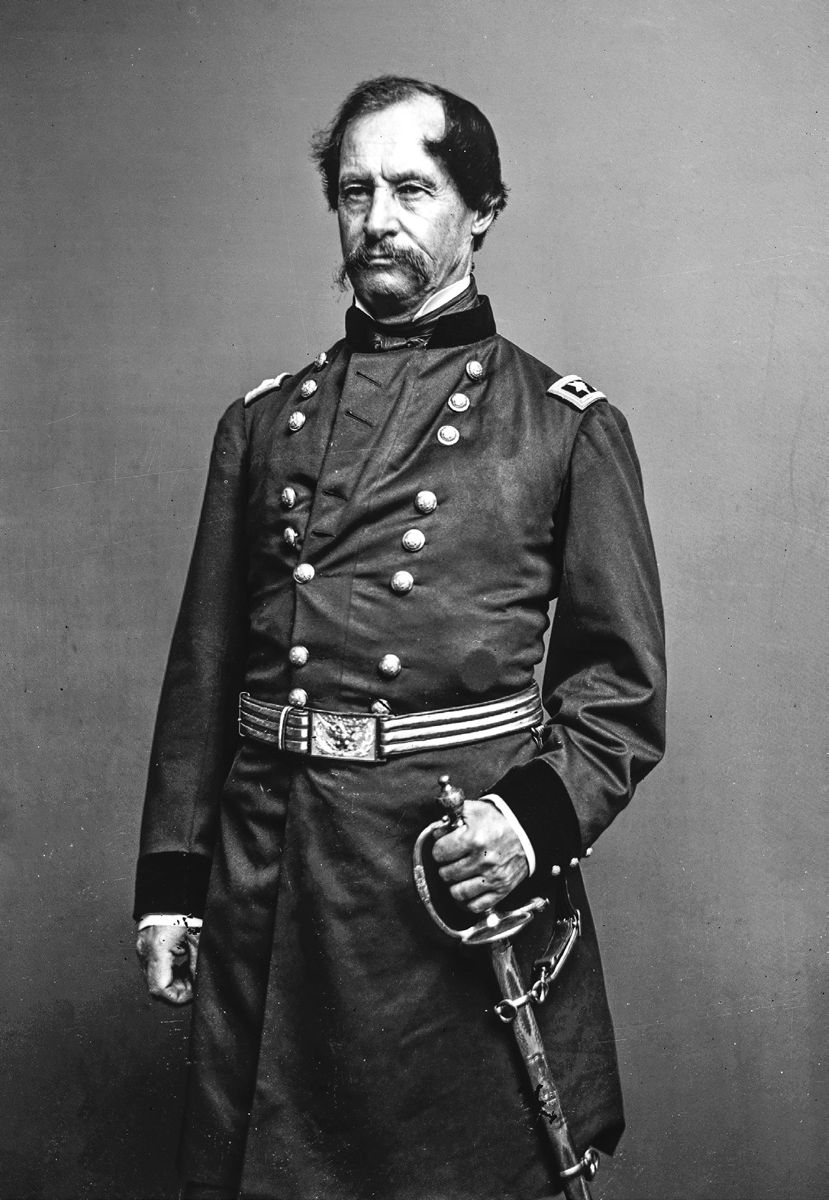
Maj. Gen. David Hunter.
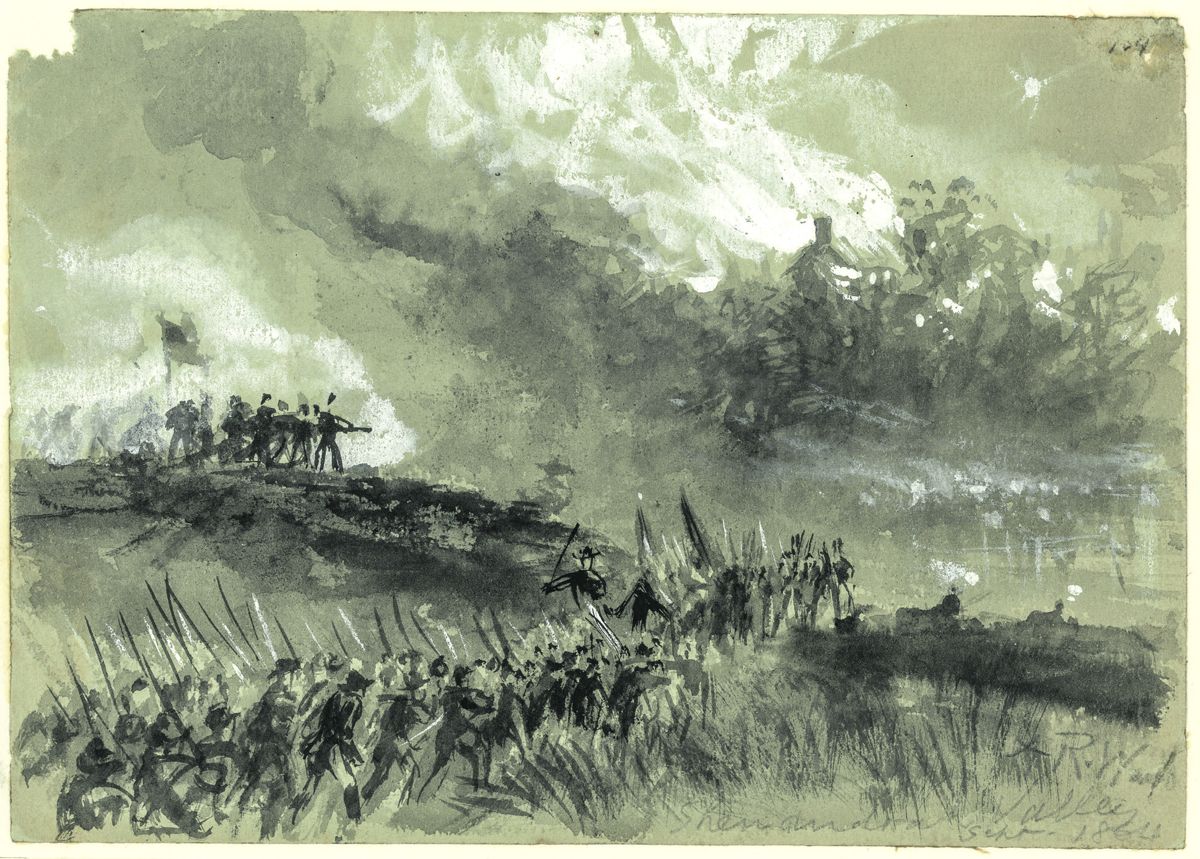
in his diary that McCausland gave the inhabitants two hours to remove belongings from their doomed homes, but that few took advantage of the opportunity. (Perhaps the townspeople thought McCausland was bluffing; perhaps they thought Union forces would arrive in time to save them.) J. Kelly Bennette records that “The burning…was generally condemned by our Regt. at first…but when reason had time to regain her seat I believe that they all thought as I thought at first; that it was Justice & Justice tempered with mercy.” The retaliatory act was “not only justifiable but…a duty.” M.T. Norman expresses a different attitude in a letter to his wife. “I never witnessed sutch a site in all my life – Nancy the poor women and children…[and old] men was running in every direction.” The wretched townspeople “were crying and screaming skarsly any of them had time to remove any of their property.” Norman refused to participate. “I never set a fire nor took any thing.” A Franklin County letter-writer, Eliza Stouffer, tells us that “many had only 10 to 15 minutes time given them to leave their houses” and that “some saved a few clothes, some nothing at all….” Stouffer states further that some were prevented from removing their money and clothing even though they were packed and ready. One rebel cruelly tore up a silk dress a woman was carrying out of her house, but “others again were more merciful, & helped the women to carry out things….” Stouffer notes too that one soldier refused orders to set the fire and was arrested: “They took him & handcuffed him.” This hard war would become harder still for people of the Shenandoah. In the fall of 1864, Federal forces under Gen. Philip Sheridan would wreak havoc far more destructive than the damage done by Hunter. The October 21 Vindicator tells us that Sheridan’s actions were of a different character than Hunter’s. The campaign was more prolonged and the damage more widespread. Moreover, Sheridan’s methods were fully sanctioned by the highest authorities in the United States. “[T]he order of Grant required Sheridan to burn barns, wheat and hay-stacks, to drive off or kill all live stock and to carry off the negroes – in fact to make the Valley a barren waste.” Why did the Union resort to such tactics? “Grant, wearied and sick of fighting the veterans of Lee with no avail has turned his arms against the women and children of our land….” And, says the Vindicator, there will be justice. “Let not the North then cry out when Southern Barbarians are let loose upon them, but remember that we can point to the campaigns in the Valley of the Shenandoah for precedents for all the acts our soldiery may commit.” Sheridan’s work was not universally approved of in the North. The Valley Spirit on October 19 reprints a piece in the New York World describing the horror of the deliberate policy of destruction in the Valley. Barns and granaries destroyed, farm machinery wrecked, all provisions carried away, the people made homeless when their houses are burned one soldier refused orders to set the fire and was arrested: “They took him & handcuffed him.” This hard war would become harder still for people of the Shenandoah. In the fall of 1864, Federal forces under Gen. Philip Sheridan would wreak havoc far more destructive than the damage done by Hunter. The October 21 Vindicator tells us that Sheridan’s actions were of a different character than Hunter’s. The campaign was more prolonged and the damage more widespread. Moreover, Sheridan’s methods were fully sanctioned by the highest authorities in the United States. “[T]he order of Grant required Sheridan to burn barns, wheat and hay-stacks, to drive off or kill all live stock and to carry off the negroes – in fact to make the Valley a barren waste.” Why did the Union resort to such tactics? “Grant, wearied and sick of fighting the veterans of Lee with no avail has turned his arms against the women and children of our land….” And, says the Vindicator, there will be justice. “Let not the North then cry out when Southern Barbarians are let loose upon them, but remember that we can point to the campaigns in the Valley of the Shenandoah for precedents for all the acts our soldiery may commit.” Sheridan’s work was not universally approved of in the North. The Valley Spirit on October 19 reprints a piece in the New York World describing the horror of the deliberate policy of destruction in the Valley. Barns and granaries destroyed, farm machinery wrecked, all provisions carried away, the people made homeless when their houses are burned with all their contents. And this account comes with a warning: “Citizens of Franklin county, what think you of the prospect before you? If the rebels should again invade our State…in what condition do you suppose they would leave our beautiful Valley with its fine farmhouses and magnificent barns and mills?” The Democratic paper continues: “It makes the blood run cold in our veins to contemplate the accumulation of sorrow our misguided rulers are bringing upon this distracted land.” Of course, the Confederates were unable to mount another offensive down the Valley and into the North. The Spirit’s fears were not to be realized. Back in the Shenandoah, the Staunton Vindicator makes a prediction in the November 18
edition. With the re-election of Lincoln, the Valley and the South could expect that “The unbridled licentiousness of the past four years will be continued for the next four….” The Confederacy’s defeat in the spring would mean that this fear also would not be realized. Gould Hagler is a retired lobbyist living in Dunwoody, Ga. He is a past president of the Atlanta Civil War Round Table of Atlanta and the author of Georgia’s Confederate Monuments: In Honor of a Fallen Nation, published by Mercer University Press in 2014. Hagler speaks frequently on this topic and others related to different aspects of the Civil War and has been a regular contributor to CWN since 2016. He can be reached at [email protected].