
Polish Ceremony Honors Heros von Borcke, Prussian Cavalryman who Fought for the South
By Piotr “Smednir” Narloch and Marcin “Walter” Białek · Originally published February 2019 · p. 30
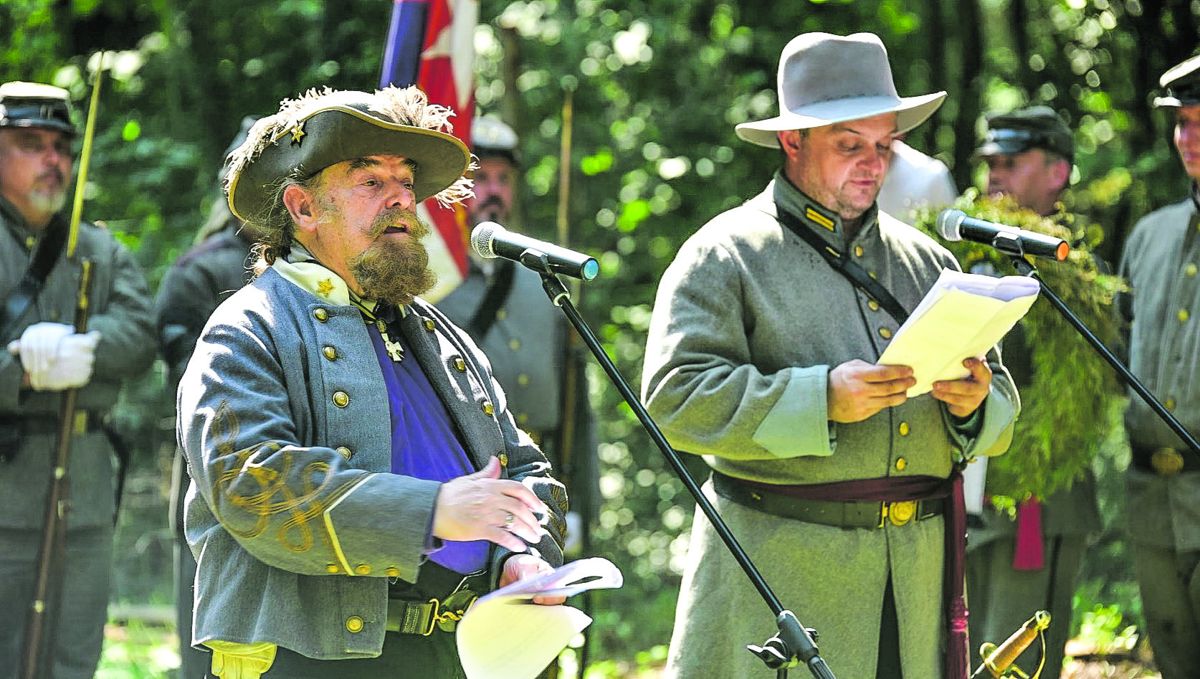
Polish Ceremony Honors Heros von Borcke, Prussian Cavalryman who Fought for the South By Piotr “Smednir” Narloch, sergeant, 14th La. Regt. (Polish Brigade) and Marcin “Walter” Białek, private, 58th NY Regt. (Polish Legion) Edited by Joe Bordonaro Gizyn is a small village located in northwestern Poland. For several years, thanks to the hospitality of its residents, and the passion of Polish American Civil War reenactors, Gizyn has become known for regularly held ceremonies pertaining to, and reenactments of, battles of the Civil War. Until recently, no one in this town had ever heard of Colonel Heros von Borcke (1835–1895), a Confederate hero, and an officer who served on the staff of General J. E. B. Stuart, the renowned Army of Northern Virginia cavalry leader. No one in town paid any attention to the decaying brick mausoleum overgrown with bushes that was the burial site of Colonel von Borcke. The von Borcke family palace was located in Gizyn, then part of Prussia, where Heros was brought up. Every year at the end of July, Gizyn becomes a secessionist village and is visited by reenactors wearing the blue and gray of the American Civil War. These reenactors come from Poland, the Czech Republic, Slovakia, Germany, Austria, and Sweden! It is interesting to learn the many reasons that people in these various countries came to become Civil War reenactors. Each reenactor had his own reasons for becoming involved. For many, a primary motivation was the participation of their countrymen in the war. Sometimes, the reason for becoming involved was the result of meeting similar history enthusiasts and learning many details of the war’s history and the weapons and uniforms that pertain to it. An American Civil War reenactment has been occurring in Gizyn for ten years. The event usually lasts from Thursday to Sunday. The event includes many combat reenactments as well as a ceremony at the mausoleum where reenactors, Blue and Gray, combine to pay tribute to Colonel von Borcke. The ceremony includes honorary volleys, speeches, and the placement of flowers and wreathes. Plans for the next event include the placing of an event-long guard at the mausoleum. Each year skirmishes are reenacted in the village of Gizyn and in backwoods areas nearby.
Heros von Borcke was portrayed by American Richard J. Cicero. (Piotr Wojtowicz) (Piotr Narloch)
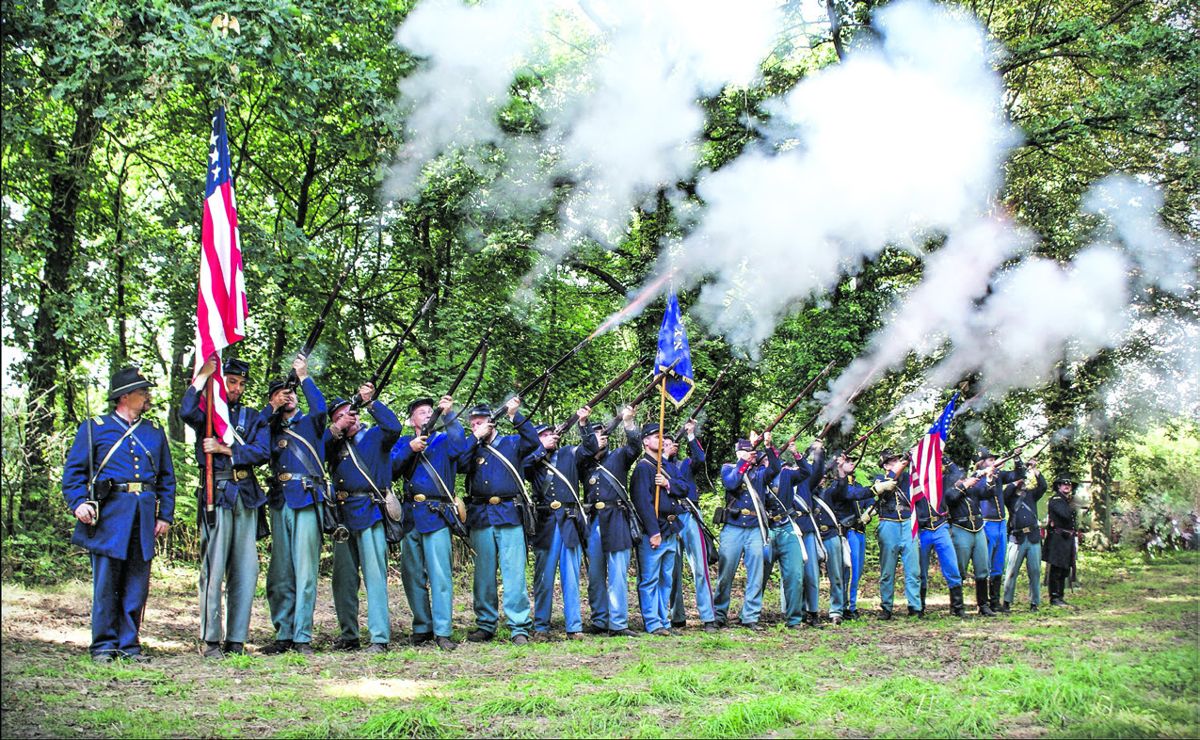
Every year, the event’s guiding focus is one of the important battles of the American Civil War. This year, episodes of the Battle of Chickamauga were reenacted. The culmination of every event is a spectacular battle in front of a large audience. For several years, ramparts and field fortifications have been built near the camp areas that are then used during reenactments of other battles of the Civil War. Among the guests at this year’s reenactment, two Americans deserve special mention. The first is Chris McLarren, adjutant of the European Camp of the Sons of Confederate Veterans Association. Chris is a Texan living permanently in Berlin. He usually does not participate in reenactments of historic events but he always visits Gizyn in a Confederate captain’s uniform. The other distinguished American visitor was Richard J. Cicero, who portrays Confederate Colonel Heros von Borcke. Mr. Cicero is a member of a group of reenactors who portray Lee’s lieutenants and travel across the ocean every year to participate in the event at Gizyn. The people of Gizyn are the reenactment hosts and provide the food for the reenactors. Between events, they also take care of the mausoleum and the battle reenactment site. Villagers have helped with the fortification construction over the years. Each year, they invite local authorities and guests from nearby communities to the ceremony. Participants at each reenactment experience their wonderful hospitality throughout the event. Every year, on the highest flagpole of the village, the flag of the Confederate States of America flutters in the wind. Reenactment participants appreciate the effort of the local authorities to preserve the mausoleum and the care taken to preserve the memory of the person who is undoubtedly the community’s most famous historical figure. Thanks to the active involvement of the inhabitants of Gizyn, Richard Cicero, and the Polish and foreign reenactors, the mausoleum now has a chance of being preserved and rebuilt. Appropriate legal and administrative steps have been taken to secure the mausoleum and the adjacent area. The mausoleum has been added to the list of monuments and thus is now under the protection of Polish law. Huge thanks for organizational effort are due to the members of the Volunteer Fire Brigade and the women of the Country Housewives’ Club. Without their support and enthusiasm the event could not be undertaken. This year’s event, “Gizyn 2018,” was once again very successful. The number of participants has increased every year as news about it spreads through the units of American Civil War events in Poland and in other European countries. The organizers of the event are the 14th Louisiana Regiment and the 58th New York Regiment. The reenactor guests from other countries also contributed to the success of the event. Biographical Note: Johann August Heinrich Heros von Borcke was born on July 23, 1835, into an old, noble Prussian family. Following the family tradition, he took up military service in the Prussian cavalry. He left this service in 1861 to move to the Confederate States. Slipping though the U.S. Navy’s blockade, he arrived in Richmond and began looking for
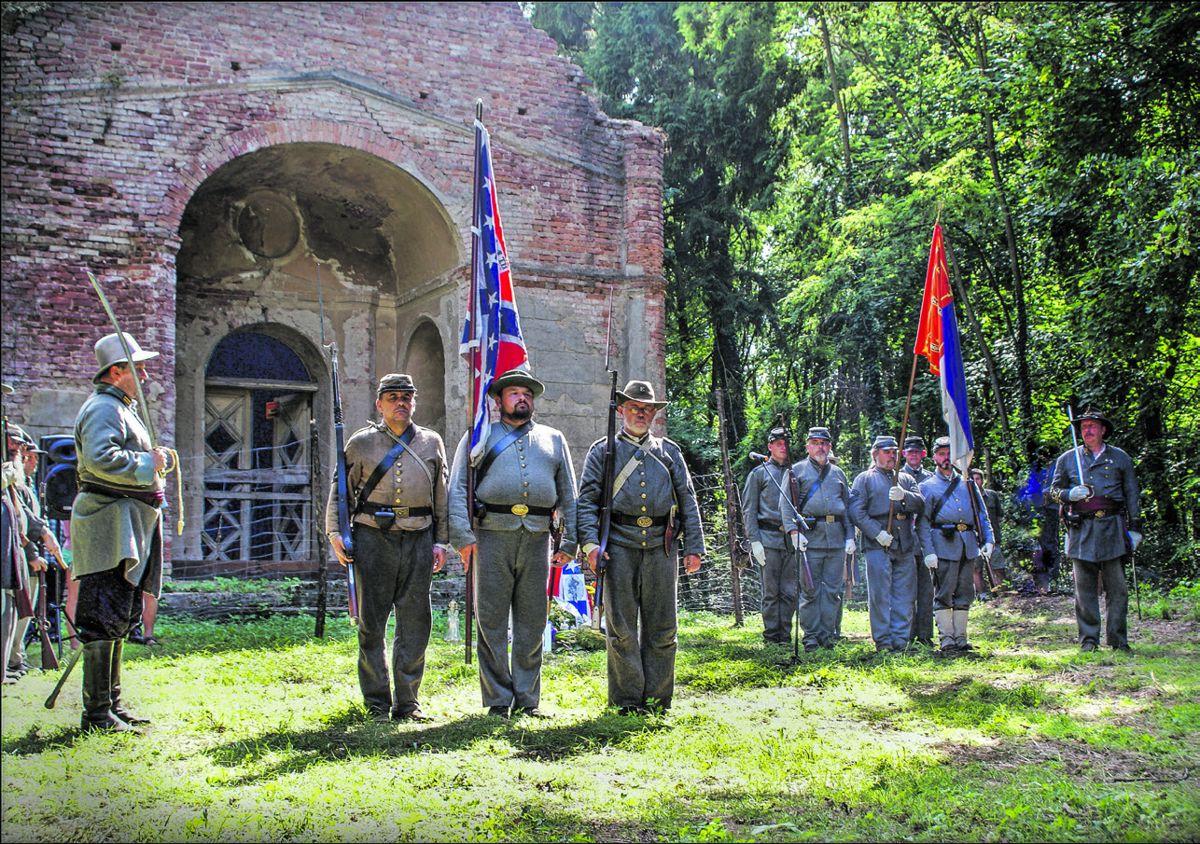
(Piotr Narloch)
Heros von Borcke. Photo from original wet plate image by E. O. Higgins, 1914. (Library of Congress) a way to serve with the Southern army. Assigned as an adjutant to the staff of General J.E.B. Stuart, he became a valuable member of the Confederate cavalry. General Stuart and von Borcke developed a close friendship and working relationship. Both were inspired by, and seemed to personify, the cavalier tradition. Von Borcke proved himself in battle, as an adjutant, and as a liaison to General Robert E. Lee’s staff. On June 19, 1863, he was severely wounded in a cavalry clash near Middleburg, Va., during the Gettysburg Campaign. After a long convalescence, he managed to return to duty, but he did not recover enough to perform the duties of a cavalryman and serve in the field. The Confederacy rewarded von Borcke with a promotion to colonel and also the praise of the Congress. In the spring of 1865, Colonel von Borcke was sent with a diplomatic mission to London, where he was to represent the “right and noble cause,” but unfortunately this cause was already lost. The “knight errant,” as he was called by American historian Ella Lonn, returned to Prussia and settled in his estate in Pomerania, now a part of Poland. The Confederate flag was proudly flown over his palace in Gizyn. In 1877, von Borcke published a memoir of his service in the American Civil War. He returned to America in 1884 and visited the Southern states, where he was feted as a hero. He died on May 10, 1895, and his mortal remains were buried in the family mausoleum in Gizyn.