
Through The Lens
A Tale of Two Forts
By Stephanie Hagiwara · Originally published February 2019 · pp. 14–15
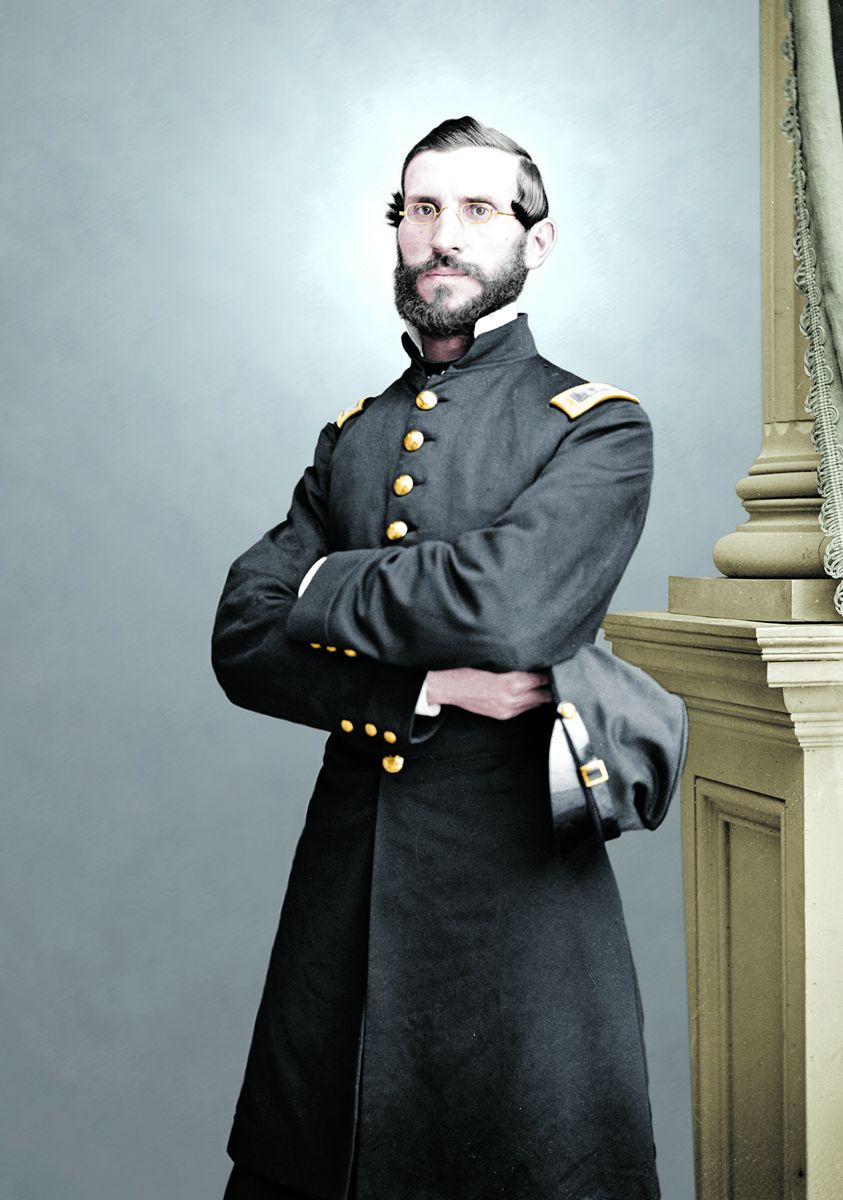
A Tale of Two Forts “It is a strange situation. The Federal Government, afraid to speak, and unable to act, is leaving its soldiers to do as they please.” – William Russell, London Times reporter Due to conflicting orders, Fort Sumter, S.C., not Fort Pickens, Fla., went down in history as an enduring symbol of the Civil War. Pickens, situated on Santa Rosa Island, protected Pensacola, the largest deep-water harbor on the Gulf Coast. On Jan. 7, 1861, it came to the attention of Lt. Adam J. Slemmer, 1st U.S. Artillery, Barrancas Barracks, Fla., that Florida and Alabama troops were planning on marching against the forts protecting Pensacola Harbor. Lacking guidance from above, Slemmer, with his fellow officer 2nd Lt. Jeremiah Gilman, considered their options. Fort Barrancas was situated on a hilltop near the naval yard. Fort McRee was located on a sandy barrier island. The key was Fort Pickens, the largest brick structure on the Gulf of Mexico. It was dilapidated, had not been occupied since shortly after the Mexican-American War ended in 1848, and suffered damaged from a fire in 1858. Without orders, Slemmer concluded it was “best” to remain where he was stationed but moved the powder and the men from the Barracks into the fort. After midnight on Jan. 8, about 20 men came to occupy the normally deserted Fort Barrancas. They were greeted by fire from the guard and were run off, “their footsteps resounding on the plank walk as the long roll ceased and our company started for the fort at double-quick. This, I believe, was the first gun in the war fired on our side,” wrote Gilman. On Jan. 9, Slemmer received orders from U.S. Gen. Winfield Scott to “prevent the seizure of public property and to cooperate with Commodore James Armstrong at the yard.” In preparation to consolidate their position at Pickens, the
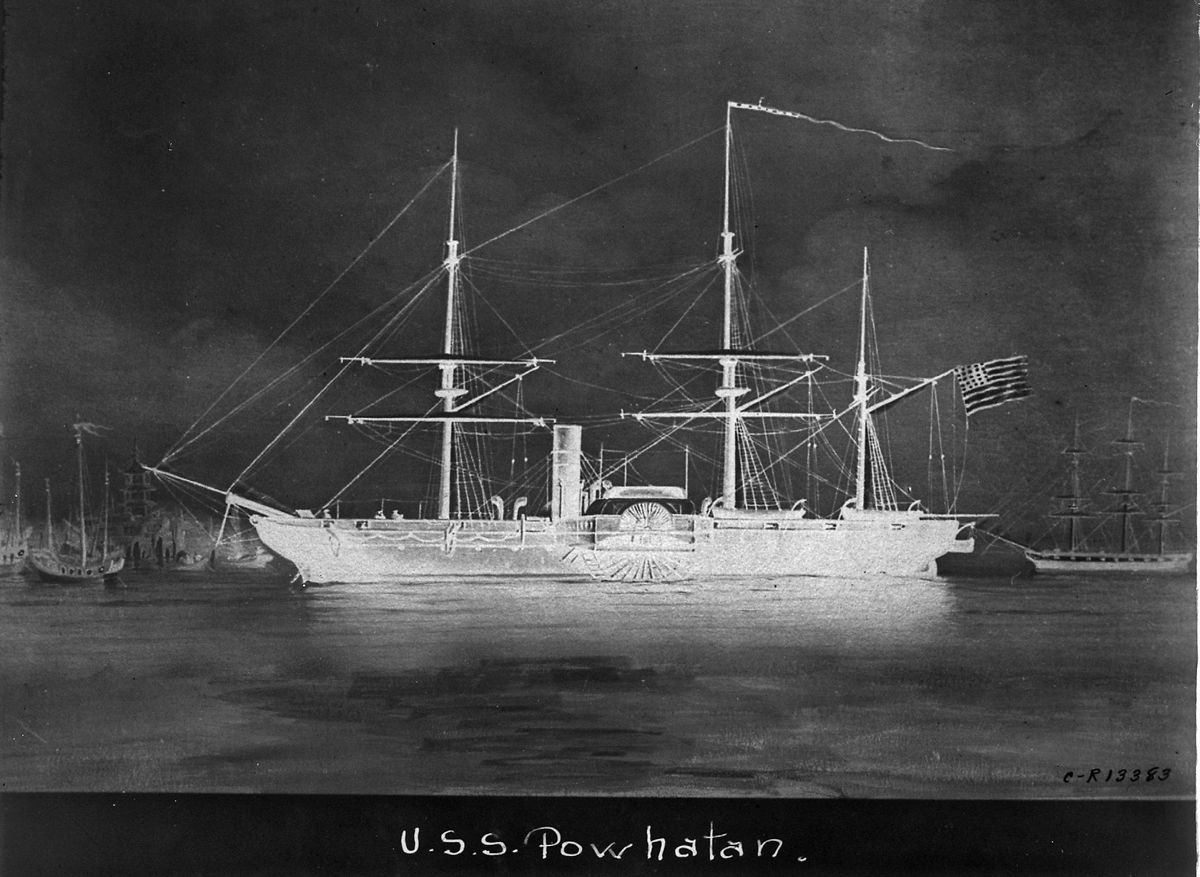
Federals destroyed over 20,000 pounds of gunpowder at McRee and spiked the guns at Barrancas. Armstrong was to provide the transportation; his challenge was that many of the naval officers were secessionists. Slemmer had to repeatedly twist his arm to get the use of boats to convey the 51 soldiers, 30 sailors, “provisions, brass field-pieces, ammunition, tools, and whatever public property was most needed and could be carried, including, I remember, an old mule and cart (which afterward proved of great service to us)” to Pickens. The move was accomplished about 10:00 a.m. on Jan. 10, the same day Florida seceded from the Union. On Jan. 12, to the frustration of the 38 marines vs. 400 militia, Armstrong relinquished the Navy Yard, Barrancas, and McRee. Slemmer refused to surrender. The men labored in torrential rain on the “flank casemate guns, loading with grape and canister such as could be worked, and at other points closing the embrasures.” On Jan. 15, C.S. Col. William Henry Chase, who designed and built Pickens as a Federal officer, came to request the surrender of the Fort as he believed, “it right and necessary to save bloodshed.” Chase’s “voice shook, and his eyes filled with tears” as he tried but was unable to read his prepared statement. Gilman instead read it aloud. The conversation turned to the option of taking Pickens by force. Chase acknowledged the possibility that half the approximately 800 men he could gather for an attack might be lost, but he also pointed out that, “with your small force, you are not expected to, and cannot, hold this fort. Florida cannot permit it, and the troops here are determined to have it; and if not surrendered peaceably, an attack and the inauguration of civil war cannot be prevented. If it is a question of numbers, and eight hundred is not enough, I can easily bring thousands more.” On Jan. 21, U.S. President James Buchanan and future C.S.A. Sec. of the Navy Stephen Mallory came to an agreement; as long as the Federal government did not land troops to reinforce Pickens, the Confederates would not take it by force. On March 10, C.S. Gen. Braxton Bragg, Louisiana planter and former career military officer, arrived in Pensacola. He laid out camps and conducted drills on the sand. Bragg lined the beach with a few big guns and four miles of troops as his army swelled with volunteers. As part of his efforts to turn the mob into an army, Bragg prohibited the sale of alcohol to soldiers. His inexperienced volunteers became more robust than when they had arrived. Each man believed that “he can whip the world” and nothing was more necessary then to just go and take Pickens. However, when asked, Bragg made clear he intended to keep the truce. He didn’t mention that he lacked the trained artillery officers to fire his few guns, specialists, transports, and money needed for an assault. Or that the C.S.A. War Department insisted that he come up with an attack plan. “I want that fort saved at all hazards,” decided U.S. President Abraham Lincoln. On April 6, he ordered Lt. David Porter to command the Navy’s most powerful warship, the USS Powhatan, on a secret mission to reinforce Pickens. Unaware of the secret orders, U.S. Sec. of the Navy Gideon Welles ordered the Powhatan to reinforce the supply ships for Sumter. Lincoln had signed both sets of orders. When it was realized that the Powhatan wasn’t on her way to Sumter, U.S. Sec. Of State William Seward and Welles brought the conflicting orders to Lincoln’s attention. Seward was told to send Porter orders redirecting the Powhatan to Sumter. Porter, considering the President’s orders superseding Seward’s, ignored Seward, who was not in his chain of command anyway. On April 17, the Powhatan arrived at Pensacola. She was able to safeguard landing the men to reinforce Fort Pickens. The Marines stayed a month to improve the defenses. Each man filled and placed 40 sandbags a day. A reporter from the New York Times called the Marine Corps the “bright spot in the Navy. … “Oh, that we had ten thousand Marines!” On the April 12, the Battle of Fort Sumter began. On the same day, the 121 Marines aboard the USS Brooklyn, USS Sabine, USS Wyandotte, and the USS St. Louis were ordered ashore to bolster Pickens’s defenders. “In his exuberance to be the first ashore, Marine drummer George Gardner stepped overboard when he thought they were in shallow water. Surprised to be in over his head, he held his drum tight, used it as a float and as he kicked his way to shore.”
Sources: • Gilman, J. H. ‘With Slemmer in Pensacola Harbor’. In Johnson, Robert Underwood and Clarence C. Buel, eds. Battles and Leaders of the Civil War, vol. 1 • McWhiney, Grady, Braxton
Bragg and Confederate Defeat, Vol. 1 Russell, William Howard, My Diary: North and South, Vol. 1 Godwin, Doris Kearns, Team of Rivals www.navyandmarine.org, The Navy in the Civil War
Stephanie Hagiwara is the editor for Civil War in Color.com and Civil War in 3D.com. She also writes a column for History in Full Color. com that covers stories of photographs of historical interest from the 1850’s to the present. Her articles can be found on Facebook, Tumblr and Pinterest.