
A Navy Man Writes on the Fall of New Orleans
By Bruce Allardice and Wayne Wolf · Originally published February 2019 · pp. 18–19
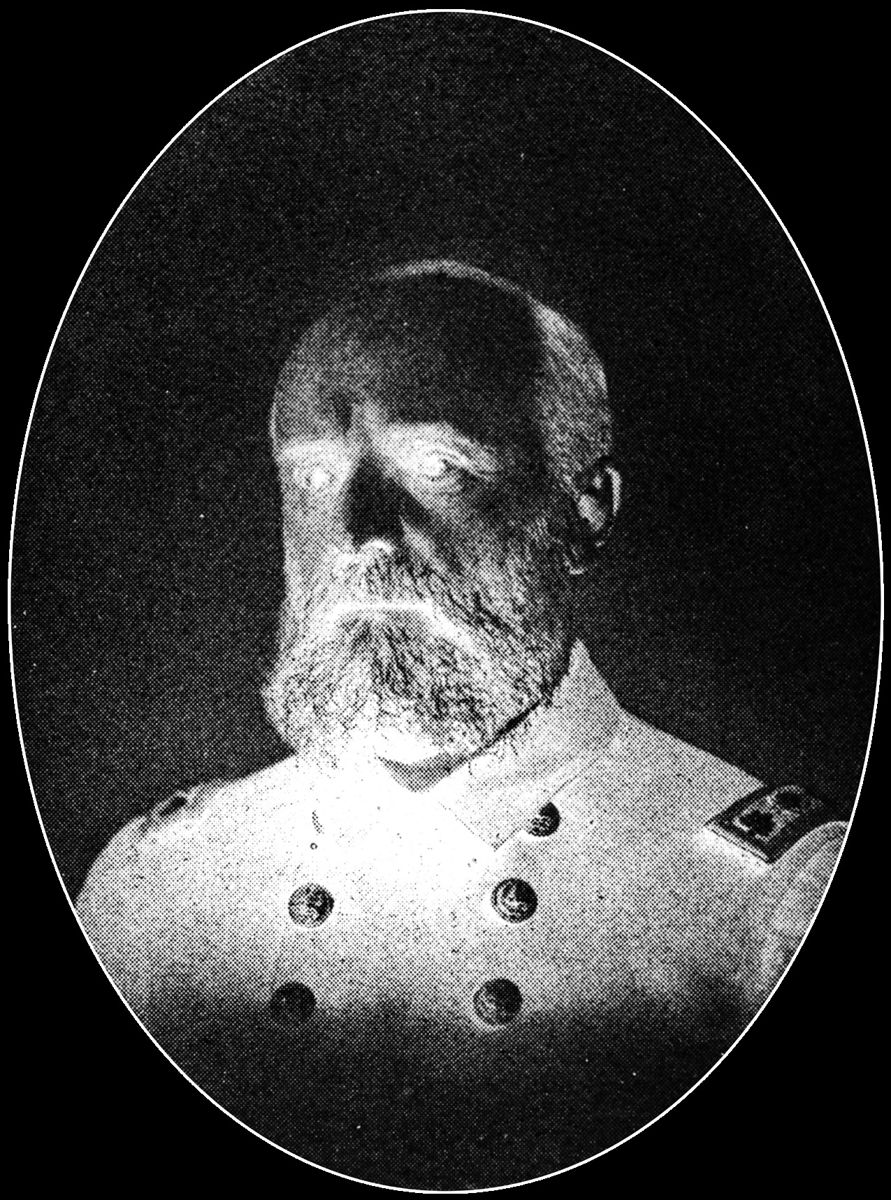
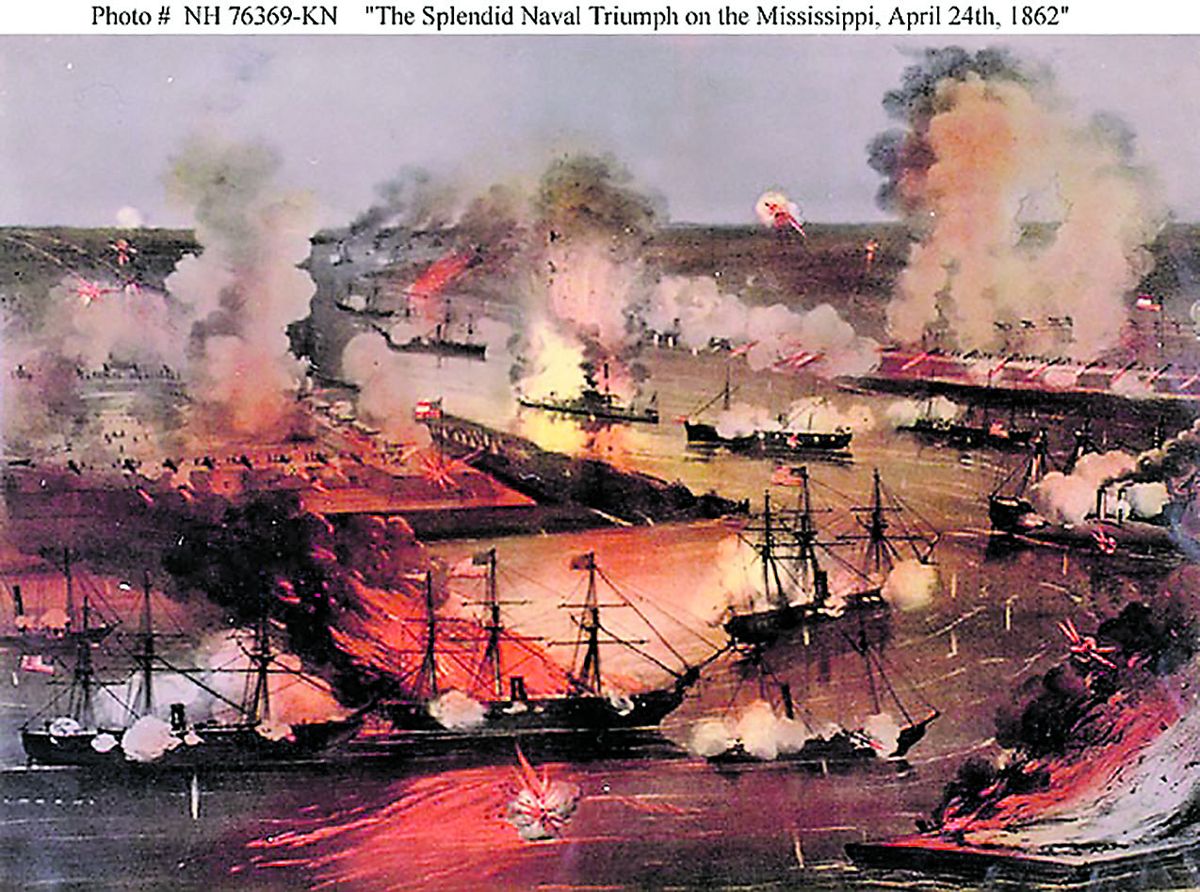
A Navy Man Writes on the Fall of New Orleans By Bruce Allardice and Wayne Wolf Dr. Aaron Shimer Oberly (1837–1918) studied medicine at Yale University. He was appointed assistant surgeon, USN, in 1861. During the war he served as surgeon on the USS Kineo and USS Santiago de Cuba. He remained in the navy after the war, finally retiring in 1889. During the war he penned numerous wartime “love letters” to his future wife Anna Maria Woodford (1844–1944), daughter of State Representative Chester R. Woodford and his wife Harriet Webster.1 The letter published here, addressed to Mrs. Woodford, touches on his vivid experiences of the 1862 capture of New Orleans. The 691 ton gunboat Kineo was launched on Oct. 9, 1861. Under the command of Lt. George M. Ransom, she was sent to join the forces then gathering to attack New Orleans. On April 24, 1862, Kineo was one of the Union navy steamships that battled their way past Forts Jackson and Saint Philip. Though hit by cannon fire, she was able to continue up the Mississippi River and participate in the capture of the Confederacy’s largest seaport. The mutiny of the Confederate garrisons at Forts Jackson and St. Philip embarrassed the Confederate government. The soldiers were largely Irish-born and, according the Confederate sources, had little inherent loyalty to the Confederate cause. When Farragut’s fleet passed the forts and cut off their supply line, most of the soldiers concluded further resistance was of no use. As Dr. Oberly observes, the mutineers disarmed their officers and surrendered. It is clear that later in the war, Confederate troops in much worse circumstances resisted until the bitter end. The loss of the forts also meant the doom of the unfinished, immobile ironclad CSS Louisiana, which had been moored at the forts to serve as a floating battery. Its crew blew the ironclad up, in a spectacular explosion that Oberly relates. U.S. Gunboat Kineo Mississippi River May 2d 1862 Dear Friend, Mrs. Woodford Your letter dated Feb. 25th came to hand this morning and as I have the time & opportunity it will afford me pleasure to give an immediate reply. I was expecting to hear from you before, as I noticed that no mention was made concerning you in Maria’s. I must not however forget to mention that I received day before yesterday a letter from Maria which contained a note from you dated March 27th. A long time had elapsed until we received any mail from the North & then it came in packages in such a manner that the last were first and the first last. I received also another with the postage stamp March 22d. Thus our letters came for three consecutive days and trust they will continue coming in though we cannot reasonably expect it so. We are all very much rejoiced to have it announced that mail has arrived even though the dates have passed by for some time. All news are [sic] welcome, as they tend to cheer the monotony which so frequently falls to our lot. We have things mostly in extremes either very exciting or else very dull. But as we are unable to arrange things to suit our tastes we are obliged to take things as they come & which we do & make the most out of them at that. The Kineo is steaming down the river at present en route for South West Balize [near the mouth of the Mississippi River] and at which place we have nigh arrived. We left New Orleans this afternoon at about one o’clock at which place we were stationed yesterday & would have remained had we not required some necessary appendages to our vessel. We are ordered to return immediately which we will no doubt do tomorrow. Since the morning of the 24th [the night Admiral Farragut’s Union fleet steamed past Forts Jackson and St. Philip] we were employed a short distance above Forts Jackson & Philip transporting troops, prisoners & deserters from one side to the other, excepting the last two days when we were engaged elsewhere on other duty. On the night of the 27th or the morning of the 28th of April some two hundred men deserted from Fort Jackson causing the forts to surrender on the 28th. They kept the officers under guard and spiked the guns pointing in the direction of the way they intended to flee. They were stopped by our troops to which they willingly surrendered parting with their arms. The forts weakened by desertion feared
Dr. Aaron S. Oberly. their ability to hold out and as it was merely a matter of time since we had cut them off from receiving supplies, they came to the conclusion that they had better surrender immediately.2 They destroyed their vessels and iron clad battery [the CSS Louisiana] so that they would not be turned against them. The battery which contained about a ton of powder made a beautiful explosion whirling the iron plates through the air killing and wounding a number in the vicinity. We had several Confederate Naval Officers aboard our vessel held as prisoners which formerly were attached to our service. They apparently were still full of fight and wished to be exchanged so that they could continue their occupation. They said they expected to be whipped wherever our fleet could pass but that inland with their army they expected to conquer. Also they mentioned that the war had but just begun. I fear they are mistaken at any rate. We are satisfied if they are. I presume that the number of killed and wounded on the Confederate side in the forts and vessels will not fall short of one thousand.3 They acknowledge in their papers that between two and three hundred were killed and wounded in the forts while we know that the loss was far greater on their vessels. On our side I understand there were thirty two killed and one hundred and nine wounded.4 When our fleet arrived at New Orleans all the vessels belonging to the place were fired, wharves and docks destroyed and whatever [else] might be turned to any account by us. About-nine miles above New Orleans at a place known as Carlton [Carrolton, La.] there was a battery or strong fortification intended to resist Flag Officer Foote on his downward passage. They could make no resistance to us as their guns were all pointed up stream. We intend moving onward in about twenty four hours towards Memphis to meet Flag Officer Foote and have a grand reunion. What resistances we shall meet I am unable to say but do not entertain any idea of seeing anything equal to what we passed. New Orleans is very quiet at present—all kinds of business has stopped making it appear like one long holiday. The merchants refuse to sell and take Confederate scrip for pay as in future it will be a worthless article. Everything sells at a high price excepting those things raised in the immediate vicinity & not possessing any market. Flour sells at a very high rate and very scarce at that making it impossible for the poorer classes to purchase any—indeed they had a regulation that none could be obtained except by those enlisted in war. The last few days [Union General Benjamin] Butler’s troops are being landed on both sides of the river at New Orleans and when all are arrived which will be 13,000 they (inhabitants) will conclude it best to surrender to the U.S. Government and not submit as they now do to a military authority. At present the stars & stripes floats; or waves to the gentle breeze from the Custom House, Post Office, Mint &c. The people look cold and apparently have a bitter enmity in seeing our fleet off the city. There are no Confederate flags seen anywhere though the Louisiana flag can be seen at some places. There is said to be a strong union sentiment suppressed which will likely return when we have everything under military control. I will come to a close by stating that I am well. Remember me to Maria and inquiring friends. Very respectfully your friend A.S. Oberly Address Western Gulf Squadron via New York. Endnotes: 1. Oberly letters are at Auburn University; the University of Maryland; the University of Florida; the University of South Carolina; and The Maritime Museum. The letter published here is not part of these collections.
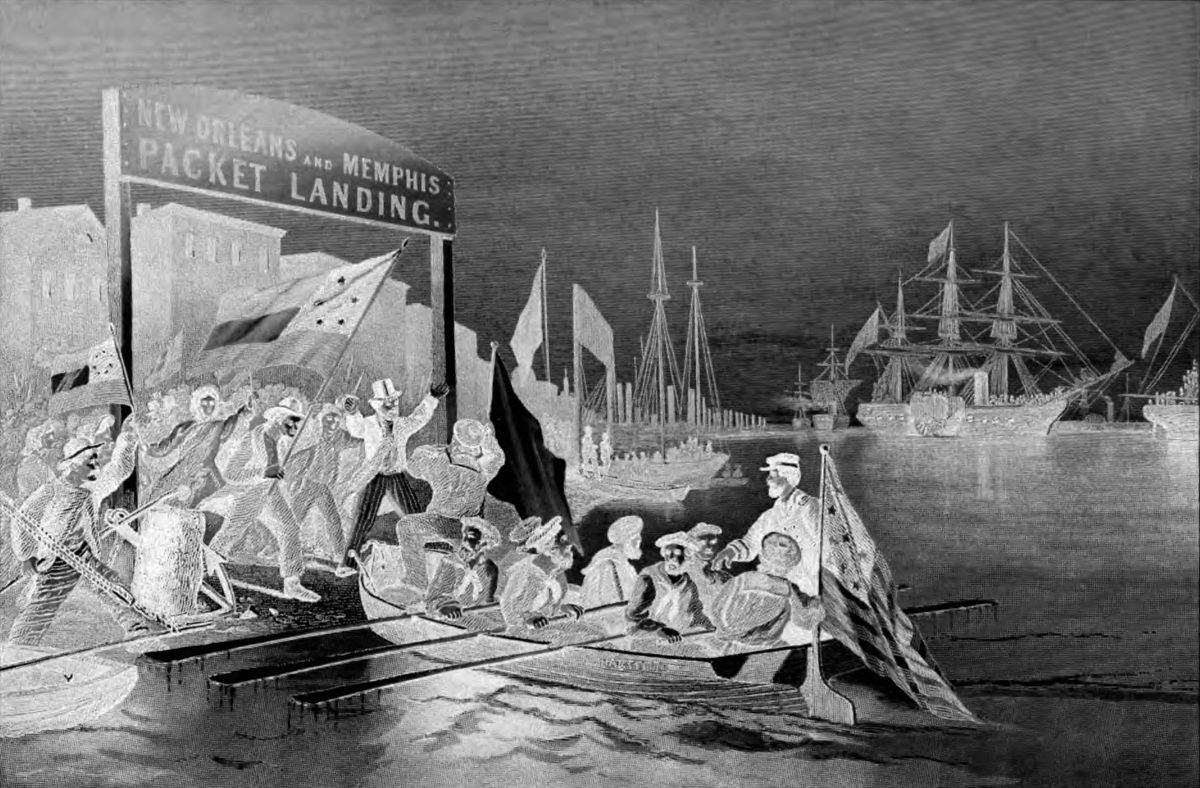
Union sailors land in New Orleans. From Samuel M. Schmucker, The History of the Civil War in the United States (Philadelphia, Jones & Co., 1865).
- For more on this mutiny, so embarrassing to the Confederate cause, see Michael D. Pierson, Mutiny at Fort Jackson: The Untold Story of the Fall of New Orleans (UNC Press, 2009). 3. Total Confederate casualties were 782. 4. Total Union casualties were later figured at 229. Bruce S. Allardice is Professor of History at South Suburban College in Illinois. He is a past president of the Civil War Round Table of Chicago. Wayne L. Wolf is past president of the Lincoln-Davis Civil War Roundtable.