
Excellence at the N-SSA 140th Nationals
By Bruce W. Miller · Originally published December 2019 · pp. 1–2
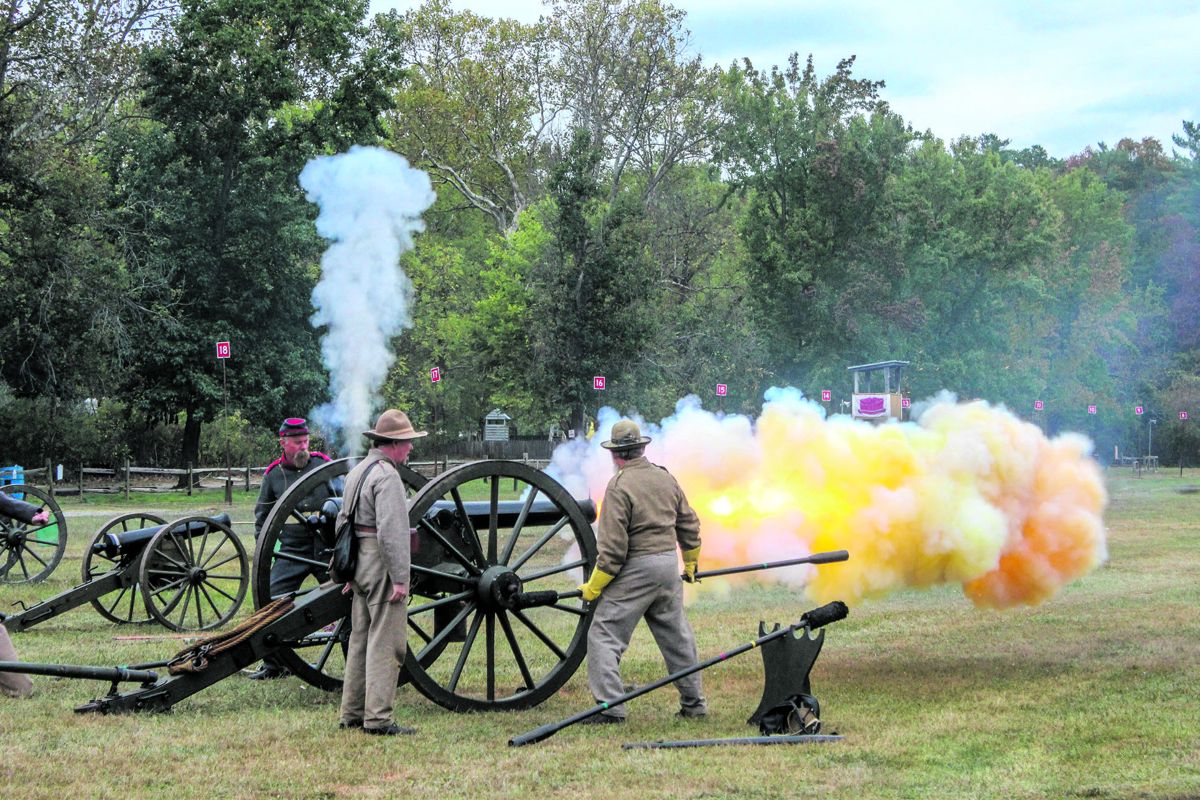
Over the 69-year history of the North-South Skirmish Association (N-SSA), there have been many great championship units. Without a doubt, the greatest of the 21st Century to date is the 110th Ohio Volunteer Infantry (OVI). Interestingly, the original regiment spent much of its three-year service in and around the home of the N-SSA, Fort Shenandoah, near Winchester, Virginia. Organized in October 1862, under Colonel J. Warren Keifer, the 110th OVI moved into West Virginia. In January 1863, the 110th OVI marched to Winchester and served in the Army of the Potomac. At Kernstown, it engaged Lee’s advance, resisting an overwhelming force. Finally cutting its way out, the regiment marched to Harper’s Ferry. In 1864, the regiment operated with Grant in the Overland Campaign and then with Sheridan in the Shenandoah Valley at Winchester and Fisher’s Hill. The regiment took part in the assaults upon Petersburg and pursued Lee until he surrendered. The 110th engaged in 20 battles and lost 795 men. It was mustered out June 25, 1865. Today’s N-SSA 110th OVI joined the association in 1961. Many of those original members worked at Wright Patterson Air Force Base. Eldon Bertram and Jon Barber are the sole surviving members of that era. The current roster includes 24 active members and five non-shooting members. Most members are from Ohio, primarily in the southwestern part of the state. Like many N-SSA units, the 110th OVI includes brothers, married couples, fathers, sons, and even a grandfather, son, and grandson. The unit practices together and that has paid off with an amazing string of N-SSA championships. Since 2000, they have won rifle musket gold 24 times; smoothbore musket seven times; carbine six times; Henry rifle three times; single shot rifle once, and even one mortar match. They are members of the Midwest Region and often travel to neighboring regions to conquer the locals! Not only are the members of the 110th great shots, but great people too. The 140th National Competition was held October 2-6, 2019. Member units competed in livefire matches with original or authentic reproduction Civil War period muskets, carbines, breechloading rifles, revolvers, mortars, and cannon. It is the largest Civil War event of its kind in the country. After two days of individual matches, seven team matches were held over the three-day weekend. The weather in the scenic Shenandoah Valley was spectacular with the exception of a rainy Sunday; the day of the Rifle-Musket Team match, the N-SSA signature event. A total of 159 eight-member teams participated in this classic competition. All targets are breakable and the pieces flew as clay pigeons, ceramic tiles, and pot silhouettes were blasted by Minié balls at ranges of 50 and 100 yards. The rain couldn’t keep the 110th Ohio Volunteer Infantry (OVI) from winning gold medals once again. They won the musket match with a phenomenal time of 399.9 seconds for the five-event program, besting the next closest unit by over a minute. This makes an (Joseph Pelot) amazing 25 rifle-musket championships since 2000. Two members, Mike Rouch and Jerry Smith, have been on all 25 teams. The always competitive 8th Virginia Volunteer Infantry won the Carbine Team match with a time of 392.1 seconds, beating the next closest unit by a solid 44.7 seconds. One hundred thirty-four teams participated in this match of speed and accuracy. Smith carbines are a favorite in this match and many are valuable originals. Skirmishers are also fond of Sharps’ carbines and you will often see Burnsides, Maynards, and even muzzle-loading carbines and musketoons on the firing line. Friday morning dawned cool and bright as 80 teams squared off in the Revolver Team match. The four-member teams participated in the four event match: 12 clay pigeons on a cardboard backer, eight hanging 6 x 6 inch ceramic tiles, eight hanging clay pigeons, and eight hanging 4 x 4
inch ceramic tiles. Harris’ Light Cavalry finished first with a time of 118.4 seconds, 13.5 seconds better than the second place team, the Nansemond Guards, winners of the match at the previous two nationals. The 1st Maryland Cavalry won the Smoothbore Musket Team match, outshooting 130 other units to finish first with a total time of 214.2 seconds, just 1.1 seconds ahead of the ever present 110th OVI. This relatively new match has become increasingly popular and, as you can imagine, a really great test of skill. Competitors participate with many different firearms, including the U.S. Model 1842, Confederate Macon arsenal conversions of the Model 1842, the Hewes & Philips conversion of the U.S. Model 1816 (which features a rear sight), and the occasional European Potsdam in .72 caliber. The match consists of four events, including the extra challenging silhouette of a tiny clay pot at 25 yards and 6 x 6-inch ceramic tiles at 50 yards. Three additional shoulder arm team matches were held. In the Single-Shot Rifle Team match, the 149th Pennsylvania Infantry finished first. In the BreechLoading Rifle Team match, the 2nd Maryland Artillery was the winner; in the Spencer Team match, the 46th Illinois Infantry took gold. Fifty units participated in the Mortar Team match. The mortar teams fire seven shots at a stake 100 yards down range. Officials then carefully measure the distance from the stake and tally the best five shots for score. The overall winner was the 2nd South Carolina Infantry, Company I “Palmetto Guards,” with a terrific five shot aggregate score of 23 feet-3.25 inches; a huge 12 feet better than any other team.
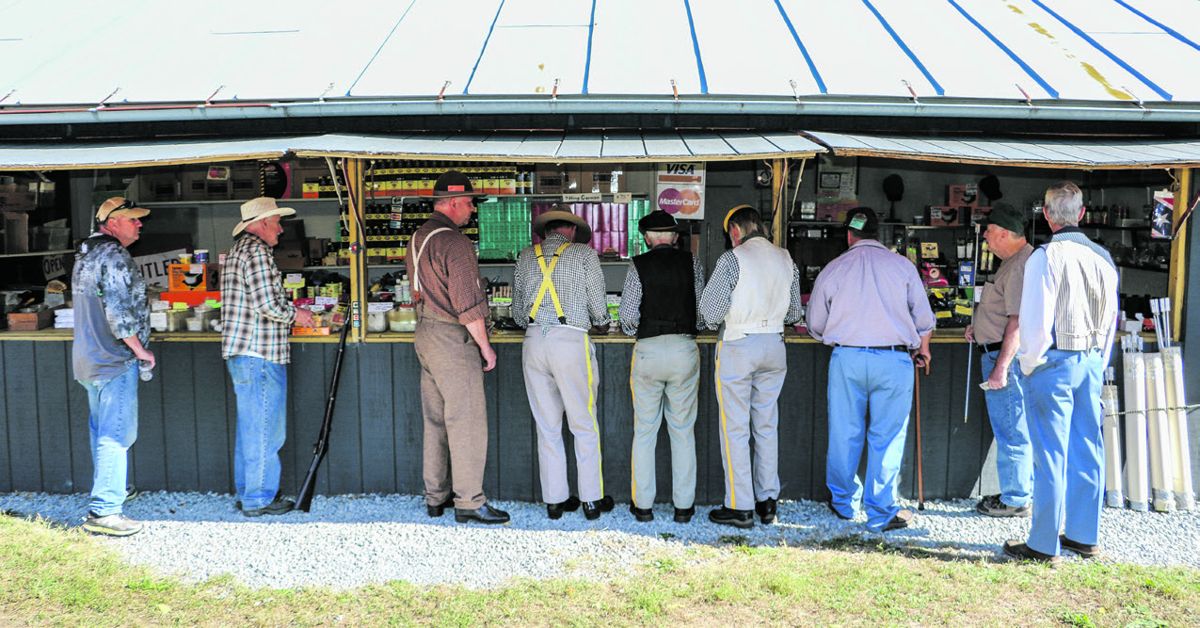
The Artillery Team matches are a spectator favorite and the excellent weather brought out 46 guns to participate. The range is reconfigured so that the cannons fire perpendicular to the regular firing line. Target frames and their paper targets are then set at a distance of 200 yards for rifled guns and 100 yards for smoothbores and howitzers. Each cannon fires a solid shot at two targets; a bull’s eye and a silhouette of a cannon facing them that represents counter battery fire. A maximum of seven shots are fired on either target with a maximum point count of 25 per target. A perfect score is 50 points. The guns are classified by type: smoothbore, rifled, howitzer and rifled howitzer. In the Smoothbore class, the 1st Virginia Cavalry (gun #1) was the winner. In the Rifled class, the 3rd U.S. Infantry (Smithgall) won with a perfect score of 50-5V. In the Howitzer class, the Rowan Artillery won for the fifth consecutive national, shooting a near perfect 50-8V. Not surprisingly, the 1st Maryland Cavalry won for the sixth consecutive national in the Rifled Howitzer class. The accuracy of these Civil War cannons is truly amazing and N-SSA gun crews know how to get the most out of them. The N-SSA is the country’s oldest and largest Civil War shooting sports organization with over 3,000 individuals that make up its 200 member units.
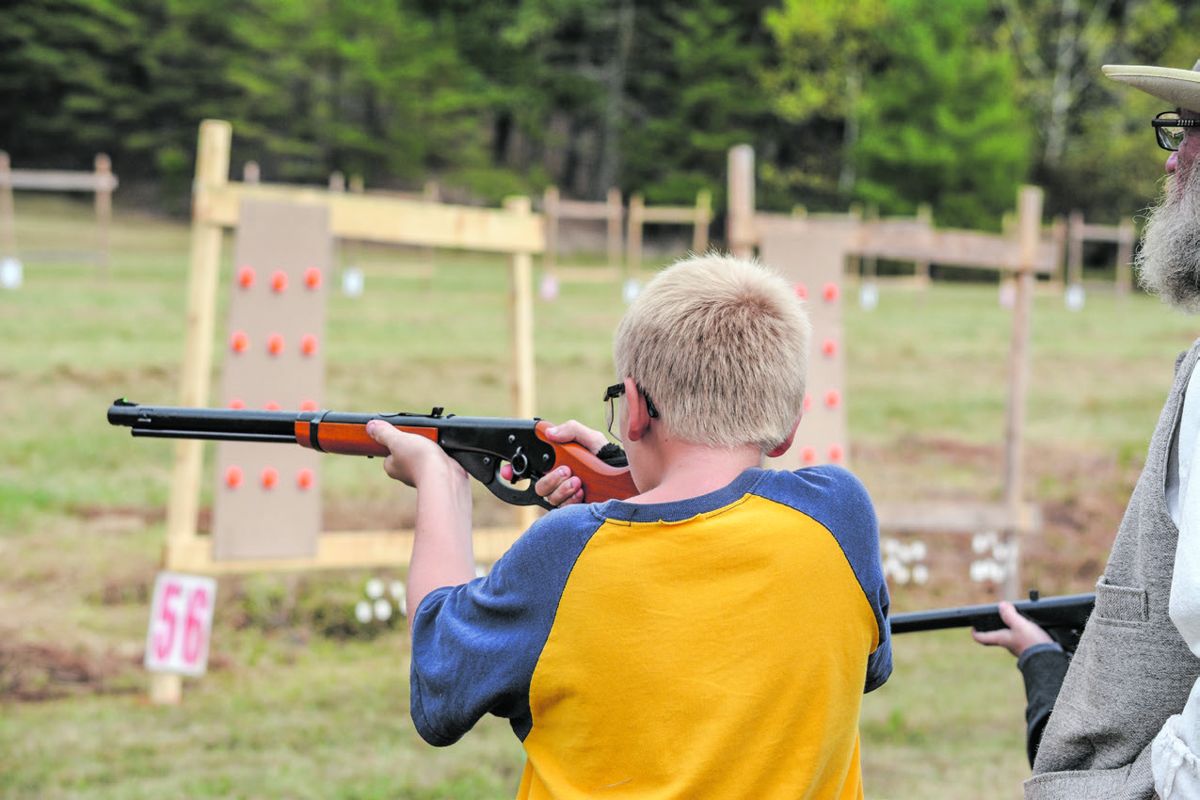
twelve more members were recognized for 50 years of membership in the Association; quite an accomplishment. The 141st National Competition is scheduled for May 13-17, 2020 at Fort Shenandoah, just north of Winchester, Virginia. For more information about the N-SSA visit the web site at www.n-ssa.org.