
Emerging Civil War
Emerging Civil War — December 2019
Originally published December 2019 · pp. 28–29
Whenever I invoke George Santayana in front of a Civil War group, I get a lot of “Amens.” “Those who do not learn history are doomed to repeat it,” Santayana said (or something close to it: “Those who cannot remember the past are condemned to repeat it”). The idea gets at the very heart of why we study history. I agree with the premise wholeheartedly, but it does present some challenges. To draw a lesson from history inherently means you’re appropriating history for your own purpose. To people who agree with your perspective, you seem wise. History offers sage advice and appropriately cautionary tales. To people who disagree, though, you seem like you’re “getting political.” Let me use a non-Civil War example. Timothy Snyder is a Yale historian who specializes in the history of totalitarianism.
Amazon.com describes his most recent book, On Tyranny: Twenty Lessons from the Twentieth Century, thus: The Founding Fathers tried to protect us from the threat they knew, the tyranny that overcame ancient democracy. Today, our political order faces new threats, not unlike the totalitarianism of the twentieth century. We are no wiser than the Europeans who saw democracy yield to fascism, Nazism, or communism. Our one advantage is that we might learn from their experience. It says outright “we might learn from their experience.” Sounds right up our alley, right? If one supports the idea that we should learn from history, it stands to reason that a historian who specializes in totalitarianism would have some insights on the topic that might help us learn from past examples as we move through today’s troubled times. But because Snyder applies those lessons to modern America, I can easily imagine some readers dismissing the book outright because of their political leanings. To people who agree with him, he’s considered an expert; to people who disagree, he’s dismissed as elite. In other words, some people want to learn from the past if they agree with the lessons. In that respect, it’s like today’s journalism: people only want the news they agree with. Having that attitude doesn’t let us learn anything. We much prefer an echo chamber, even from our own history, than perspectives that challenge us and, in doing so, help us learn. And so I ask you to consider: do you agree with Santayana, really? — Chris Mackowski, Ph.D. Editor-in-Chief
We’ll be announcing our lineup soon for the Seventh Annual Emerging Civil War Symposium at Stevenson Ridge. Our theme next year will be “Fallen Leaders.” You’re going to see some of the Civil War’s greatest “hits” (so to speak!). Join us August 7-9, 2020, at Stevenson Ridge in Spotsylvania,
Va. Early bird tickets are just $155 dollars; regular price, starting January 1, will be $175. More information is available at https://emergingcivilwar.com/2020-symposium/.
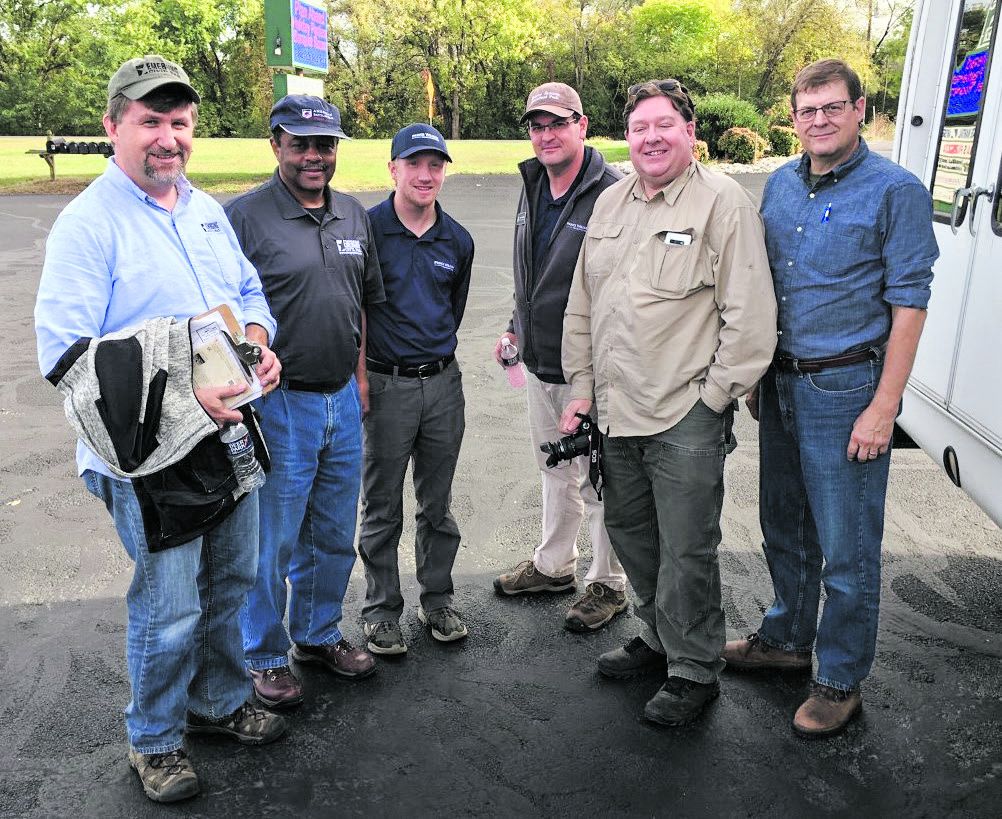
The cover story of the December 2019 issue of Civil War Times asked, “Do we still care about the Civil War?” ECW was pleased to partner with the magazine to extend the conversation through the blog. “Your blog has allowed other important voices to be heard,” said CWT Editor Dana Shoaf, who contributed to the online series. Aside from the many great historians featured in the magazine, we had an additional fifteen contributors at ECW. You can read the online entries at: https://emergingcivilwar.com/tag/do-we-still-care-series. On Saturday, October 19, Mike Block, Chris Mackowski, Rob Orrison, and Kevin Pawlak partnered for an all-day tour of the “forgotten fall” of 1863. Rob and Kevin focused on Bristoe Station; Mike focused on Rappahannock Station; Chris focused on Mine Run. Steve Davis featured “Confederate Biography, A-Z” in the November 2019 issue of Civil War News. The article highlighted Steve’s extensive collection of Confederate biographies, more than 400 volumes in all, organized on three shelves. Bert Dunkerly would like to note that the Washington Redskins are 1-5 at the time the ECW newsletter went to press. He would specifically like to remind any of his ECW colleagues who are Skins fans of this record. Meg Groeling spoke to the Elk Grove CWRT on Captain Jack Wildey and Civil War Base Ball on October 18, just in time for the World Series! Meg also reviewed James G. Mendez’s A Great Sacrifice: Northern Black Soldiers, Their Families, and the Experience of Civil War for the November 2019 issue of Civil War News. Robert Lee Hodge stepped up as a last-minute pinch-hitter to speak to the Louisville, Ky., CWRT about the Battle of Spotsylvania Court House. Derek Maxfield will host a special exhibit at the MorganManning House in Brockport, NY, entitled “Changing Victorian Deathways in the 19th century.” The three-day exhibition is scheduled Monday through Wednesday, October 28, 29 and 30, 2019, from 6 – 8 p.m. There will also be a special lecture on Wednesday, October 30 at 7 p.m., “Dying on Script: Changing Victorian Deathways in the 19th Century,” by Maxfield is a Genesee Community College professor of history who is also a member of the Morgan-Manning House Board of Trustees. Derek Maxfield and Tracy Ford will perform their Civil Warinspired play “Now We Stand by Each Other Always,” a conversation between Gens. Ulysses S. Grant and William T. Sherman, at the West Sparta, NY, town hall on November 3 at 2 p.m. Derek Maxfield will present “Hellmira: The Union’s Most Infamous POW Camp of the Civil War,” based on his upcoming ECW book by that title, at the Powhatan Civil War Roundtable on November 21 at 6:30 p.m. Eric Wittenberg recently presented a talk titled “The Johnson-Gilmor Raid: Destined to Fail” at the 22nd annual Middleburg Conference on the Art of Command in the Civil War, addressing Robert E. Lee’s failed attempt to free Confederate POW’s from Point Lookout, Md., as part of Jubal Early’s advance on Washington in July 1864. Eric also had his first event as program coordinator for the Chambersburg Civil War Seminars on the weekend of October 24. They will be presenting some really different and unique programs over the coming years, and Eric would like to invite you join them! Ryan Quint presented at the 22nd Annual Middleburg Conference on the Art of Command. He helped lead a bus tour to Monocacy, with Scott Patchan leading a tour of the Battle of Second Kernstown in the afternoon. “It was a fantastic time,” Ryan says. Dan Welch recently had an article on the Battle of Cedar Mountain published as part of the Essential Civil War Curriculum. You can read it here: https://www.essentialcivilwarcurriculum.com/the-battle-of-cedar-mountain.html Kris White and Dan Davis had an article in the current issue of Hallowed Ground. The issue highlighted different stories that involved maps. In Kris and Dan’s article, “How Inaccurate Maps Repeatedly Thwarted Union Major General Ambrose E. Burnside,” they wrote about two instances in which Ambrose Burnside was bedeviled by poor maps, including during his ill-fated trip to Fredericksburg. “Has Google Maps ever led you astray at work?” they ask. We at Emerging Civil War were saddened to learn of the death on October 9 of D. P. Newton, owner of the White Oak Civil War Museum in southern Stafford, Va. In 2018, ECW honored D. P. with the Emerging Civil War Award for Service in Civil War Public History. We extend our sympathies to his wife, Bonny. You can read more about D. P. here: https://emergingcivilwar.com/2019/10/08/in-memoriam-d-p-newton.
Rob Orrison is the historic sites supervisor for Prince William County, Va., and a board member for the Virginia Association of Museums. He called the victory of the Washington Nationals in the National League Championship Series “Greatest moment of my sports life!!!” Rob was first profiled in the November 2016 ECW newsletter: https://conta.cc/2gdbv6Q. You can read his full bio on the blog: https://emergingcivilwar.com/author-biographies/authors/rob-orrison. You’re just coming off your first (and very successful) Emerging Revolutionary War Symposium. How do you feel about it? It was a great event and highlights the importance of collaboration. Working with the City of Alexandria was a great experience and, for our first symposium, we were very happy with the attendance of over 75 people. We also focused on a mix of non-military and military topics with a great selection of young and veteran historians. We are already planning the 2020 Symposium and details should be out soon on our website,www.emergingrevolutionarywar.org. We look forward to growing this event annually as we approach the 250th anniversary of the American Revolution. Switching hats from Rev War to Civil War, you had some exciting news at work recently. You work for Prince William County, which includes the Bristoe Station battlefield. Can you tell us about the developments there? Yes, this was GREAT news we received in early October, great timing with the Bristoe Station anniversary on October 14th. This new land is over 150 acres (our current Bristoe Station battlefield park is 140 acres), so this will more than double the size of our park. Currently we manage the part of the battlefield where a portion of the Confederates attacked; this new property includes the Federal position of Webb’s Brigade and Union artillery. It will allow us to tell a fuller story about the battle and brings the total acreage of preserved land to nearly 300 acres, about 40% of the battlefield. Working with the American Battlefield Trust has been great. Anyone reading this who is not a member of the ABT should sign up now. Great staff and great results nationwide in preserving American battlefields. I know they will continue to look for other opportunities in the Bristoe Station battlefield area for more preservation victories. Why do you think the Fall of
1863 tends to get overlooked in larger narratives of the war? Two reasons. There are no real “large” battles that led to future national parks; secondly, it is between Gettysburg and Grant. History books teach Gettysburg and then talk about how that was the high water mark of the Confederacy, and then Grant is put in charge and “knocks out” the Army of Northern Virginia. When doing a talk or tour about this time period, I always get the “I had no idea Lee and the Confederates were this close to Washington after Gettysburg!” On October 15-16, Confederate cavalry was in Herndon and near Clifton, with Confederate infantry near Manassas. It is hard to believe that even after Gettysburg, which we are taught is the end for the Army of Northern Virginia, that Lee was on the doorstep of Washington. You’ll be ascending to the presidency of the Virginia Museum Association in a few months. What will that involve? I am very excited about this opportunity to lead the nation’s oldest and largest state-wide museum association. VAM has been integral in assisting Virginia-based museums to be in the forefront of new ideas in public engagement and interpretation. VAM members range from large museums such as Mount Vernon and the Virginia Museum of History and Culture to small museums like the Clarke County Historical Association. Over the next two years, I will be working with museums, members, and elected officials to promote why museums are important to our communities with their impact on cultivating cultural experience and economic development. How does your museum work tie back to your interest in the Civil War? I manage twelve historic sites, including historic homes and landscapes. Being in Prince William County, a lot of these places relate to the Civil War. My first interest in history as a child was in the Civil War, so I am able to use a childhood passion every day at work. I appreciate all historic time periods, though, and many sites I managed have colonial and 20th century historic significance. Working in Civil War history prepares you to talk about difficult topics, which is a required skill when working in public history. Lightning Round: Favorite primary source? If there has to be just ONE, then it has to be the Official Records.
Favorite Civil War-related monument? Dangerous question these days! Appomattox in Old Town Alexandria. Favorite unsung hero of the Civil War era? Wouldn’t say “hero,” but John Breckinridge had a huge impact on the last days of the Confederacy and trying to see the men under arms were taken care of. Thinking he was once the U.S. vice president, then held military and civil commands in the Confederacy, he succeeded in pretty much everything he did. What’s a bucket-list Civil War site you’ve not yet visited? Chickamauga Favorite ECWS book that’s not one of your own? This kills me…but Bert Dunkerly’s To The Bitter End.
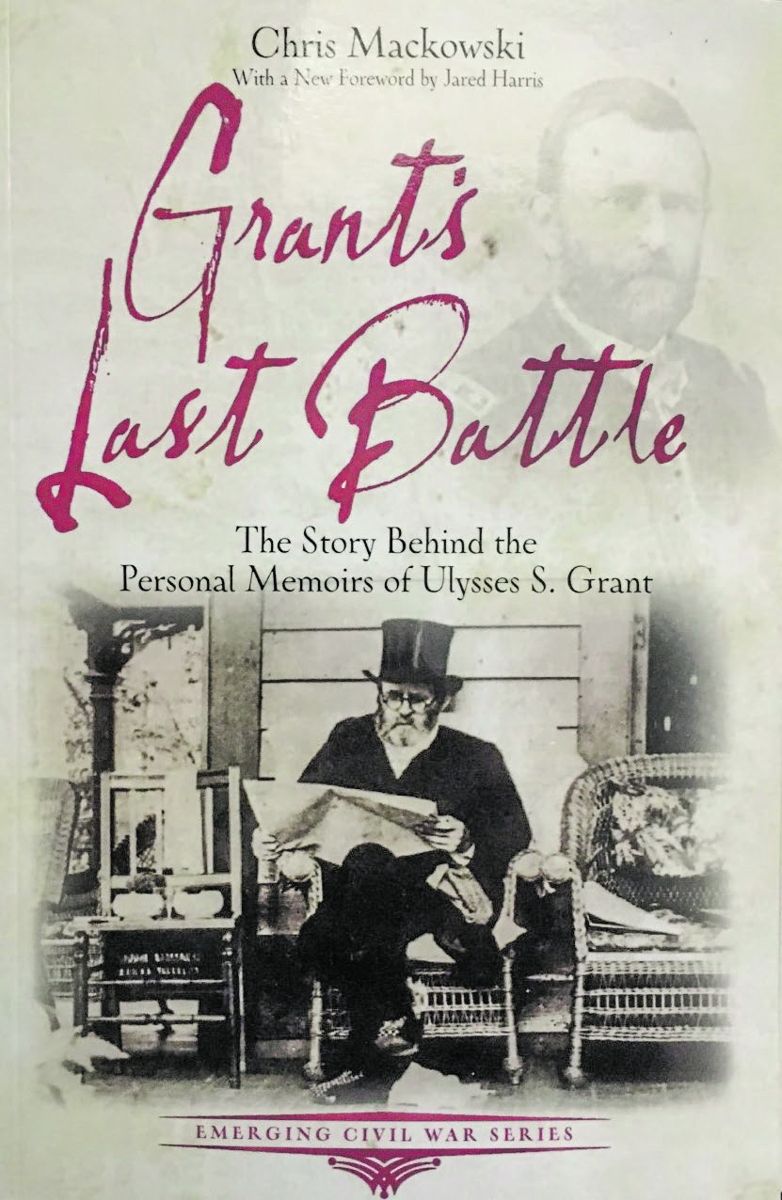
ECW Bookshelf Hot off the press: new editions from our Emerging Civil War Series of A Season of Slaughter: The Battle of Spotsylvania Courthouse by Chris Mackowski and Kristopher D. White and Grant’s Last Battle: The Story Behind the Personal Memoirs of Ulysses S. Grant by Chris Mackowski.
A new edition of Grant’s Last Battle. Aside from some clean-ups, the new edition of Grant’s Last Battle features a new foreword by Jared Harris, who played Grant in Steven Spielberg’s movie Lincoln. The new edition of Season of Slaughter includes updated captions and information about recent preservation acquisitions. “Central Virginia Battlefield Trust’s acquisition of Myer’s Hill was particularly important to note because it will change the complexion of interpreting the entire second week of the battle,” Mackowski said.
Emerging Civil War Podcast In October, we did our podcast live from the Douglas MacArthur Memorial in Norfolk, Va. Our first episode featured an interview by Dan Welch with historian Brian Steel Wills, author (most recently) of Inglorious Passages: Noncombat Deaths in the Civil War. Our second episode featured an interview by Dan with historian Charlie Knight, military curator of the North Carolina Museum of History. Check out the Emerging Civil War Podcast on our Patreon page: https://www.patreon.com/emergingcivilwar. Episodes are only $1.99 each (which goes to support production).
Emerging Revolutionary War News With the mention of October in Rev. War circles, one word comes quickly to mind: Yorktown. The victory at Yorktown propelled the American colonies with their French allies to ultimate victory and American independence. If you are looking to learn more about the victory and also an overview of the entire American Revolution, check out the new-ish American Revolution Museum at Yorktown. One of Emerging Revolutionary War’s historians works as one of the curators there. But, October also saw the pivotal battle of Germantown, fought outside Philadelphia on October 4. Although a reverse for the Continentals under George Washington, the ramifications were positive, as it helped convince the French to enter into an alliance with the rebelling colonies, the icing on the proverbial cake after the victory at Saratoga, which also culminated in October. A new history of the battle and campaign is slated for release from our friends at Savas Beatie next year. (And look for some ERW Facebook Live videos the first weekend of November as some of our historians head that way on a trip.)
On Thursday October 24, ERW historian Travis Shaw spoke at Mt. Zion Historic Park in Aldie, Va. Travis offered a lecture on American Revolutionary War spy John Champe. For more details, check out this link: https://mosbyheritagearea.org/events/2019/10/24/conversations-in-history-revolutionary-spy-john-champe As always, stay up-to-date on ERW by checking out the blog for new content: www.emergingrevolutionarywar.org.
Speakers Bureau Spotlight Dwight Hughes, a retired U.S. Navy Surface Warfare Officer and Vietnam War veteran, is an author and speaker specializing in the naval history of the Civil War.
Dwight Hughes Talks: • Rebel Odyssey: The Cruise of the CSS Shenandoah • Unlike Anything That Ever Floated: The USS Monitor • Unvexed Waters: Mississippi River Squadron • Burnside’s Sand March: The Forgotten North Carolina Expedition • From Shenandoah to Seeadler: The Legacy of Civil War Commerce Raiders in WWI • Rebels Down Under: A Surprise Confederate Visitor Makes Mayhem in Melbourne • Rebels and Aliens: Confederates on the Far Side of the World