
Critic's Corner
“Co. Aytch”
By Stephen Davis · Originally published December 2019 · p. 42
Look at the cover of this paperback (price 95 cents!) and you’ll know just how long I’ve been reading Sam Watkins’ famous memoir, “Co. Aytch.”
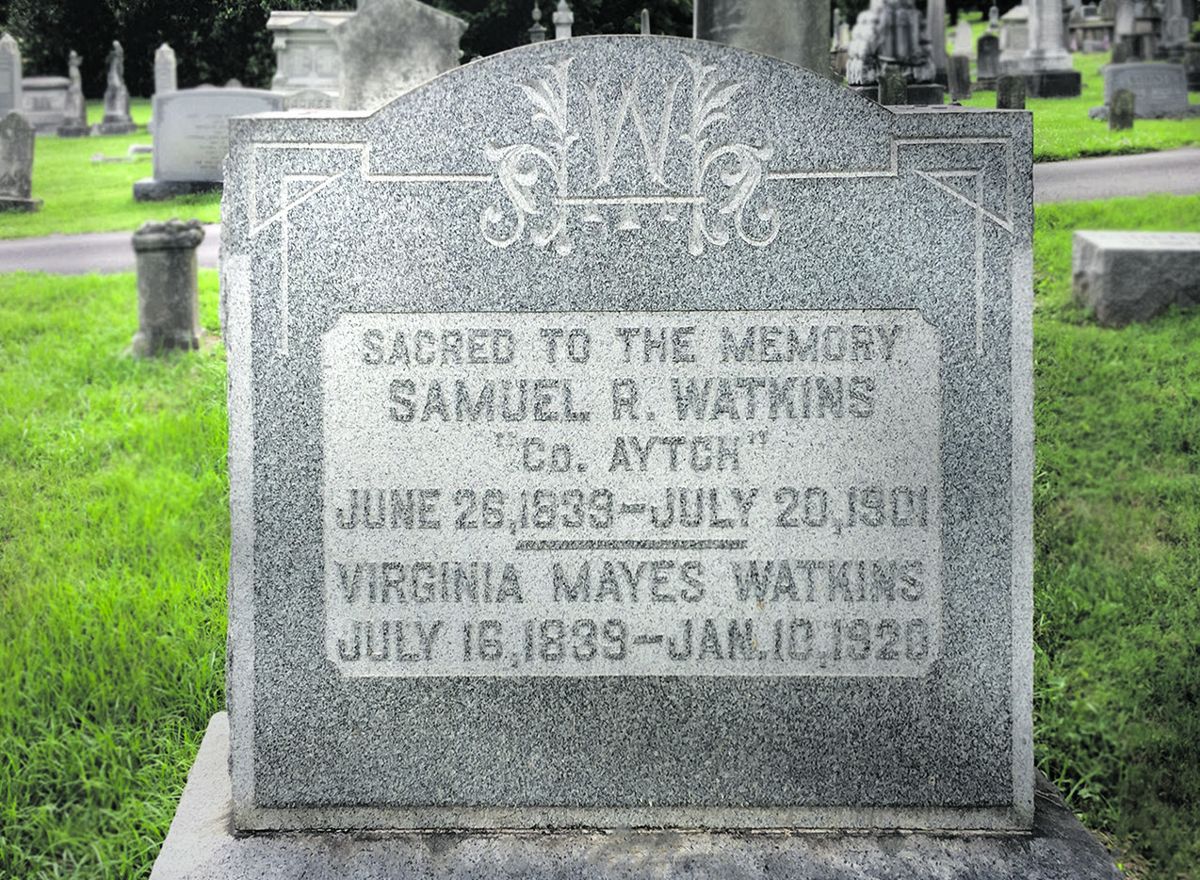
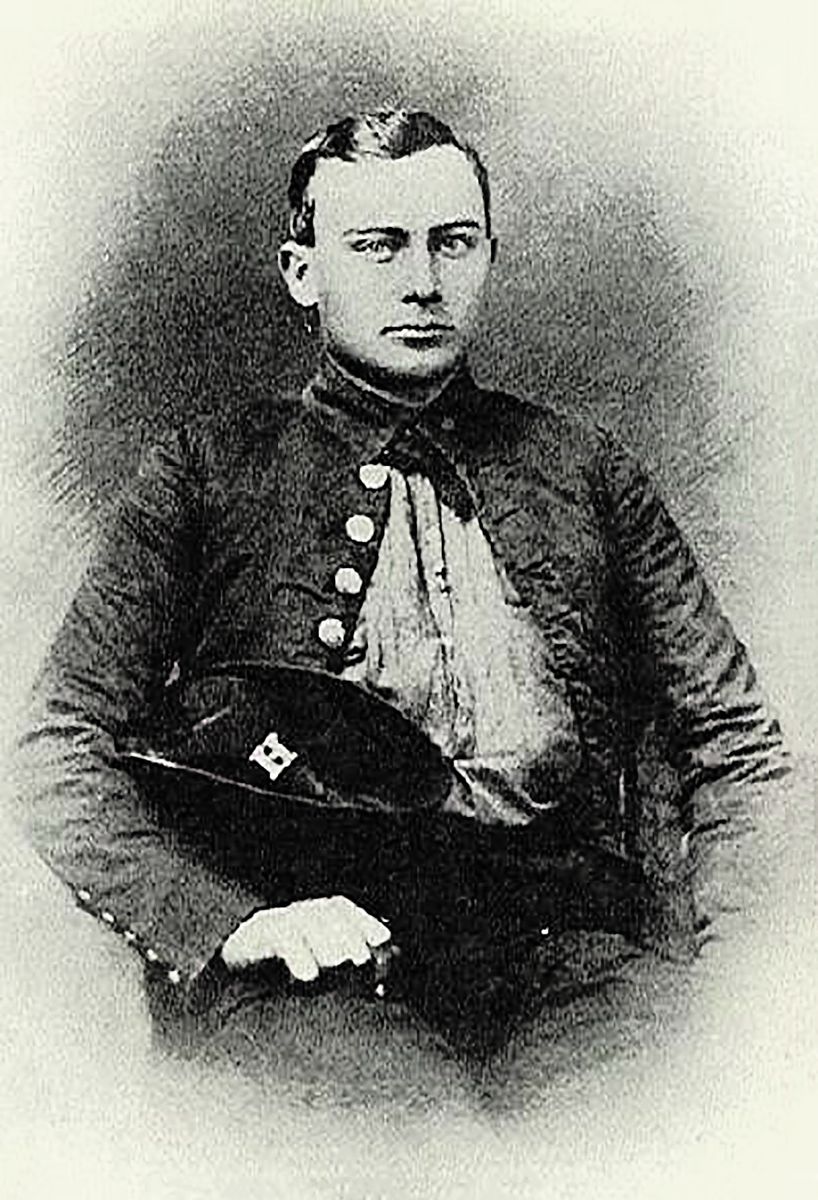
Almost half a century ago, I would take my high school American history students on a Saturday morning trip to Kennesaw Mountain National Battlefield Park. The film that the Visitor Center showed back then featured a narrator quoting Watkins: “a solid line of blazing fire right from the muzzles of the Yankee guns being poured right into our very faces.” Yup—I’ve been reading Watkins’ words that long. Samuel Rush Watkins was born on June 26, 1839 near Columbia, Tenn. He attended college there and was twenty-one when the war broke out. Just weeks after Sumter he volunteered to join a local company, the Maury Grays, that became Company H of the 1st Tennessee.
Private Watkins saw the elephant at Shiloh, followed Bragg to Perryville, and was slightly wounded at Murfreesboro. He suffered through the rout at Missionary Ridge. He was wounded at Atlanta, and in Hood’s tragic raid into Tennessee again at Nashville. True to the colors, he surrendered with Joe Johnston in North Carolina. Watkins’ memoir, Co. “Aytch,” Maury Grays, First Tennessee Regiment, or, a Side Show of the Big Show, was published by a Nashville house in 1882, two decades before the veteran’s death. By my count it has been reprinted seven times: in 1900; in 1952 by McCowat-Mercer (edited by Bell Wiley); in 1962 (my paperback edition); in 1982 by Bob Younger’s Morningside; in 1987 and 1990 by Tom Broadfoot; and again in 2007. Whew!
I like very much Dr. Wiley’s introduction (1952) to the memoir, in which he likens “Co. Aytch” to other memorable memoirs, Carlton McCarthy’s Detailed Minutiae (1882) and Josh Billings’ Hard Tack and Coffee (1887): “No memoir by a Rebel participant is richer in intimate detail of common soldier life than this engaging story told by Private Sam R. Watkins of the First Tennessee.” I’ll offer only a few handfuls of “intimate detail” from Watkins’ work, as subtitled by the author himself.
The Court-Martial at Tupelo At this place was held the grand court-martial. Almost every day we would hear a discharge of musketry, and knew that some poor, trembling wretch had bid farewell to mortal things here below. It seemed to be but a question of time with all of us as to when we too would be shot. We were afraid to chirp. So far now as patriotism was concerned, we had forgotten all about that, and did not now so much love our country as we feared Bragg.
Cheat Mountain After the fighting was over, where, O where, was all the fine rigging heretofore on our officers? They could not be seen. Corporals, sergeants, lieutenants, captains, all had torn all the fine lace off their clothing. I asked several of them why they had torn off the insignia of their rank, and they always answered, “Humph, you think that I was going to be a target for the Yankees to shoot at?” You see, this was our first battle, and the officers had not found out that minnies as well as cannonballs were blind; that they had no eyes and could not see. They thought that the balls would hunt for them and not hurt the privates. I always shot at privates. It was they that did the shooting and killing, and if I could kill or wound a private, why, my chances were so much the better.
Shiloh I do not pretend to tell of what command distinguished itself; of heroes; of blood and wounds; of shrieks and groans; of brilliant charges; of cannon captured, etc. I was but a private soldier, and if I happened to look to see if I could find out anything, “Eyes right, guide center,” was the order. “Close up, guide right, halt, forward, right oblique, left oblique, halt, forward, guide center, eyes right, dress up promptly in the rear, steady, double quick, charge bayonets, fire at will,” is about all that a private soldier ever knows of a battle. Watkins’ pluck and wit are evident in this passage: The histories of the Lost Cause are all written out by “big bugs,” generals and renowned historians, and like the fellow who called a turtle a “cooter,” being told that no such word as cooter was in Webster’s dictionary, remarked that he had as much right to make a dictionary as Mr. Webster or any other man; so have I to write a history. And so he did. Stephen Davis’ next book, released December 2019 by Mercer University Press, is Texas
Brigadier to the Fall of Atlanta: John Bell Hood (544 pages, $35 hardcover). In this work, the first of two volumes, John Bell Hood’s rise in rank is chronicled. In three years, 1861–1864, Hood rose from lieutenant to full general in the Confederate army. Davis emphasizes Hood’s fatal flaw: ambition. He constantly sought promotion, even after he had found his highest level of competence as division commander in Robert E. Lee’s army. As corps commander in the Army of Tennessee, his performance was good, but no better. Promoted to succeed Joseph E. Johnston in July 1864, Hood did his utmost to defend Atlanta against Sherman. In this effort he failed. Davis’ second volume, John Bell Hood: Into Tennessee and Failure, is planned for publication by Mercer late next year.