
Young Skirmishers Join the Fun at N-SSA 139th Nationals
By Bruce W. Miller · Originally published August 2019 · pp. 30–32
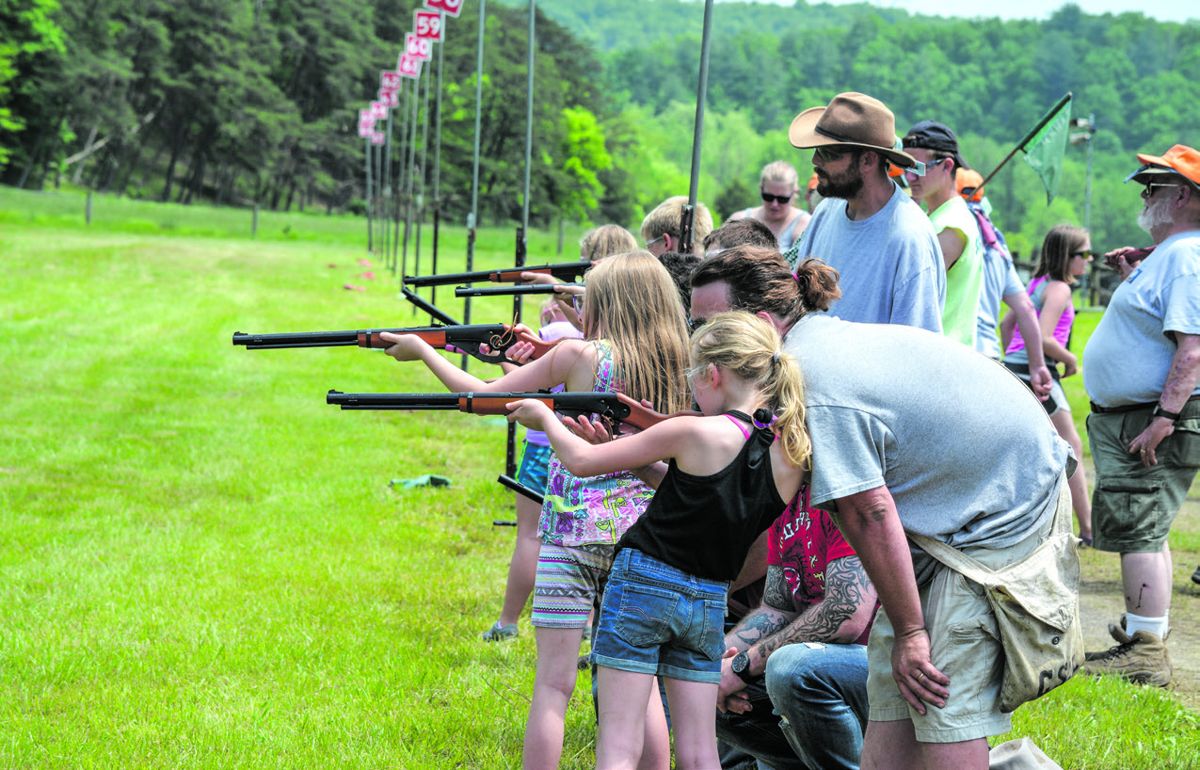
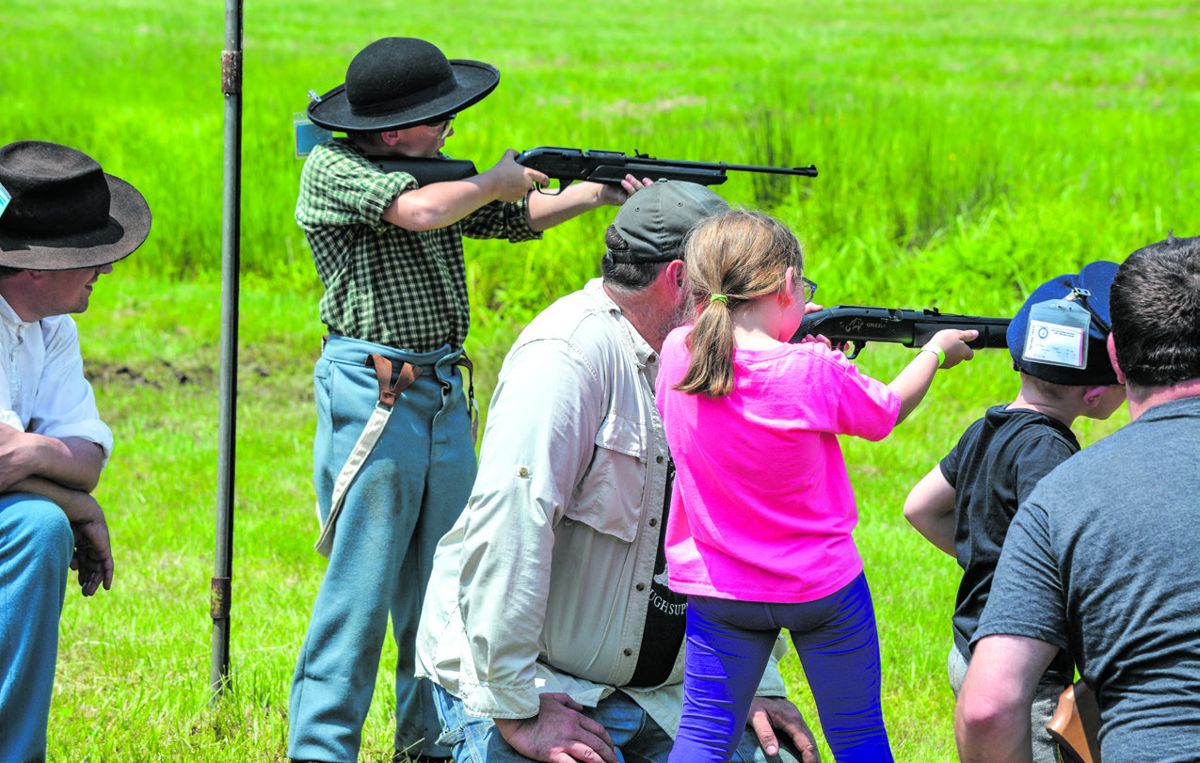
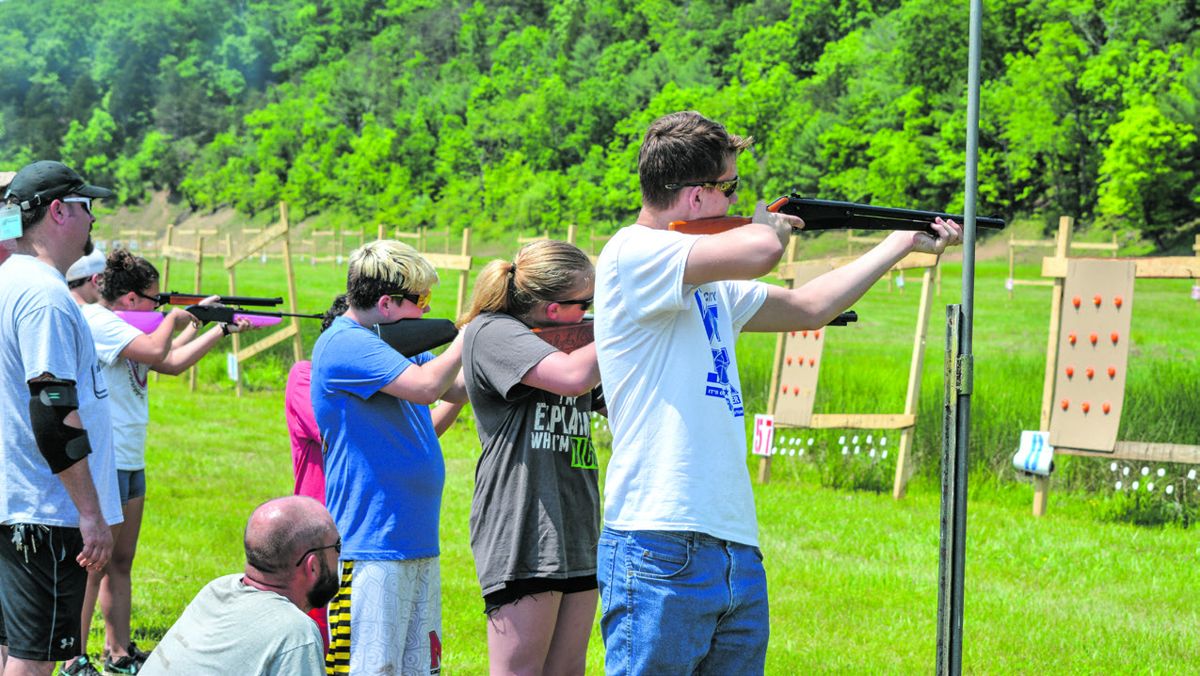
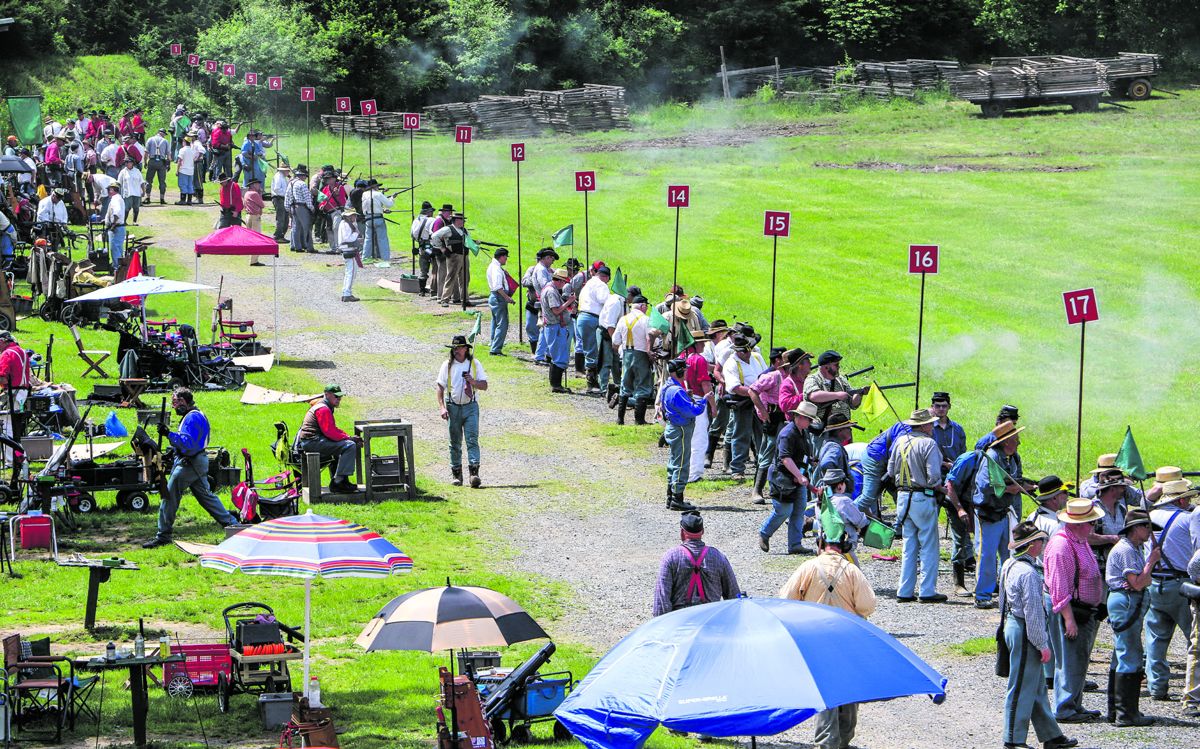
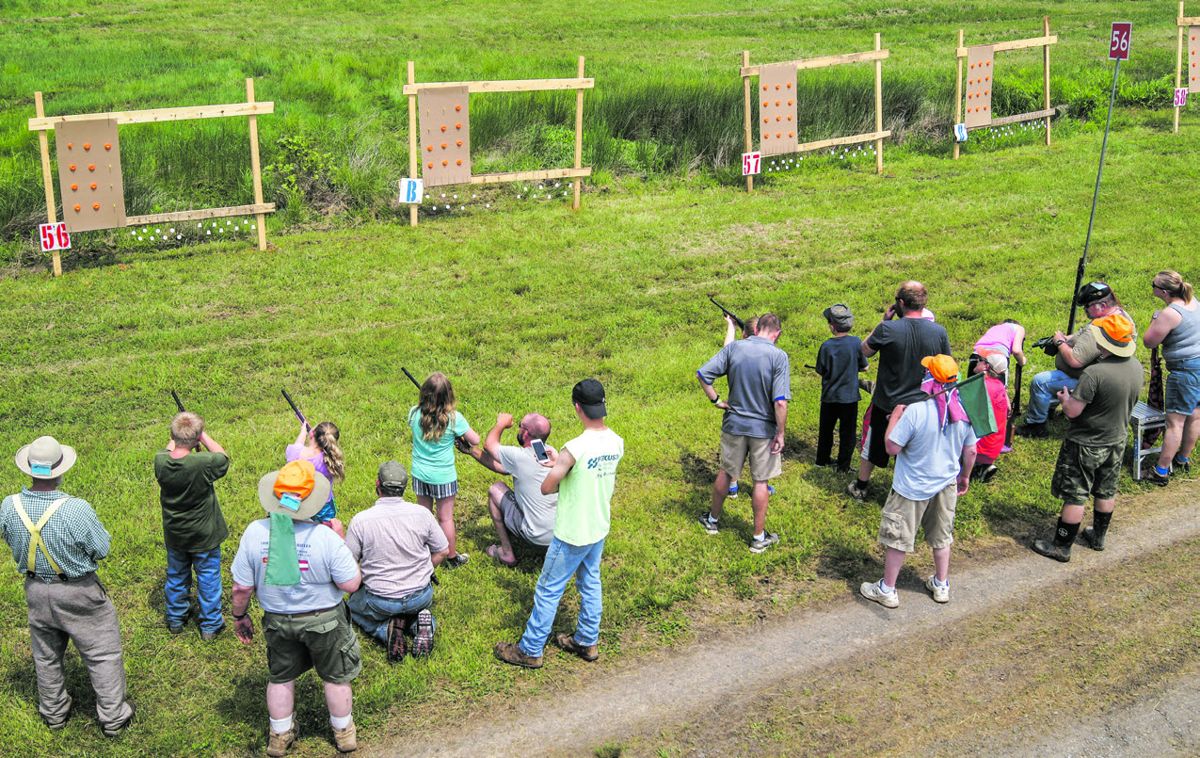
The North-South Skirmish Association prides itself on its motto of “History, Competition and Camaraderie.” One of the many ways the Association does this is through youth competition. Dependents and guests of N-SSA members who are under the age of 15 and not members of the Association (minimum age for regular membership is 14) are eligible to participate in individual and team matches with pellet rifles or BB guns. The objectives of these matches are to promote education in the history of the Civil War; to learn the fundamentals of firearms safety and marksmanship, and to develop a sense of fair play and personal achievement while providing family entertainment during skirmish weekends. The N-SSA has held matches for young people at the nationals since 1975 and even earlier on a regional level. Youth Competition has two classifications: Juniors, aged four through ten years, and Seniors, aged 11 through 14. All matches are fired at 25 feet with individual competition at paper targets; team competitions are shot at breakable targets such as clay pigeons and clay pot silhouettes. As with all N-SSA matches, safety rules are strictly enforced. blasted by Minié balls at ranges of 50 and 100 yards. The consistently excellent 110th Ohio Volunteer Infantry (OVI) took gold medals again. They won the musket match with a time of 485.7 seconds for the five-event program. However, it wasn’t easy as the 9th Virginia Cavalry were hot on their heels and finished only 1.3 seconds behind the winners. A total of 168 eight-member teams participated in this classic competition. The 8th Virginia Infantry won the Carbine Team match with a time of 387.7 seconds, edging out the 9th Virginia Cavalry by just 3.4 seconds. You have to feel for the 9th Virginia Cavalry; two second place finishes in the two largest team matches by less than five total seconds! One hundred forty-one teams competed in this match of speed and accuracy. The 110th OVI took another championship as they also triumphed in the Smoothbore Musket Team match, beating 127 other units to finish first with a terrific time of 168.8 seconds and a 17.3 second lead over the second place unit. This exciting match has become increasingly popular and, as you can imagine, is a really great test of skill. Three events are shot at 25 yards and a fourth event at 50 yards. Competitors participate with many different firearms, including the U.S. M1842, Confederate Macon Arsenal conversions of the M1842, the Hewes & Philips conversion of the U.S. M1816 (which features a rear sight), and the occasional European Potsdam in .72 caliber. Eighty four-member teams participated in the Revolver Team match of four 25 yard events: 12 clay pigeons on a cardboard backer; eight hanging 6 x 6 inch ceramic tiles; eight hanging clay pigeons, and eight hanging 4 x 4 inch ceramic tiles. The 21st Virginia Infantry finished first and claimed the gold with a time of 151.4 seconds. Three additional shoulder arm team matches were held. In the Single-Shot Rifle Team match, the 149th Pennsylvania Infantry won gold medals with a time of 194.4 seconds, a whopping 75.3 seconds better than the runner up. Most rifles in this match are Sharps’ or Ballard’s. In the Breech-Loading Rifle Team match, the 2nd Maryland Artillery won, besting 39 other teams with a time of 159.4 seconds. This match is shot primarily with Henry rifles. Competitors start the match with a full magazine, but must single load after the magazine is emptied. Some members want to compete with much slower Spencer (Ericka Hoffmann)
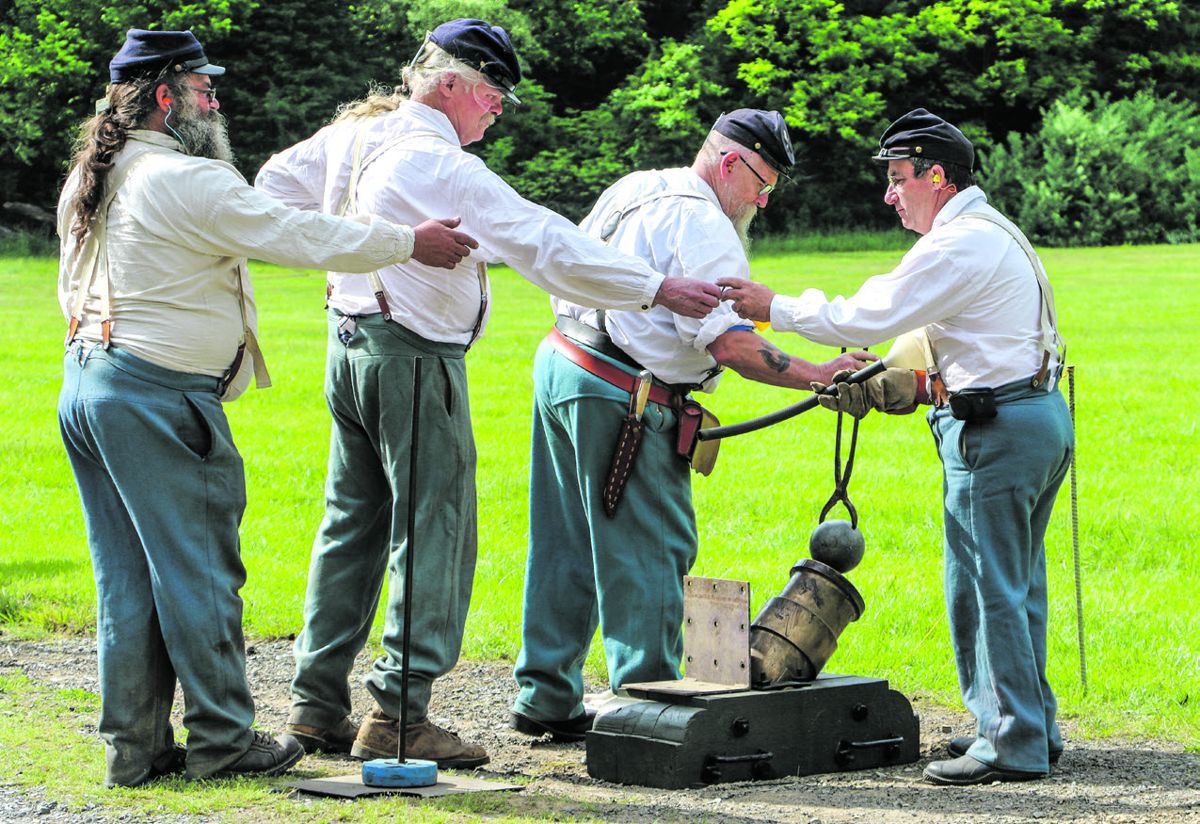
Rob Bethke of the 3rd Maryland Cavalry watches their mortar ball fly toward the target stake while the crewman on the next firing position readies to pull a lanyard and fire their mortar.
(Niki Bethke) (Ericka Hoffmann) (Niki Bethke)
(Ericka Hoffmann)
At the end of the mortar match members of Dulany Troop help score the shots fired by the Hazelwood Volunteers. The distance is measured from each ball to the target stake, and the five best shots are added together to determine the team’s score.
(Ericka Hoffmann)
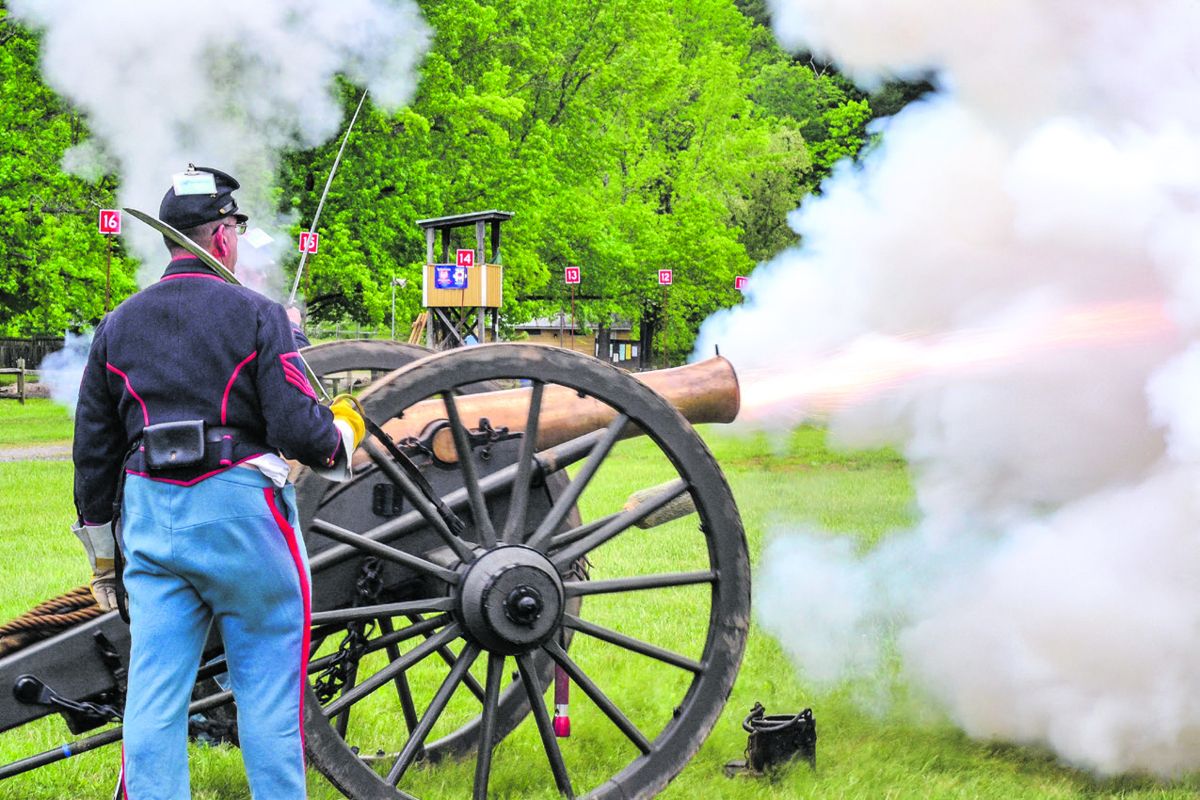
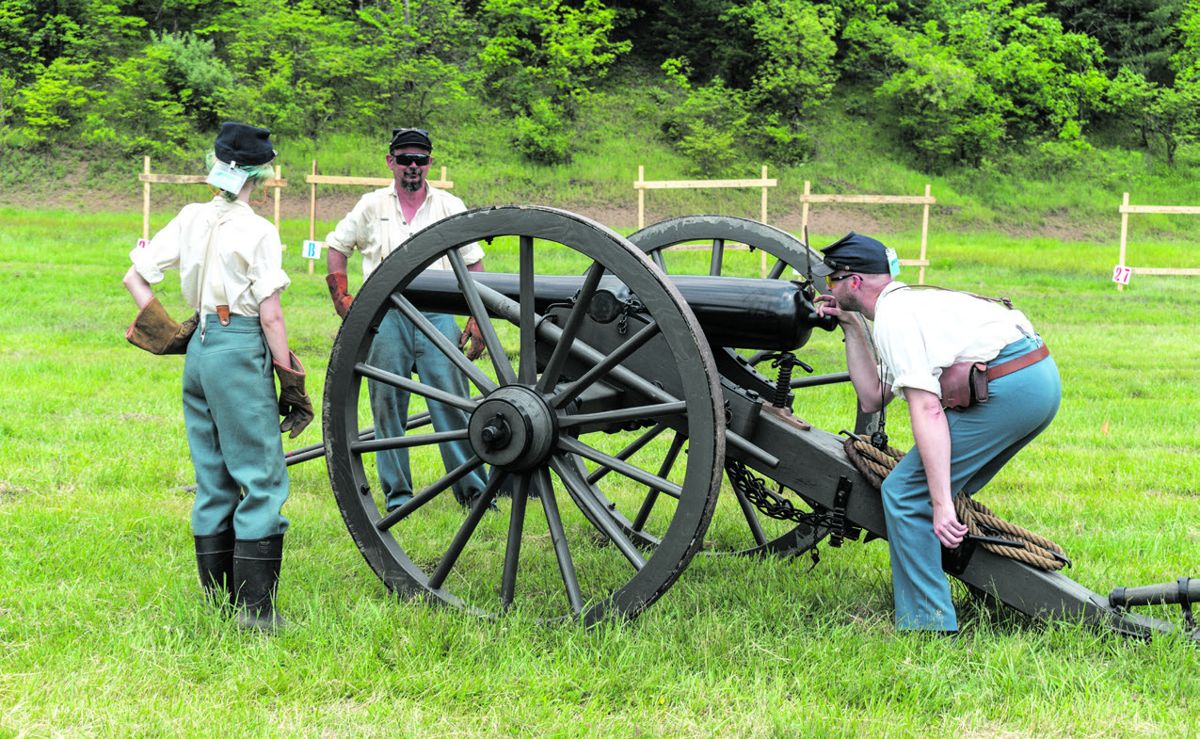
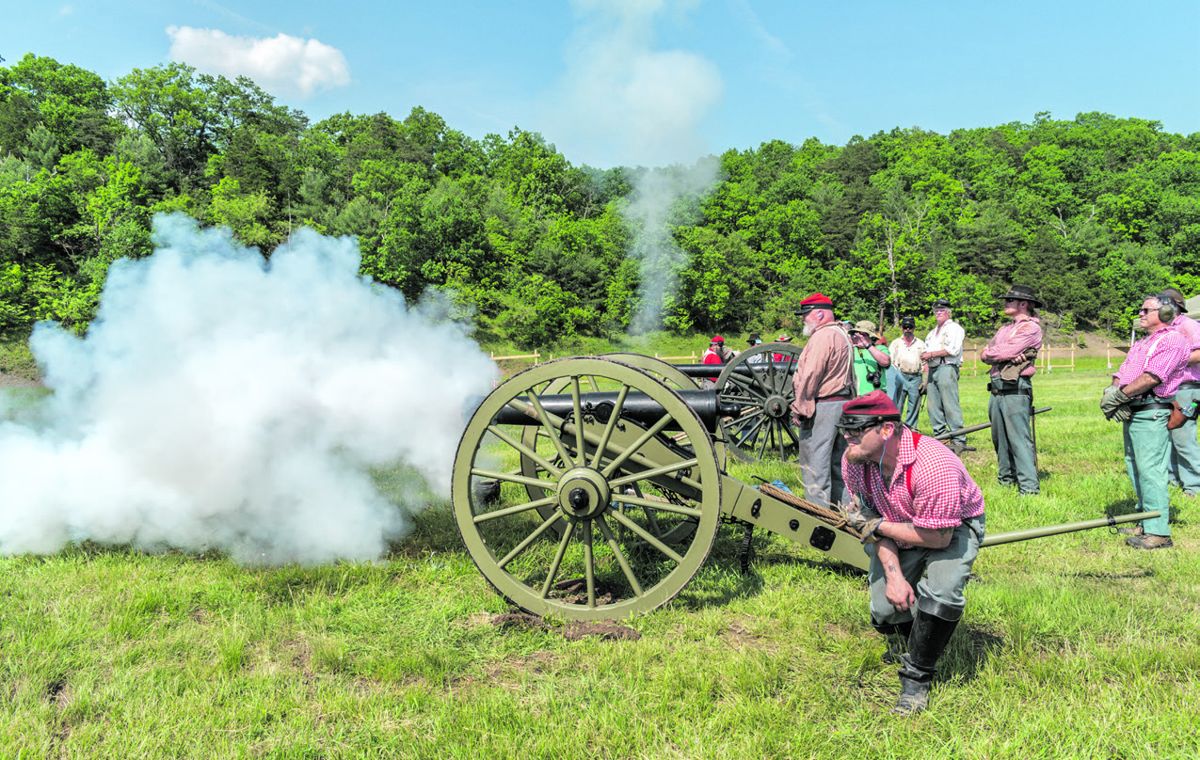
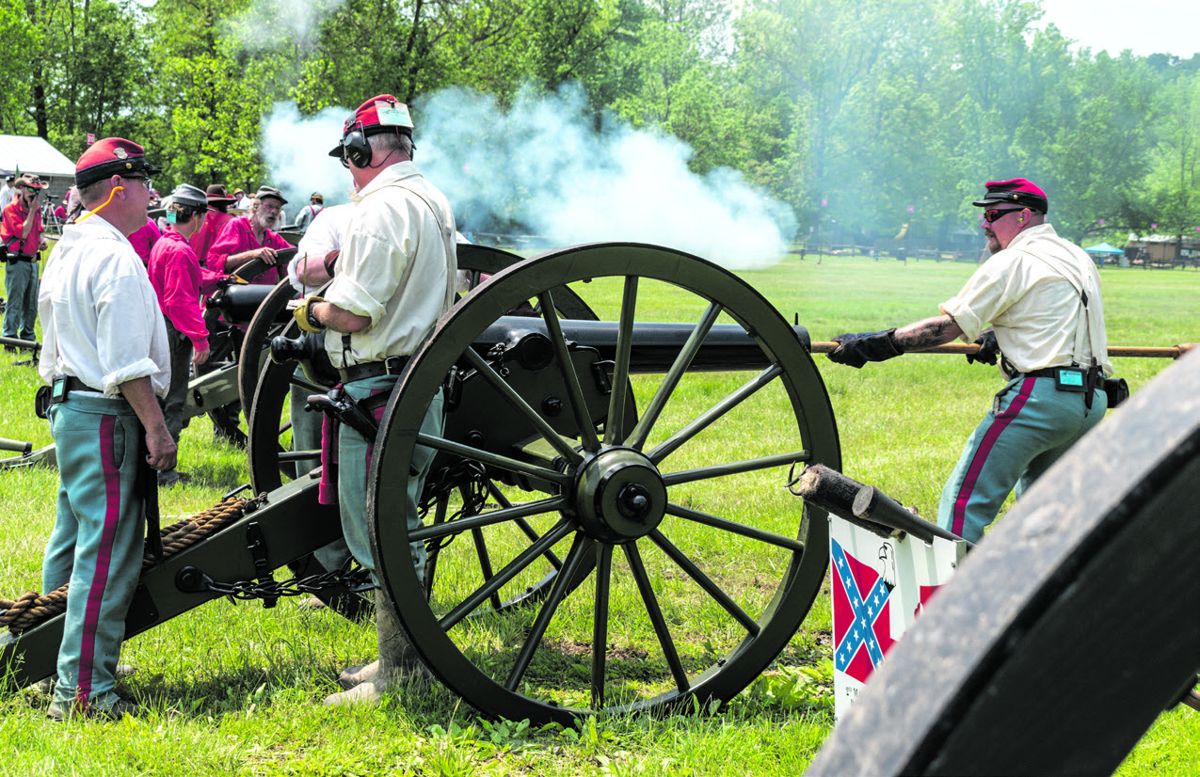
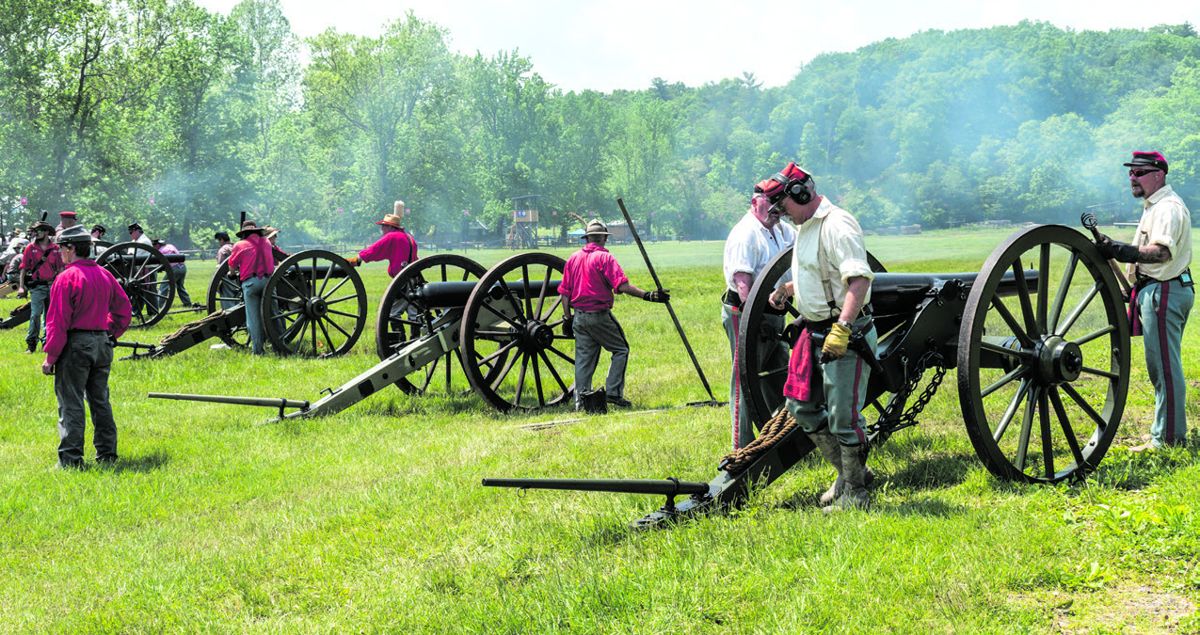
magazine-fed arms so they have their own match. The 11th Pennsylvania Infantry won it with a time of 1,072.2 seconds… just a bit slower than the Henry’s! Forty-five pieces competed in the Mortar Team match. It is always great fun to watch this match because you can follow the projectile’s flight due to its low muzzle velocity. The mortar teams fire seven shots at a stake 100 yards down range. Officials then carefully measure the distance from the stake and tally the best five shots for score. The overall winner was the 7th Tennessee Infantry with a five shot aggregate score of 24 feet, .25 inches. The cannon matches are a spectator favorite and 46 guns participated in the beautiful spring weather. The range is reconfigured so the cannon fire perpendicular to the regular firing line. Target frames and their paper targets are set at a range of 200 yards for rifled guns and 100 yards for smoothbores and howitzers. Each cannon fires solid shot (smoothbore) or bolts (rifled) at two targets, a bull’s eye and a silhouette of a cannon facing them that represents counter battery fire. A maximum of seven shots are fired on either target with a maximum point count of 25 per target. A perfect score is 50 points. The guns are classified by type: Smoothbore, Rifled, Howitzer, and Rifled Howitzer. In the Smoothbore class, the 1st Virginia Cavalry (gun #1) won the gold medal with a 43-2V (“V represents dead center.)” In the Rifled class, the 3rd U.S. Infantry won with an almost perfect score of 50-4V. In the Howitzer class, the 3rd U.S. Infantry won again, shooting a spectacular 50-7V. The Rifled Howitzer class winner was the Rowan Artillery with a 49-1V. The accuracy of these Civil War cannon is truly amazing and N-SSA gun crews know how to get the most out of them. The N-SSA is the country’s oldest and largest Civil War shooting sports organization with more than 3,000 individuals who make up its 200 member units. Each represents a particular unit or regiment and proudly wears reproductions of the uniform the original unit wore over 150 years ago. At the 139th National, five members were recognized for 50 years of membership in the Association; quite an accomplishment. The 140th National Competition is scheduled for October 4-6, 2019, at Fort Shenandoah, just north of Winchester, Va. For more information about the N-SSA visit the web site at www.n-ssa.org.
At the 139th National, Grant Ostner (on the right, loading his musket) of the 9th Virginia Cavalry was the recipient of the first place Young Skirmisher Award, presented to the shooter aged 18 or younger with the highest musket aggregate individual score. (Ericka Hoffmann)
The 110th Ohio Volunteer Infantry, Company A claimed the gold medals in the musket team match, beating 168 other competing teams. (Ericka Hoffmann)
Men, women, young and old, love to compete in the musket team matches, the N-SSA’s signature event. (Lis Cole)
A left-handed young lady takes careful aim at 4 x 4 inch ceramic tiles with her U.S. M1861 rifle musket. (Lis Cole)
Black powder smoke hangs in the morning air as revolver teams fire at targets placed 25 yards from the firing line. (Lis Cole)
Two shooters with the 1st Florida Cavalry compete in the Singleshot Rifle Team match with their Sharps and Ballard rifles.
Members of the 13th Confederate infantry carefully load, aim, and fire at hanging 4-inch tile targets during the Smoothbore Musket Team match. The smoothbore matches include events with a variety of breakable targets set at 25 and 50 yards from the firing line. (Ericka Hoffmann)
Music of the fifes and drums cuts through the warm Sunday afternoon air as the musicians march to the range during the break between the two phases of the Musket Team matches.