
Confederate Statue Rededicated at a New Location
By Walt Albro · Originally published August 2019 · p. 36
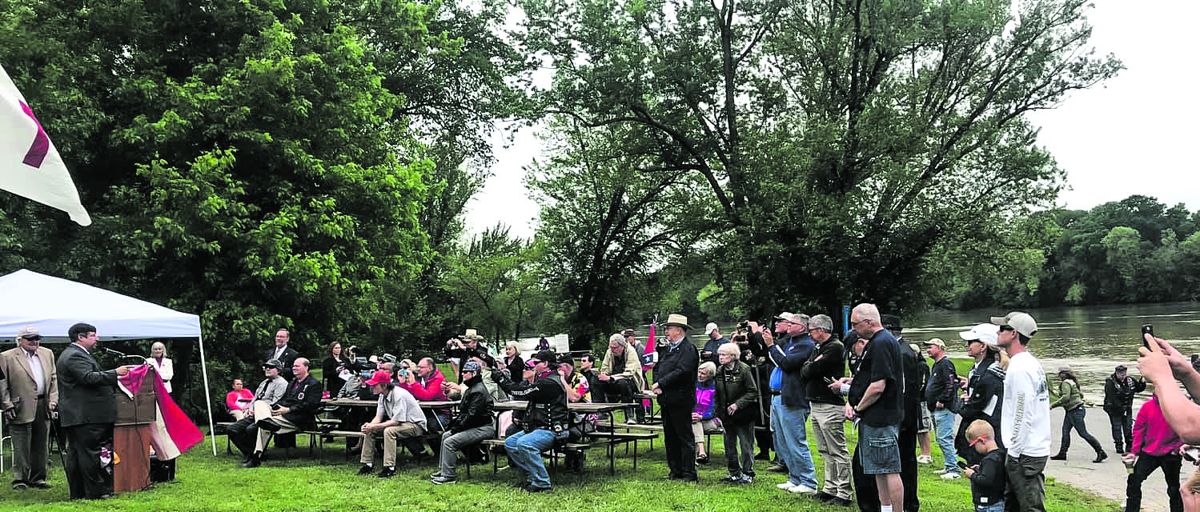
WHITE’S FERRY, MD—The three-year-old controversy over a Confederate soldier statue in Rockville, Md., has been resolved, with each side gaining at least part of what they wanted. The county government succeeded in transferring the Confederate symbol from public to private land. Confederate heritage groups applauded the monument’s preservation at a place that is more visible. The monument was relocated at county expense to White’s Ferry, a rural area that overlooks the Potomac River and is steeped in Civil War history. The spot is 28 miles west of Rockville. At a May 11 rededication of the White’s Ferry memorial, Terry M. Klima, Maryland Division Commander of the Sons of Confederate Veterans, said that when the statue was still in Rockville, the Montgomery County government had hidden it behind dense bushes and trees. Asked what he thought of the White’s Ferry site, Klima said, “We are very pleased.” The monument now sits a short distance from a ferry boat landing that transports cars and pedestrians across the river to Virginia. The statue can be clearly seen from the hundreds of motor vehicles that use the ferry weekly. White’s Ferry is not far from White’s Ford, the river crossing used by the Army of Northern Virginia in the South’s 1862 invasion of Maryland, an incursion that ended in the Battle of Antietam. During the hour-long rededication service, five wreaths were placed in front of the memorial, a life-sized bronze of a young cavalry private, wearing boots and with a sheathed saber at his side. He stands on an eight-foot granite pedestal that is inscribed, “To our heroes of Montgomery County, Maryland, that we may through life not forget the Thin Grey Line. 1861–1865.” About 75 people attended the event. Confederate heritage groups that were represented included the Sons of Confederate Veterans, the United Daughters of the Confederacy, the Military Order of Stars and Bars, and the Order of the Confederate Rose. Klima expressed concern about persons with “political agendas” who, he said, had placed all historical monuments in the crosshairs. He said, “The Sons of Confederate Veterans prefers to emphasize unity, national reconciliation, and the importance of honoring all military veterans.” In addition to the Confederate heritage groups, there were also representatives from the Sons of Union Veterans, the Sons of the American Revolution, and contemporary veterans’ organizations.
The Confederate statue was originally erected in 1913 in front of the Rockville court house to honor local men who fought in the Confederate Army. Rockville is the county seat of Montgomery County, which abuts the city of Washington, D.C. In the early 1860s, Montgomery County was inhabited mainly by rural white Southern sympathizers. Today, the county is heavily suburban and racially diverse. Since the 1970s, the memorial had been relocated several times, each time to a progressively less conspicuous plot of public land, although still in downtown Rockville. In 2016, former County Executive Isiah Leggett called for the statue’s removal, saying that it was an improper symbol to display prominently on public property. He directed that the monument be moved again to another less visible public place or to private property. Eventually, the county negotiated an agreement with a private landowner (who asked not to be identified) and hauled the statue to White’s Ferry in July 2017. The process of preparing the site had been going on from that time until the May 11 rededication. “In 1913, when this beautiful monument was dedicated, the ceremony emphasized the reconciliation and unification of our country, which had suffered through what remains our country’s deadliest war,” Klima said during the ceremony. “Hopefully, today’s rededication will instill in each of us a deeper appreciation of history, foster in us a sense of unity as Americans, and remind us of the perils of division,” he added.
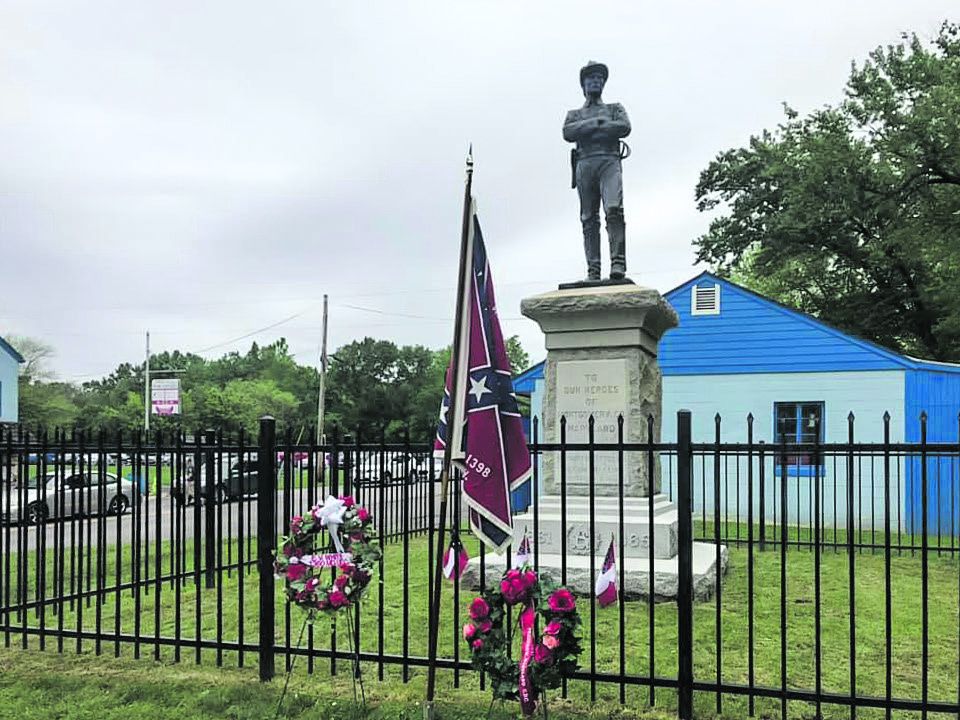
The May 11 rededication of the Confederate soldier statue in White’s Ferry, Md., after it’s relocation from downtown Rockville.