Ask The Appraiser
Three Swords Discovered
By John Sexton · Originally published April 2019 · pp. 32–33
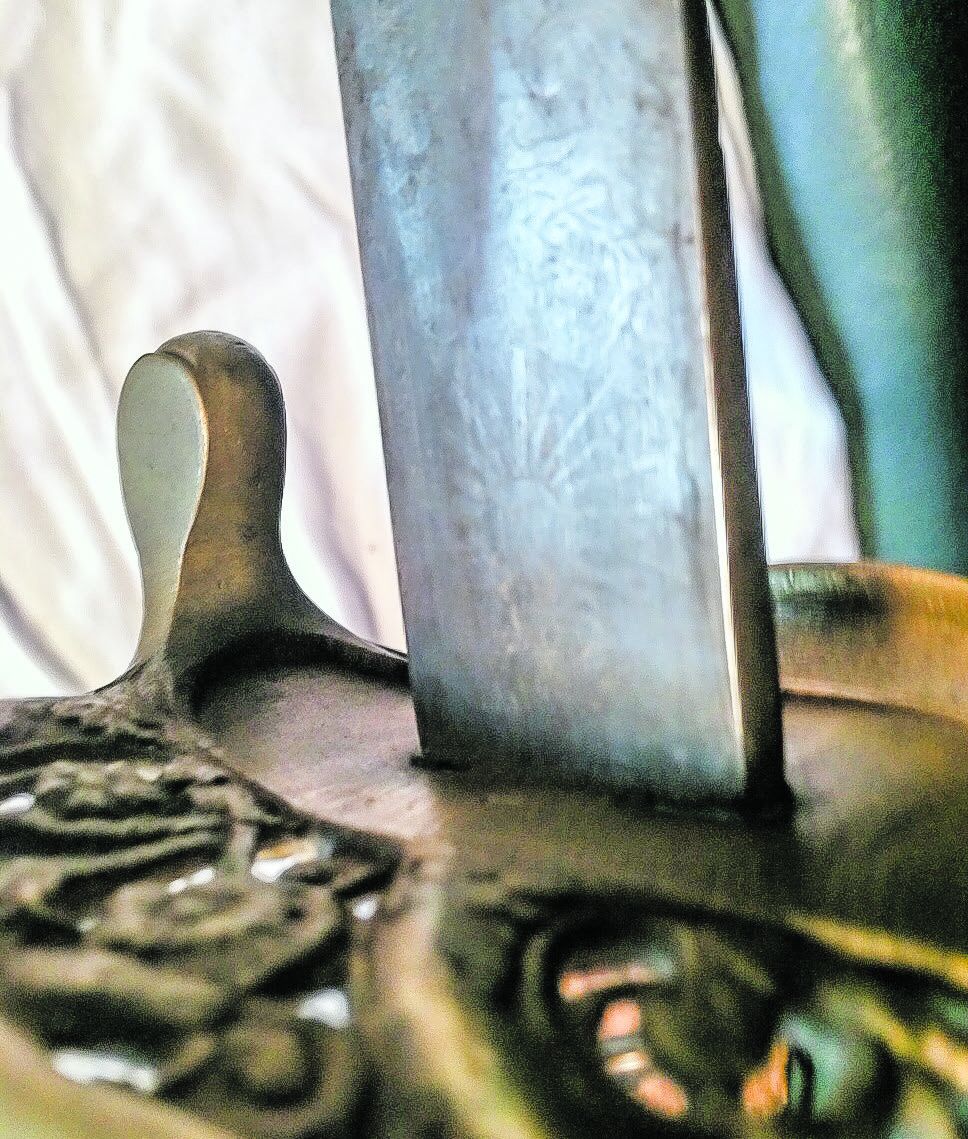
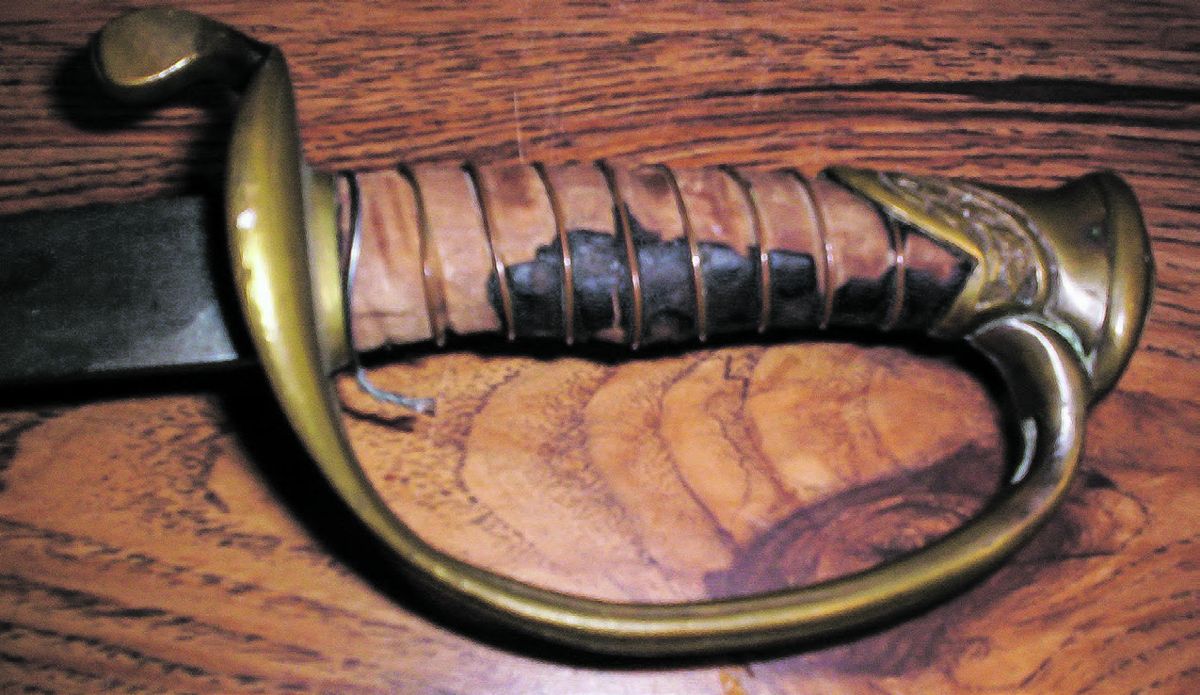
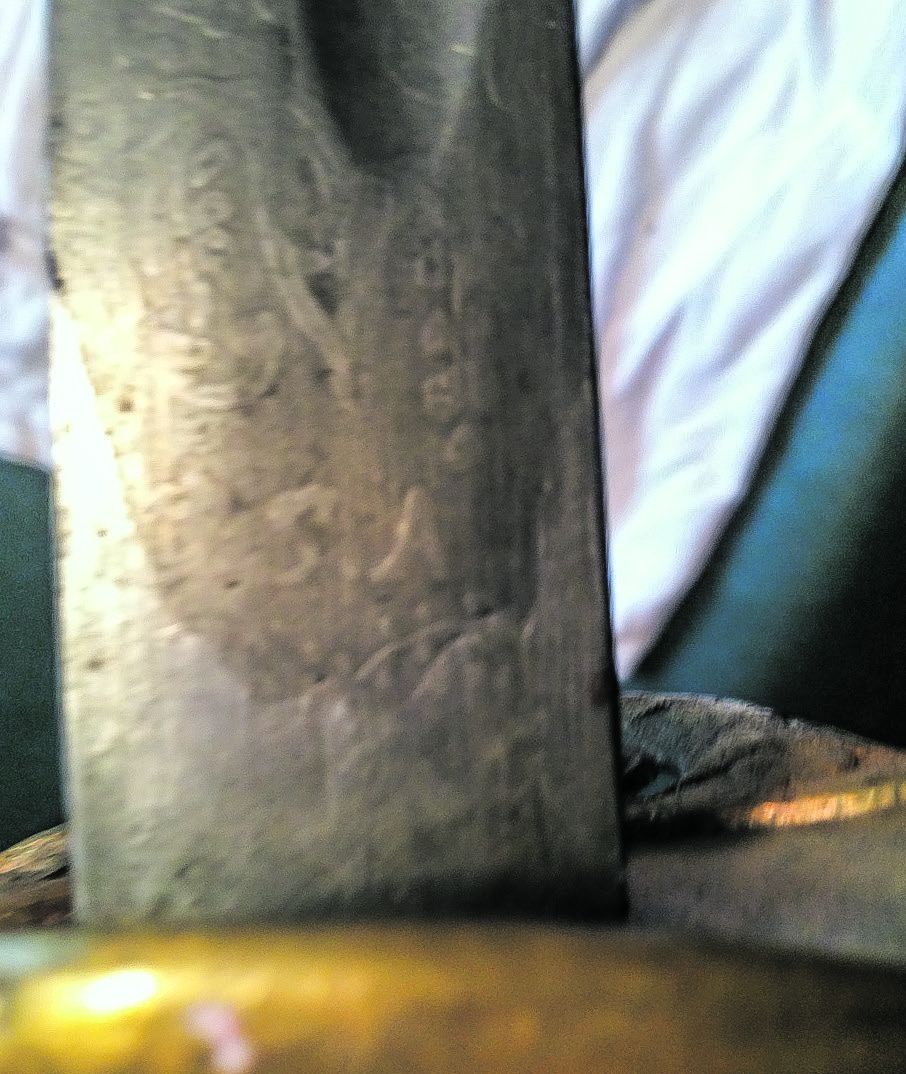
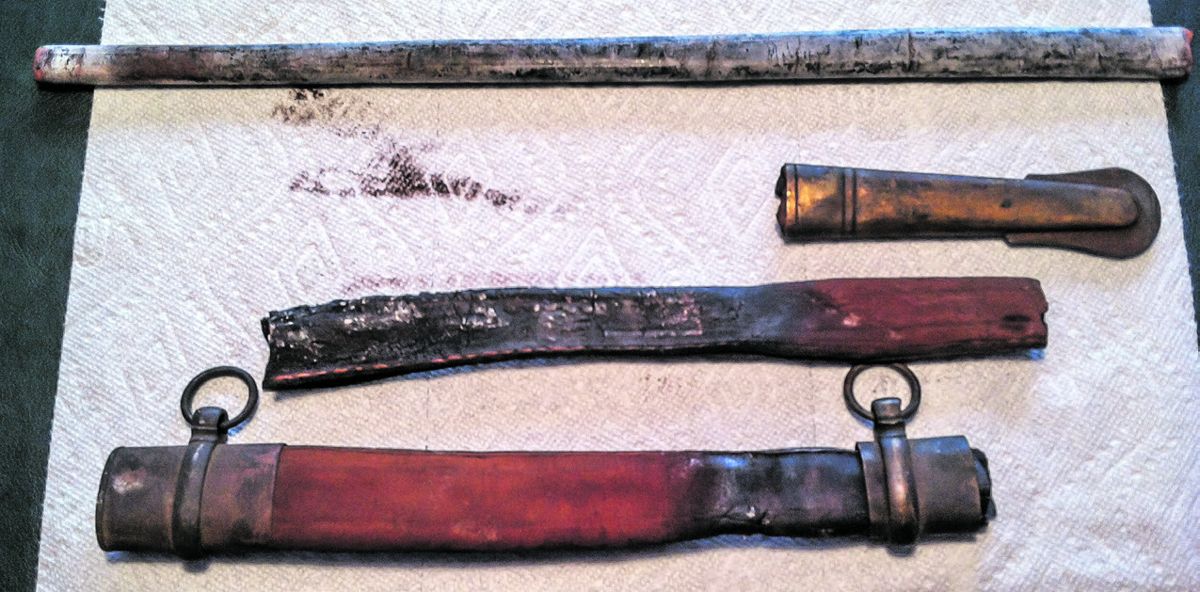
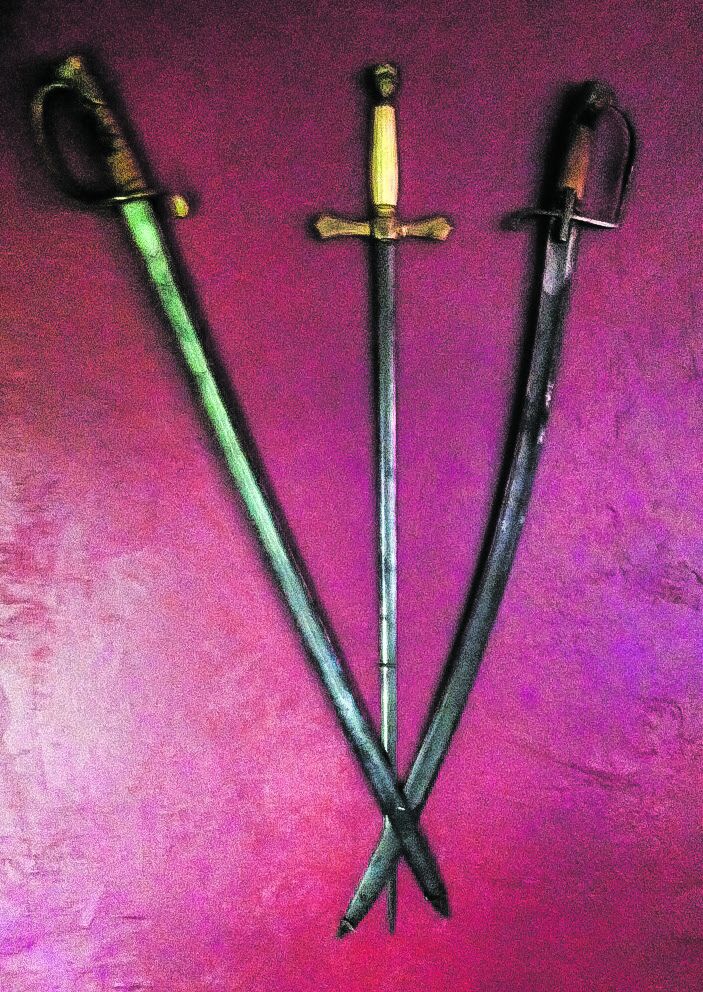
In 1972, my wife and I purchased our first home from a very nice elderly couple. They were moving into a retirement facility and taking very little with them. They told us we could have everything that was left. After moving in, I climbed up into the attic above the garage to take a look around. To my surprise, I found a treasure trove of items, including two sets of old golf clubs, a WWII army pistol belt and holster, and three swords. The swords were in poor condition with rust on two of the blades. The scabbard for one sword was literally falling apart. Unfortunately, I tried to clean the rust from the swords and worsened their condition. On one sword, I can make out flowers and crossed cannons sketched on the blade, with “CSA” near the hilt. I have been told that the “CSA” sword is probably a Confederate artillery officer’s sword. Any idea what I have based on the attached photos? Jim Dear Jim: All three swords are Civil War era. The knight’s head cruciform guard, straight bladed militia sword was made and used from the 1840s to well after the Civil War, often with fraternal or society markings. Yours with maker’s mark of Shannon, Miller & Crane dates after the war. You see photographs and images with this identical style sword with militia officers and even Civil War militiamen posed with similar examples. A typical price asked at trade shows for this style sword is about $100-150. The Germanic style horseman’s saber is most likely an English variant of a Prussian 1788 Dragoon saber. Even though the pattern is German, most examples I see are English maker marked. This was a popular heavy cavalry saber of the late 18th and early 19th centuries. Without a scabbard, in average “as found” condition, regardless of origin, examples can be found priced for about $300, though I see two English maker-marked examples priced on eBay for $450 and $695
today; they haven’t sold. Your Confederate sword is a classic example of a model 1850 foot officer’s sword made by Boyle & Gamble of Richmond, Va. Though your photographs are not great for showing the blade etching, you can still see an area of brighter metal changing to gray metal (about an inch or so on ricasso) which is the interface in the blade where more malleable iron was blacksmith welded to steel. Collectors often call this interface a “fault” but this is a unique feature to this and a few other Confederate manufacturers. Just like its U.S. counterpart, the sword was regulation for a lieutenant or captain, the company grade officers. Often the blades are in such poor condition, etching is not visible at all, but some were not etched. How discernible and aesthetically pleasing the blade etching presents itself determines the price as there is no added historical value. Since it was found in a New Yorker’s retirement home with other effects, it was probably a Union souvenir. I can read the quite clear “CSA” etched near the ricasso; this tells me the blade may clean up a little and reveal a name or motto that would add value. The sword appears “as found,” missing most of the leather grip but retaining the original single copper wire wrap. The scabbard in pieces can be restored (and should be done by a professional) since you have all three original mounts that appear to be in very good condition with dark patina. You can find similar swords priced at trade shows and auctions in the range of $4,000 to $7,000. The value at the higher end depends on what can be seen on the blade and the overall aesthetics as restored. It will bring more if an identifying name is found, perhaps scratched on the dark grungy scabbard throat. John is an certified appraiser with International Society of Appraisers specializing in Civil War memorabilia. He authenticates and evaluates other rare and valuable historic items as well. His website is www.civilwardealer.com. He is coauthor of the book Confederate Bowie Knives (2012) by Jack Melton, Josh Phillips and
John Sexton, that was published by Mowbray Publishing, Inc. Send “Ask The Appraiser” questions and photographs to [email protected].