‘The Battle of Atlanta’ Cyclorama Opens After Four Year Restoration
Originally published April 2019 · pp. 1–6
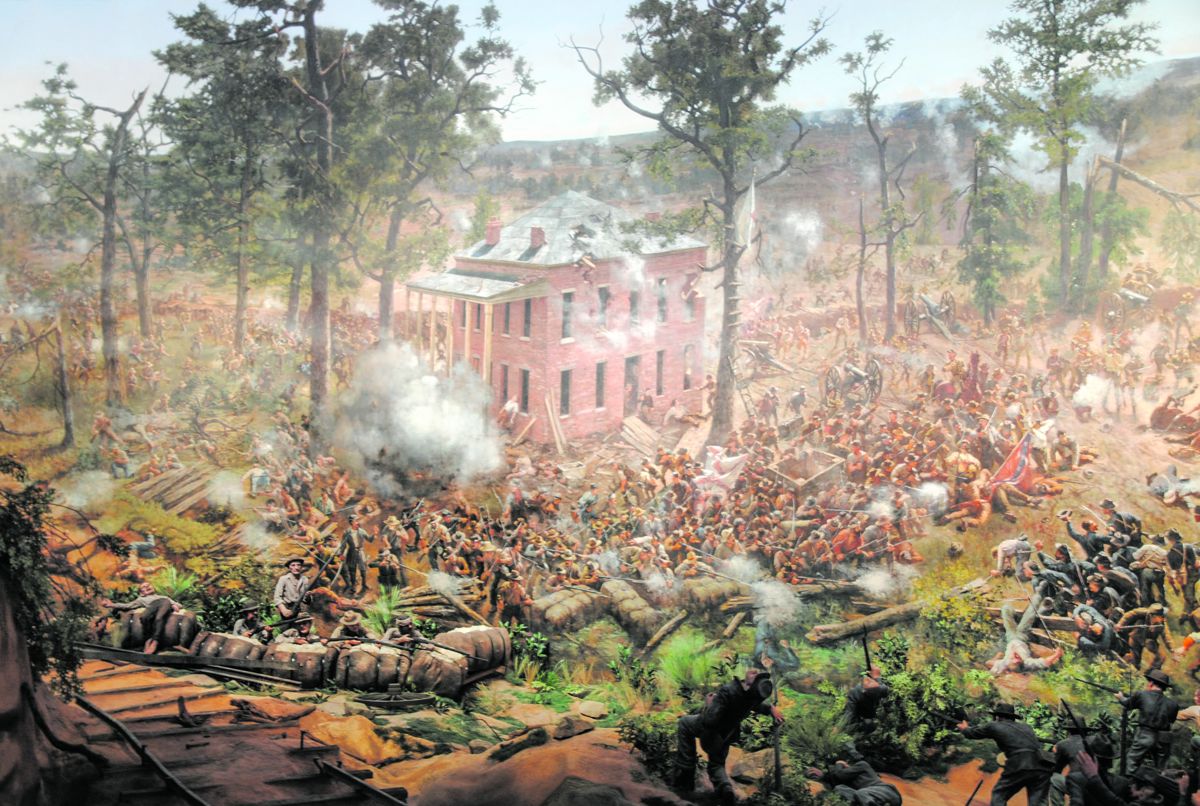
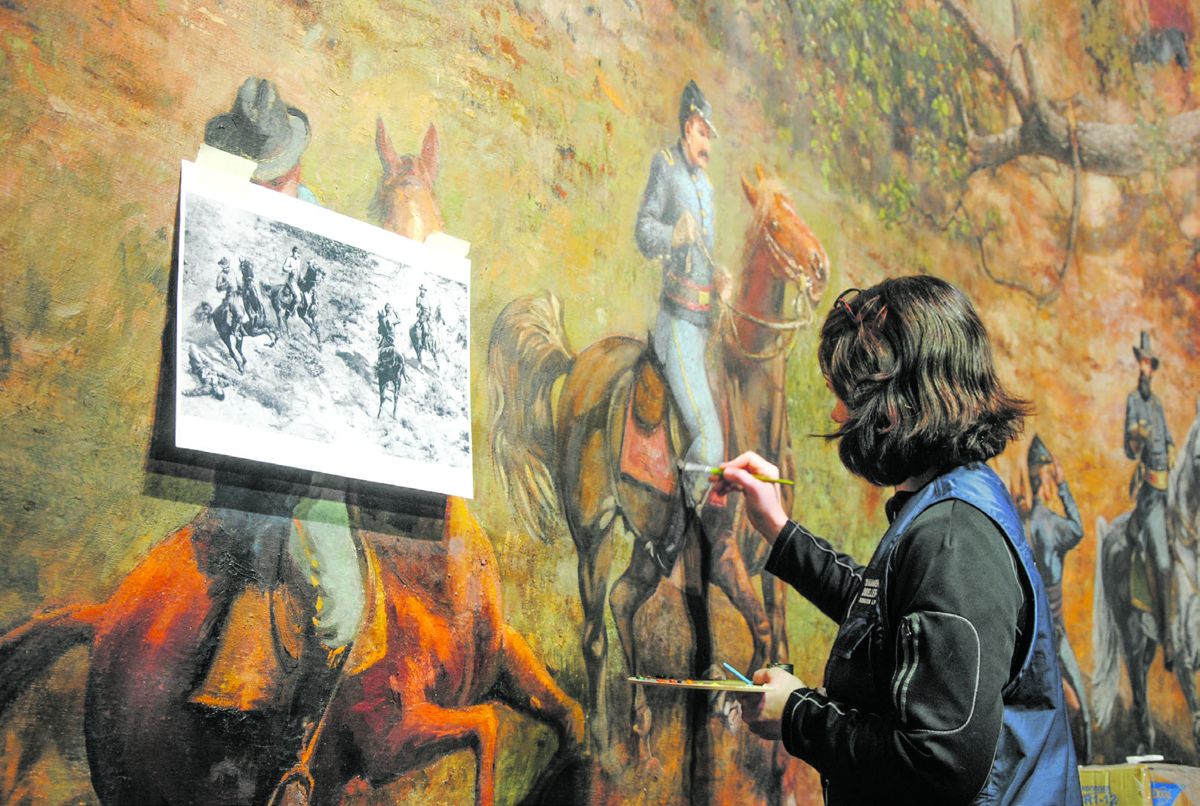
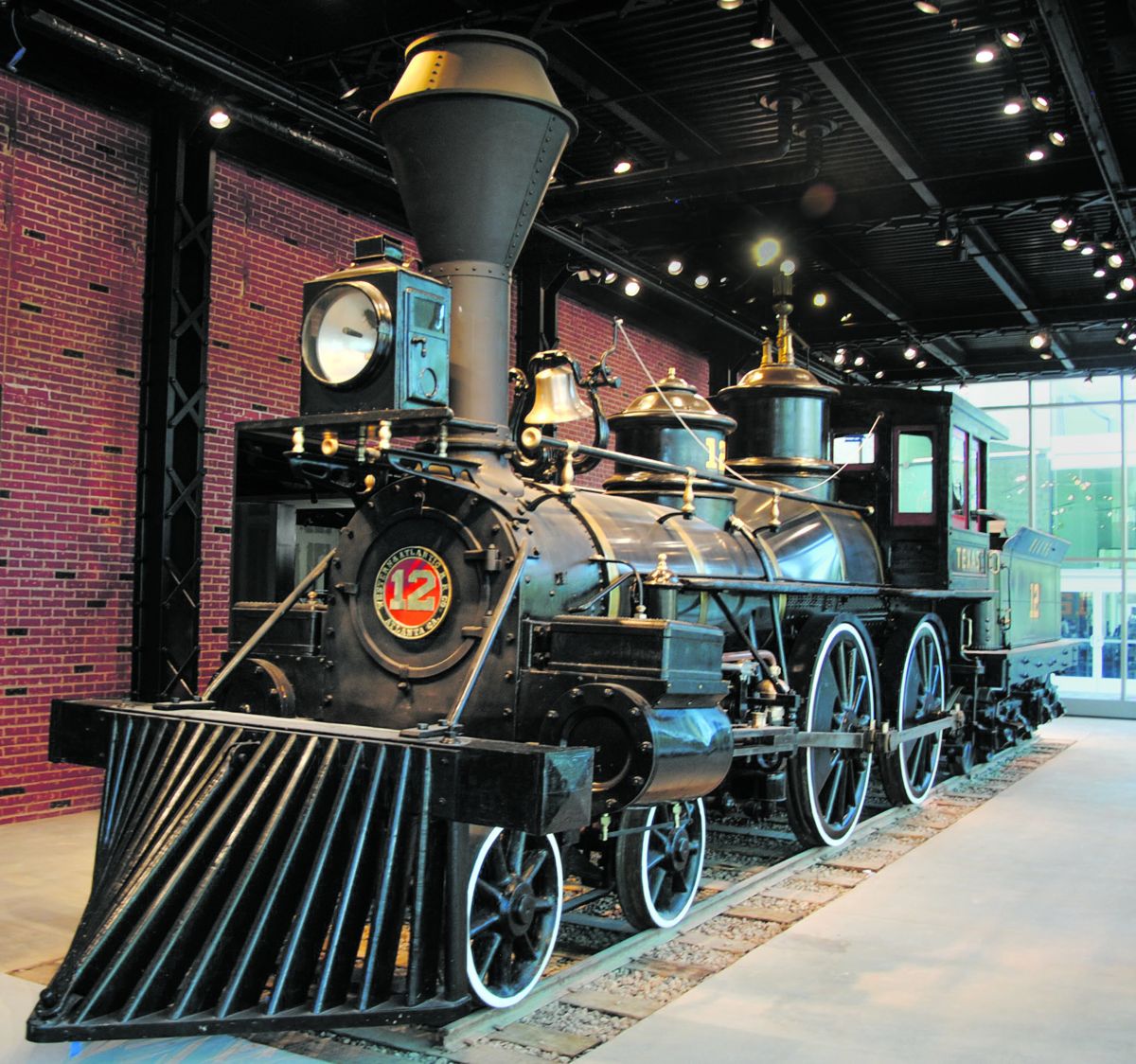
ATLANTA, Ga.—On Feb. 22, 2019, the Atlanta History Center opened The Battle of Atlanta cyclorama after a four-year, $35.8 million relocation and restoration project. The 360-degree painting is the centerpiece of the Center’s 25,000-square-foot multi-media exhibition Cyclorama: The Big Picture. In 2017, The Battle of Atlanta and the locomotive Texas were moved from a 1921 building in Grant Park, Atlanta, to the newly-constructed Lloyd and Mary Ann Whitaker Cyclorama Building at the Atlanta History Center. Both artifacts have undergone complete restorations. Created by the American Panorama Company in Milwaukee during 1886, the cyclorama portrays the U.S. victory of July 22, 1864, when General William T. Sherman’s armies repulsed a determined Confederate attack directed by General John B. Hood along the Georgia Railroad east of Atlanta. A team of 17 mainly German artists painted the 18,000-squarefoot painting in less than five months. Using sketches made on the battlefield, they re-created the moment at approximately 4:45 p.m. when General John A. “Blackjack” Logan led a counterattack against Confederates who had captured the DeGress Battery at the Troup Hurt House. The entire scene was composed from a Northern perspective so that it would appeal to Northern audiences. Only in large Northern cities were there enough paying customers to make the massive paintings profitable. The Battle of Atlanta was shown in Minneapolis and Indianapolis through 1890. There was also a second copy of The Battle of Atlanta exhibited in Detroit and Baltimore. This second copy fell into disrepair and disappeared around 1900. In 1891, Georgia entrepreneur and showman Paul Atkinson purchased The Battle of Atlanta in Indianapolis after it had gone bankrupt. He moved it to Chattanooga and then Atlanta, where he advertised it as the “Only Confederate victory ever painted” to appeal to Southern audiences. After going bankrupt again, The Battle of Atlanta was donated to the city of Atlanta in 1898. After nearly thirty years in a “temporary” wooden building, where it suffered considerable damage, the painting was enshrined in the 1921 steel, concrete, and marble structure in Grant Park, where it remained through 2017. Of at least 40 cycloramas that toured the United States depicting battles, biblical scenes, and disasters, only The Battle of Atlanta and The Battle of Gettysburg survive. One inspiration for The Battle of Atlanta project was the move and restoration of The Battle of Gettysburg cyclorama between 2004 and 2008. In the 127 years that The Battle of Atlanta has been on display in Atlanta, the cyclorama has been the subject of periodic re-interpretation. At times, it was seen as a proud symbol of the capital of the New South rising from the ashes left by Sherman. It has also been criticized as an anachronism
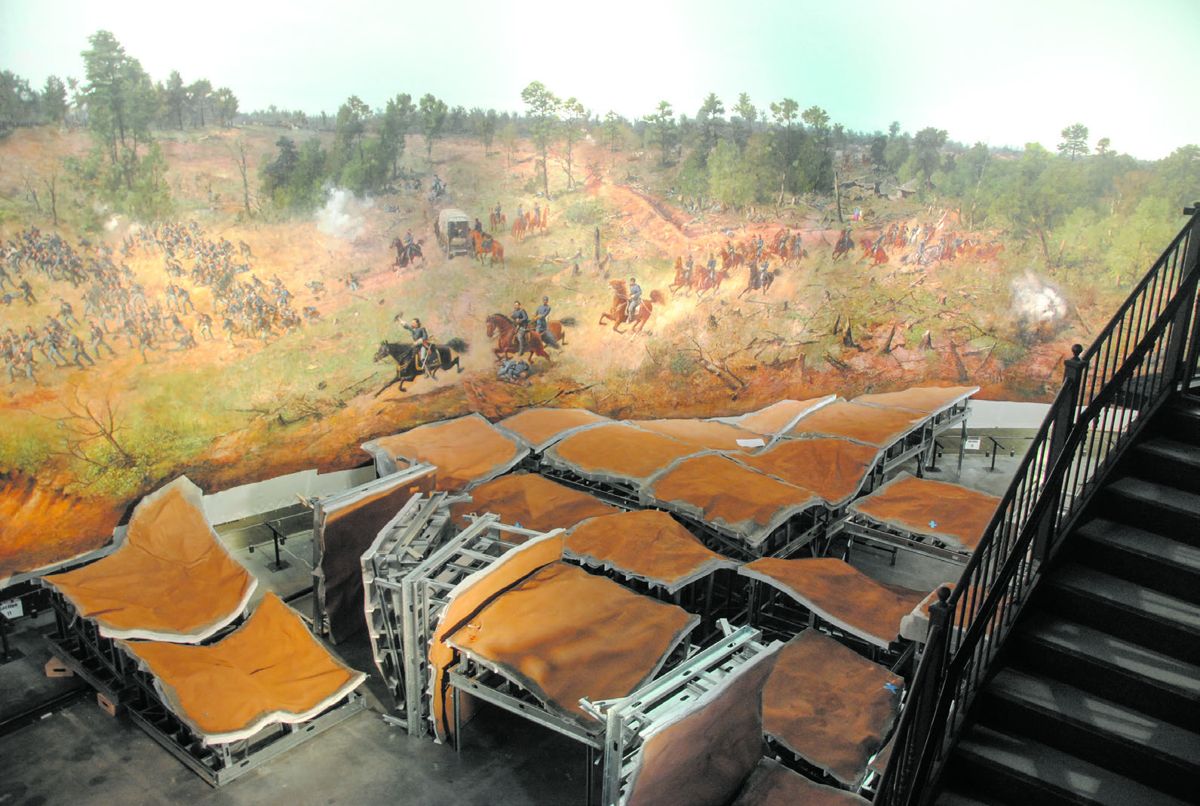
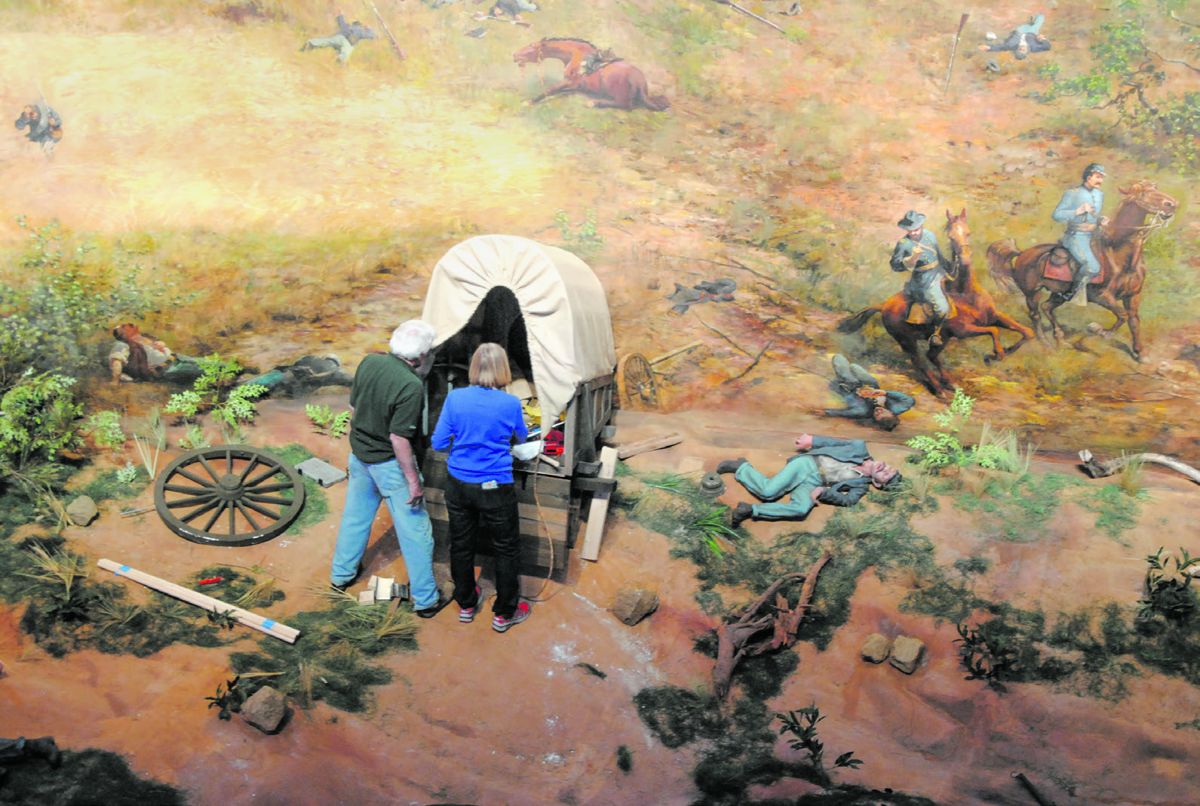
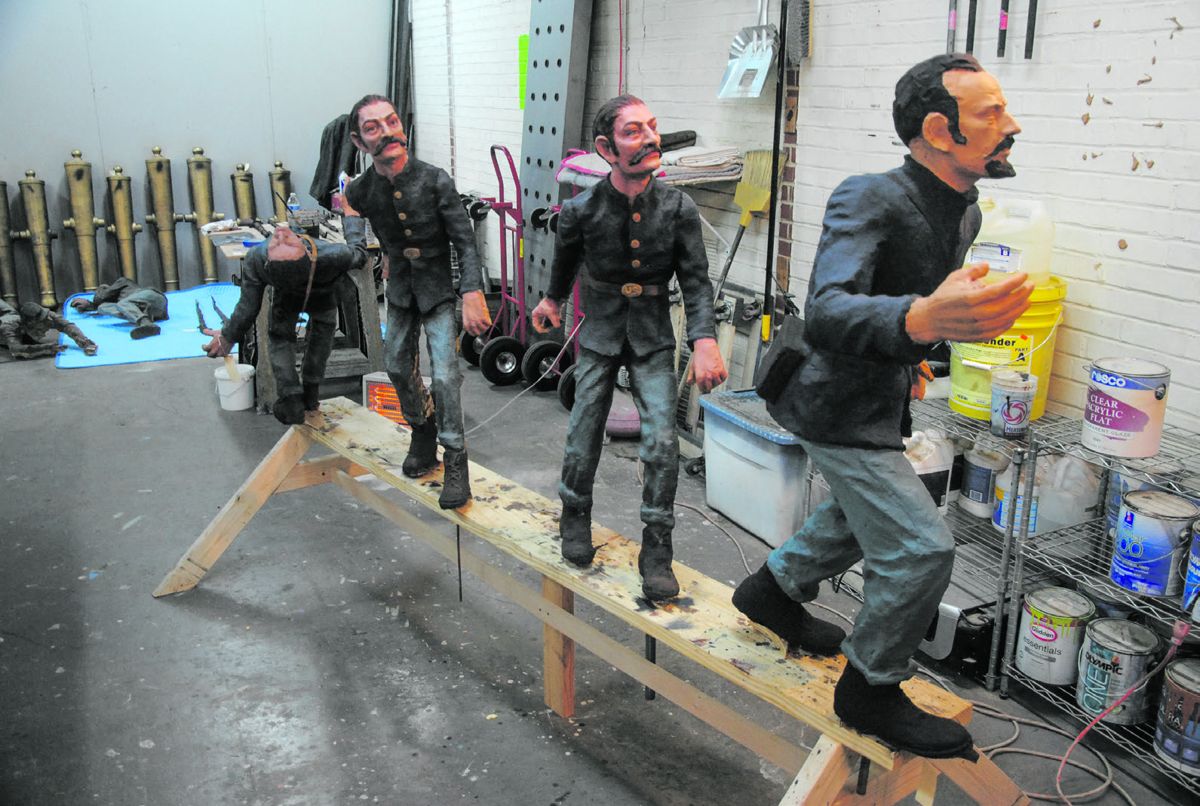
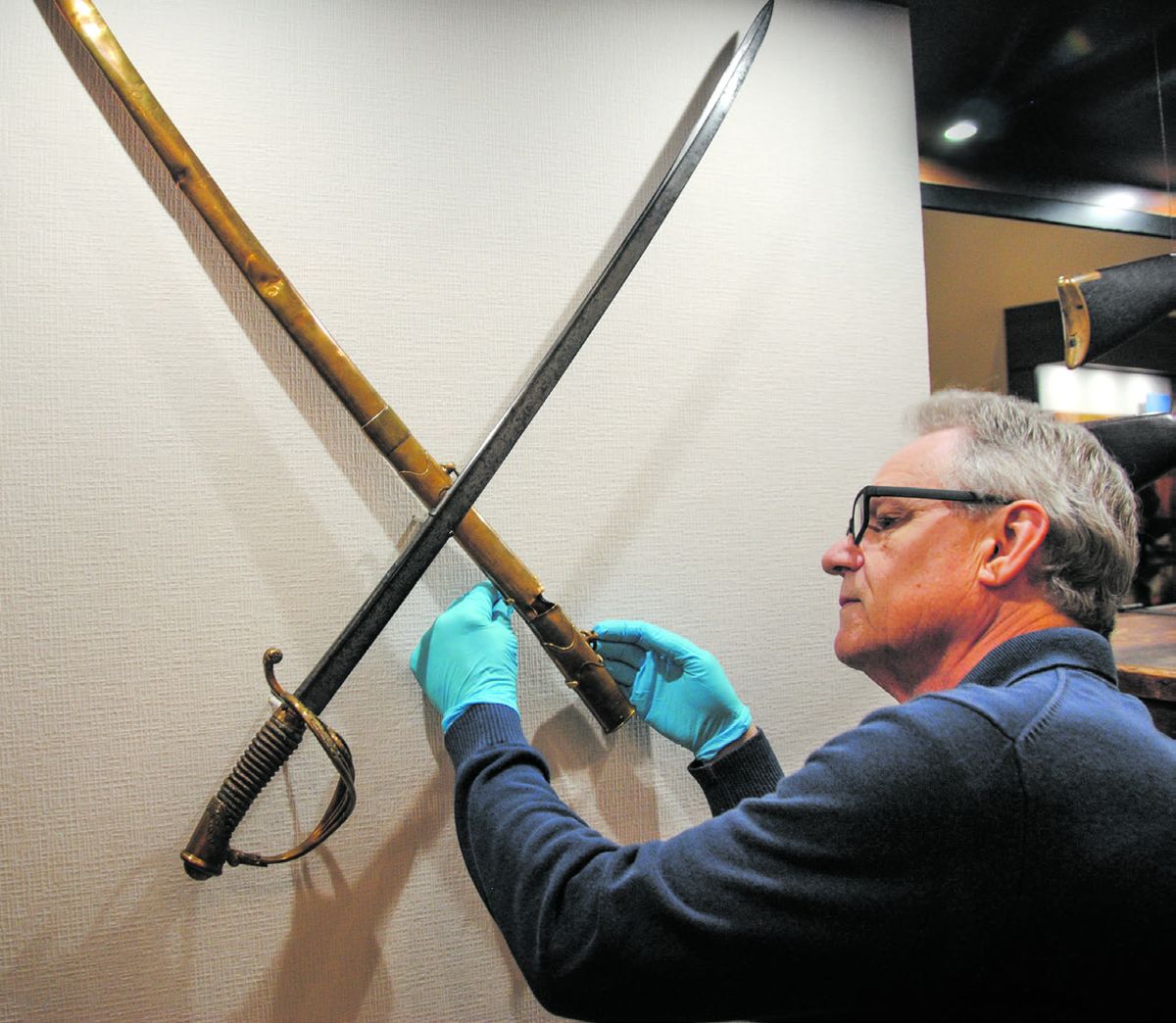
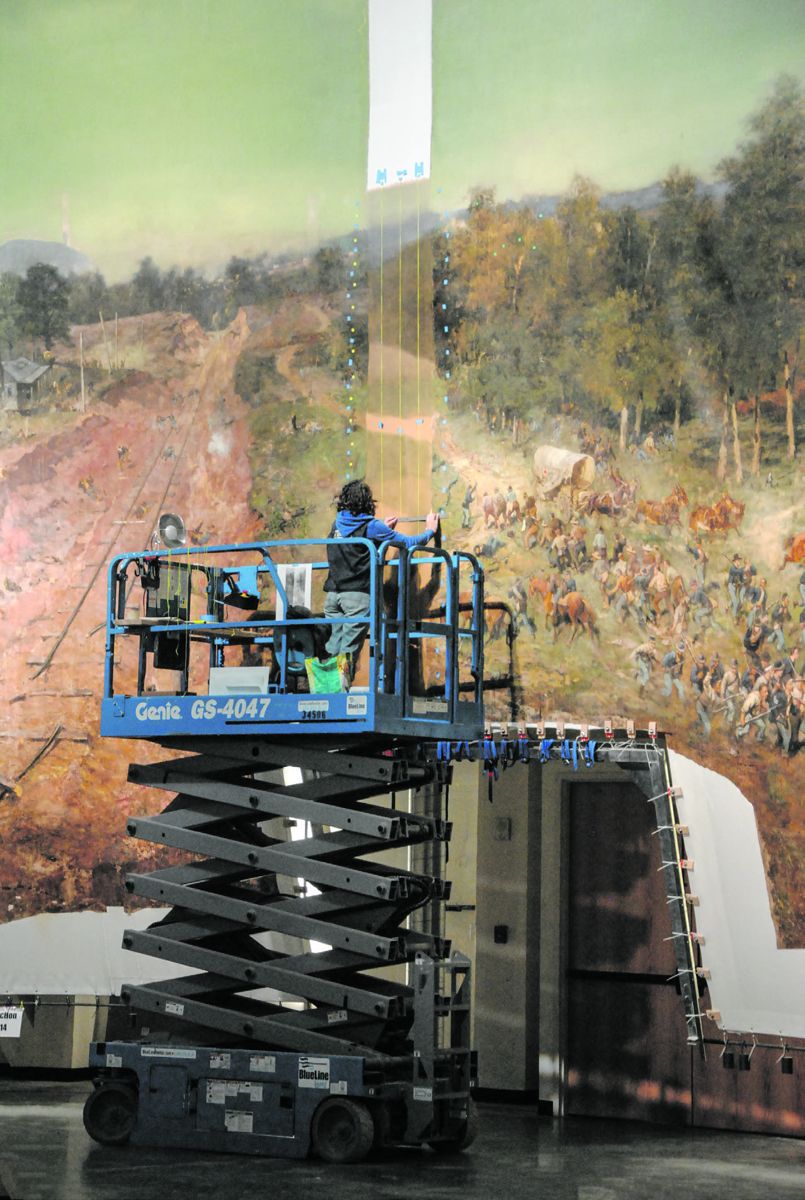
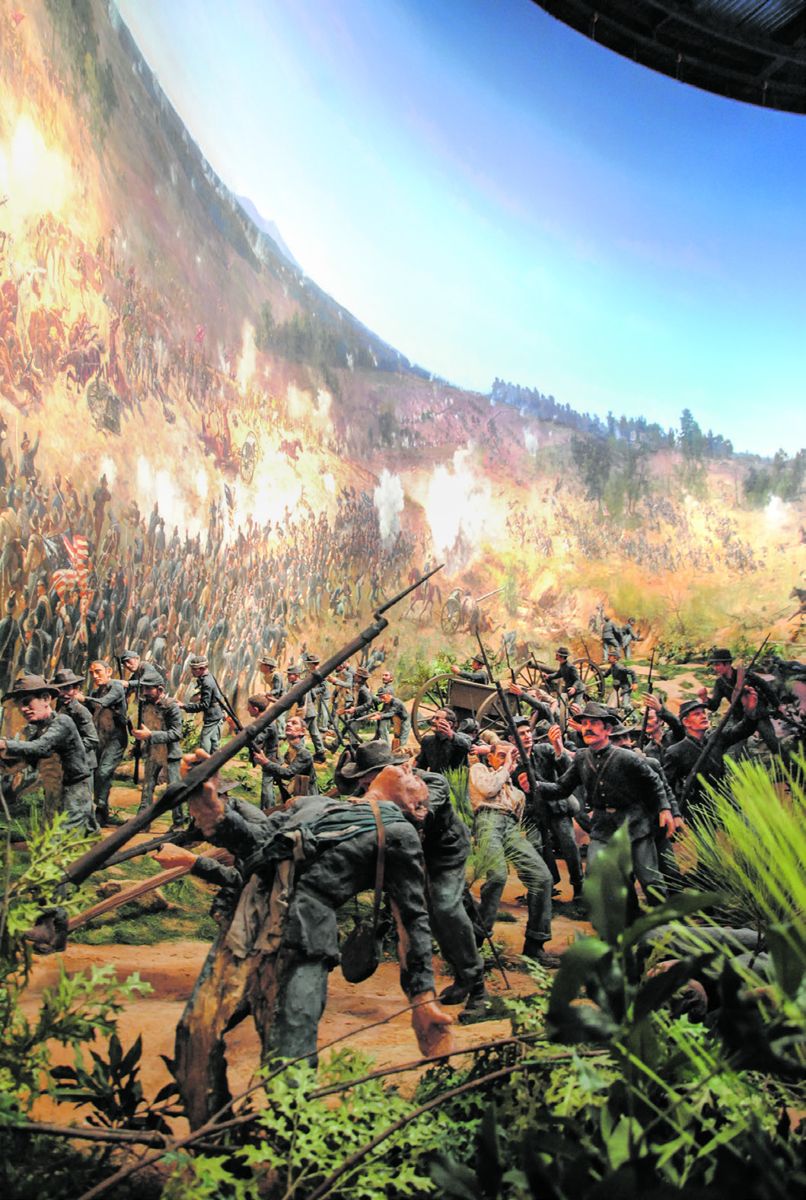
The Battle of Atlanta cyclorama restored to its original 1886 dimensions and appearance. In the foreground, restored 1930s plaster figures rest on a new fiberglass diorama infused with real Georgia red clay. (All photos courtesy of the Atlanta History Center) meant to glorify the “Lost Cause” of the Confederacy. Perceptions of history, and the painting itself, have depended on the eye of the beholder, as audiences viewed it in different times and places. In 2012, a task force convened by Atlanta Mayor Kasim Reed recommended moving The Battle of Atlanta from its outdated ninedecades-old building to a new one to be built at the Atlanta History Center. On July 23, 2014—one day after the 150th anniversary of the Battle of Atlanta, Reed announced a 75-year licensing agreement with the non-profit Atlanta History Center for the relocation and restoration of The Battle of Atlanta cyclorama painting and the Texas. A $10 million endowment pledge from Lloyd and Mary Ann Whitaker initiated fund-raising for the project. The Center raised an additional $25.8 million in private funds to design and construct a new building, relocate the painting, restore it to its original 1886 size and appearance, and create new interpretive exhibitions. From July 2014 through February 2019, a team of more than 200 architects, engineers, riggers, construction workers, and art conservators worked to bring The Battle of Atlanta back to life. The most significant challenges were erecting the building and engineering the move of the 10,000-pound painting as well as the 53,000-pound Texas. Today, three once missing sections of the painting have been restored: a 54-inch-wide vertical strip to the left of the Troup Hurt House (damaged and removed in 1893), a 22-inch-wide vertical strip along the Decatur Road (excised in 1921 because the new Grant Park building was too small); and seven feet around the upper edge of the painting (removed incrementally as the painting was moved in the late 1880s and early 1890s). The sky, overpainted in 1922, has also been restored to its original appearance. Today, The Battle of Atlanta stands at its original size of 49 feet tall and 371 feet in circumference, just as visitors first saw it in 1886. Entering the new exhibition, Cyclorama: The Big Picture, guests are greeted by an introductory video and a 10-foot-tall animated map illustrating the course of the Civil War in Georgia. Two levels of exhibitions examine the untold stories of the painting, consider the role visual entertainments have had in shaping perspectives of the Civil War, and provide a look at the fleeting entertainment sensation of cycloramas. Among the key artifacts exhibited are: the sword carried by Confederate Brigadier General Arthur M. Manigault during the assault on the DeGress Battery, the sword used by Captain Francis DeGress to defend his battery, a Henry rifle used by Private Enos Tyler of the 66th Illinois near the Troup Hurt House, and a wooden chest and other personal effects of U.S. Major General James B. McPherson, who was killed during the Battle of Atlanta. Also on display are original artists’ sketches and oil studies for The Battle of Atlanta, a preliminary sketch for a competing cyclorama of the Battle of Atlanta that was never made, and original cyclorama advertising brochures, photographs, and memorabilia from the collection of Sue Boardman, historian of The Battle of Gettysburg cyclorama. In the 1880s, cycloramas were an immersive experience; they were the IMAX of their time. Every step in the extensive twoyear restoration process has been choreographed to revive that original viewing experience, albeit with visitor accessibility and safety in mind (cyclorama buildings of the 1880s were firetraps!). Visitors enter The Battle of Atlanta through a 7-foot-tall tunnel—passing underneath the diorama—before ascending an escalator to a 15-foot-tall stationary viewing platform. Here they get a full 360-degree view with the horizon at eye level, exactly as intended by the artists. There are no timed tours; you can stay as long as you want. The view is enhanced by LED lighting technology and a 12-minute largerthan-life theatrical presentation projected onto the painting at the top of every hour. Visitors can also walk underneath the viewing platform, different from cycloramas of the 1880s. Seeing the diorama from ground level reveals how the illusion above you works. It is all about tricking the eye. There is also a series of computer kiosks on this lower level that explain specific scenes in the cyclorama. Here you can learn about the battle and its famous personalities while sorting out what is historically accurate in the painting versus what is artistic license. All cycloramas of the 1880s were meant to have a diorama, or artificial terrain, in the foreground. At the time, however, none were made with human figures because it was thought they might detract from the painting. Between 1934 and 1936 two Atlanta sculptors created 128 plaster soldier figures to enhance the three-dimensional illusion of The Battle of Atlanta. Today these figures, including one later adorned with the face of Clark Gable, are considered integral to the artifact and have also been restored. Even if you have seen The Battle of Atlanta before, you have never seen it like this; and if you have never seen it, you are in for a spectacular treat! The Atlanta History Center is open 10 a.m.–5:30 p.m. MondaysSaturdays and noon–5:30 p.m. Sundays. For more information, please call 404.814.4000 or visit AtlantaHistoryCenter.com. Pre-restoration view of the battle for the DeGress Battery, the central scene in the cyclorama. Note the wrinkles visible along the horizon as well as the discolored sky. The 2014-2019 restoration corrected these and many other problems.
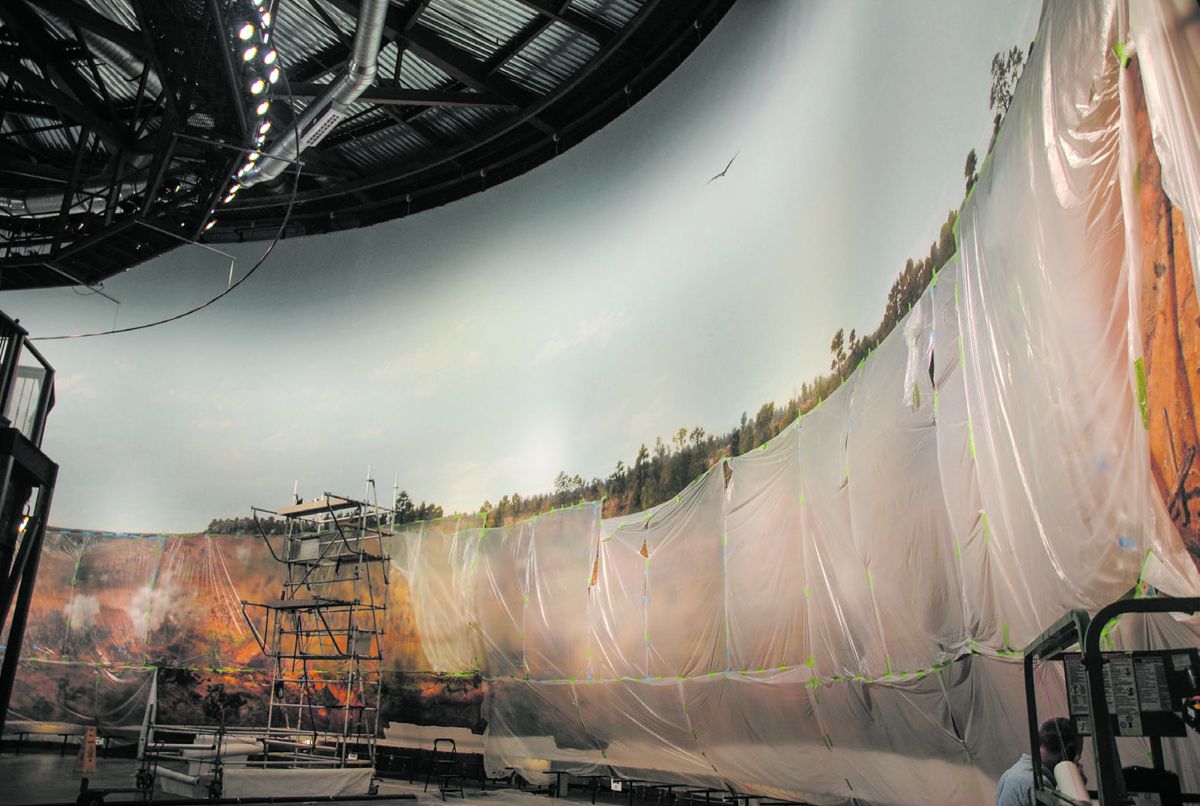
Visitors entering the cyclorama rotunda see the back of the cyclorama painting. A weighted ring at the bottom edges revives the original hyperbolic, or curved, shape. Without this suspension, the painting in its old building hung like a wrinkled curtain.
In an exhibit gallery under the viewing platform, interactive computer kiosks allow visitors to explore various figures, landmarks, and scenes. For example, here you learn the real story behind General John A. Logan, who did not sponsor the painting as was often claimed in the past.