
Through The Lens
Steal My Dog I Steal Your Cat
By Stephanie Hagiwara · Originally published April 2019 · pp. 14–15
“I little thought, when I faced the storm of bullets at Edwards’ Ferry, [Va.] and escaped a soldier’s death upon the field, that it was only to be left by my country to die upon the gallows.” – U.S. Col. Milton Cogswell On April 17, 1861, C.S.A. President Jefferson Davis issued a proclamation, “inviting all those who may desire, by service in private armed vessels on the high seas,” to apply to become legal pirates for the Confederacy. Lacking a navy, Davis decided to combat U.S. President Abraham Lincoln’s blockade by authorizing private ships to attack Union shipping and warships for profit. Several captains seized the opportunity to turn privateer. On
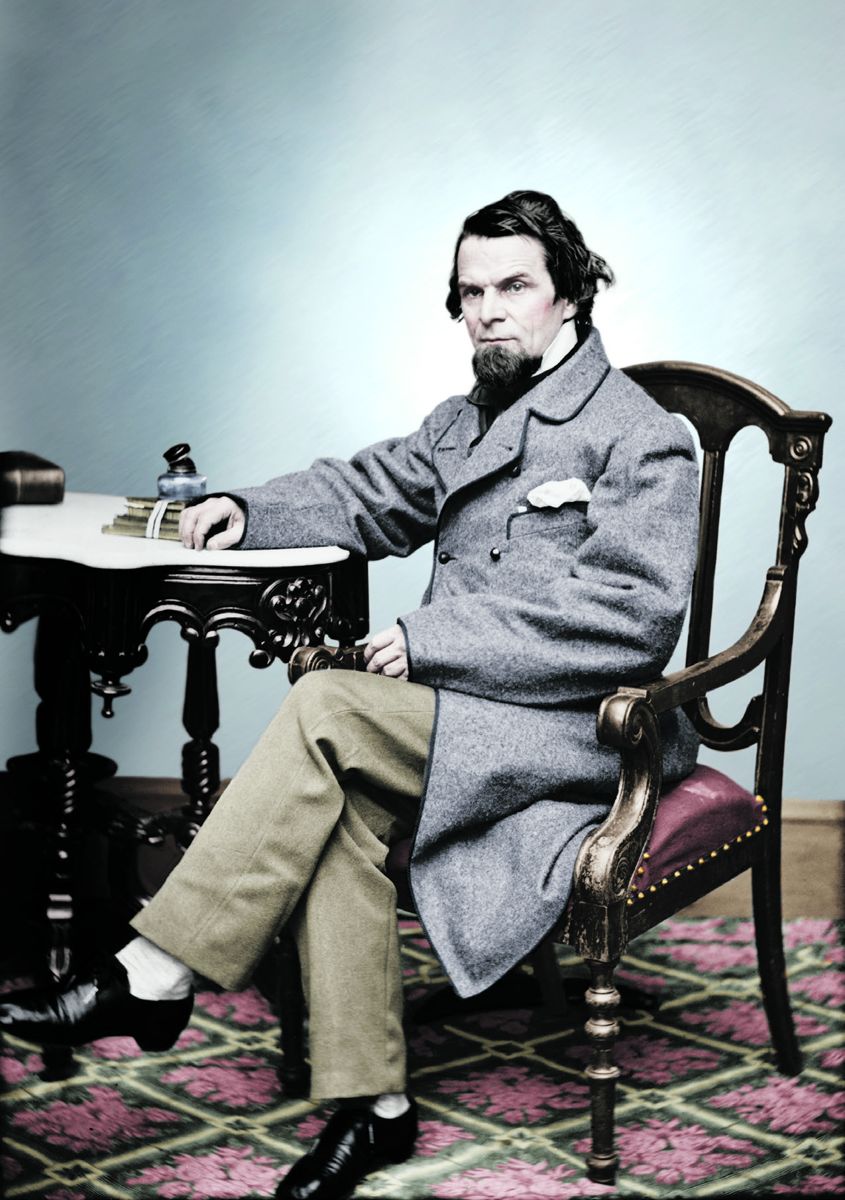
May 16, the Ocean Bark, at the mouth of the Mississippi River, became the first ship captured. The Federal Navy in turned captured privateers. The privateers expected to be treated as POWs. To their horror, they were put on trial as that scourge of all mankind – Pirates! Davis vowed to treat Federal prisoners the same as the captured privateers. Soon he had his chance. On July 18, the 13th N.Y. Volunteer Infantry had engaged in a fight at Blackburn’s Ford, Va. As the men included volunteers from his congressional district, the Hon. Alfred Ely considered it his duty to visit them. Ely obtained a pass from U.S. Gen. Winfield Scott, hired a carriage and set off to visit the men near Manassas, Va., on July 21. Ely had the bad timing of his visit coinciding with the First Battle of Bull Run. On October 22, in Philadelphia,
Penn., the courtrooms were packed with the national political elite for the separate trials of five men from the privateer Jefferson Davis. The fate of the privateers was of avid interest around the nation and across the pond. Three days later, Capt. William Smith was sentenced to death by hanging. Three more men were sentenced to the same. On October 23, in New York City, the dean of the New York bar, Daniel Lord, teamed up with renowned criminal defense lawyers James T. Brady and Algernon Sullivan, to defend the 12 crew members of the privateer Savannah. Lord had a personal interest. The first mate of the Savannah was the son of Lord’s Yale classmate. Before the trial began, Sullivan had corresponded with Confederate officials on his clients’ behalf.
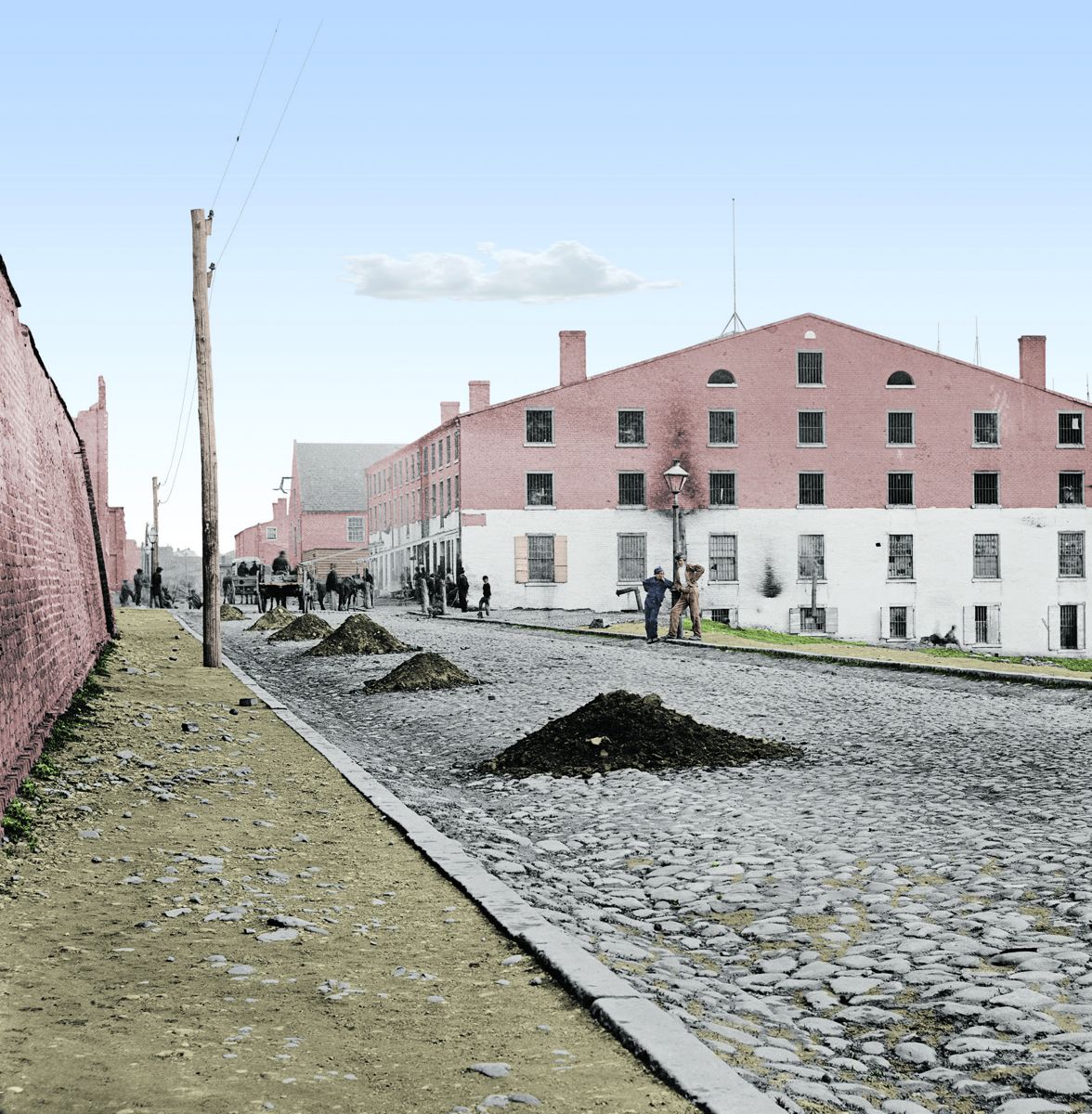
U.S. Secretary of State William Seward had Sullivan thrown in the Ft. Lafayette, N.Y., prison for seditious contact with the enemy. Sullivan was released on an oath of loyalty shortly before the trial began. From the start, Lincoln wanted to treat the secessionists as criminals. His decision to “blockade” instead of close Southern ports was “to avoid complications” that might result in a foreign war. U.S. Congressman Thaddeus Stevens had protested that by doing so, the United States was being committed, “to conduct the war, not as if we were suppressing a revolt in our own States, but in accordance with the law of nations.” Now the decision to “blockade” was being used to the privateersmen’s advantage. The Savannah’s defense team argued that the dispute wasn’t over the essential facts. It was over how to characterize them. Were the men legitimate privateers like the American privateers of the War of 1812? Or were they high sea robbers? “Lord fumed about a government that claimed to treat southerners ‘as enemies, for the purpose of confiscation’ but ‘as traitors and pirates, for the purpose of execution.’” After six days of listening to the lawyers’ arguments, the jury came back deadlocked. Another attempt to reach a decision failed. In the end, the government simply couldn’t convince the jury that the past six months of fighting was not a war. Meanwhile, in Richmond’s Libby Prison, Ely was held in the officer’s quarters. Both residents and tourists flocked to see the “Yankee Congressman,” inspiring jokes to charge for tickets. On November 10, Ely was in the officer’s quarters as C.S. Gen. John Winder entered. Winder had been ordered to select by lottery, men of the highest rank, to be treated as felons and to be executed if the privateers were executed. Slips of paper with the names of the six Federal colonels in Confederate custody were placed “in a tin case nearly a foot in depth, and only large enough to admit the hand. After shaking up the ballots,” Winder requested the only non-military man, Ely, draw the name of the colonel “who should stand as a hostage for privateer Smith now condemned to death in Philadelphia.” The attention of 75 Federal officers was fixed on Ely as he fulfilled his “painful duty.” The first name drawn was Col. Michael Corcoran, Ely’s “mess mate and intimate friend.” Thirteen more names were drawn from the tin. Davis had the names of the selected officers widely published. The men were marched off to the county jail, “confined in one small room, about twelve by sixteen feet.” On November 21, newspaper publisher turned privateer John P. Calvo, wrote a protest letter to Lincoln. Calvo had been captured on August 3 and had grown weary of languishing in a NYC prison. Calvo’s position was that if the War continued it would be a “dog eat dog”—“steal my dog I will steal your cat” situation. The men on both sides, “should be considered and treated the same. … if you still think and will have it that I am a Pirate for serving my country, in God’s name have me indicted, tried, sentenced and hung instead of having me imprisoned. … Do you suppose dragging us from pillow to port in irons as have been done, and confined and fed as we are now will make us loyal subjects under the Stars and Stripes any quicker? If so, you and those in power are and will be deceived!” After over five months in captivity, Ely was exchanged for the Hon. Charles Faulkner, former U.S. Minster to France. On December 29, Ely arrived in Washington, D.C., and spent the evening at the White House. Ely described to Lincoln and Seward his experiences at Libby Prison, including pulling the names out of the tin. At this point, Lincoln had to have realized that his efforts to portray secessionists as criminals
Stephanie Hagiwara is the editor for Civil War in Color.com and Civil War in 3D.com. She also writes a column for History in Full Color. com that covers stories of photographs of historical interest from the 1850’s to the present. Her articles can be found on Facebook, Tumblr and Pinterest.