Fort Donelson Anniversary Programs
By Craig Barry · Originally published April 2019 · p. 18
The battle at Fort Donelson was an early turning point in the US Civil War that took place in mid-February 1862, right around St. Valentine’s Day. General Grant received national recognition for the victory, the first major Union success of the War. The capture of Fort Donelson and its garrison by the Union led directly to the capture of Nashville, Tenn., the capital and industrial center of the state. Nashville remained in Union hands from Feb. 25, 1862, until the end of the war and, along with the victory at Stones River later in 1862, gave the Union effective control over much of Northern and Middle Tennessee. These two defeats struck a major blow to the Confederacy early in the war. The annual anniversary programs at Fort Donelson National Battlefield commemorating these events are the unofficial start of the historic weapons demonstrations and living history schedule of events in Tennessee. The recent U.S. government shutdown forced cancelation of the Stones River anniversary programs late last year and left the programs at Fort Donelson up in the air until a week or two before the event. Fortunately, the staff at Fort
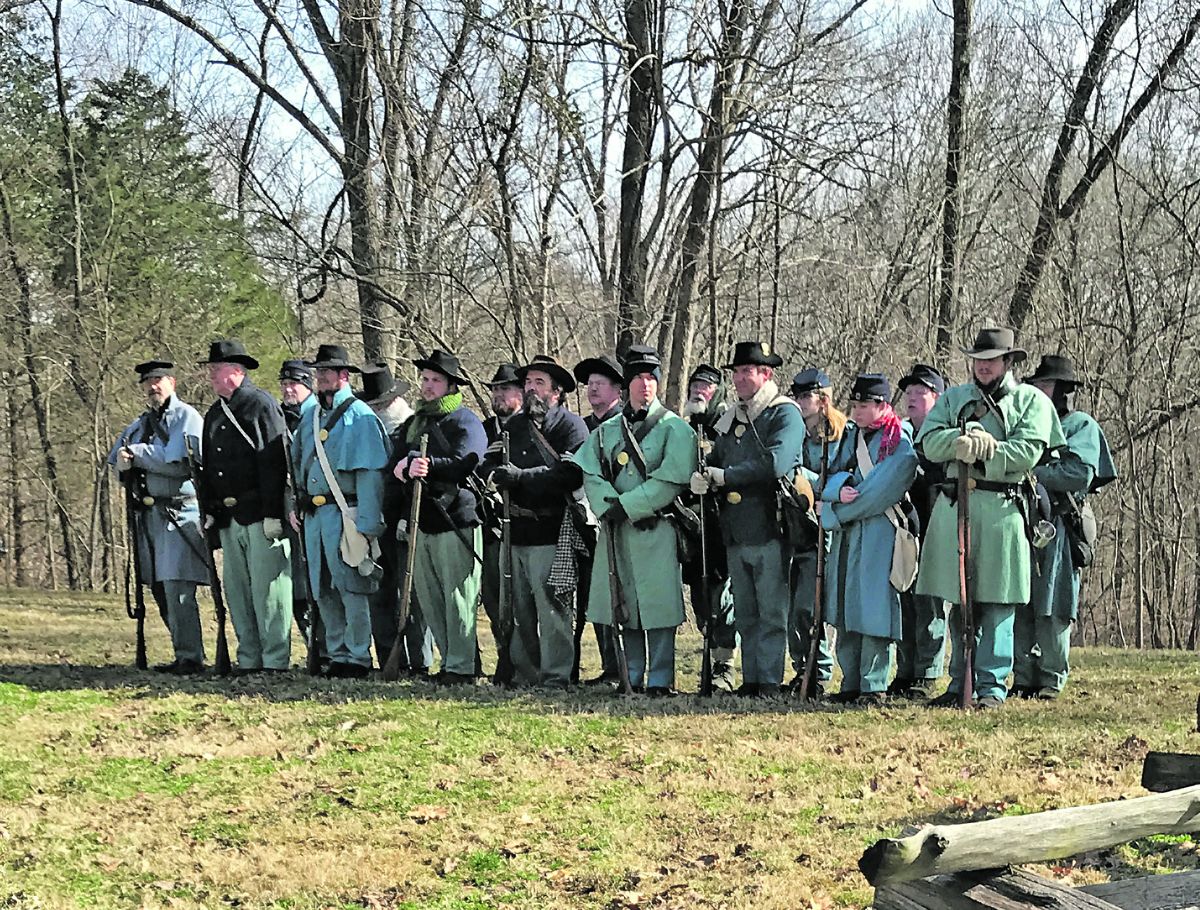
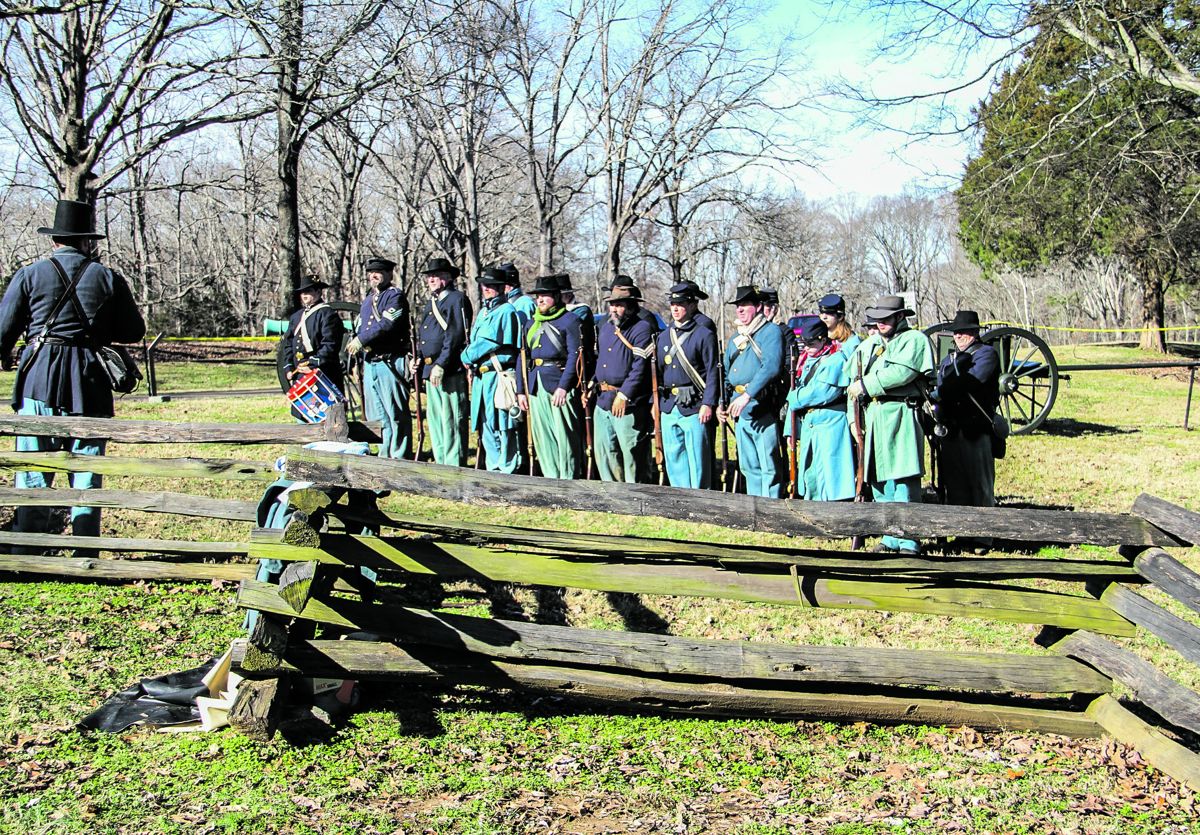
Donelson was able to not only get back and running in time, but also get the necessary ground work done to put programs together on a very tight time line. Kudos go to park ranger Susan Hawkins and her staff for their work in that regard. For those of us who enjoy participating in these programs, we were very grateful for their efforts. The dates selected were Feb. 9-10, 2019, …among the last possible just in case the U.S. government shut things down again as had been threatened when the park temporarily reopened a few weeks ago. The weather was the usual mix of clear, very cold, and sunny on Saturday with slightly less cold but rainy and wet on Sunday. On Saturday morning, the weather channel reported temperatures of about 20 “that feel like 8 degrees.” This is seasonable for those parts in mid-February but this much can be said for certain, no matter what your winter kit may include to keep your body warm, fingers struggle with the dexterity needed to place a percussion cap on a musket under such conditions. There were about two dozen volunteers from the 9th Ky. Inf. (U.S.) on hand for the programs and the area around tour stop five (the site of Smith’s attack) was cleared for the camp. The historic weapons and living history programs were held behind the original visitor’s center (closed for renovation for about three years now). There were demonstrations of drill, marching in formation, loading in nine times, and historic weapons (musket) firing. For participants in the programs, it was an excellent chance to re-connect with friends who have not been together since late last year. Whatever challenges may have been with the cold and winter weather, a nice crowd of visitors braved the conditions and the programs were all successfully completed as scheduled. Interest in the American Civil War remains strong in that part of Tennessee. Craig L. Barry was born in Charlottesville, Va. He holds his BA and Masters degrees from the University of North Carolina. He writes Civil War News column “The Unfinished Fight.” He is the author of several books including three books in the Suppliers to the Confederacy series on English Arms & Accoutrements, Quartermaster stores and other European imports.