The Last Confederate Battle Flag
By John Peter Beckendorf · Originally published September 2018 · pp. 14–15
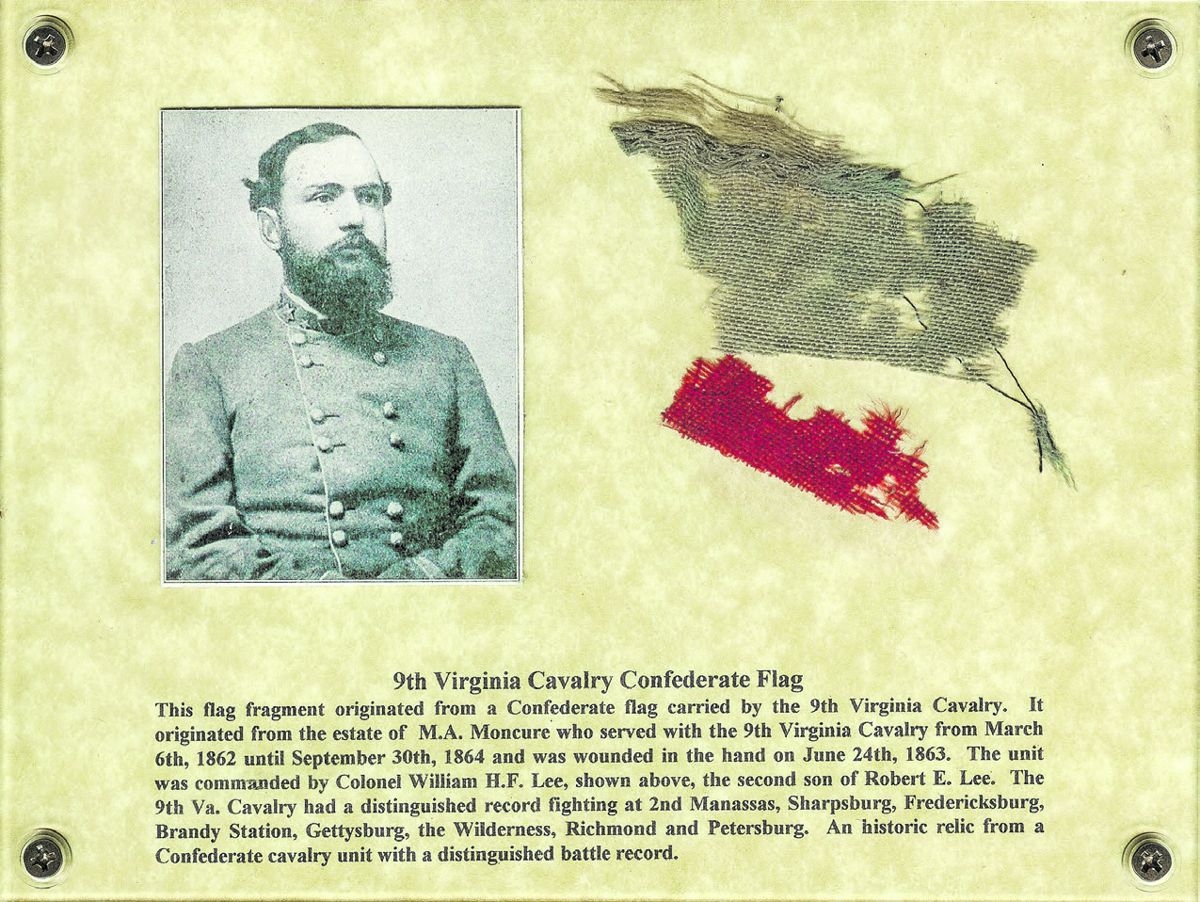
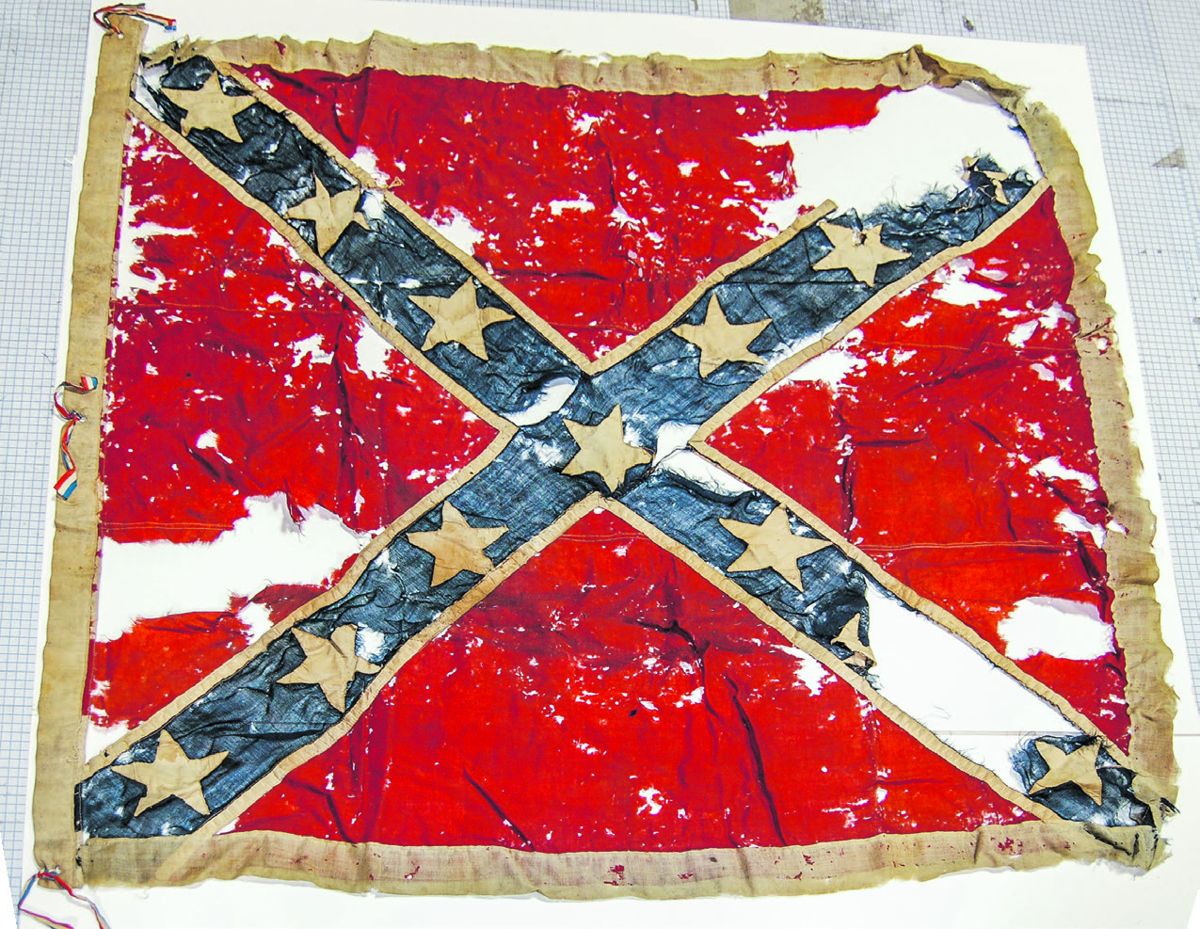
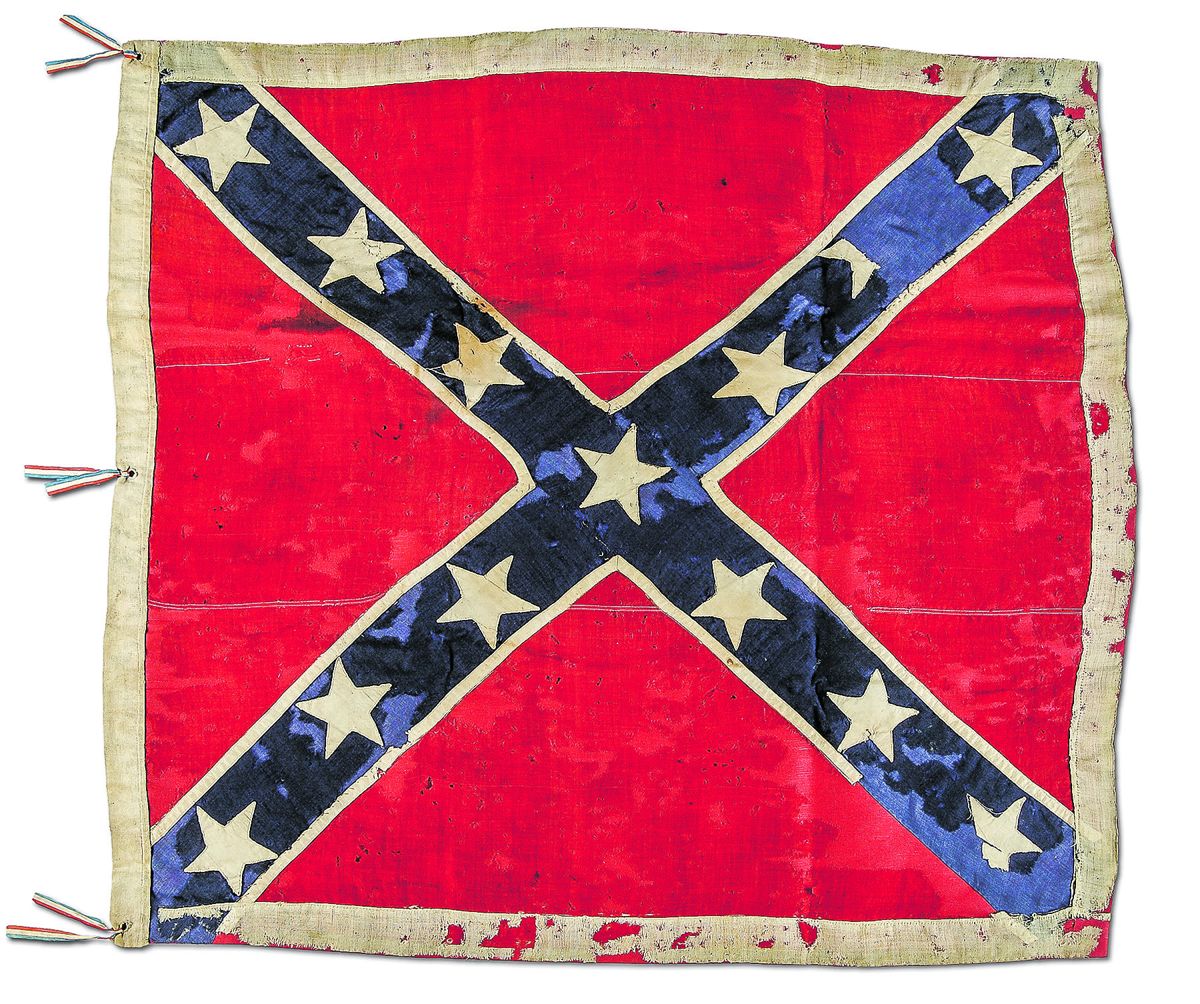
R. L. T. Beale was Lt. Colonel of the 9th Virginia Cavalry from May 1862 until he was promoted to Colonel in October 1862. He writes in his “History of the 9th Va. Cav. in the War between the States” the following: On Wednesday, the 25th of June [1862], rations were cooked, and that night the regiment marched taking the road leading to Ashland. We had, along with other regiments, a few days previous received the Confederate battle-flag. Colonel Beale’s son G. W. Beale confirms this, writing in his book A Lieutenant of Cavalry in Lee’s Army” that “It was on the 25th of June, 1862, while the regiment to which I was attached – the Ninth Virginia – was encamped at Mordecai’s, on the Brooke Turnpike … That afternoon we were mounted and march out on the pike toward Yellow Tavern, beyond which we took a road bearing to the right at Turner’s and followed it to the vicinity of Ashland. It was our first opportunity to see the new battle flags of several of our cavalry regiments as they floated in the evening air. At the time of the first invasion of the north (Sharpsburg/ Antietam) the 9th Va. Cav. was brigaded with the 1st, 3rd, 4th and 5th Virginia regiments of cavalry under Brigadier General Fitzhugh Lee. During the Gettysburg Campaign and afterward they were brigaded with the 10th and 13th Virginia, and 2nd North Carolina, under Brigadier General William H. F. (Rooney) Lee. An analysis of existing flags and drawings shows that the regimental flags were 3rd pattern Richmond Depot. John Nathaniel Peed of King George County, Va., was Bugler of Company I, 9th Va. Cav. He wrote many letters home to his family. Many of these letters are now at the University of Notre Dame and the Library of Virginia. Patrick Neimeyer, Peed’s great great grandson related to me that the family had Peed’s journal and diary from the war years, but that these have been lost, however, the family has John Peed’s relation of a story about the 9th’s flag. He said that near the war’s end it was ripped into pieces with soldiers keeping them as souvenirs. He specifically recalled Lt. Thomas Jefferson Christian of Company H and others openly weeping as the colors were unfurled and cut up. The piece of the 9th’s flag depicted came from the estate of Marshall Ambler Moncure who served as a Private in Company B (Caroline Light Dragoons). In 1868 he established the “Eagle Museum” at his Raceland Plantation home in Dinwiddie County, Va. He and his son were inveterate collectors of memorabilia. The estate and museum passed down through his family until the 1990s when Robert Marshall Spiers and his sister Jacqueline Ambler Spiers, through their agent Terry Botts, liquidated the estate. Part of this liquidation included a piece of the flag consisting of red and white wool bunting. Given the issue period of June 1862, the fragment can only be from a Richmond Depot 3rd pattern wool bunting flag. In September/October 1864, the 9th Virginia received a new flag from the Richmond Depot. It is one of six known 5th pattern flags. This flag was carried by color bearer Walter Scott Callis of Company B through the 9th’s subsequent battles until the Army of Northern Virginia surrendered at Appomattox Court House on April 9, 1865. Only the bravest of men were chosen as color bearers. Marshall Ambler Moncure subsequently wrote about Callis’ courage at the Battle of Ream’s Station August 25, 1864. Here we soon engaged the enemy’s cavalry, who were armed with sixteen shooters, but we charged on and drove in the pickets. On advancing a little further we were met with such a continuous shower of bullets that we were compelled to seek cover and lay as flat down as possible. Just here occurred one of the coolest and bravest acts I ever witnessed between our line and that of the enemy. Five horses had been left tied to some trees by the Yankees. Walter Callis, a member of my company, advanced in the opening, and deliberately commenced unfastening the halters. One horse had been so frightened that the knot was so tight it seemed impossible to untie it. Walter threw his whole weight against it several times, but did not succeed in unfastening it, when some of the boys called to him to cut it. ‘You fool, I am not going to spoil the halter’ said he. All this time the enemy were pouring the shot into us as fast as they could, but notwithstanding, Walter brought the horses and all safety (sic) to the rear. Just west of Appomattox Court House, the 9th and 14th Va. Cav., along with Robert’s North Carolina Brigade, launched a desperate assault in the early morning of April 9, 1865, attacking Lord’s Battery of Federal artillery posted near the junction of the Richmond-Lynchburg Stage Road and the Oakville Road. The battery was posted on open ground just in front of a tree line and was supported by dismounted Federal cavalry behind a low breastwork of logs and fence rails. The Confederate charge was successful and resulted in the capture of Federal artillery. The color bearer of the 14th, James Wilson, was killed just as he planted the regimental colors among the Federal guns. The Confederates lacked the man power to exploit this breakthrough as Sheridan brought up additional Federal troops. Flags of truce appeared upon the field within an hour of Wilson’s death. At 1:30 p.m. General Lee rode to the McLean House to surrender the Army of North Virginia to Lt. General U.S., Grant. Walter Scott Callis refused to surrender. He took the flag from its staff, wrapped it around his body under his shirt and smuggled it home to Port Royal, Va. He took his Oath of Allegiance May 6, 1865, at Bowling Green, Va. The flag descended down through his family and was sold by them to the James Julia Company from whom I purchased it at auction and had it conserved by Jessica Hack of New Orleans. The family’s oral history states that Walter Scott Callis wrapped all his children in the flag following their births, a practice continued by his daughter Julia May Callis Powers until her death in 1941. The flag was then stored in a picture frame with tobacco
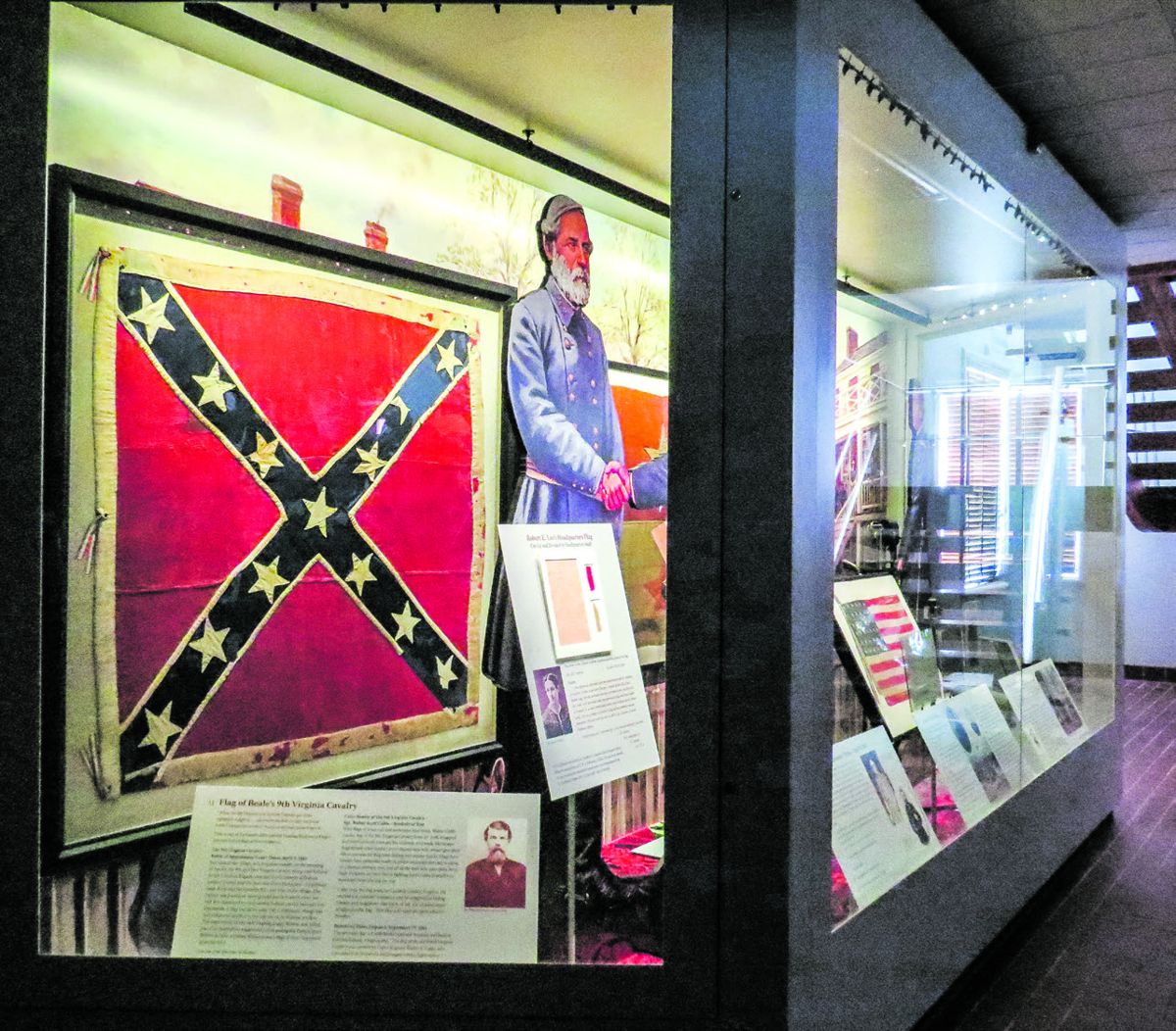
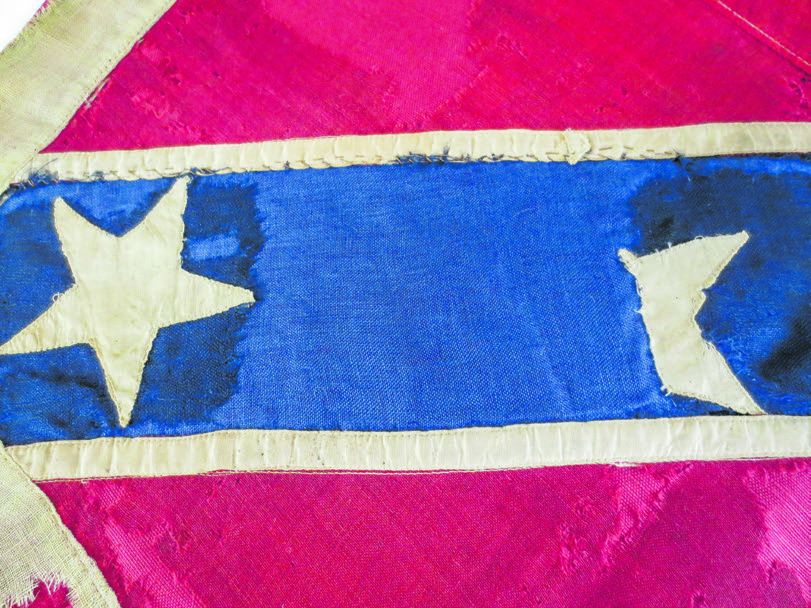
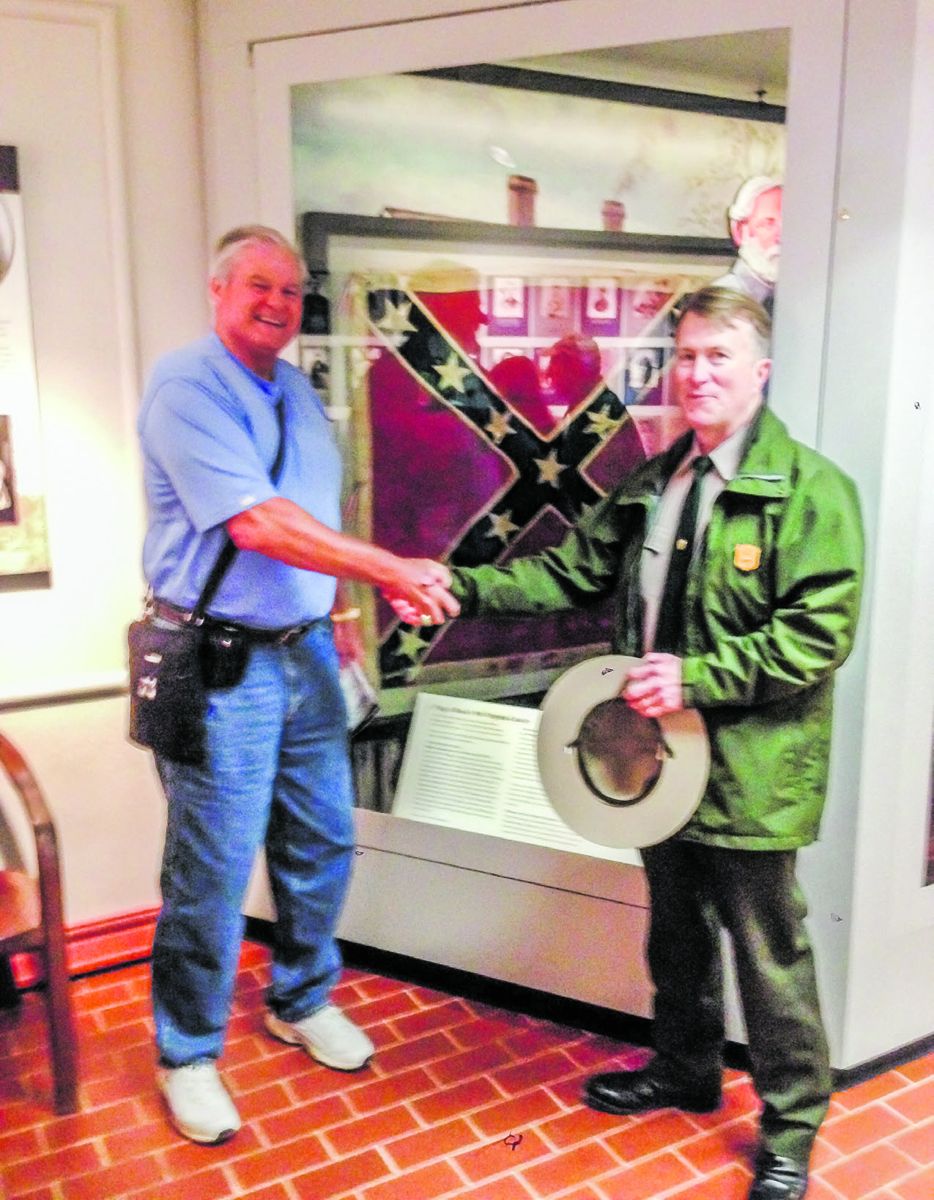
Photo of Walter Scott Callis, last color bearer of the 9th Virginia Cavalry. leaves to protect it from insects. On conserving the flag, Jessica Hack found bits and pieces of tobacco in the flag fabric. Additionally, the flag was found to have a nearly perfect 4 ½ inch x 6 ½ inch rectangular piece cut through a portion of a star and perfectly along the white fimbriation of the interior edge from the upper-right portion of the St. Andrews Cross. No other area of souveniring exists on the flag, unlike the fate of the 9th’s previous flag. On September 18, 1884, a Confederate veteran’s reunion was held at Fredericksburg, Va. The Richmond Dispatch reported on this the next day. But here and there was a tattered Confederate battle-flag which was greeted with an enthusiasm which showed that ‘the Conquered Banner’ is still cherished for the memories in the hearts of our people. The flag of the old Ninth Virginia cavalry was carried by Color-Sergeant Walter S. Callis, who concealed it on his person and brought it from Appomattox. Some of the old veterans proposed to cut up the flag and divide it out, to be kept as heirlooms in their families, but the gallant Sergeant replied: ‘No! I have been using it to wrap my babies in that they may catch the spirit which it breathes, and learn the lessons which it teaches. I have already wrapped seven of them in it. He did, however, as a special favor, give a small piece of it to the wife of an old comrade of the Ninth (B. F. Curtis, of Kentucky), whose brother was a captain in Morgan’s command, and who says that she will unite this memento of the boys who followed Jeb Stuart and the Lees with some that will tell of those who rode with John Morgan. This article is extremely important to the provenance of the Callis Flag. First of all, it provides documented proof of the family’s oral history about wrapping babies in the flag. Secondly, it provides a physical description of souveniring of the flag. Following conservation of the flag, I loaned it to the Appomattox Court House National Park for 20 months covering the 150th anniversary of the Army of Northern Virginia’s surrender. It was on display at the Park Center in the Court House along with other priceless artifacts. John Beckendorf is a retired commercial insurance broker. He has been the Program Chair for the Los Angeles Civil Round Table for many years and is an avid collector of Civil War memorabilia. He may be reached at jpbcoast@aol. com and his collector’s web site is: www.westcoastcwc.com. of the flag showing the conservation.