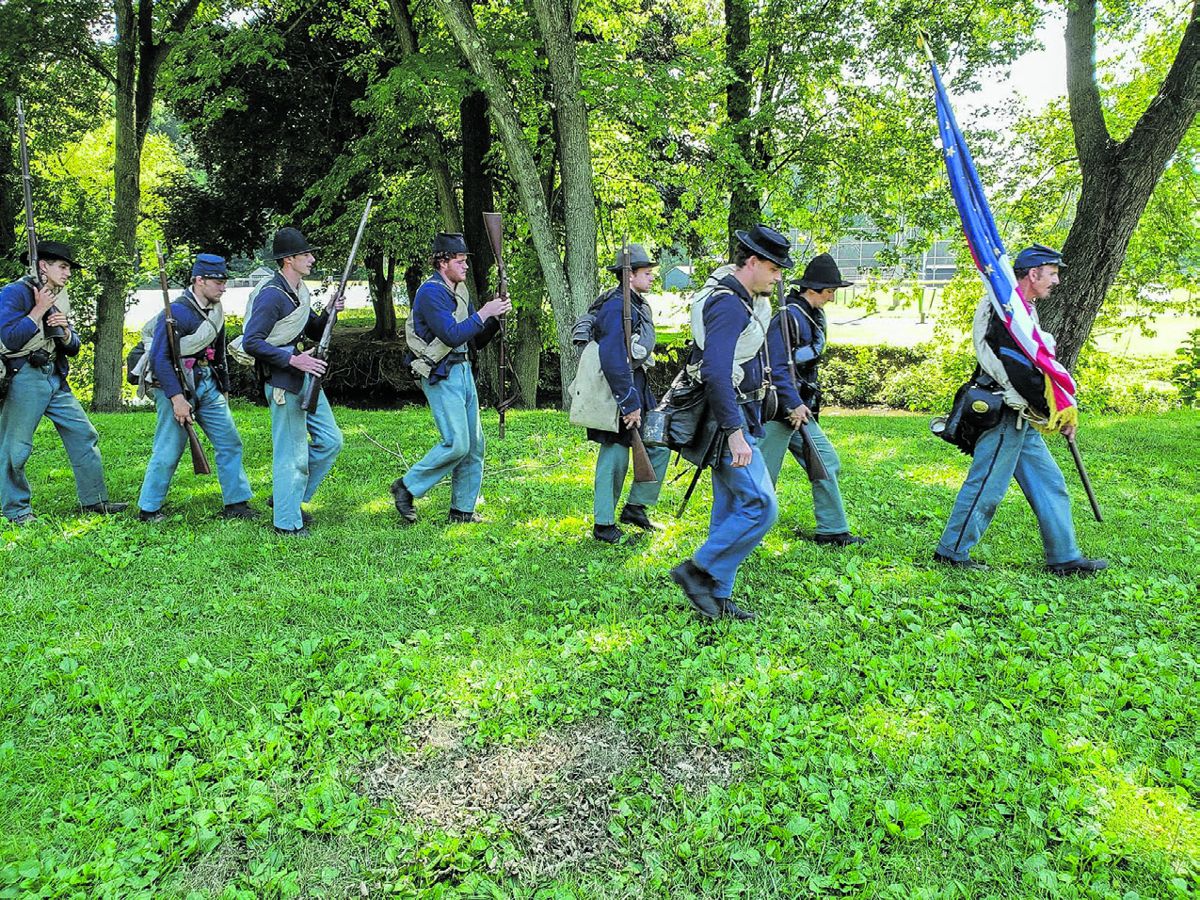
Sixth Corps March Commemoration, June 27–July 2
By Joe Bordonaro · Originally published September 2018 · pp. 16–17
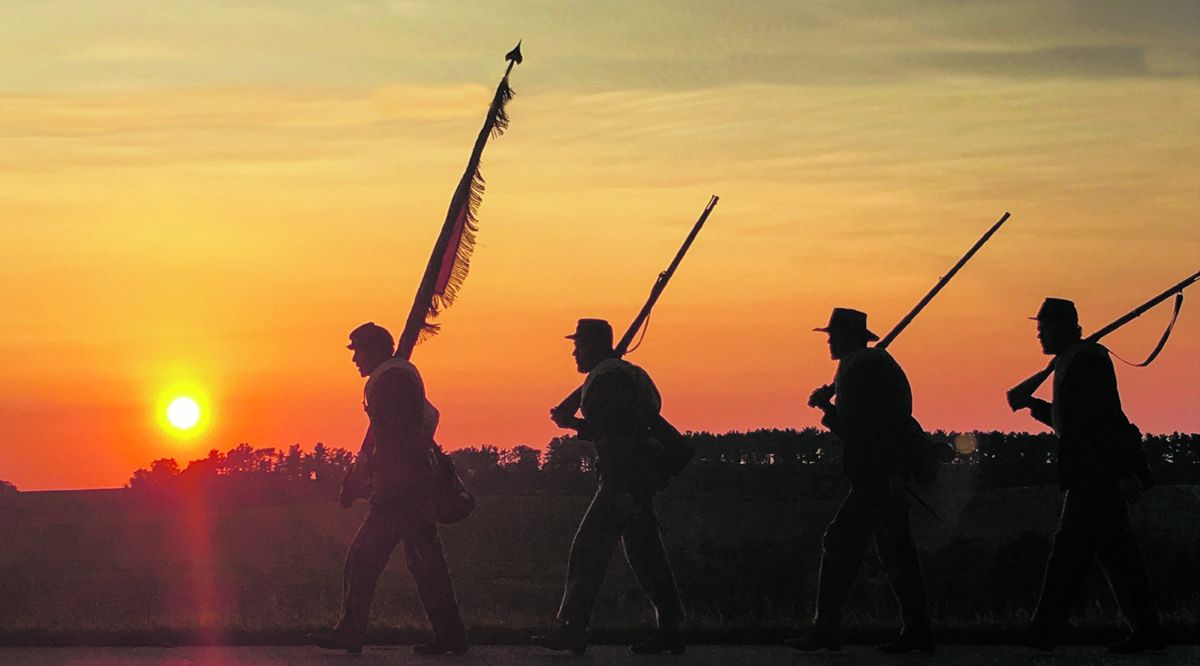
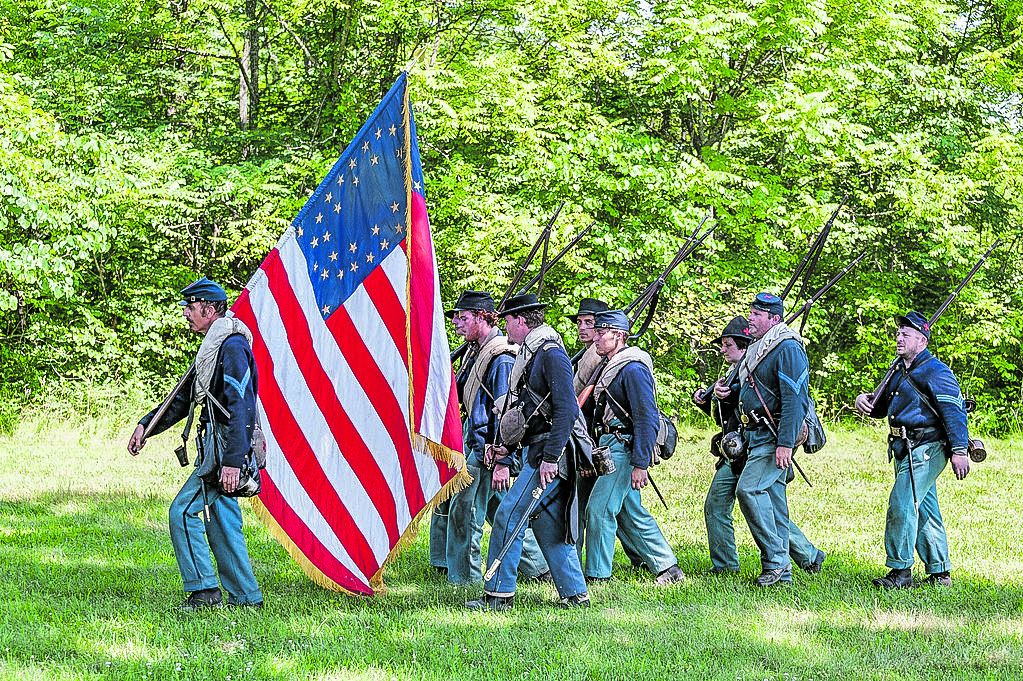
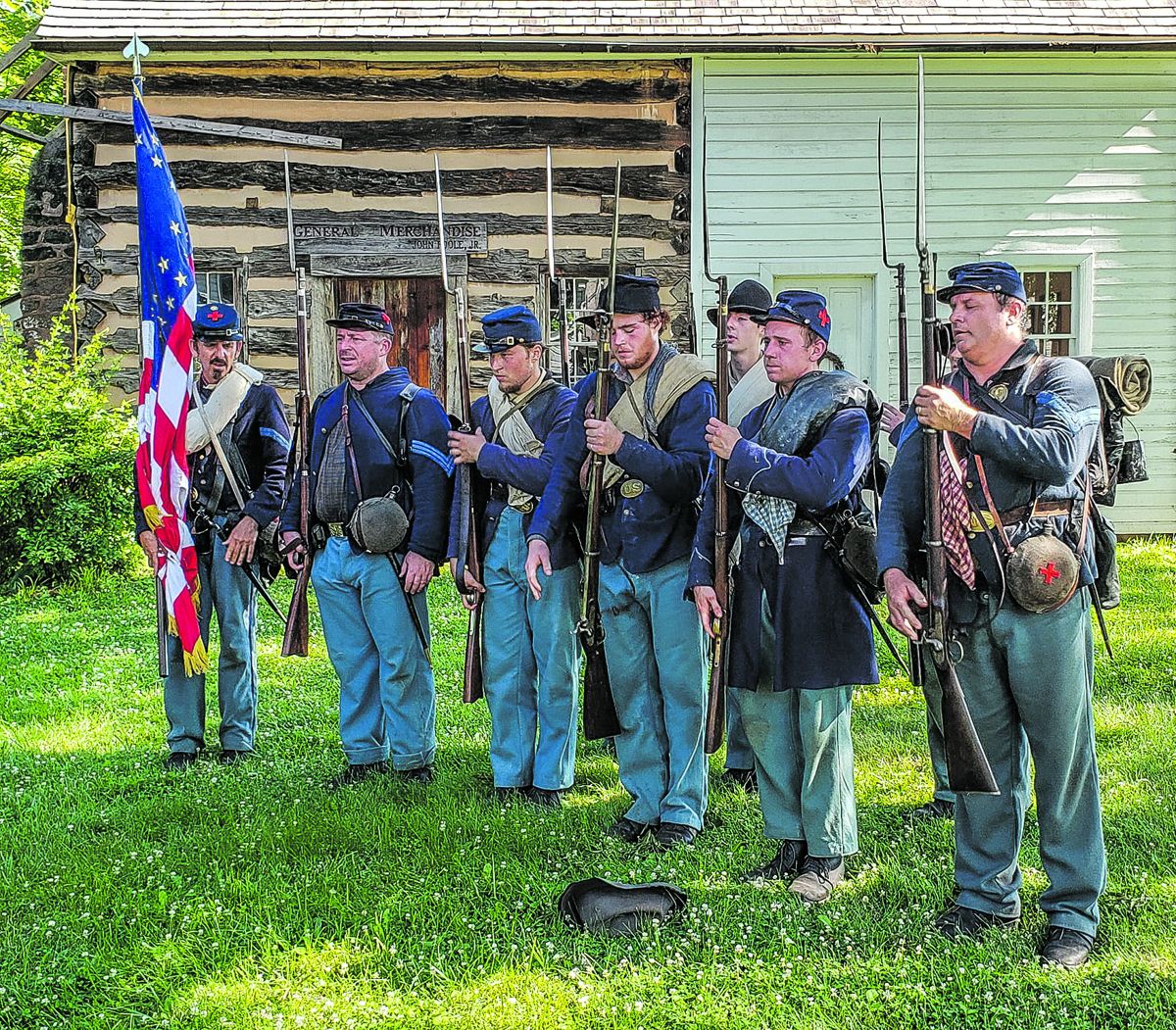
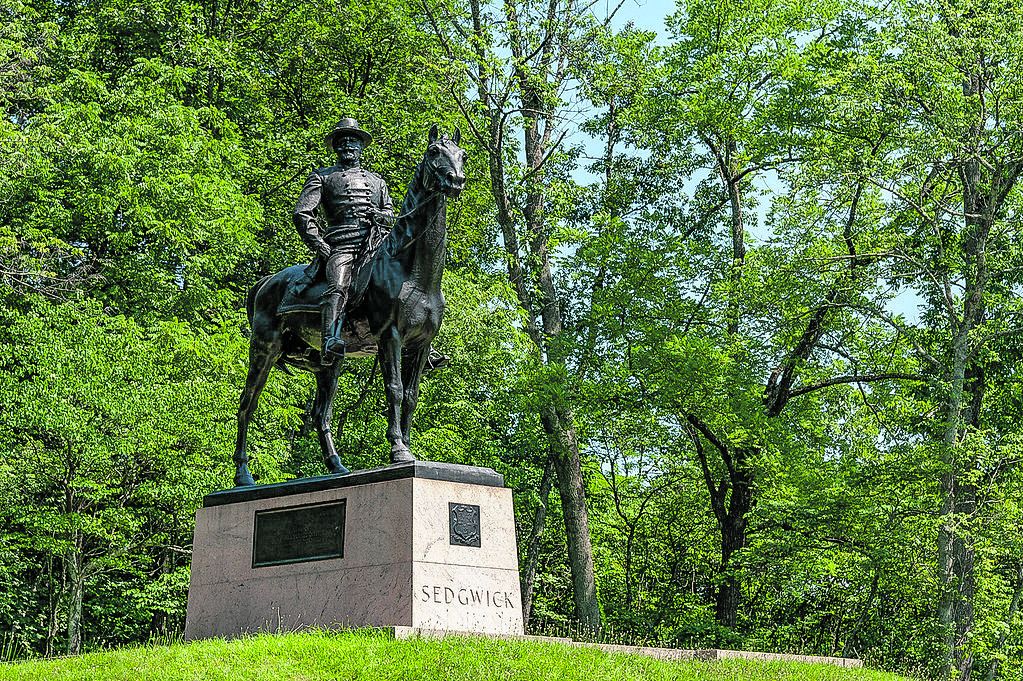
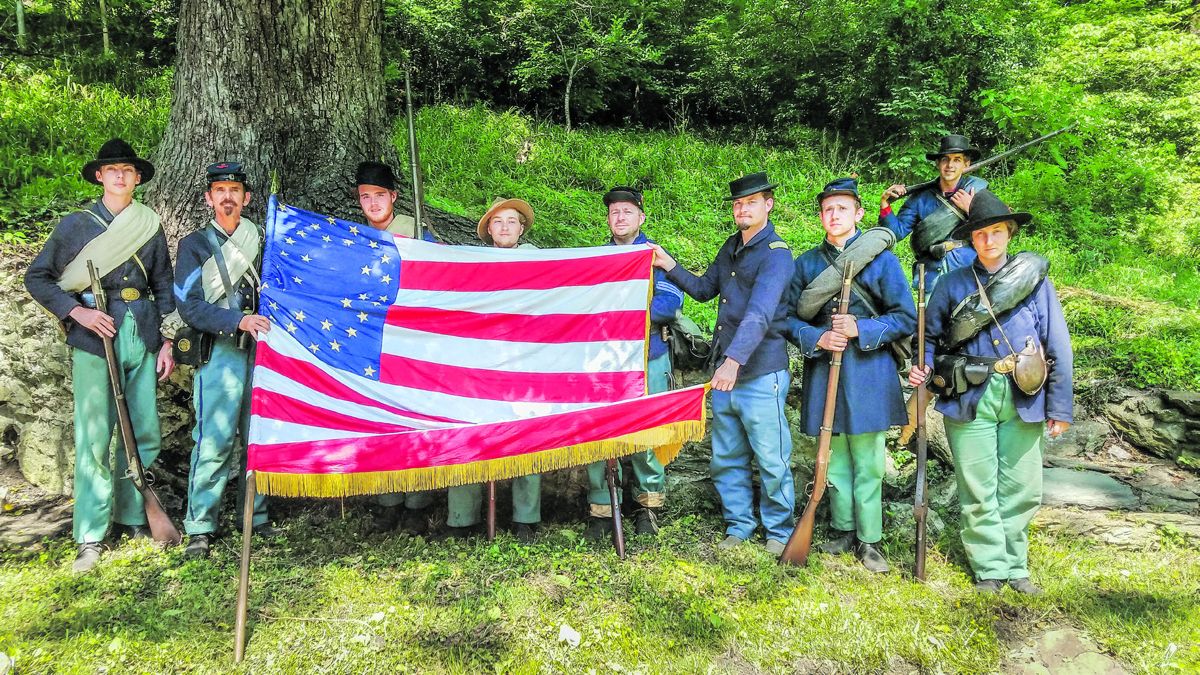
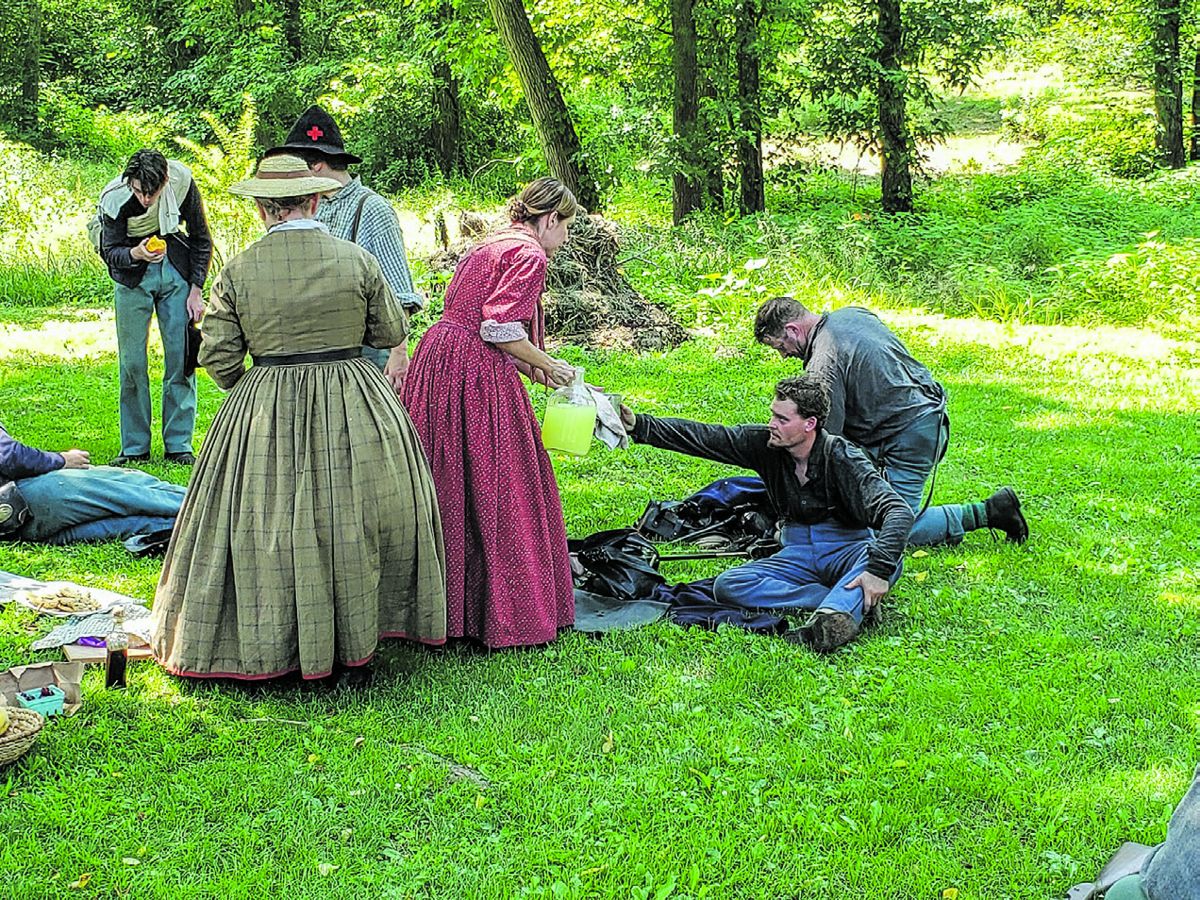
The movements of the Sixth Corps on July 2, 1863, are such to challenge the admiration of mankind. Its majestic tread on the battle-field, at the supreme moment, after such a memorable march, will resound through the ages. – Robert Orr, 61st Pennsylvania Volunteers, speaking at the dedication of the regiment’s monument at Gettysburg (Gettysburg Magazine 22:65). To commemorate this march, and to represent the soldiers who made it, was the mission of a group of ten reenactors and their four person support team. Meeting at White’s Ferry, Md., the afternoon of June 27, 2018, they marched down the Chesapeake & Ohio Canal Tow Path to Edward’s Ferry, about five miles. Marching on the gravel and dirt, tree-lined trail provided an excellent taste of 1863-style roads, which, alas, was pretty much the only such experience on the march. A group of civilian living history interpreters, members of the Atlantic Guard Soldiers Aid Society, had previously set up camp at Lock House 25 and entered into first person interactions with the soldiers as they arrived. The soldiers were fed a meal of black bean soup; they in turn pledged to refrain from any activity that might damage the lock house property or disturb members of the lock keeper’s family. This arrangement worked to everyone’s satisfaction, the soldiers were fed, camped on the grounds of the lock house, and marched off early the next morning. Marching next to Poolesville, Md., the marchers stopped at the historic John Poole House for a rest and had a chance to tour the house, which is undergoing renovation. Poolesville is the place where General Hooker was informed his resignation as commander of the Army of the Potomac had been accepted and General Meade learned that he was the new commander. Imagine being put in charge of an army with the enemy somewhere ahead of you, invading Pennsylvania! Leaving Poolesville, the march went on through the lovely Maryland farm country. Pausing at an orchard whose owner treated the marchers to fresh cherries, the march went on for about 20 miles. Finally, the camping area for the night was reached at Little Bennett Regional Park near Clarksburg, Md. The park has a primitive camping area that was perfect for the marchers. The next morning the marchers headed north and spent another long day on the march. Stopping at a private home on the Old National Pike in Mount Airy provided a much needed rest for the weary soldiers. The home was present in 1863 and its back yard, bisected with a clear running stream and dappled in cooling shade, made the perfect place to rest. The family was happy to help the soldiers out and provided cold liquid refreshments that were gratefully consumed by the thirsty marchers. All good things come to an end, and soon the marchers were back on the road, climbing a long series of hills to reach the high point of the aptly named Mount Airy. From there it was a long, hot slog on Ridge Road to finish the twenty miles march at Taylorsville. The marchers were glad to find a camp on a local farmer’s property and after a quick meal got some much needed sleep. Up early the next morning, the intrepid band left Taylorsville and marched by way of Sam’s Creek to Westminster. The early morning was delightful, with a breeze and much shade on the back roads to cool the marchers. Once the sun came up and they left the shaded bottom lands, the march turned into quite a challenge. Eventually, however, they reached the afternoon rest area at a park in Westminster. Greeted there by a very patriotic lady who nursed many of the men’s aching and blistered feet, the boys enjoyed the tree-lined creek and a hearty meal provided by patriotic citizens. Revived, the marchers headed out to complete another 20 mile hike to their next camp site, a farm near Manchester. The farmer and his family proved to be wonderful hosts, providing food and the run of their farm to the exhausted marchers. In keeping with the historical record, the troops rested the rest of Saturday evening and all day Sunday. The VI Corps did not receive a summons from General Meade until about 8 p.m. on July 1st, so we did not leave until about sunset. The long rest for the marchers’ feet, and the cooler night temperatures, proved the keys to completing the final march, some 26 miles. After marching back through Westminster to the Baltimore Pike, the route went straight up the Pike through the night. When the sun rose the next morning, the marchers stopped for a quick rest in Littlestown, Penn. The commander of the group, 2nd Lt. Bob Bowser, said that he had never before witnessed a group of people falling asleep so quickly! The sleep was a very short nap, but it did help a bit, and the men got back on the road. Once the sun came up, the brutally hot temperatures soon proved a difficult enemy to defeat. On went the march, however, and finally we reached our last rest area at the historic Lightner Farm (now a bed and breakfast), where the marchers were greeted with a warm welcome from owners Dennis and Eileen Hoover and cool drinks and fresh fruit from a trio of Union women. Much refreshed, the marchers left about an hour later for the final leg of the march. With a quick stop along Rock Creek where the VI Corps hospitals were located, the marchers finally turned up Wheatfield Road, then marched down Hancock Avenue to the magnificent equestrian statue of General John Sedgwick, muchbeloved commander of the VI Corps. Sedgwick brought his men up to the battlefield just in time to take the wind out of the sails of Longstreet’s Confederate I Corps, who were sweeping up the western slope of Cemetery Ridge. Faced with fresh V Corps Pennsylvania Reserves, and seeing the VI Corps flag behind them signifying the largest corps in the Army of the Potomac, the Confederates halted their advance. They were then pushed back beyond the Wheatfield to the Rose Farm. The crisis of the battle was passed, and so the forced march of the VI Corps achieved what its men long took pride in—the repulse of the Confederate’s closest approach to victory in the course of the three day battle. With our arrival at Sedgwick’s statue, the 2018 Commemoration of the Sixth Corps March came to an end. It is hoped that those who saw the marcher in person, the news, or social media posts, were reminded of the magnificent achievement of those “boys in blue” on those hot summer days in 1863. Joe Bordonaro is a USAF veteran (1973–1977), Glassboro State College graduate (1980), Catholic school teacher (St. Joseph’s ProCathedral, 1983–1988), and retired public school teacher (Mullica Township School, 1988–2009). He has been involved with Civil War reenacting/living history since 1999. Joe began submitting articles to the Civil War News in 2005 and has been covering events for the News on a regular basis since 2016. He has also recently begun to write book reviews for Civil War News. Joe lives in Mount Laurel, N.J., and has been married to his wife Karen for 29 years. If you wish to contact Joe, email him at [email protected].
Breakfast at Edward’s Ferry, June 28.
Lt. Bob Bowser keeps guard while his men get some sleep in Littlestown, Pennsylvania, July 2. (Joe Bordonaro) Pards in Camp.
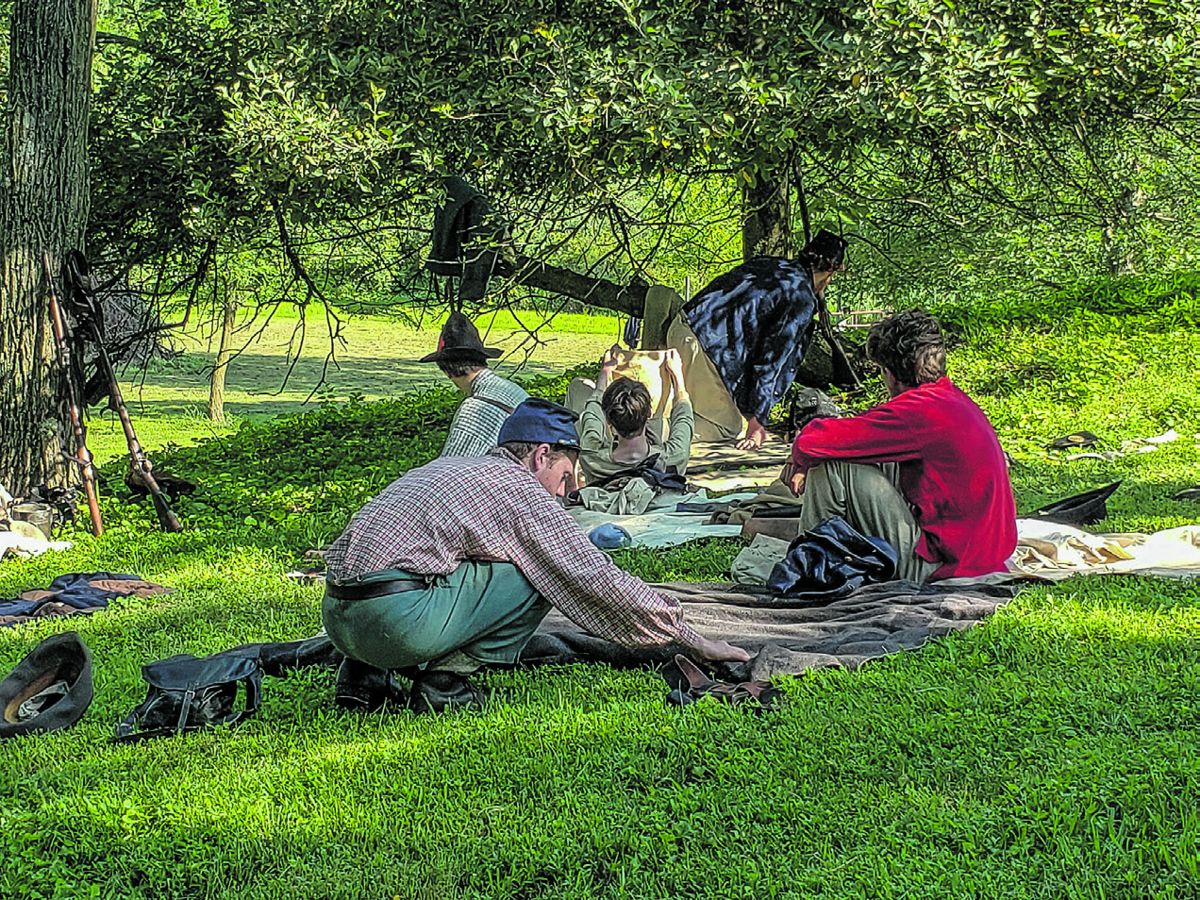
(Andy Modla) (Andy Modla) The Boys at Mount Airy.