Rain Can’t Dampen N-SSA 137th National Competition
By Bruce W. Miller · Originally published September 2018 · pp. 20–22
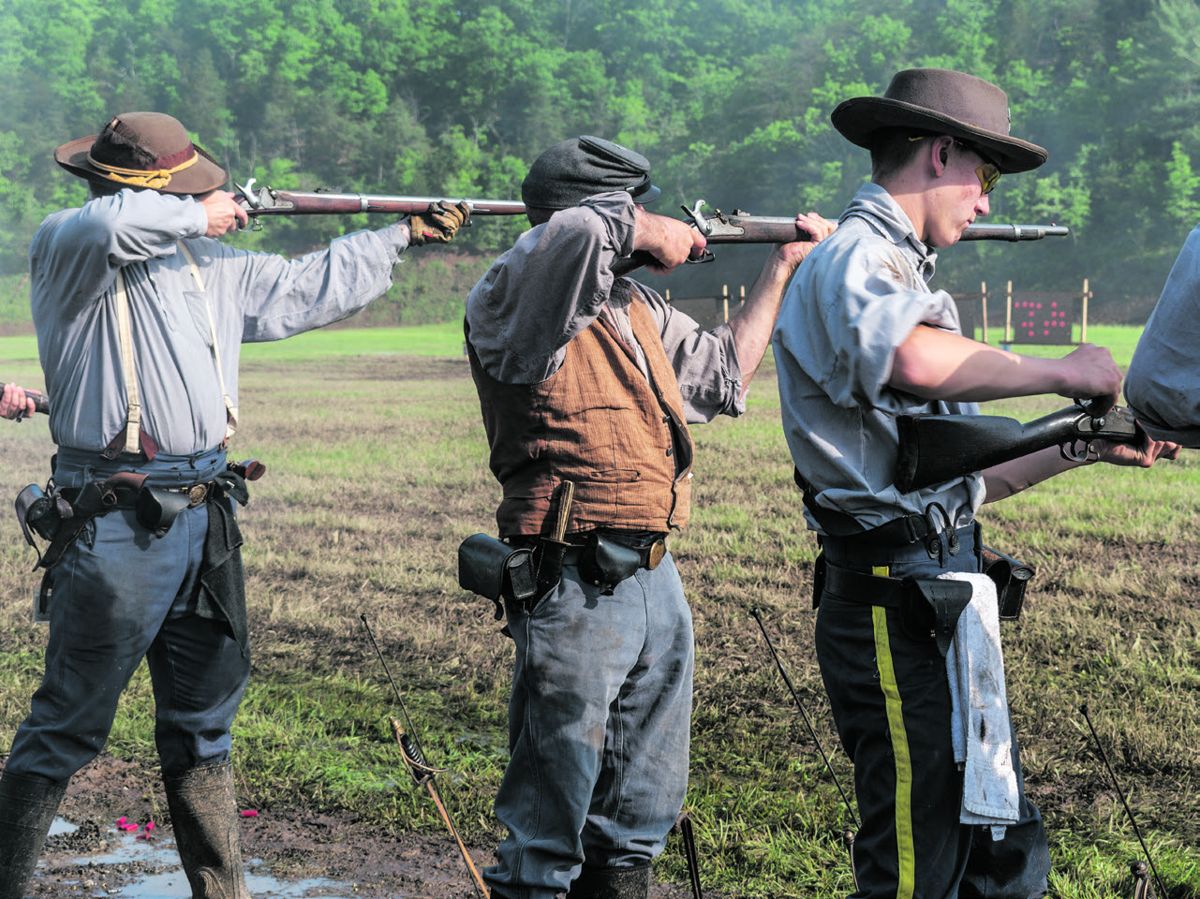
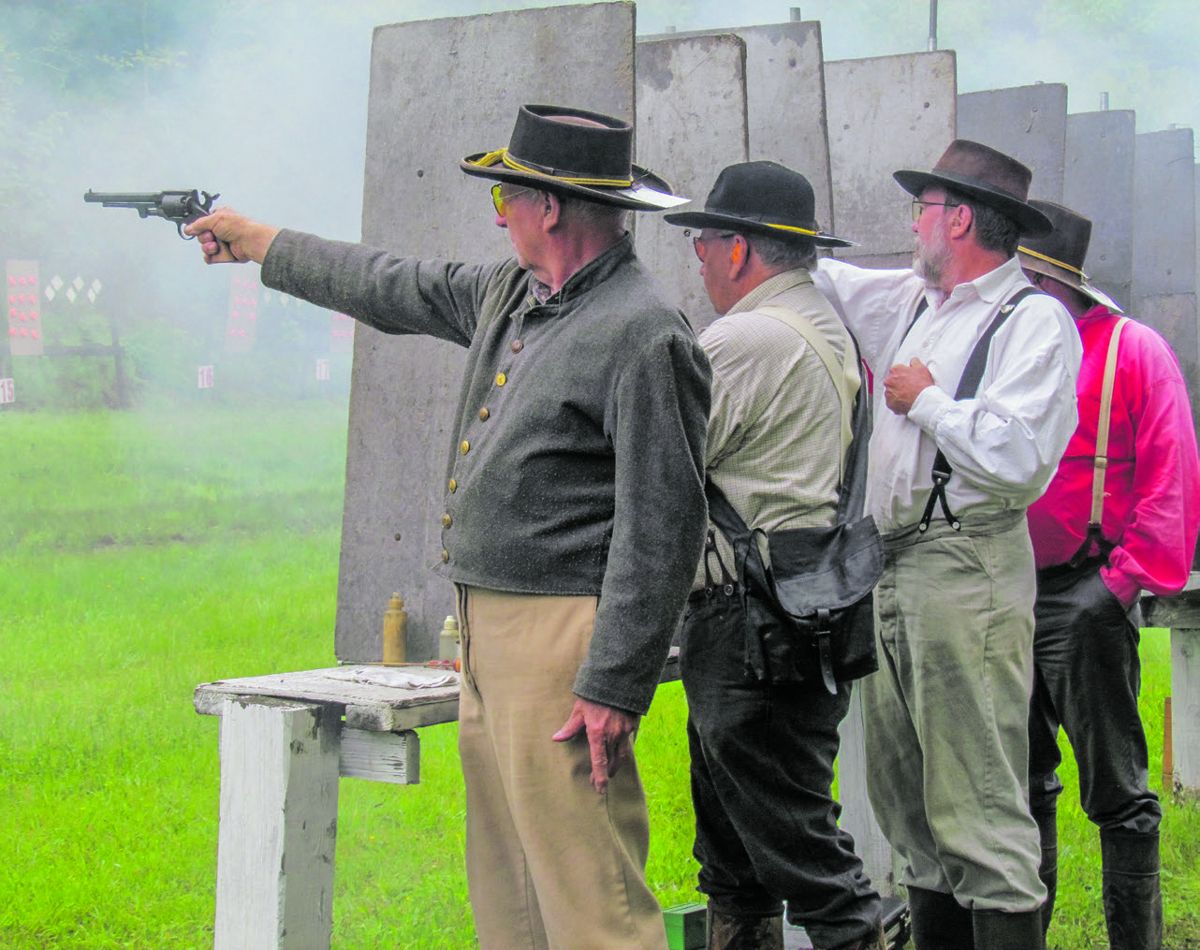
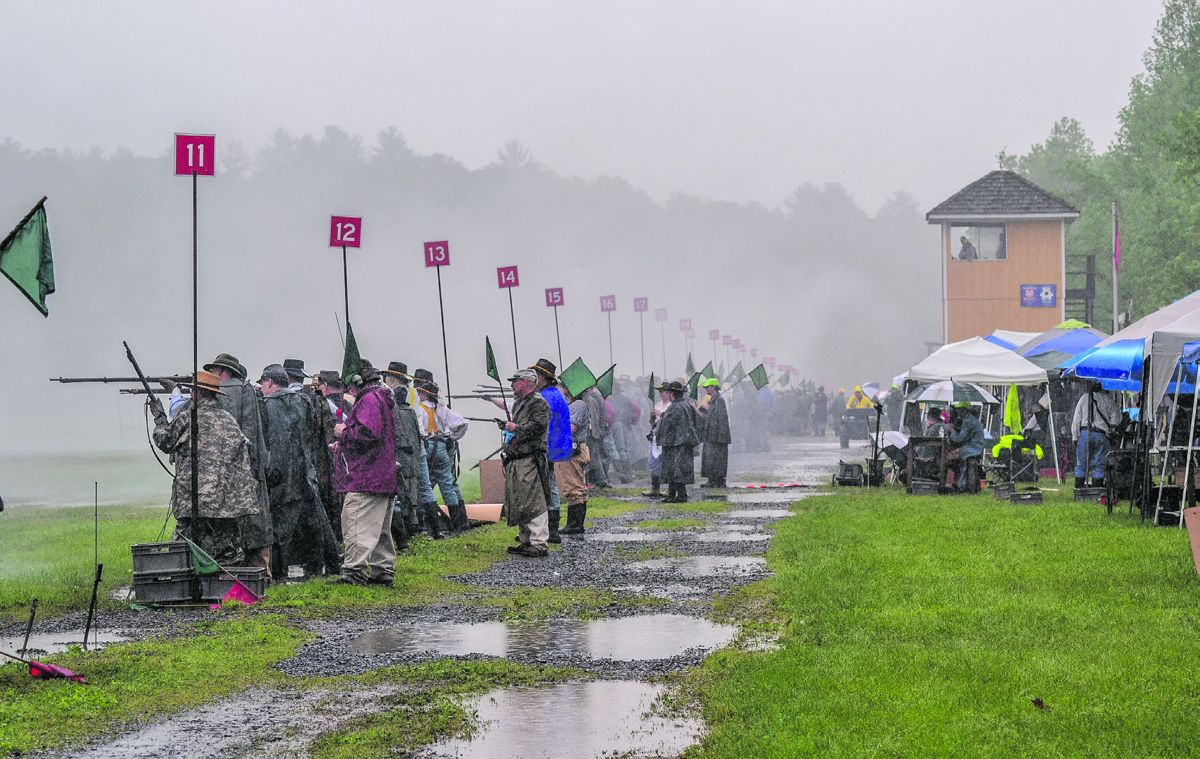
It doesn’t “take a village” to put on a North-South Skirmish Association (N-SSA) National Competition. However, it does require about 150 people and a lot of hard work. N-SSA units rotate the responsibility of hosting a national and this spring 16 units generated the staff necessary to prepare for and stage the fiveday event. With the leadership of Skirmish Director Bobby Hannula and Adjutant Chuck Kindle, even four days of consistent rain from a tropical storm front couldn’t stop or even slow down the event-filled schedule of matches. The competition was held May 16-20, 2018 near Winchester, Virginia. Member units competed in live-fire matches with original or authentic reproduction Civil War period muskets, carbines, breechloading rifles, revolvers, mortars and cannons. It is the largest Civil War event of its kind in the country. The N-SSA’s home range, Fort Shenandoah, is located north of Winchester, Virginia, on over 600 acres. There is room for each of the 200-plus member units to have a designated and permanent campsite and you’ll find members camping in everything from period tents to gigantic motor homes. There is also the country’s longest continuous firing line, extending over onequarter of a mile. Another feature is the large Thomas E. Johnson Jr. Sutler Area that has permanent structures for over 50 vendors of all things Civil War; from original firearms to period jewelry and everything in between. After two days of soggy individual matches, nine team matches are held over the threeday weekend. The weather in the scenic Shenandoah Valley was constant rain which finally stopped on Sunday; the day of the Rifle-Musket Team match, the N-SSA signature event. All targets are breakable and the pieces certainly flew as clay pigeons, ceramic tiles and pot silhouettes were blasted by Minié balls at ranges of 50 and 100 yards. The rain couldn’t slow down the consistently excellent 110th Ohio Volunteer Infantry (OVI) from winning the gold medals. They won the musket match with a phenomenal time of 361.3 seconds for the five-event program, besting the next closest unit by a distant 139.4 seconds. A total of 142 delightfully dry eight-member teams participated in this classic competition. Not to be denied, the indomitable 110th OVI won the Carbine Team match as well, with a time of 347.9 seconds and beating the next closest unit by a whopping 74.6 seconds. Smith carbines are a favorite in this match and many are valuable originals. Skirmishers are also fond of Sharps’ carbines and you will often see Burnsides’, Maynard’s and even muzzleloading carbines and musketoons in this match of speed and accuracy. Few things in skirmish life are worse than shooting the Revolver Team match in the rain. Just 59 brave four-member teams participated in the match of four events: 12 clay pigeons on a cardboard backer; eight hanging 6 inch x 6 inch ceramic tiles; eight hanging clay pigeons and eight hanging 4 inch x 4 inch ceramic tiles. The Nansemond Guards finished first for the second consecutive nationals and claimed the gold medals with a time of 126.3 seconds, a solid 41 seconds better than the second place team. Harlan’s Light Cavalry claimed the gold in the Smoothbore Musket Team match, besting 101 other units to finish first with a total time of 194.1 seconds, just 16 seconds ahead of the ever present 110th OVI. This relatively new match has become increasingly popular and, as you can imagine, a really great test of skill. Competitors participate with many different firearms including the U.S. Model 1842; Confederate Macon arsenal conversions of the Model ’42; the Hewes & Philips conversion of the U.S. Model 1816 (which features a rear sight) and the occasional European Potsdam in .72 caliber. The match consisted of four events, including the extra challenging silhouette of a tiny clay pot at 25 yards and 6 inch x 6 inch ceramic tiles at 50 yards. Three additional shoulder arm team matches were held. In the Single-Shot Rifle Team match, the 8th Virginia Infantry finished first. In the Breech-Loading Rifle Team match, the 2nd Maryland Artillery won the match for the third consecutive National and in the Spencer Team match, the 11th Pennsylvania Infantry took the gold. The rain held participation in the Mortar Team match down to just 15 as compared to last fall’s 57. The mortar teams fire seven shots at a stake 100 yards down range. Officials then carefully measure the distance from the stake and tally the best five shots for score. The overall winner was Manley’s Battery (gun #2) with a five shot aggregate score of 34 feet-10.25 inches. They will probably be digging those projectiles out of the sodden field for years! The Artillery Team matches are a spectator favorite but the rain and drenched field cut participation to less than half the guns that usually participate. The range is reconfigured so that the cannons fire perpendicular to the regular firing line. Target frames and their paper targets are then set at a range of 200 yards for rifled guns and 100 yards for smoothbores and howitzers. Each cannon fires a solid shot at two targets; a bull’s eye and a silhouette of a cannon facing them that represents counter battery fire. A maximum of seven shots are fired on either target with a maximum point count of 25 per target. A perfect score is 50 points. The guns are classified by type: smoothbore, rifled, howitzer and rifled howitzer. In the Smoothbore class, the 3rd Maryland Battery (gun #2) was the winner. In the Rifled class, the Dulany Troop/6th Virginia
(Ericka Hoffmann)
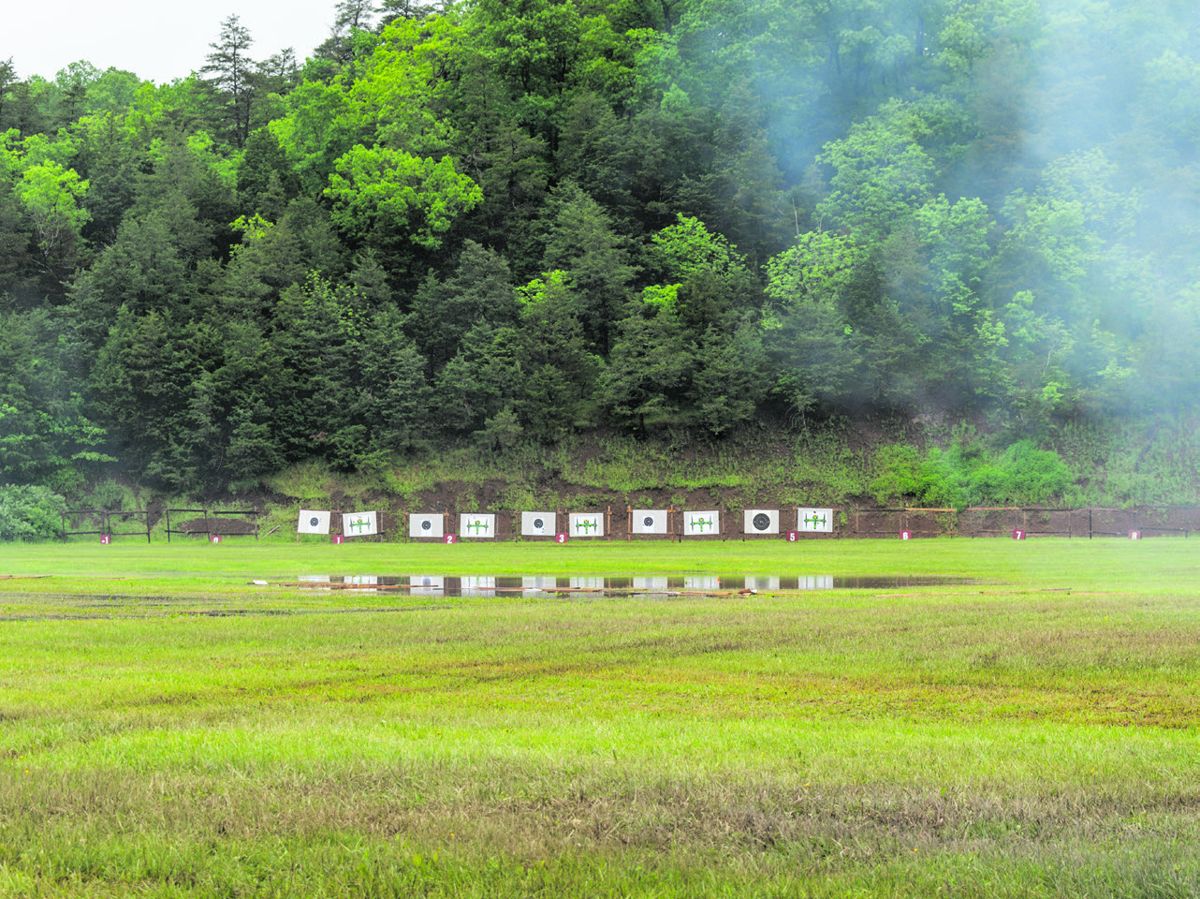
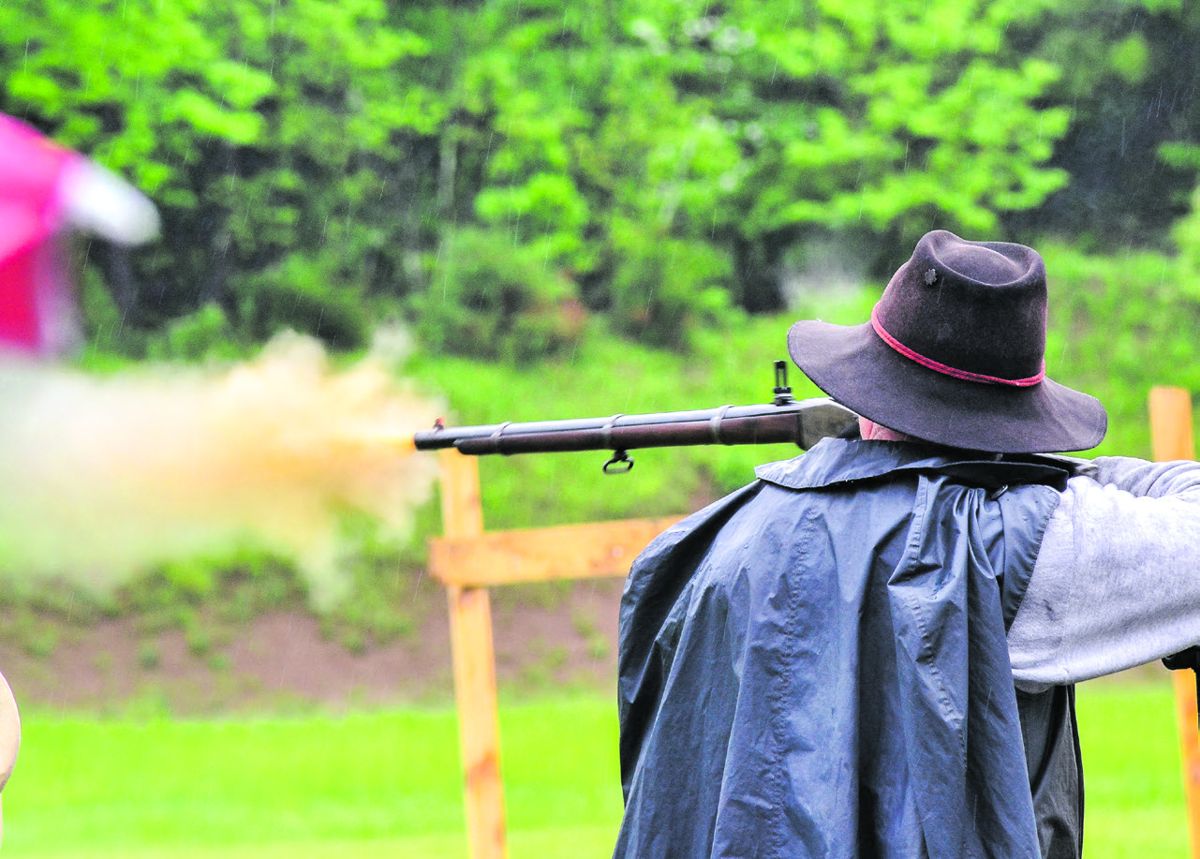
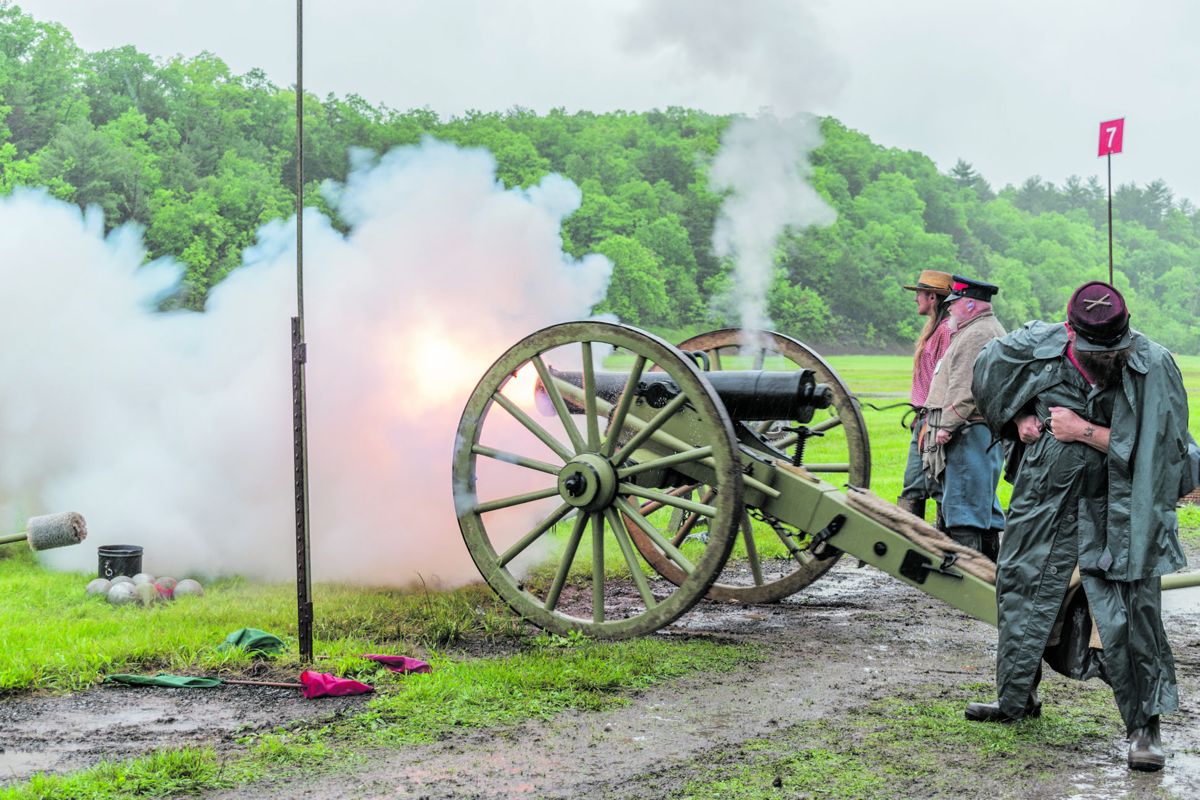
Cavalry won with a great score of 50-4V. In the Howitzer class, the Rowan Artillery won for the third consecutive National, shooting an excellent 48-2V. Not surprisingly, the 1st Maryland Cavalry won for the fifth consecutive National in the Rifled Howitzer class. The accuracy of these Civil War cannons is truly amazing and N-SSA gun crews know how to get the most out of them. The N-SSA is the country’s oldest and largest Civil War shooting sports organization with over 3,000 individuals that make up its 200 member units. Each represents a particular unit or regiment and proudly wears the uniform they wore over 150 years ago. At the 137th National, seven more members were recognized for 50 years of membership in the Association; quite an accomplishment. The 138th National Competition is scheduled for October 3-7, 2018 at Fort Shenandoah, just north of Winchester, Virginia. For more information about the N-SSA, and how to join and participate, please visit our website at www.n-ssa.org. (Ericka Hoffmann) (Ericka Hoffmann) (Ericka Hoffmann) (Terianne Carey) N-SSA National Skirmish artillery targets consist of a bullseye and a counter battery (a drawing of an opposing cannon) for each gun crew to fire upon. Here, you can see the targets reflected in the standing water on the range. (Ericka Hoffmann) The Smoothbore musket events have seen a great increase in popularity among N-SSA members. 102 teams, including the 1st Michigan Infantry pictured here, competed in this rainsoaked match of four events at 25 and 50 yards. (Tambi Dudley, Courtesy of Schuetzen Powder Energetics)
(Tambi Dudley, Courtesy of Schuetzen Powder Energetics)
One of the signature events in an N-SSA musket match is the Pigeon Board, consisting of 24 sporting clays mounted on a cardboard backer. The eight-person musket teams compete to hit all of the clay pigeons to clear the board in the least amount of time. (Ericka Hoffmann)
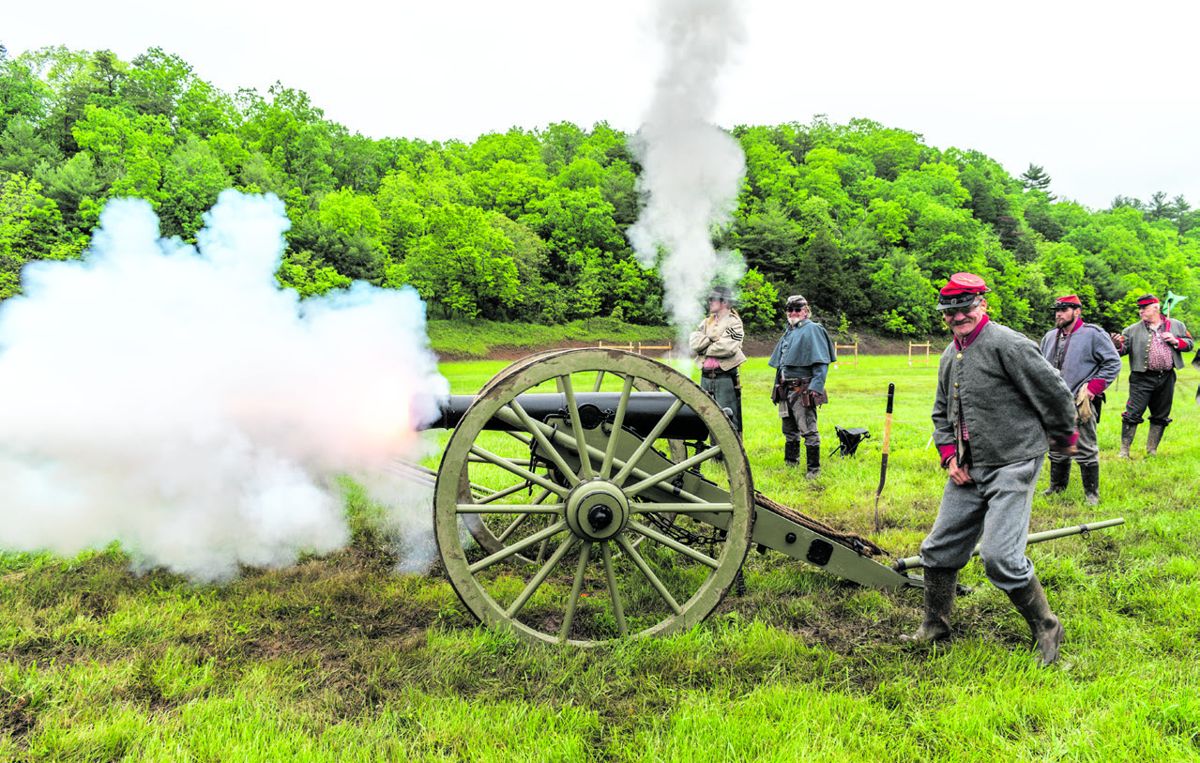
Tim Scanlan of the 1st Maryland Cavalry watches through his spotting scope as the projectile from his James Type 3 Cannon makes its way toward the target. 1st Maryland Cavalry placed 2nd in the Rifled Artillery class with this gun with a score of 50-4V.
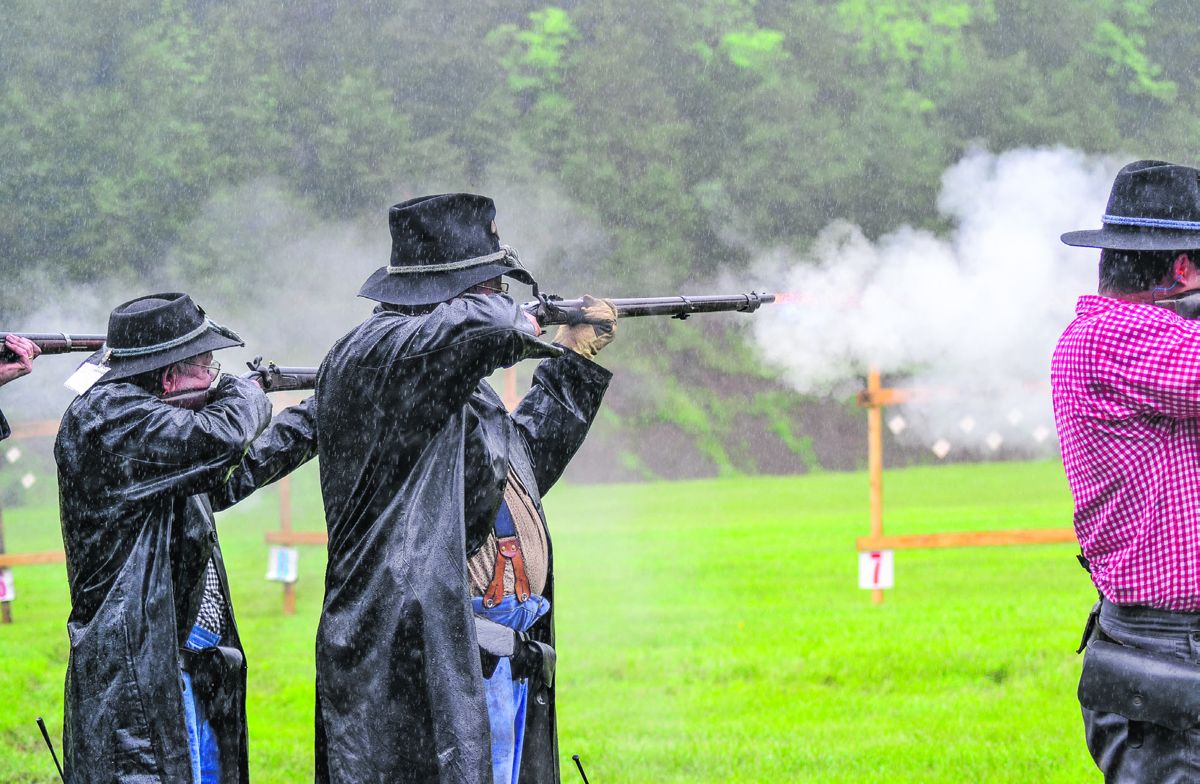
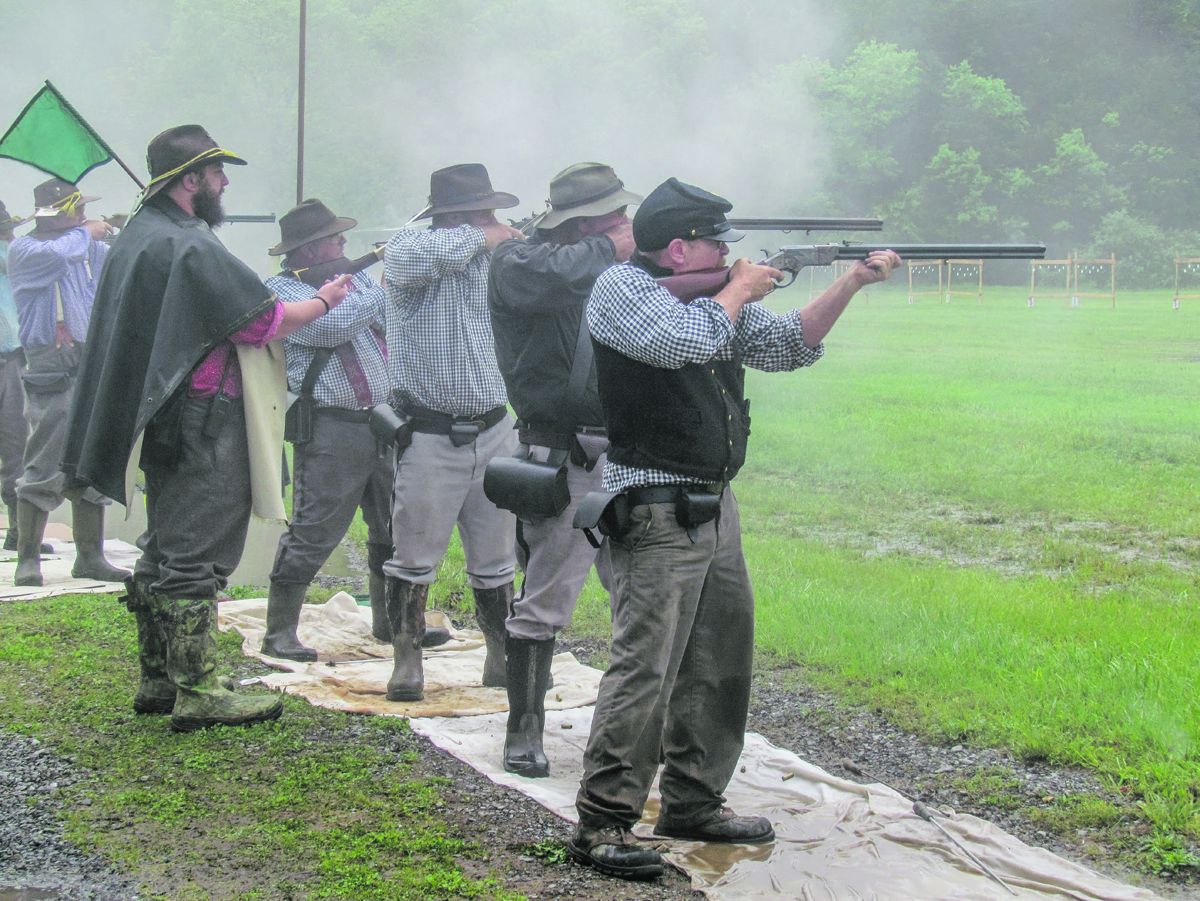
Members of the 5th Virginia Volunteer Infantry load and fire at breakable targets during the musket match. At a National Skirmish, eight-person musket teams fill 65 line positions; the largest continuous firing line in the country.
A competitor takes careful aim with his .44 caliber Rodgers & Spencer during the four event revolver match on Friday morning. (Tambi Dudley, Courtesy of Schuetzen Powder Energetics)