
The Unfinished Fight
Manners
By Craig L. Barry · Originally published September 2018 · pp. 8–9
The true aim of politeness is to make those with whom you associate as well satisfied with themselves as possible. …it does whatever it can to accommodate their feelings and wishes in social (settings). – Arthur Martine, Civil War Etiquette: Martine’s Handbook and Vulgarisms in Conversation (1864) Manners, or in a broader context “social mores,” change over time such that behaviors considered acceptable or even polite in our modern-era may be considered rude in the same setting at an earlier time period in history. This subject is not possible to cover in something of article length, and in fact dozens of etiquette books have been written about the complicated array of mid-19th century “manners.” Hence, we will concentrate here on just one specific interaction common to the Southern states in the mid-19th century, that is, greeting a civilian woman on the street, and the broader point of how to treat a lady with the respect she is entitled to expect from a Southern gentleman or C.S. soldier while in public. One must understand that every soldier was at one time a civilian first, and as such would have an understanding of how to conduct himself when out of camp or in public. Respectable women, unless employed by the military, generally avoided army encampments for obvious reasons. The following quote taken from a letter home illustrates the mindset of soldiers towards “girls”
who visit the camps. I have more fun with the girls that come into camp than a little. I don’t care a darn what I say to them. The way to greet a woman to whom you have not been introduced is the single most mishandled aspect of 1860s behavior on display at modern living history events. Why? There are hard and fast rules that constitute “good manners” for gentlemen of the time period toward any women encountered outside camp. An innocent greeting such as “hello” or “good day, ma’am” may seem polite today, but would have suggested something different in the 1860s. If a Confederate soldier outside camp or civilian gentleman saw any civilian woman of good character coming towards him, he would only speak if he had previously been formally introduced to her. If not, he would then pretend the woman was invisible, unless she speaks to you first. This is the opposite of modern interactions between the sexes where the man is expected to take the initiative if he intends to greet a woman in public to whom he has not been introduced.
To tip your hat was even worse than taking it completely off in front of a lady. The gesture was suggestive of prior acquaintance, and if not, it would have been considered very disrespectful or even rude to the woman. Seem strange? Welcome to the manners of the 1860s, a time period when most stricter social rules of behavior applied to women, but men had odd expectations at times as well What was the issue with “introductions” and what was the nature of an “acquaintance” to begin with?

All women were on a slippery slope compared to men in terms of their reputation and honor. This critical component of social standing went first and foremost in shaping behaviors of the day, and there was a definite double standard. As a result, there were defensive strategies that were to be employed by 1860s women to protect the appearances of honor when out in public, one of which was ignoring any gentleman with whom you had no prior acquaintance. “Acquaintance” meant the man
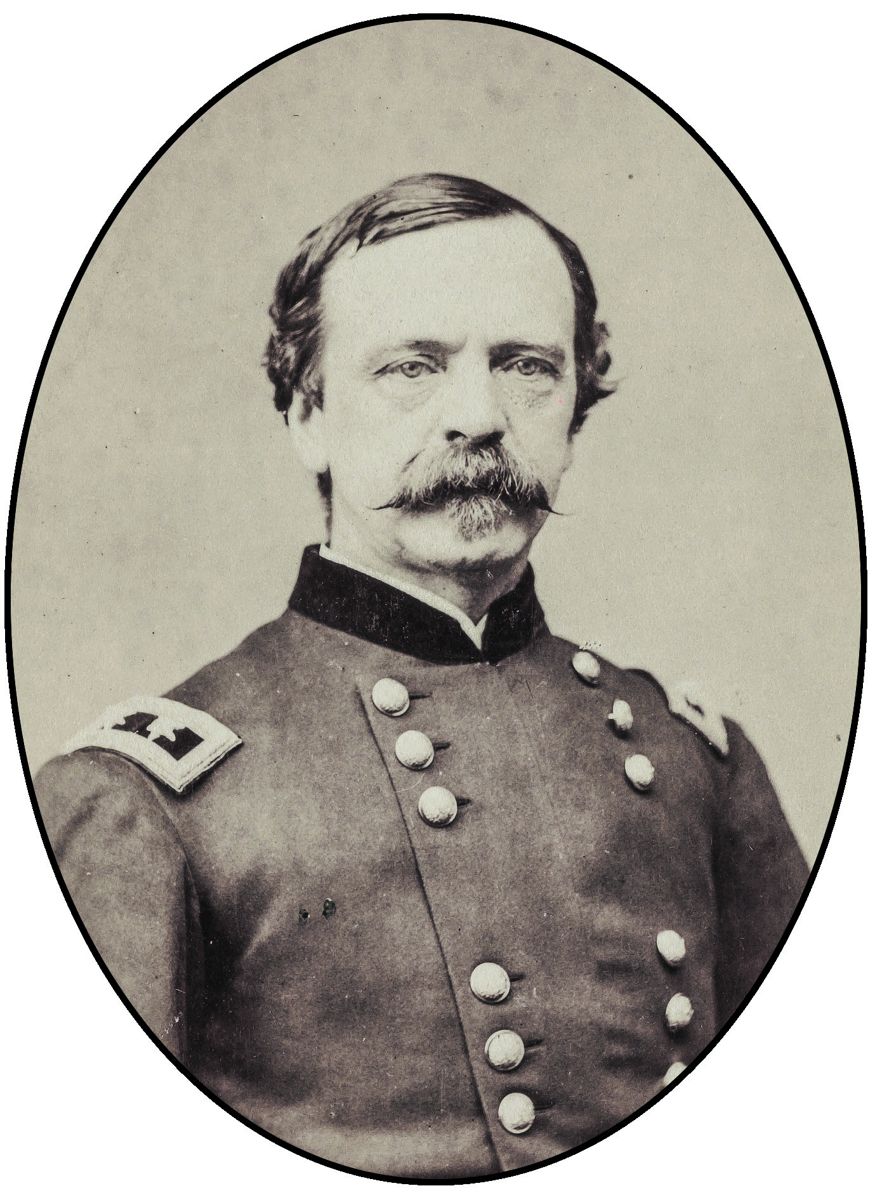
and woman had been previously introduced by a third party who knew both. To be introduced by someone meant they were vouching for your character, which also put that person’s own reputation at risk. For this reason, the formalities of introduction and acquaintance were taken very seriously. While a woman was being introduced to a new male acquaintance, would she offer her hand to be polite? It depends. On introductions taking place inside a room, a married lady generally offers her hand, but a single girl would not. In a ballroom setting, where an introduction is made to ask for a dance, not friendship, a gentleman would not initiate contact or shake hands with a lady, only bow. “It may perhaps be stated that the more public the place of introduction, the less touching takes place.” What were the reasons for this degree of formal etiquette? To a woman of the 1860s, a spotless reputation was the first priority. Someone of dubious character was shunned completely by the rest of “society.” The double standard was best exemplified by the case of that well-known rake, Congressman Dan Sickles, the self-proclaimed hero of the Peach Orchard at Gettysburg. Dan Sickles’ pre-Civil War career was full of personal scandals. He was censured by the New York State Assembly for escorting a well-known prostitute into its chambers. He also reportedly brought that same prostitute to England with him to meet Queen Victoria, leaving a pregnant wife half his age at home. Speaking of his wife Teresa, Sickles had married her against the wishes of both families, and so on. In an ironic twist with tragic consequences, his lack of fidelity came back in his face when his young wife became involved in an ill-advised affair with Philip Barton Key II, the son of the famous Francis Scott Key, who wrote “The Star Spangled Banner.” Far from forgiving her, upon learning of his wife’s indiscretion in 1859, the enraged Sickles summarily shot and killed Philip Key in the streets of Washington, D.C., allegedly right in front of the White House. As far as Philip Key, besides being the son of someone famous and beloved, he was perhaps more importantly the U.S. Attorney for the District of Columbia. Now here was a scandal, even by Washington standards. Congressman Sickles was charged with murder but subsequently acquitted after a sensational trial involving the first use in U.S. jurisprudence of temporary insanity as a legal defense for murder. His defense attorney was well chosen, none other than Edwin M. Stanton, later to become Lincoln’s Secretary of War. After this incident the notorious Dan Sickles did not even lose his congressional seat. The attitude of the general public was much more hostile toward Sickles’ after his later reconciliation with his wife than it was to the murder of Key or even Sickles’ numerous other scandals including his unorthodox legal “defense.” However, his wife Teresa was never forgiven and formally shunned by Washington society ever afterwards, the love affair apparently being the more serious of the two crimes. The only complaint about Sickles’ behavior (generally) was that he took his wife Teresa back. The point is…there was no middle ground for a woman in the 1860s. American society in the 1860s was extremely concerned with the maintenance of proper standards for both men and women, but particularly women. Hence, we can see that the “rules” of behavior were very different for Civil War-era women than for men. Men would have been well aware of this double standard unless they were terribly stupid or socially backward. In conclusion, the goal is to base any portrayal of 1860s behaviors on the existing documentation of the manners of the time period. Craig L Barry was born in Charlottesville, Va. He holds his BA and Masters degrees from the University of North Carolina (Charlotte). Craig served The Watchdog Civil War Quarterly as Associate Editor and Editor from 2003-2017. The Watchdog published books and columns on 19th-century material and donated all funds from publications to battlefield preservation. He is the author of several books including The Civil War Musket: A Handbook for Historical Accuracy (2006, 2011), The Unfinished Fight: Essays on Confederate Material Culture Vol. I and II (2012, 2013) and three books (soon to be four) in the Suppliers to the Confederacy series on English Arms & Accoutrements, Quartermaster stores and other European imports.