Inspection, ARMS!
French Percussion Muskets in the U.S. Civil War
By Tim Prince · Originally published September 2018 · pp. 24–25
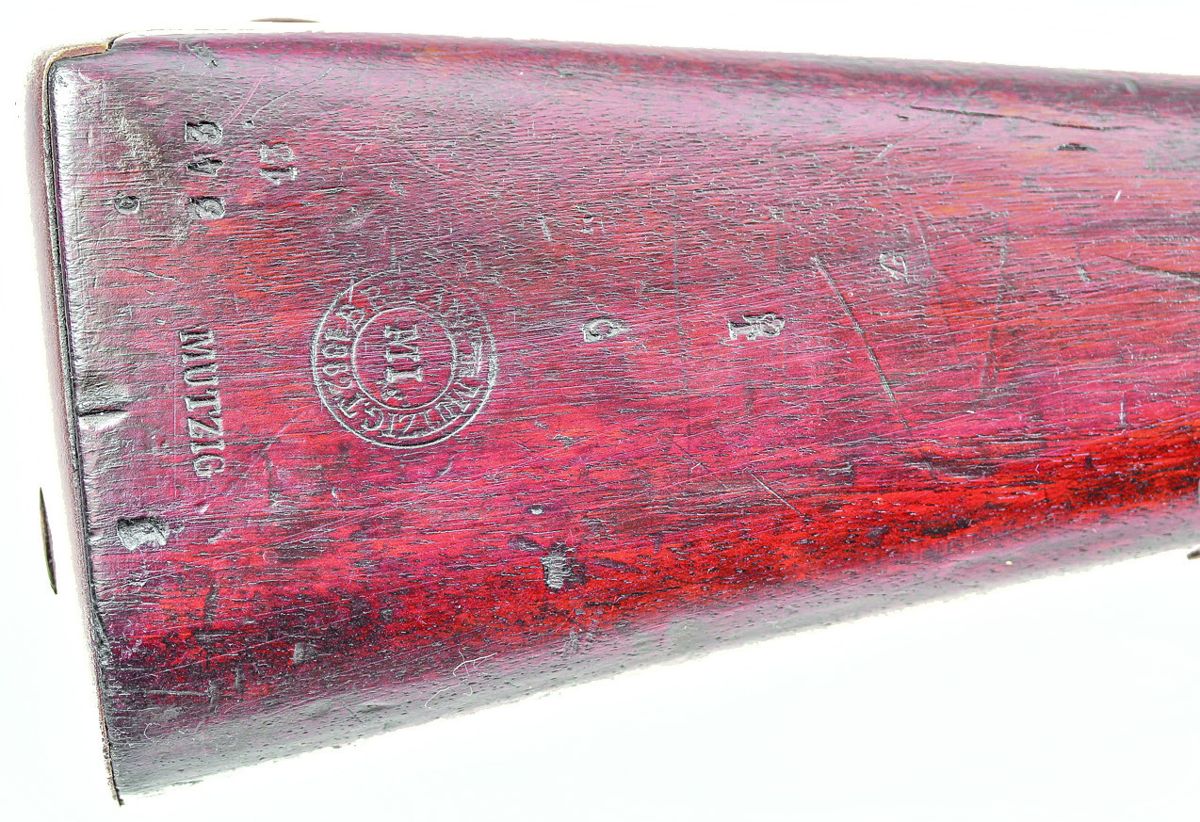
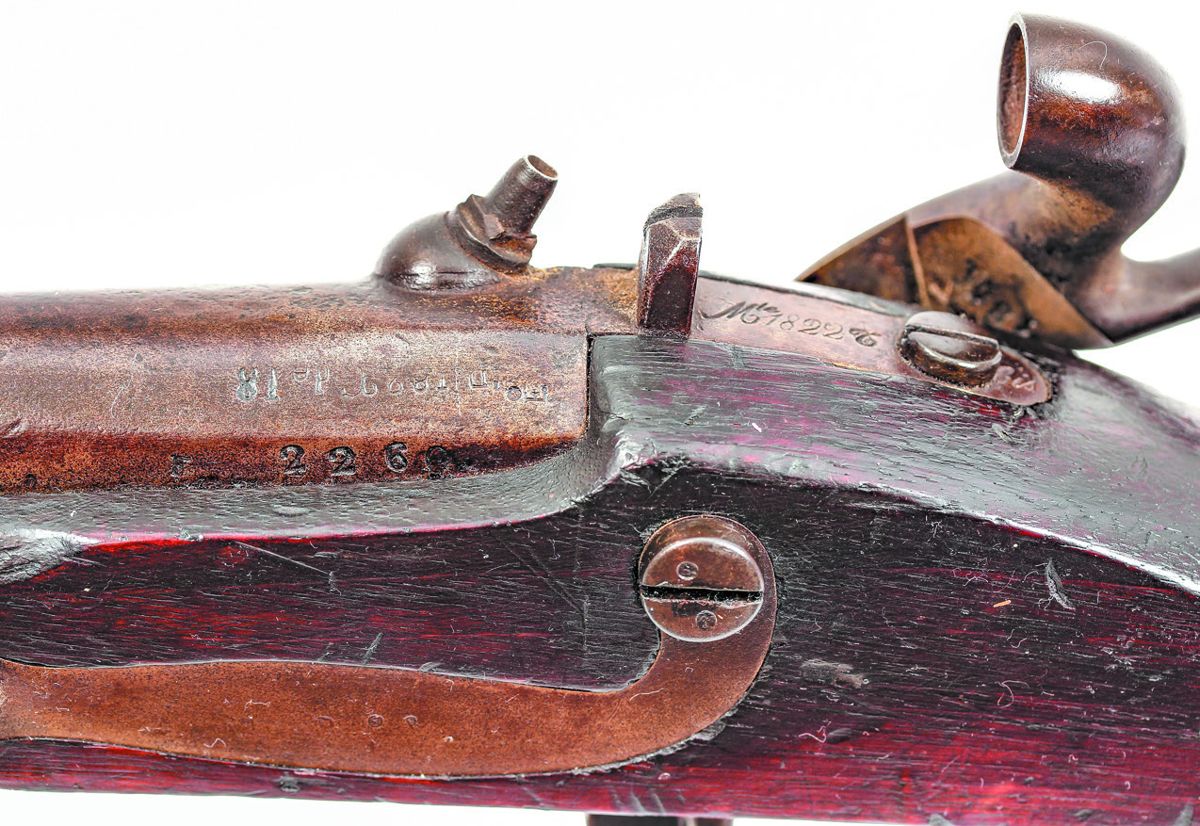
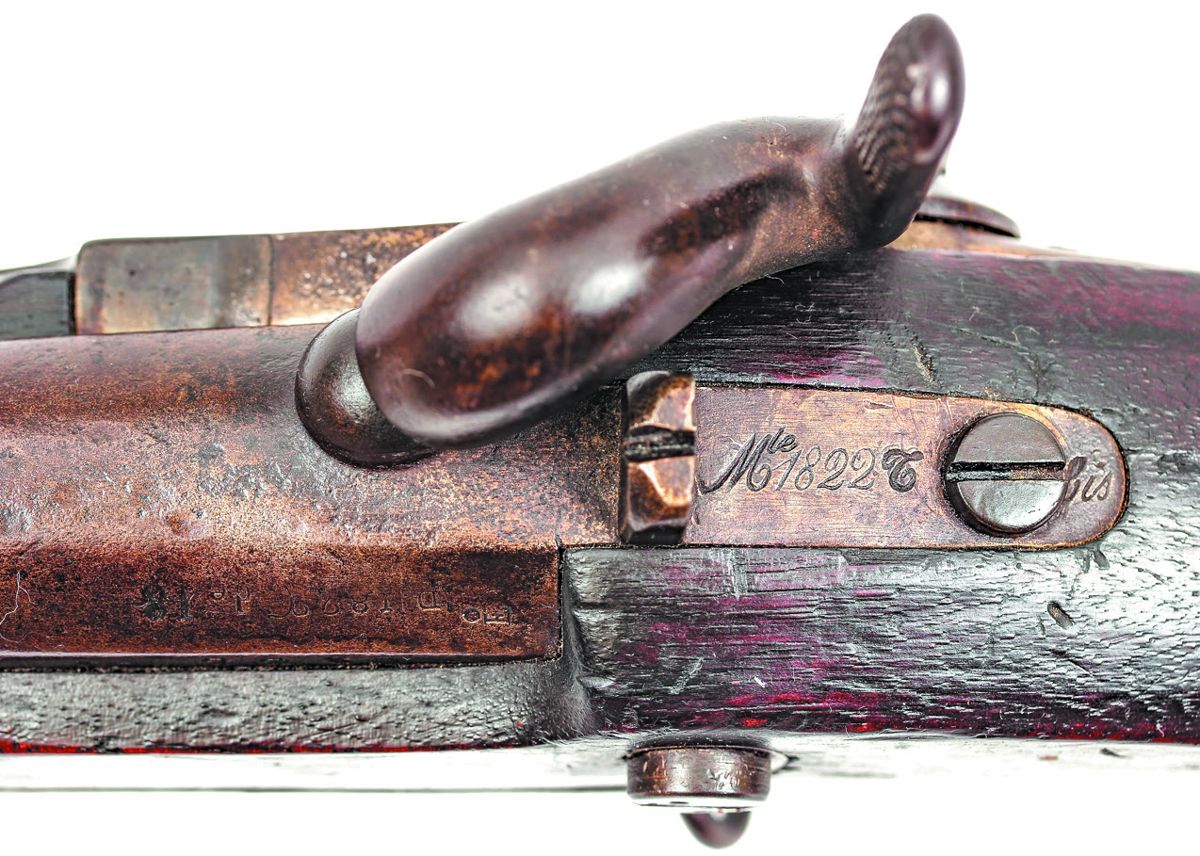
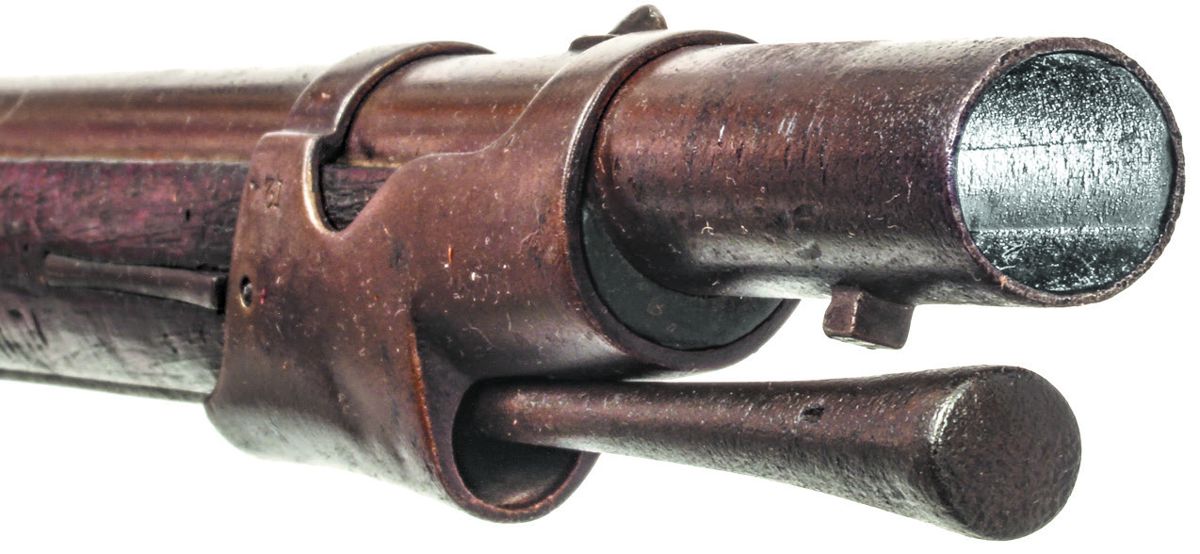
Most collectors of Civil War infantry arms are very aware of the huge numbers of U.S. Model 1816/22/28 flintlock muskets that saw combat use during the American Civil War, primarily as “cone in barrel” alterations to percussion. When the US military officially adopted the percussion ignition system in the early 1840s, the Ordnance Department almost immediately started to investigate methods to convert the hundreds of thousands of flintlock muskets and rifles stored around the country. Other countries around the world did the same thing when they adopted the percussion system as well. In 1837, the first French percussion military arms were issued for field trials, and in 1840, the percussion system was officially accepted by the French with the adoption of the Model 1840 “back action” lock percussion musket. Just as the United States would, the French quickly found themselves with thousands of now obsolete flintlock military muskets and no easy or inexpensive way to replace them with new percussion models. To that end, in 1841, the French entered into largescale altering of flintlock Model 1822 muskets to percussion. The alteration system was very similar to that used by the United States for most of their percussion alterations. While the U.S. “Belgian” (cone-in-barrel) conversion system simply “upset a lump” to form a cone seat for the percussion cone (nipple) to screw directly into the breech, the French system used a somewhat more substantial cone seat brazed to the breech. Both systems then used newly fabricated percussion hammers to replace the flintlock hammers. Both systems also removed all external flintlock battery parts and filled holes in the lock, usually by simply cutting off screws flush after the holes were plugged. Several variations of the percussion altered bolster were used by the French, with some cone seats more nearly resembling those used on the French M1840 and M1842 percussion muskets, and some being quite similar to the U.S. “cone-in-barrel” Belgian conversion system. After the French muskets were altered to percussion, their barrel tangs were marked with a “T,” for “transformed,” after the model designation, such as Mle 1822. After the French adopted rifled arms for general issue to the French military, many Mle 1822T muskets were altered again to .708 caliber and rifled with four lands and grooves. Often a rudimentary fixed rear sight was added to the breech plug tang of these rifled arms as well. These arms that had been altered a second time were usually marked “bis” after the Mle 1822T designation on the breech plug tang, essentially meaning “again,” as in “transformed again.” The general rifling of the M1822T muskets began in France in 1860, but soon proved less than satisfactory, as had been the case with similar U.S. attempts to rifle percussion altered flintlock muskets. The thin barrels walls, rendered thinner by the increase in caliber from .69 inch to .708 inch, and the subsequent rifling, often left the guns too weak to be safely used with Minié style ammunition. The French tried to fix the problem by using newly made barrels for the altered muskets, but the results were still far from stellar. With the outbreak of the American Civil War, the French saw a perfect opportunity to dispose of thousands of obsolete and now potentially hazardous arms to the American belligerents. These obsolete French muskets were exported to U.S. buyers by the thousands during the first few months of the War. The French Model 1822 was the last flintlock infantry musket to see widespread use in the French army and remained in production for about two decades, finally being officially replaced by the very short-lived Model 1840 percussion musket. As originally produced, the M1822 was a muzzleloading flintlock musket with a conventional “forward action” lock, a .69 caliber smooth bore, and a 42 ½ inch barrel for line infantry and a 40 ½ inch barrel for the Voltiguers (light infantry). All were iron mounted with three barrel bands, the upper one being double strapped. The M1822 was the pinnacle for flintlock infantry musket development in French service and so impressed the U.S. Ordnance Department the U.S. Model 1835 flintlock musket (later adopted as the Model 1840 Musket) was based upon the French M1822. The primary accessory for the Model 1822 Musket was the Model 1822 socket bayonet. Again, the U.S. Ordnance Department was so impressed with the French design that they adopted a nearly identical copy as the U.S. M1835 socket bayonet. This bayonet was an important advancement in U.S. bayonet development, as it was the first U.S. socket bayonet to incorporate a locking ring, bringing more than a century of friction-fit socket bayonet use in America to an end. The French-made muskets were typically marked on their locks with the name of one of the French government arsenals at which they had been produced: Châtellerault, Maubeuge, Mutzig, St. Etienne, or Tulle. These government manufactories usually bear designations like “Mre Rle”, “Mre MI”, or “Mre MA” prior to their locations to indicate “Manufactory Royal,” “Manufactory Imperial” or “Manufactory of Arms,” a reference to the form of government in power at the time of production: Monarchy (Royal), 1st or 2nd Empire (Imperial), or the later day Republic. They were additionally marked on the breech plug tangs with their model designation in the form of their year of adoptions: i.e. Mle 1822, along with any alterations or upgrades such as T, T bis, etc. The French muskets are usually serial numbered with at least the stocks and barrels numbered. These numbers were likely applied during the alteration process. Altered muskets were often stamped with a dated storekeeper’s cartouche on the obverse butt indicating when and where the modifications were made. Thus, it is not uncommon to find a St. Etienne made musket marked with a Mutzig alteration cartouche, or vice-versa. Belgian made guns of the same patterns will not have French arsenal markings but will often bear the marks of various Liège based gun makers such as Auguste Francotte or P.J. Malherbe. These guns will also have Liège barrel proofs, usually an oval with E/ LG/* within it, and often the “Perron” or Liège “shot tower” proof near the bolster. During the first 18 months of the War, the U.S. government obtained some 147,000 French & Belgian Muskets, caliber .69-.71 inch from a variety of sources. Due to poor record keeping, and the fact that the average ordnance officer could not differentiate between the various French patterns, let alone distinguish whether the guns were made in France or Belgium, it is impossible to know how many of these 147,000 muskets were French Mle 1822T bis muskets. It is believed, however, that more than half the guns were French Mle 1822T muskets or Belgian made copies thereof. Amazingly, the U.S. Ordnance Department classified the percussion altered and rifled French muskets as 2nd class arms, when similarly rifled U.S. M1816/22/28 muskets were generally considered unsafe for issue! The smooth bore, percussion altered French muskets were considered 3rd Class arms. The guns were typically treated as being nominally .69 caliber and often issued the same .69 ammunition used for U.S. smoothbore and rifled muskets. Although some foreign made .708 inch ammunition was imported, it appears this was primarily for use in the imported French and Belgian percussion “short rifles” and not for use in muskets. While many muskets were well worn and in less than great condition, the only major complaint about them listed by the Ordnance Department was that their recoil was “objectionable” due to their caliber. This seems a strange statement as similarly altered U.S. muskets, firing the same ammunition would have had essentially the same recoil. One small group of Belgian made M1822T bis muskets can be positively identified as being delivered by international arms dealer Herman Boker. His Sample #17 consisted of 640 Belgian made percussion altered rifled muskets with locks that were described as “front action,” indicating that they were not the later M1840, M1842, M1853 patterns. Even though the inspecting officers described the guns as “worn out,” they were still accepted. Boker was paid $7.98 each, as the guns “might be of some use.” While hardly attractive or 1st class like the English Pattern 1853 Enfield rifle musket, these French and Belgian percussion altered muskets saw a significant amount of service with early Civil War U.S. regiments until better arms became available. Even though the Confederacy concentrated on buying higher quality arms like English Enfields and Austrian Lorenz rifle muskets, they too obtained at least some of the large bore French and Belgian altered muskets and some were still in service at the end of the war, particularly in the Western and Trans-Mississippi Theaters. Tim Prince is a full-time dealer in fine & collectible military arms from the Colonial Period through WWII. He operates College Hill Arsenal, a web-based antique arms retail site. A long time collector & researcher, Tim has been a contributing author to two major book projects about Civil War era arms including The English Connection and a new book on southern retailer marked and Confederate used shotguns. Tim is also a featured Arms & Militaria appraiser on the PBS Series Antiques Roadshow.
Overall image of a French Mle 1822T bis percussion altered rifled musket.
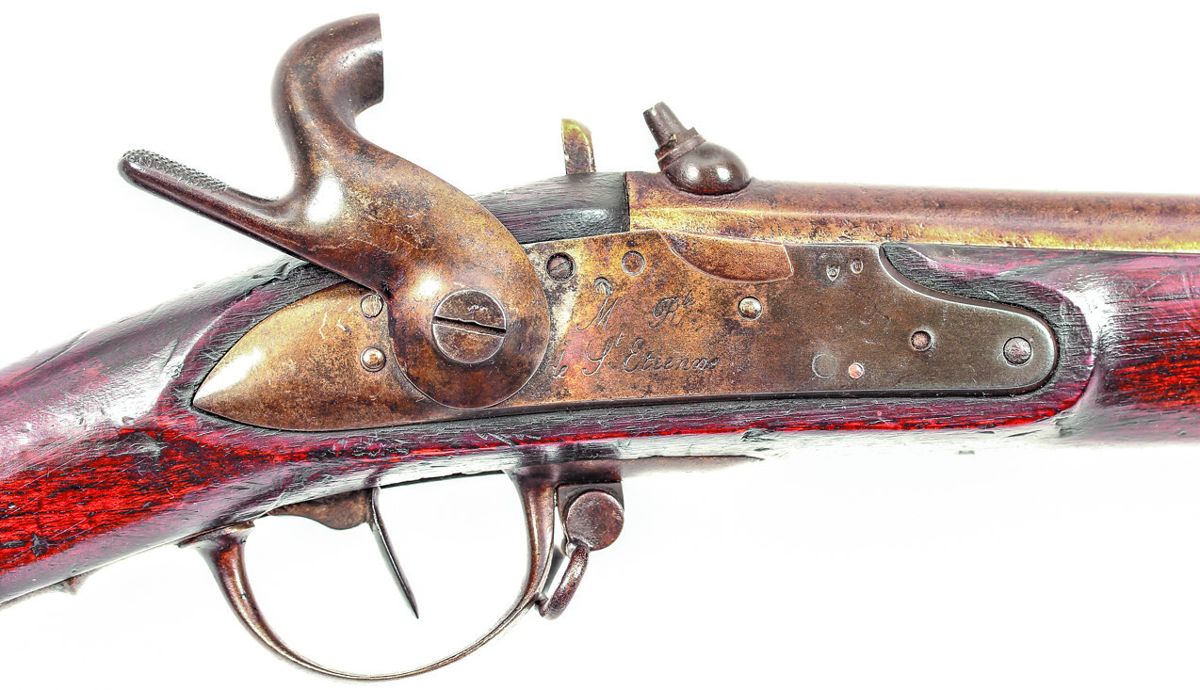
(All photos by Tim Prince)