
C. Chapman Carbine
By John Sexton · Originally published September 2018 · p. 30
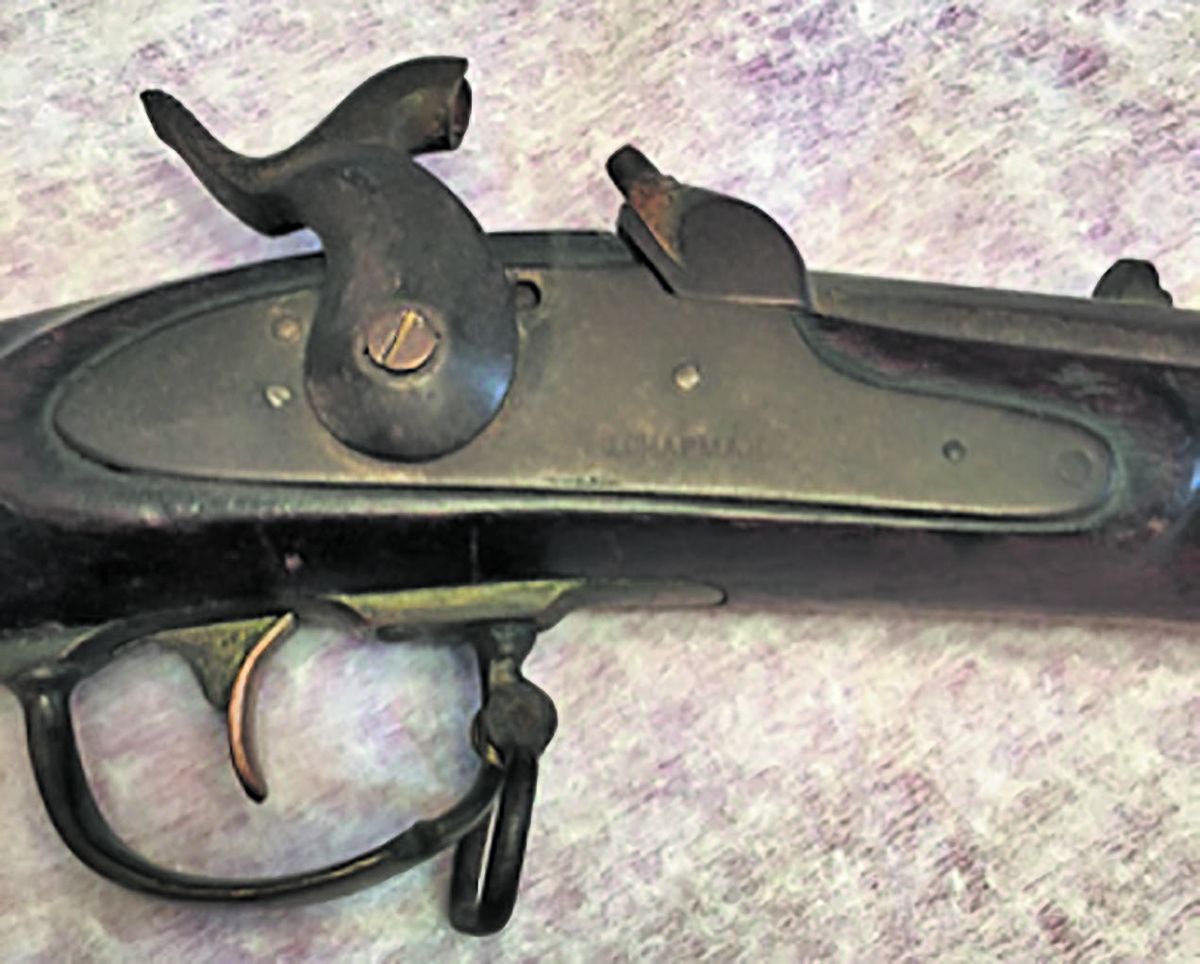
Mr. Sexton: We are in possession of, and know this is, a very rare C. Chapman Civil War era 24 inch carbine with the # 14 in several places. It is in good to very good condition. The gun has been authenticated as an authentic Chapman by a vintage weapons person here in Illinois. Now we are trying to figure out how to sell it, but don’t want to go the auction route. That is where you come in. I hope maybe you could give us some help with that. Thank you for any insight you may give us. Sandy Dear Sandy: You do have a very rare Confederate short rifle or carbine. There are only about 10 known examples of “C.CHAPMAN” long arms. The exact manufactory is unknown. Charles Chapman was superintendent of the Nashville Armory and was involved in dismantling and moving it from Nashville to Atlanta in 1862. John Murphy and Howard
Madaus document in their Confederate long arm texts that these guns are, indeed, most likely Tennessee contracted Confederate arms. Murphy and Madaus show and describe a nearly identical carbine with assembly/serial number “9” on pages 35-39 of their 2002 text Confederate Carbines and Musketoons. At the time of printing, this #9 was the only known example of a C. Chapman carbine; yours might just be the second. Other long arms made by Chapman are the 33 inch barrel rifles that are based on the M 1841 U.S. Mississippi rifle. What makes your gun special is that it has not been cleaned and is in what collector’s call “attic” or “as found” condition. Your gun is all original with the exception of the replaced brass hammer screw. Collectors love to find dark chocolate/mustard colored patinas on the high-copper brass mounts of Confederate arms which this gun exhibits. The barrel and lock also have smooth dark grey patina. The stock has a fine hand worn surface with crisp edges. Ironically the initials “JF” carved in the stock that possibly would have identified the Confederate who carried it are a feature also seen on serial number “9.” I usually recommend an auction for marketing rare Civil War arms, especially those in exemplary condition like this one, because auction results often will be higher than a dealer would pay. I am not aware of any Chapman arm being sold in recent years but do remember at least one rifle that sold for about $30,000 some 15 years ago. Though you do not wish to auction it, I would place a presale estimate at $20,00030,000 and, if the auction was well promoted and attended, this carbine could easily go sell above the high estimate. There have been several similar “as found” Confederate carbines and rifles that sold above $40,000 that I cataloged and promoted in auction; these guns were not as rare for survival, but just for condition. This is a beautiful rare survivor that the most discriminating collector would love.
.54 caliber 6-land and groove rifling as found on other Chapman rifles that was prescribed for 1861–62 State of Tennessee rifles.
John is an certified appraiser with International Society of Appraisers specializing in Civil War memorabilia. He authenticates and evaluates other rare and valuable historic items as well. His website is www.civilwardealer. com. He is coauthor of the book Confederate Bowie Knives (2012) by Jack Melton, Josh Phillips and John Sexton, that was published by Mowbray Publishing Inc. Send “Ask The Appraiser” questions and photographs to [email protected].
Overall view of serial number “14” C. CHAPMAN marked carbine with original ramrod.
Note the sharp edges of the stock, showing little use and initials “JF,” possibly of the soldier who carried this arm.