
Brandy Station the ‘Ideal Place’ for Event
By Michael Clarke · Originally published September 2018 · p. 28
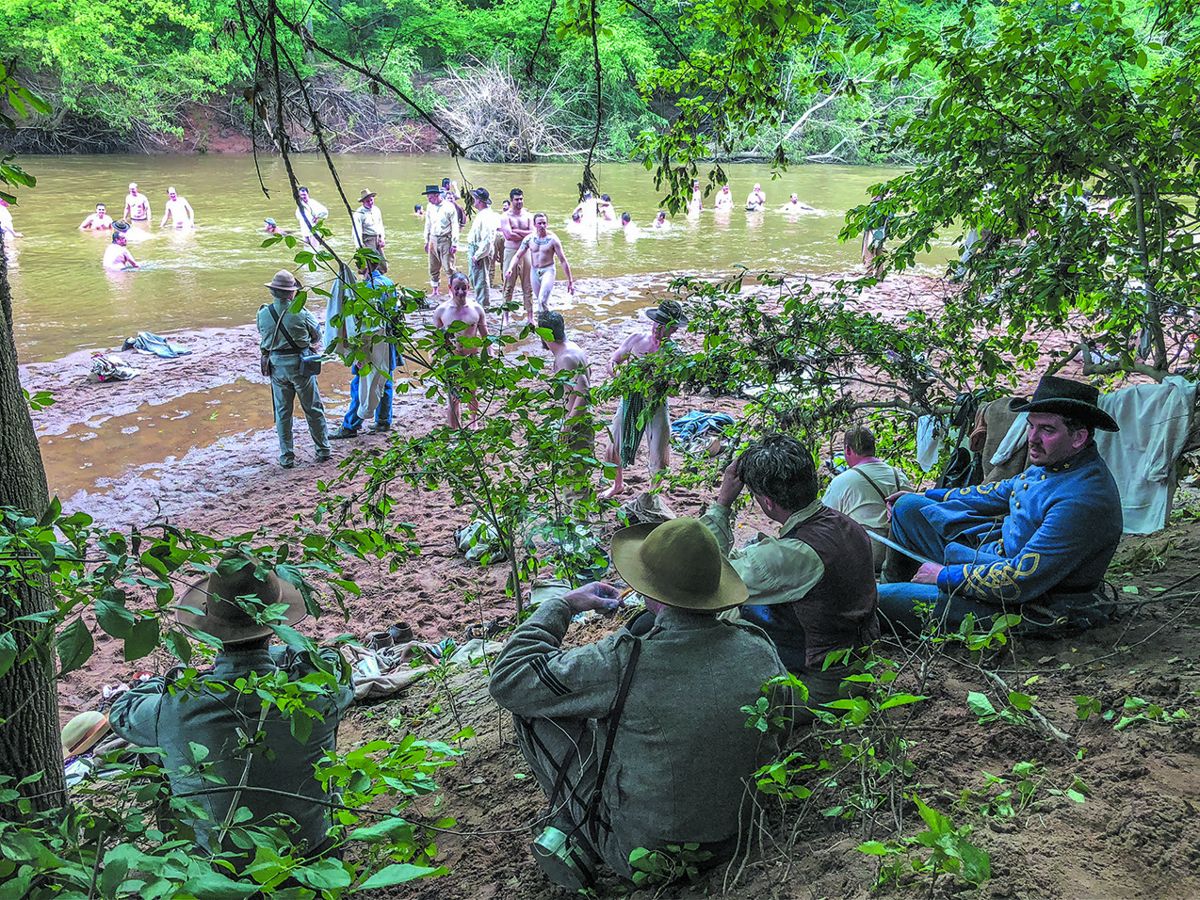
CULPEPER COUNTY, Va.— Our group of reenactors aspired to recreate the sights, sounds, and smells when the 8th Virginia Infantry prepared to march north in June 1863, opening the Gettysburg Campaign. To do that, we needed a historic setting devoid of modern intrusions. The Brandy Station Battlefield in Culpeper County provided the ideal place. The site is widely known for the savage cavalry engagement that preceded Gen. Robert E. Lee’s 1863 invasion of Maryland and Pennsylvania. You may also be familiar with the long and arduous preservation battles waged over the pristine fields, streams, and stone fences that remain today, thanks to the efforts of the American Battlefield Trust and its members. That such a large tract of undeveloped land exists in fastgrowing Culpeper County is remarkable. But I must admit that it was not until I began to scout for the ultimate livinghistory site that I became aware of the battlefield’s vast trove of woodlots, fields, streams, trails, historical waysides, and wildlife, with one of the most beautiful vistas in central Virginia. The scarcity of undeveloped land here in the heart of Civil War country is all too familiar to me as a living-history event planner. We sought to recreate the regiment’s Culpeper encampment of June 16, 1863, when “The Bloody Eighth” struck its tents to head north with the rest of Maj. Gen. George Pickett’s Division. At the Battle of Gettysburg, the 8th played a central role in Pickett’s Charge. From June 8 through June 10 this year, hundreds of Civil War reenactors, spearheaded by the Liberty Rifles, came to Culpeper from 17 states for this immersive, full-scale, living-history event. In June 1863, the 8th Virginia Infantry had 210 to 220 men on its rosters; we had the same number in the field. Our desire to recreate the 8th’s camp required plenty of open, flat land for camping and battalion drills. Additionally, we wanted to completely avoid modern anachronisms and be near where the event we sought to recreate had happened. The rare and exceptional Brandy Station battlefield landscape proved perfect. For a Civil War reenactor, to walk and savor the ground on which momentous events occurred is akin to a spiritual experience. Mimicking the actions of soldiers, to the closest degree possible, gives us great insights into primary sources, stimulates the imagination, and creates a sense of empathy and profundity. The visual and physical recreation of the smallest details of soldier life, material culture, and military protocol provide us with endless thought-provoking moments and an emotional connection to the men who lived, marched, fought, suffered, and died during the war. Our experience was augmented by Clark B. “Bud” Hall, the Virginia historian and preservationist who took our battalion on an incredible marching tour along Culpeper’s Cunningham Farm Road, down to “Private Ford” on the Hazel River. Bud’s narration infused the moments our group spent bathing and swimming in the Hazel with greater meaning. I was struck by the realization that we were enjoying the same pastimes in the same spot as countless Civil War soldiers, and that the area has remained virtually untouched in 155 years. We conceived this event two years ago as Liberty Rifles members consulted the National
American Battlefield Trust-preserved land opens time-travel window on Gettysburg Campaign for 220 reenactors on battle’s 155th anniversary
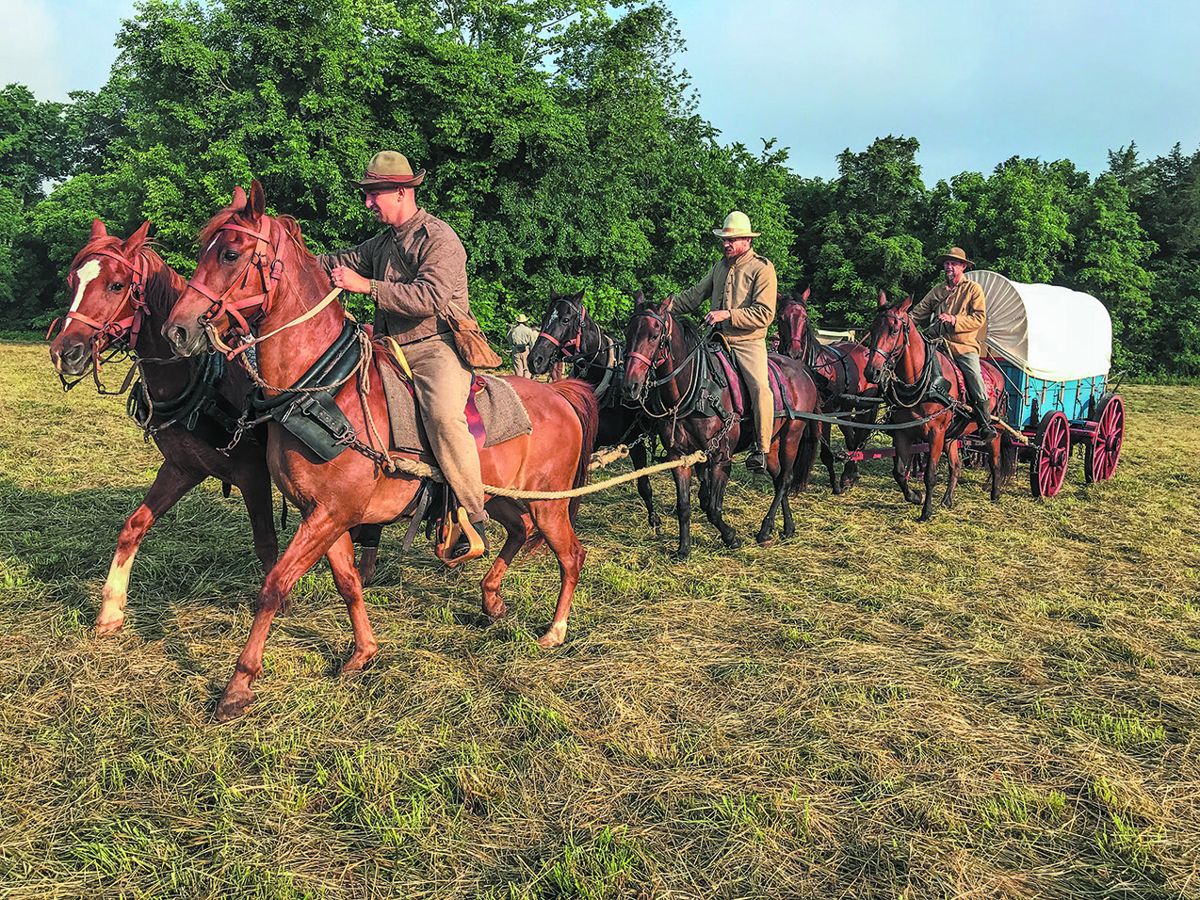
Archives, National Civil War Museum, and other sources about the Confederate government’s production and issue of fly tents to Lee’s Army of Northern Virginia. This published research, for the first time, thoroughly detailed and documented these tents and their large-scale use by Lee’s army. Pickett’s Division was well supplied with fly tents in May 1863, and our event sought to bring to life their use. Members of the Liberty Rifles and many like-minded groups across the country diligently applied needle to cloth and produced the requisite number of tents for the event. We made 20 fly tents, each with some 12,000 hand stitches. Researching, patterning, and sewing the flies allowed us to recreate the aesthetic of what an ANV regiment static camp looked like during the early summer of 1863. Each fly tent sheltered 10 to 12 privates and noncommissioned officers. Like the original troops of the 8th, we spent our evenings under the flies. Close friends spoke of their wives and children at home, their aspirations and dreams. The smell of bacon grease and pipe smoke hung in the air, and games of euchre were aided and accented by libations, laughter, and music that circulated through the camp. At the event’s culmination on Sunday, the recreated 8th Virginia Infantry lined up to learn what the actual 8th Virginia experienced over the next three weeks. Officers counted off 86 percent of the regiment’s members and asked these men to take a knee to reflect the casualties that the 8th sustained in Pickett’s Charge. The instant connection between then and now became evident. Of
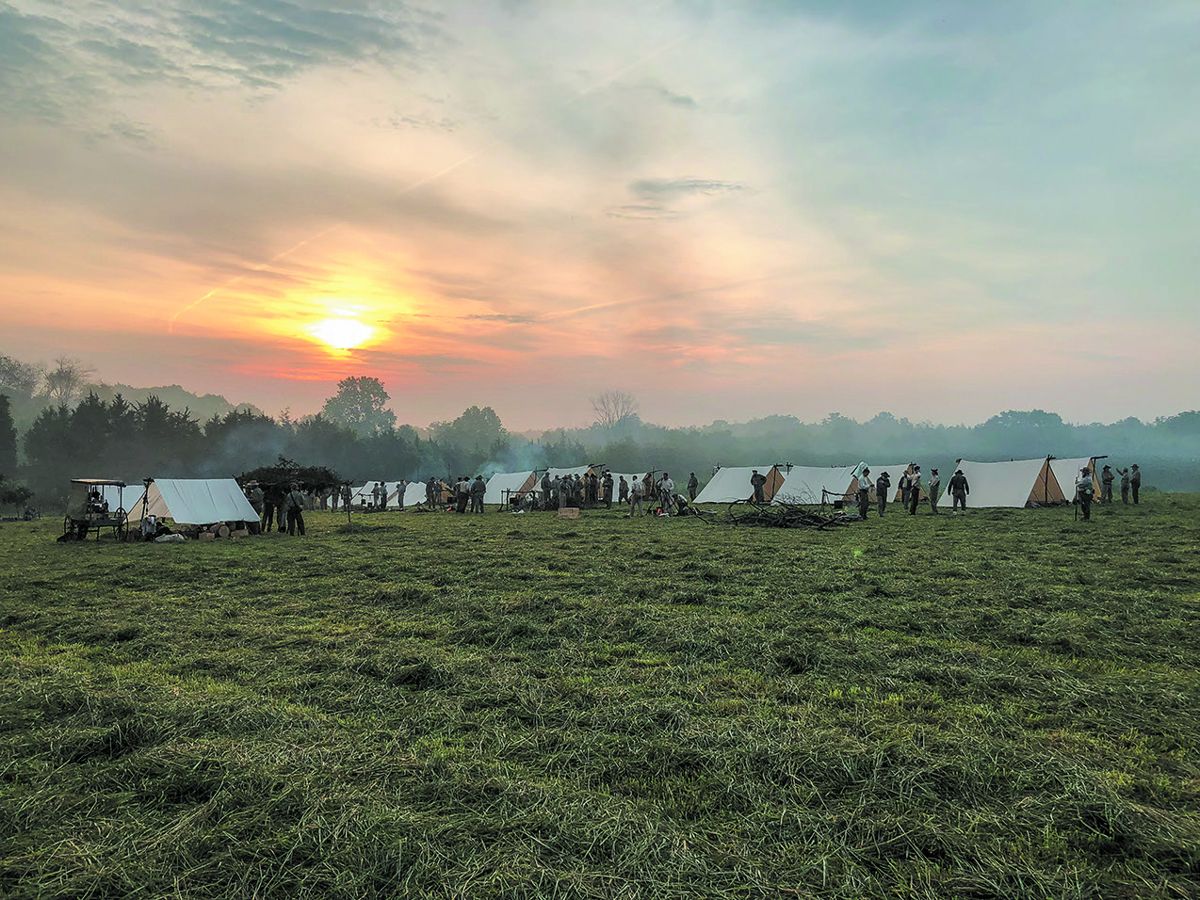
10 to 12 men gathered under each fly tent, perhaps only two or three survived Gettysburg’s bloodbath. That was the watershed moment for our event at the Brandy Station Battlefield, linking its preserved ground and historical events, our research, and material culture to the human experience. At midday Saturday, I was sitting under a cedar arbor with the regiment’s other field officers, chatting with Bud Hall and looking out over the regiment in camp. Company cooks were making biscuits while other men were cutting wood and hanging up their laundry. Sergeants were hustling back and forth with various tasks. Officers were doing regimental paperwork; and I contentedly thought to myself, “This is what the Civil War looked like!” After a few minutes of enjoying this scene with my friends, the small talk faded, and we just took in the moment. It was then that Bud sat up straight, looked at us, and offered one of the most profound statements I have ever heard regarding land preservation, living history, Civil War memory, and more. “Your being here means we won,” he told us. Think about that! Instead of having been destroyed by a Formula One racetrack, an office park, or a strip mall, the Brandy Station battlefield stands today as a pristine piece of Virginia countryside, a living memorial to the sacrifices of the men who fought and died on this ground. Thanks to hard-fought preservation efforts, in 2018 Brandy Station is a protected cultural and natural treasure in the heart of Central Virginia. Michael Clarke of Frederick, Md., is president of the Liberty Rifles, a Civil War living history group based in the Mid-Atlantic. See www.libertyrifles.org.