
Book Reviews
Book Reviews — September 2018
Originally published September 2018 · pp. 36–42
Civil War News book reviews provide our readers with timely analysis of the latest and most significant Civil War research and scholarship. Contact Stephen Davis, Civil War News Book Review Editor. Email: [email protected].
When compared to the mountain of books on Civil War campaigns, battles and biographies, the number of books on Civil War supply and logistics simply pales. Yet, without supplies and the logistical systems to move them, battles and campaigns simply do not matter. Sun Tzu wrote about logistics and supplies over 2,000 years ago and, as armies got bigger and technology got more expansive, supplies and logistics became more important and more complicated. No longer could a successful supply line be run by mediocre officers; it took great professionals to handle this properly. But what are logistics? As Hess describes, citing the Oxford Dictionary, “the activity of moving equipment, supplies and people for military operations.” The prolific Earl Hess has turned his sights on Civil War logistics in his latest book. This work focuses entirely on several layers of logistical operations during the war: rivers, railroads, coastal shipping, wagons, pack trains, and foot power. This much-needed examination serves both the novice trying to get a grip on the topic, as well as the more veteran student of the war. Hess begins with the logistical heritage of armies going from Ancient Greece and Rome before moving into the musket era and the armies of France’s Louis XIV and Napoleon. He looks at the American Revolution and European wars like the Crimean War, with the first use of railroads. The War of 1812 and the Mexican War were logistical laboratories for the U.S. Army and the lessons learned from both helped the nascent armies of 1861 as they formed for war. Hess laces each chapter with excellent examples of the good and bad for each side of the Civil War. He successfully argues that the Union capabilities of sealift were unmatched by the Confederates, thanks to Union Navy control of the seas. The Confederate Navy’s primary task was defending blockade runner harbors so that vital supplies could get into the Confederacy. This force multiplier gave the Federals a huge advantage. Railroads were of vital importance during the Civil War and again, the Northern system, despite its six different gauges (versus four for the South) was a more complete system. The vast majority of rail mileage and locomotives being manufactured in the North were also forces that helped bury the Confederacy. As the war went on with losses of iron furnaces and the Confederate Navy taking rail iron for their ironclads, the Southern railroad system collapsed. Whereas the Union government virtually nationalized its railroad system and created the U.S. Military Railroad, the Confederacy made similar tepid moves, but they, too, failed. The North had transportation giants like Herman Haupt, Lewis B. Parsons, and Daniel McCallum, whereas the Confederacy had nobody close to them in ability. Hess’ examination of the massive U.S. river system makes very interesting reading. The Western rivers, bisecting the Confederate line of defense, harmed the Confederacy and aided the Union. Union industry built wooden and ironclad gunboats by the dozens to wrest control of these rivers in conjunction with Union army offensives. By stark contrast, the Confederates could only build forts and lose some 70,000 troops to capture in 1862-1863. They needed a river fleet of ironclads, but did not have the capacity to build them. Hess then shows how important wagons were to the armies of both sides. Again the big difference came in Union wagon-making versus Confederate. This chapter is supplemented with one on pack animals and the herding of beef on the hoof by each army. As much detail as Hess packs into each chapter, it is his conclusion that contains some of the most amazing facts and figures. Upon completion, one will wonder how the Confederacy ever hoped to win its independence when it was out-grown, out-manufactured, out-railroaded, out-steamboated, and out-moved to the armies in the field. They were also outleadered, lacking a logistics and supply management genius like Montgomery Meigs on the Northern helm. While the Confederates had their share of very good supply people, like Josiah Gorgas, others were incompetent or too little, too late to the fight. Hess has done Civil War students and even military professionals a great service with this well researched and written tome. While it might seem that he is more Union-centric, that was not his objective. Hess decries the lack of Confederate documentation, compared to the vast trove left by the
An Army Succeed or Failed? Think Logistics Civil War Logistics: A Study of Military Transportation. By Earl J. Hess. Notes, index, 341 pp., 2017. Louisiana State University Press, www.lsupress. org. $45.95 cloth. Reviewed by Greg Biggs
Union logisticians. However, two Confederate sources were not consulted, one being the Confederate Staff Officers File at the National Archives (Microcopy M-331). This large file, now online, contains thousands of documents from quartermasters and other supply officers and many of them concern transportation. The Confederate railroad company files in the Citizens and Business File (Microcopy M-346), also not consulted, contains a wealth of detail. Much of this and more can now be found online at the authoritative www.csa-railroads. com. The only Union source not used was Daniel McCallum’s 1866 final report on the Union railroad system, which is rich in detail. These omissions do not detract from Civil War Logistics, which this reviewer considers one of the most important Civil War books of the last five years. Want to know why this or that army could or could not do something during the war? Read this book; perhaps it had to do with logistics. Greg Biggs, of Clarksville, Tenn., is an expert on Civil War flags and also speaks widely on logistics in the Western theater.
The more historians dig, the more they find. Thanks to Bell I. Wiley, common soldiers and their writings are now as respected as the Original Records, if not more. Author Christopher E. Loperfido, a graduate not only of Oswego State University, but of the National Park Service Gettysburg (2007-8), has given readers a new addition to our growing collection of primary sources. Dr. James D. Benton wrote letters to his wife and family during the Civil War as he served in the Army of the Potomac’s 111th and 98th New York Infantry from 1862 until the end of the war. Loperfido discovered this collection of letters in 2008 as he perused the military folders in the Old Brutus Historical Society of Weedsport, N.Y. The large collection of transcribed communications was an exciting find, as there are few chronological accounts of army life from the perspective of a Civil War surgeon. In addition to the letters, Loperfido includes four pages of information concerning how Civil War armies were organized. This is an excellent idea for the reader. Whether or not one is well versed in this subject, it is a quick go-to when things get confusing. Consider it a way to illuminate the proverbial “fog of war” when trying to read history when the dog wants a walk or the baby needs changing … Also included is a series of five appendices. These inclusions are one of the hallmarks publisher Savas Beatie uses in many of its books. Although the authors of these are not listed in the Table of Contents, they are listed at the end of each piece. One appendix in particular is about “lint,” a substance commonly used to pack wounds at the time. By the time the reader finishes Dr. Dennis Rasbach’s pages, he or she will know more than ever realized about this common-butvital piece of Civil War medical history. Great stuff! Death, Disease, and Life at War was previously published in 2011 as A Surgeon’s Tale: The Civil War Letters of Surgeon James D. Benton, 111th and 98th New York Infantry Regiments, 1862–1865. This version of the collection is “dramatically different than the original,” according to publisher Ted Savas. The footnotes throughout the text may be one way in which this version is a better read than the previous one. They are not simply notes, but detailed explanations, biographical data, and further information about points mentioned in the text. Another addition to the book is its continuing series of short paragraphs linking the letters together, placing them in relation to battles, marches, and other events that help the reader contextualize what is happening when and where the letter originated. Most of the letters pertain to practicing medicine in the Union Army in the 1860s, but there are several “themes” that are consistent in all Civil War letters, Union or Confederate, officer or enlisted: food, weather, and the lateness of pay. Dr. Benton is impacted by these as well, and his reaction is no different than any other soldier. He is a doctor, however, and he writes of building viable hospitals around the Washington area, and about the practice of delicate surgery when under bombardment. Sometimes the “bombardment” is political rather than enemy shellfire. Supplies are difficult to get, military protocol often breaks down, and the constant changing of command and structure within the Army of the Potomac—all contribute to the difficulty of the job. The more collections of letters are found in attics, libraries in small cities, and in personal collections, the richer we will all be. When there is complaint voiced that the American Civil War has nothing left for a historian to read, analyze, or learn from, along comes a collection like Death, Disease, and Life at War. Christopher Loperfido’s work with this collection of letters is one of the most complete this reviewer has ever read, due to the care taken with contextualization and explanation. The excellent Appendices only raise the value of this slim volume. It reads easily and well, and belongs on anyone’s medical/Civil War bookshelf. Meg Groeling received her Master’s degree in Military History, with a Civil War emphasis, in 2016, from American Public University. Savas Beatie published her first book, The Aftermath of Battle: The Burial of the Civil War Dead, in the fall of 2015, and she has written First Fallen: the Life of Colonel Elmer Ellsworth, which Southern Illinois Press has contracted for publication sometime within the next two years. She is a regular contributor to the blog Emerging Civil War.
Newly Discovered Letters of a Civil War Surgeon Death, Disease, and Life at War: The Civil War Letters of Surgeon James D. Benton, 111th and 98th New York Infantry Regiments, 1862–1865. By Christopher E. Loperfido. 26 images, appendices (“Dr. Jonathan Letterman: Architect of Battlefield Triage,” “The U. S. Sanitary Commission During the Civil War,” “The Development of the Ambulance Corps,” “Amputations in the Civil War,” “Civil War Dressings—Lint, Sources”) index, 170 pp., 2017. Savas Beatie, www.savasbeatie. com. $16.95 softcover. Reviewed by Meg Groeling
Two Captains from Carolina Moses Grandy, John Newland Maffitt, and the Coming of the Civil War. By Bland Simpson. 208 pp., Appendices, 26 halftones, bibliography, index, 208 pp., 2018. University of North Carolina Press, www. uncpress.org. $20 paperback. Reviewed by Stephanie Hagiwara
If one sought to intertwine the lives of two men who have never met, Moses Grandy and John Newland Maffitt would seem an unlikely choice. On the surface, both men hailed from North Carolina and had successful maritime careers. Grandy was a slave who gained his freedom after thrice purchasing it. Maffitt was an Irish-American Confederate naval officer known as the “Prince of the privateers.” Both men would experience what I would describe as life-changing betrayals and would see the darker side of slavery. The book spans from 1790 to 1886, the combined lifespan of the two men. Grandy, born in 1790, escapes his probable fate as an unskilled field hand by the construction of the aptly named Dismal Swamp Canal. On his own initiative, Grandy took advantage of being hired out to pole flat boats, gaining the knowledge to become a captain and receive a share of his rental fee. Born in 1819, Maffitt is best remembered as a blockade runner and commerce raider during the War. Due to his fourteen years as part of the United States Coast Survey, Maffitt’s Channel, in Charleston Harbor, S.C., is named after him. This knowledge gave Maffitt an edge blockade running. Maffitt had served 29 years as a well-liked and respected U.S. Navy officer. He captured not one, but three slavers. He had threatened to turn his ship’s guns on Mobile, Ala. before surrendering it to the Confederacy in January 1861. But Maffitt, influenced by personal and professional betrayals, made the unlikely decision to join the Confederate Navy. At 208 pages, I consider this an abridged biography of both men. The author keeps on point while adding enough minutiae that satisfied my detail-loving heart. Grandy goes from warming his cold feet in mud, retaining the heat from sleeping hogs, to earning money to purchase his family by sailing to exotic lands and surviving a shipwreck. Maffitt goes from dancing with the Queen of Greece to having his first wife leave him for another man. Grandy attends both the founding meeting of the New England Anti-Slavery Society in Boston, Mass., and the 1843 General Anti-Slavery Convention in London, England. I have mixed thoughts about this book. Both men led interesting lives, which is illuminated by this account. I feel I got to know them and why they made their choices. On that level I was content. On the other hand, this was not a detailed biography of either man and lacked the satisfaction I get with more comprehensive works. The men’s memoirs along with other accounts are used as sources. The author writes in a lyrical style that I initially found distracting. A chronology is included at the back of the book. I would place this book on my casual Civil War shelf, but not in the required reading section. Stephanie Hagiwara, of Port Hueneme, Calif., writes the “Through The Lens” column in CWN. She is a trivia hound with a list of over 10,000 Civil War daterelated items.
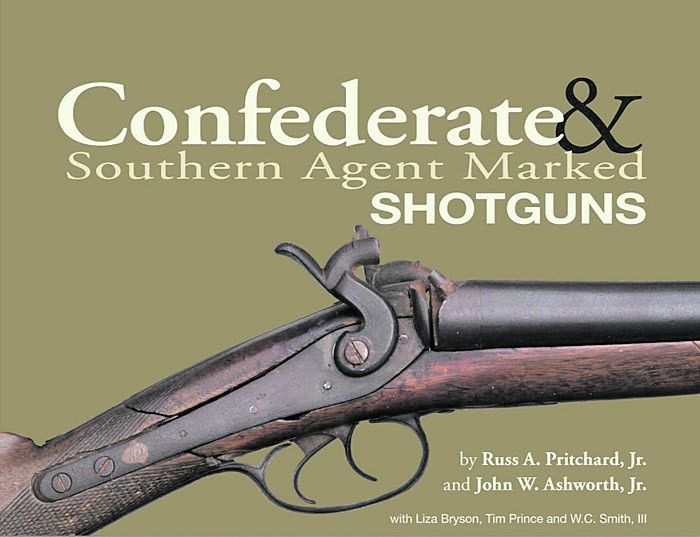
The Definitive Work on Confederate Shotguns Confederate & Southern Agent Marked Shotguns. By Russ Pritchard Jr. and John W. Ashworth Jr. With Liza Bryson, Tim Prince and W.C. Smith III. Color photographs, bibliography, notes, index, 383 pp., 2017. Selfpublished by Russ A. Pritchard Jr. www.confederateshotguns. com. $100 hardbound. Reviewed by Shannon Pritchard
A noted Brigade in Lee’s Army General Lee’s Immortals: The Battles and Campaigns of the Branch-Lane Brigade in the Army of Northern Virginia, 1861–1865. By Michael C. Hardy. Maps, photos, notes, bibliography, index, 396 pp., 2018. Savas Beatie, www.savasbeatie,com. $34.95 hardcover. Reviewed by Jeffry D. Wert
Most Civil War soldiers identified primarily with their regiment or battery. With few exceptions, histories of campaigns and battles, however, generally focus on brigades and divisions. In turn, these larger units earned reputations then and now for their combat prowess. In the storied Army of Northern Virginia, the Texas Brigade arguably could be regarded as Robert E. Lee’s most stalwart fighters. There were undoubtedly other outstanding brigades comprised of officers and men from Alabama, Georgia, South Carolina, Mississippi, Louisiana, Virginia, and North Carolina. Most of them received their identity from their brigade commanders. A noted unit in the army’s famed Light Division was the Branch-Lane brigade. Five North Carolina infantry regiments— 7th, 18th, 28th, 33rd, and 37th—filled the brigade’s ranks. A lawyer, railroad president, and antebellum Congressman, Lawrence O’Bryan Branch was appointed the brigade’s first commander. Like the volunteers in his command, Branch had to learn soldiering. Confederate authorities transferred the brigade from its native state to Virginia in
May 1862. From then until Appomattox in April 1865, the North Carolinians served in the Army of Northern Virginia. During those nearly three years the brigade belonged in the Light Division. The brigade fought in all the army’s major campaigns from the Seven Days through Petersburg. The North Carolinians suffered grievous casualties at Glendale, Second Manassas, Fredericksburg, Chancellorsville, Gettysburg, Wilderness, and in the actions around Petersburg. Branch fell at Antietam. A graduate of V.M.I., James H. Lane succeeded Branch, leading the North Carolinians until war’s end. The Branch-Lane brigade fashioned a solid combat record on some of the conflict’s bloodiest fields. To be frank, however, other brigades rightfully earned finer reputations as fighters than these North Carolinians. It was the 18th North Carolina, for instance, that fired a volley into the darkness near Chancellorsville, Virginia, on May 2, 1863, wounding Stonewall Jackson. Fairly or not, the action stained the brigade’s reputation. These North Carolinians do, however, merit a unit history, and author Michael C. Hardy has written a commendable one. He chronicles their beginnings as zealous recruits to the few surviving at Appomattox. Hardy’s work is based on admirable research in manuscript collections, newspapers and published sources. Notes at the bottom of pages are welcome and helpful. As any unit history should, Hardy’s account details the brigade’s roles in the battles and assesses its performances. One of the book’s strengths is the chapters on medical care, camp life, and the plight of prisoners. Hardy provides two brief chapters on the brigade in memory and in history. Minor factual errors intrude upon the narrative, but this is a balanced, well-researched, and welcome unit history. It is worthy of the men whose story it recounts. Jeffry D. Wert is the author of a forthcoming book, Civil War Barons, to be released in the fall of 2018.
Having long been an admirer of Confederate used shotguns, I was very pleased when the long awaited Confederate & Southern Agent Marked Shotguns rolled off the presses at an impressive 383 glossy pages. When I sat down to read this, I did not expect to read something egregiously wrong by the time I got to page five. The authors chronicle the shotgun’s first usage during the War; the account of Southern martyr James Jackson being murdered for defending his own property when Colonel Elmer Ellsworth attempted to steal his flag. The authors had the unmitigated gall to call the killing of the Ellsworth a murder committed by Jackson! This certainly put me in the wrong frame of mind. However, as I continued reading, I enthusiastically forgave them for this honest mistake. After detailing each Southern state’s efforts to round up all the shotguns that could be bought, begged or borrowed, and even the efforts made to import them from abroad, the authors launch into the guns themselves. Shotguns are usually considered a cavalry arm, but infantry shotguns take the spotlight first. Newspaper accounts document widespread effort to turn shotguns into infantry arms by adding bayonets and slings. The authors then introduce numerous shotguns with Confederate bayonet mounts added for infantry use, along with high-quality photographs and excellent descriptions. Many of the shotguns have their own specific war records ranging from fine plaques, carved names, to importer names. The same treatment is given to cavalry shotguns, with many of the most beautiful and historic Confederate cavalry used shotguns in existence. Having long been a Confederate shotgun aficionado, I know how hard it is to come by a “true” Confederate shotgun. When I write “true,” I am contrasting a specific weapon with the hundreds of “so-called” Confederate shotguns on the market. There are a few at every show, but in reality, hardly one real Confederate shotgun shows up in a hundred shows. Regardless of their scarcity, the authors came up with fifty pages of great guns. The authors continue to amaze by compiling nearly a hundred and fifty pages of shotguns, each with the markings of a Southern dealer, good detailed photographs, and a history of the importer. I never would have dreamed so many dealers could have been documented in pictures. As if nearly three hundred pages of shotguns were not enough, the authors launch into their accessories, and I am very glad they did. As mentioned earlier, they recount the history of the Confederate shotgun bayonet, a necessity for a people obsessed with “cold steel.” Just as they did with the guns, they illustrate the accessories chapter with great pictures of some of the rarest bayonets on earth. The chapter on shotgun ammunition will be a surprise to anyone who thought shotguns were only used early in the war, as documentation shows large supplies of shotgun ammunition were used throughout, in both buck-and-ball and ball rounds. Shotgun ammunition was prepared and packed the same way as rifle and musket ammunition at the Confederate arsenals. The book finishes its wartime history with photographs of numerous Confederate infantry and cavalrymen with their shotguns. The book concludes with a short section on postwar Southern marked shotguns and reproductions, which in some instances will prove invaluable. Previous books on Confederate arms such as Madaus and Murphy’s Confederate Rifles and Muskets or Gary Wiggins’ Confederate Revolvers are full of important information that we as collectors are thankful to have, but they are very dry reads, and the black-and-white pictures showing the little details leave us better educated, but bored. Confederate & Southern Agent Marked Shotguns gives us information about the shotguns and their makers, interspersed with details that make it an interesting read. That alone would make such a quality book seem inexpensive at its $100 retail price. Not only is it a wealth of information, its hundreds of crisp color photographs—by Jack Melton and Tim Prince—make this one of the finest Confederate arms books ever written. I feel confident in saying that there will never again be enough new information (though there will be some) to justify writing another book on Confederate shotguns; this tome will stand the test of time. With a print run of only 500 copies, there will not be enough published copies to satisfy the demand, so the authors have also made it available as an eBook. Shannon Pritchard, of Ashland, Va., is a regular contributor to Civil War News. His most recent column, “Colonel of the Gallant 4th Texas Remembered,” appeared in our July issue.
Sometimes a Little to Personal Testimonials in Stone Prison Pens: Gender, Memory, and Imprisonment in the Writings of Mollie Scollay and Wash Nelson, 1863–1866. Edited by Timothy J. Williams and Evan A. Kutzler. Genealogy of Reverend George Washington Nelson, Jr. Images, maps, bibliography and index. 148 pp., 2018. University of Georgia Press, www.ugapress.org. $24.95 softcover. The book is supposed to be accompanied by a digital component: a website that allows students and scholars to interact with the volume’s content and sources via an interactive map, digitized letters, and special lesson plans. Reviewed by Meg Groeling
Prison Pens is an interesting little book. It is a collection of letters written between a wealthy young Confederate woman and her fiancé, a member of the First Families of Virginia. Both are plantation dwellers from slaveholding families. Washington Nelson, who does not enter the war until late 1862 or 1863, is a Confederate officer almost immediately, and soon after, a prisoner of war. The letters exchanged present the reader with a novel look at both the Union prison experience and the life of a Virginia belle.
The book also contains a short memoir by Wash Nelson about his prison experience, which makes no mention of relationships other than those he made while incarcerated. Nelson’s experiences in Yankee prisons do not seem much different than those confined in Confederate prisons. There is one mention of a time when Nelson’s jail time seemed to result in real despair— when he arrived at Fort Delaware without any pants except his red flannel drawers. Another time he described being sent by boat from one prison to another. He was not happy with the miserable conditions aboard the ship, and the heat and humidity may indeed have been terrible for him. Nelson freely discussed the advantages given incarcerated officers, and the boxes of blankets and food they received regularly. Enlisted Confederates were not so lucky. One consistent thread running through both the memoir and the letters is the experience of being exchanged. Both Nelson and Molly Scollay seem to believe that there was still an active prisoner exchange going on throughout the war. Perhaps this was true for officers who were especially well connected, but it is not part of current Civil War historiography. Still, it is sad to think of the constant dashing of hopes they experienced as each glimmer turned to dross. The letters Wash and Molly exchanged provide a rare chance to look into their relationship. They are intimate, poignant, and funny—just like most love letters are. There were more than a few times when there was definitely a feeling of “not my business” on my part! One issue I have with Prison Pens is that it is billed as part of a package said to include a digital component of lesson plans, an interactive map, and images of the letters themselves, all via a website. I searched several days for this website, and then how to purchase Prison Pens and receive the interactive information. I was never able to complete the package and, for me, this seriously impacted the value of the book. If editors Timothy Williams and Evan Kutzler went to the trouble of creating this enticing opportunity, “through the juxtaposition of the letters and memoirs,” to provide “an opportunity for students and scholars to consider the role of memory and incarceration in retelling the Confederate past and incubating Lost Cause mythology,” then I want that. Guided thinking is almost always an excellent endeavor. The fact that it was missing was a disappointment. At $24.95 for a book and all the supplemental material, this appears to be a good purchase, especially for an educator or someone interested in memory studies as they relate to wartime and incarceration. Without the “goodies,” the price seems a bit steep. All in all I found it to be an interesting, if sometimes very personal, read. Meg Groeling of Hollister, Calif., received her Masters degree in Military History, with a Civil War emphasis, in 2016, from American Public University. Savas Beatie published her first book, The Aftermath of Battle: The Burial of the Civil War Dead, in the fall of 2015, and she has written First Fallen: the Life of Colonel Elmer Ellsworth, which Southern Illinois Press has contracted for publication sometime within the next two years. She is a regular contributor to the blog Emerging Civil War.
Stories the Monuments Tell: A Photo Tour of Gettysburg, Told by its Monuments. By Leon Reed. Photographs, bibliography, 116 pp., 2018. Little Falls Press, www.facebook.com/Little-FallsPress. $25 paperback. Reviewed by Howard Burrell
It’s clear from reading the introduction that Leon Reed is a devoted Gettysburg enthusiast. His book is a dedication to his great grandfather who fought at Gettysburg. That familial connection to the battle makes this book more than an academic listing of photos and comments on battlefield monuments. Rather, it makes it a personal look at a place that has special meaning and importance to the author. That comes through clearly and it makes this book unique and worthwhile. Reed shares his family story in the Introduction. There he also explains his desire to use pictures that he and another photographer took to explain the battle and battlefield. In the book, he is not just showing us photos of monuments and historic sites around Gettysburg; he also tells us why he wrote another photographic book about the battlefield when there are plenty of other books like it. Many visitors to the battlefield give passing glances at the monuments or ask a guide for a quick explanation. Reed is passionate about these historic memorials and believes the stories they can tell are worthy of our attention. His book makes you want to learn more about what you are seeing. Stories the Monuments Tell takes a look at monuments from different perspectives not often taken by other works of its kind. The first section immediately grabs the reader’s attention by focusing on closeups of images of 24 soldiers’ faces from various monuments. These close-ups capture detailed expressions often missed without examination. Then the author shows the reader monuments depicting relief sculpture of battle scenes, followed by combat unit sculptures of infantry, cavalry, artillery, sharpshooters, skirmishers and color bearers. Even monuments with animals and birds are included. Grouping the monuments in unique ways enables the reader to take a specialized pictorial tour of the battlefield, which is lacking in many other photographic books of Gettysburg. Along with photographs taken from unique angles and perspectives, the author also has included well researched stories and quotes that accompany many pictures. Some quotes are taken directly from the monuments themselves. He often tells battle stories, takes excerpts from dedicatory speeches, historical anecdotes, and regimental accounts, as well as personal interest stories. This is a helpful contribution that makes this book different from other like it. Such an approach is supportive for the reader and unique to photographic books of the battlefield. If there were one criticism I would raise, it would be one that the author already made and wrote about in the Introduction. The book has no maps to direct you to the monuments if you wanted to take the book with you onto the battlefield and see the memorials in person. Reed recommends taking Huntington’s “Guide to Gettysburg Battlefield Monuments” with you on the field or using the “stonesentinels. com” to get you around to them. He claims “space constraints” for the lack of maps in the book. That’s a forgivable omission given the quality of the photos and narrative content. Overall, Reed has accomplished what he set out to achieve. He intended to use photographs to “explain aspects of the battle and the battlefield” and ended up doing more. His book also provides inspiration and sparks interest in the people who fought and died there. A careful reading of it instills a desire in the reader to go and visit the Gettysburg battlefield and personally let the monuments tell you their story. Howard Burrell is a lifelong Civil War student, inspired by his greatgrandfather who served in the 14th Pennsylvania Cavalry. He taught college in Pittsburgh and is a retired United Methodist pastor who volunteers for the Gettysburg Foundation. He resides in Gettysburg.
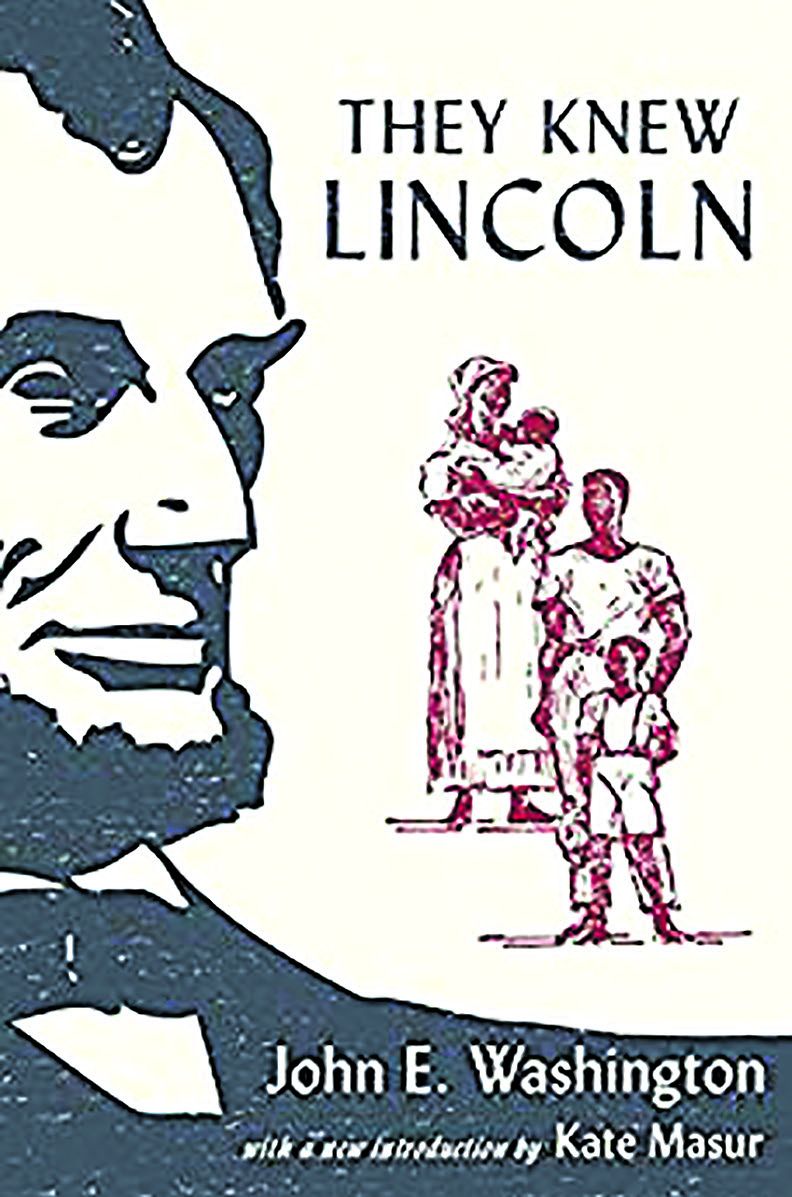
Abraham Lincoln: The Black Moses They Knew Lincoln. By John E. Washington. Edited by Kate Masur. Illustrations, appendix, 368 pp., 2018. Oxford University Press, www.oup.com/us. $27.95 hardcover.
Originally published in 1942, this book traces John Washington’s interactions with African Americans who knew and served President Lincoln. His central thesis is that Lincoln’s everyday contact with ordinary black folks—such as “Billy” the barber, Elizabeth Keckley, William Johnson and William Slade—shaped his views on emancipation and black humanity more than his single trip to a New Orleans slave market. On a daily basis Lincoln interacted with caterers, hackmen, dressmakers, butlers and mechanics. He visited contraband camps, confided in black employees, and sought employment for his trusted servants. All of these experiences endeared him to African Americans, who never forgot who freed them and whom they idolized in death as well as life. A secondary purpose of Washington’s book was to defend the reputation of Elizabeth Keckley as the author of Behind The Scenes: Or Thirty Years in the White House. Washington also set out to advance a new theory that James Redpath, a prominent literary writer of the day connected to the New York radicals, assisted Keckley as a literary advisor, ghost writer and contact with the Carlton Publishing Company. He thus dispels the argument that Keckley did not even exist, let alone write the book that so infuriated Robert T. Lincoln. Elizabeth Keckley was not only Mary Lincoln’s dressmaker but her friend and confidant; she was always devoted to Mrs. Lincoln. Both of Washington’s themes are amply supported by not only his first-person interviews with the blacks who knew Lincoln (or their direct descendants), but by pension records, Treasury Department vouchers and U.S. government archives. His research not only confirmed the ex-slaves’ accounts but introduced new information that would otherwise have been overlooked. For example, there is the revelation that Susie Johnson, employed by Mrs. Mary Surratt, had overheard the assassination plot and might have prevented the tragedy if she had come forward. Another: that Dr. Samuel Mudd was an active participant in the plot, and not an unwitting provider of medical care. The eighty-page new introduction by Kate Masur shapes the thoughts and emotions of ordinary African Americans in the context of the Civil War-era through the first decades of the twentieth century. Washington was a city of opportunity for emancipated former slaves, one in which skilled tradesmen and workers were accepted as part of a multi-racial city where a black elite could prosper. The stories and anecdotes represent the colored side of Lincolniana, including such tidbits as Mr. Stuntz’s store, where Lincoln bought Tad taffy, to Aunt Eliza’s ghost stories of Ford’s Theatre. These cherished black memories would have been lost save for the reprinting of Washington’s book. Except for a single error in dating the assassination in 1864 rather than 1865, the book boasts a rich literary accumulation of short stories aimed at the experiences of those who interacted daily with the Lincolns. It is highly recommended for its treatment of blacks’ grief at the loss of their Moses, as well as their fond memories of both Abraham and Mary Lincoln. For its modest price, They Knew Lincoln should be a part of every Lincoln scholar’s bookshelf. Wayne L. Wolf, of Blue Island, Ill., is Past President of the LincolnDavis Civil War Round Table.