A Confederate Cavalry Shotgun
By Shannon Pritchard · Originally published September 2018 · p. 19
When the Confederacy was threatened with invasion by Federal forces in 1861, so many volunteers flocked to her standards that many were turned away for lack of arms. The different state governments scoured the countryside in search of sporting rifles, old flintlock pistols, and shotguns; any weapon that could aid in arming their volunteers. In a short and to the point note dated May 18, 1861, Confederate Secretary of War Leroy Pope Walker wrote to Mississippi Governor Pettus, “Can you give me two regiments for twelve months, armed with heavy double barrel shotguns?” A few days later Virginia Quartermaster M. O. Harmon wrote to Virginia Governor Letcher, “The Greenbrier Cavalry, a fine body of men arrived today, and I send W. H. Peyton, esq., down to get army pistols, double barrel shotguns, or single barrel shotguns.” Virginia Colonel (at this time) Jubal A. Early wrote Virginia’s Adjutant General, “There are now eight companies of cavalry here, well mounted and in fine condition, but for the arms necessary for them, which are mostly wanting. Two companies are armed with double barreled shotguns, and two more will soon have them.” In a following letter Early wrote, “I have directed them to get all the double barrel shotguns they could.” In July 1861, Kentuckian William T. Withers wrote to the Confederate Secretary of War,
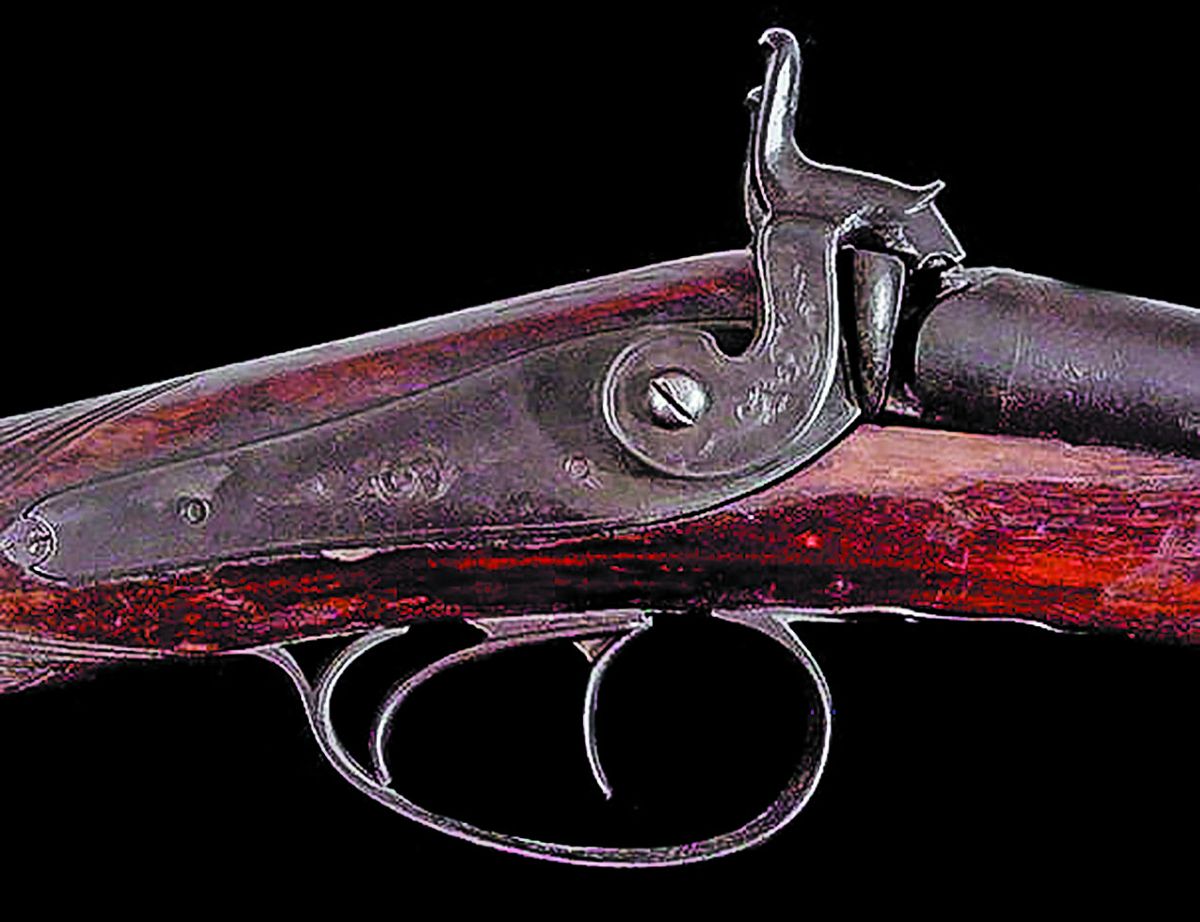
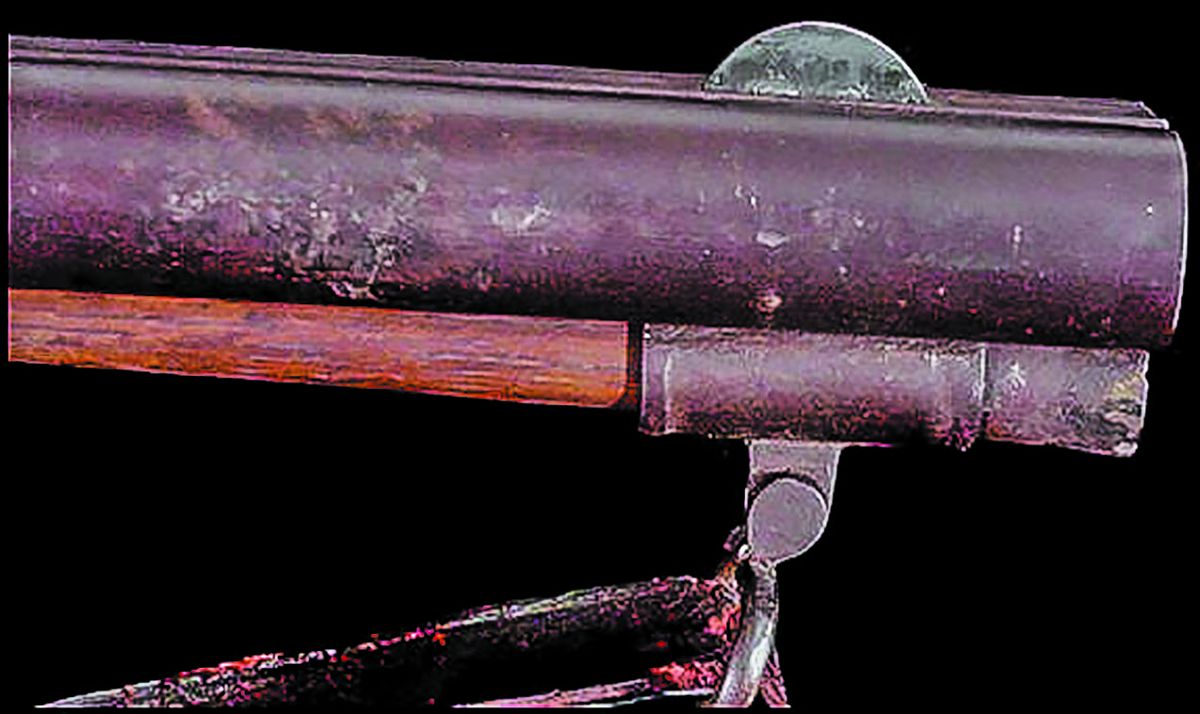
Shotgun altered at a Confederate Arsenal for cavalry use.
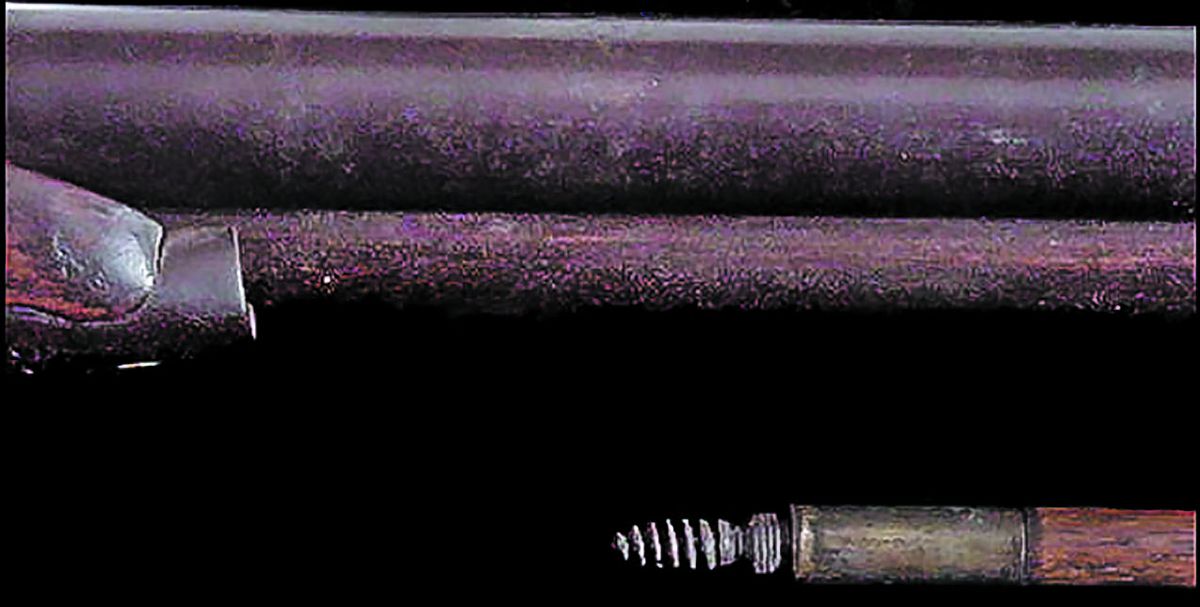
Leroy Walker, “Many Companies of cavalry have tendered their services, who propose to arm themselves with shotguns and revolvers.” On July 2, 1861, the Governor of Tennessee tendered the provisional Army of Tennessee to the Confederate President. Offering “twenty-two regiments of infantry, two regiments of cavalry…. part of the cavalry armed with revolvers and sabers, the balance with double barrel shotguns.” In January 1862, Col. W. H. Jenifer, commanding five hundred men of the 8th Virginia Cavalry reported that his men were armed with “mostly old shotguns, bowie knives, and a few long range rifles.” The Confederate cavalry’s extensive use of shotguns is frequently attributed to the Confederacy’s severe shortage of firearms early in the War Between the States; however, this is not the only reason. As early as August 1861, the shotgun’s long term use was foreseen; Captain of Ordnance William. R. Hunt wrote the Secretary of War Leroy Walker, from Memphis, recommending that contracts be let for 10,000 sword bayonets for double barreled shotguns. Nearly a year later Hunt wrote to Secretary of War J. P. Benjamin, “Colonel Forrest, the most efficient cavalry officer in this department, informs me that the double barrel shotgun is the best gun with which the cavalry can be armed.” A more qualified endorsement of the shotgun’s use could not be desired; it was the most efficient short range arm used during the War Between the States. As late as July 24, 1863, South Carolina Governor Milledge Bonham opined to Confederate Secretary of War Seddon that South Carolina had turned over all her shotguns to the Confederacy. Confederate cavalrymen continued to employ the shotgun for the remainder of the War Between the States though with less frequency. The attrition of close-in combat took its toll; cavalrymen began to skirmish at longer ranges and eventually to fight primarily as mounted infantry. Where are all those shotguns? I suspect there aren’t many surviving that were converted for military use because a sawed off shotgun was of little value after the War Between the States. One could hunt game with a rifle or musket, or even a full length shotgun, but a sawed off shotgun is only good for one thing, killing men. The only reason this one survives is because it was picked up as a souvenir of a skirmish between Kilpatrick’s Union cavalrymen and Confederate cavalry under “Grumble” Jones and Beverly Robertson in Monterey Pass after the battle of Gettysburg. The shotgun in its original configuration was manufactured in Liege; virtually all shotguns in the United States at that time were imported and Liege was home to some of the best gun makers in the world. The shotgun has been shortened to carbine length. A sling swivel similar to the one found on Richmond two band carbines is screwed into the butt stock; another is attached to the upper ramrod channel. The sling is original to the shotgun. Half of a period silver quarter serves as a front sight blade. Its original wooden ramrod has a ball puller permanently affixed to one end and a forged iron ferule reinforcing the opposite, swelled end. Shannon Pritchard has authored numerous articles relating to the authentication, care and conservation of Confederate antiques, including several cover articles and is the author of the definitive work on Confederate collectibles, the widely acclaimed Collecting the Confederacy, Artifacts and Antiques from the War Between the States, and is co-author of Confederate Faces in Color.