
What is Halsey Worth? The Sale and Resale of a Connecticut Civil War Soldier’s Legacy
By Dr. Walter L. Powell · Originally published October 2018 · pp. 22–23
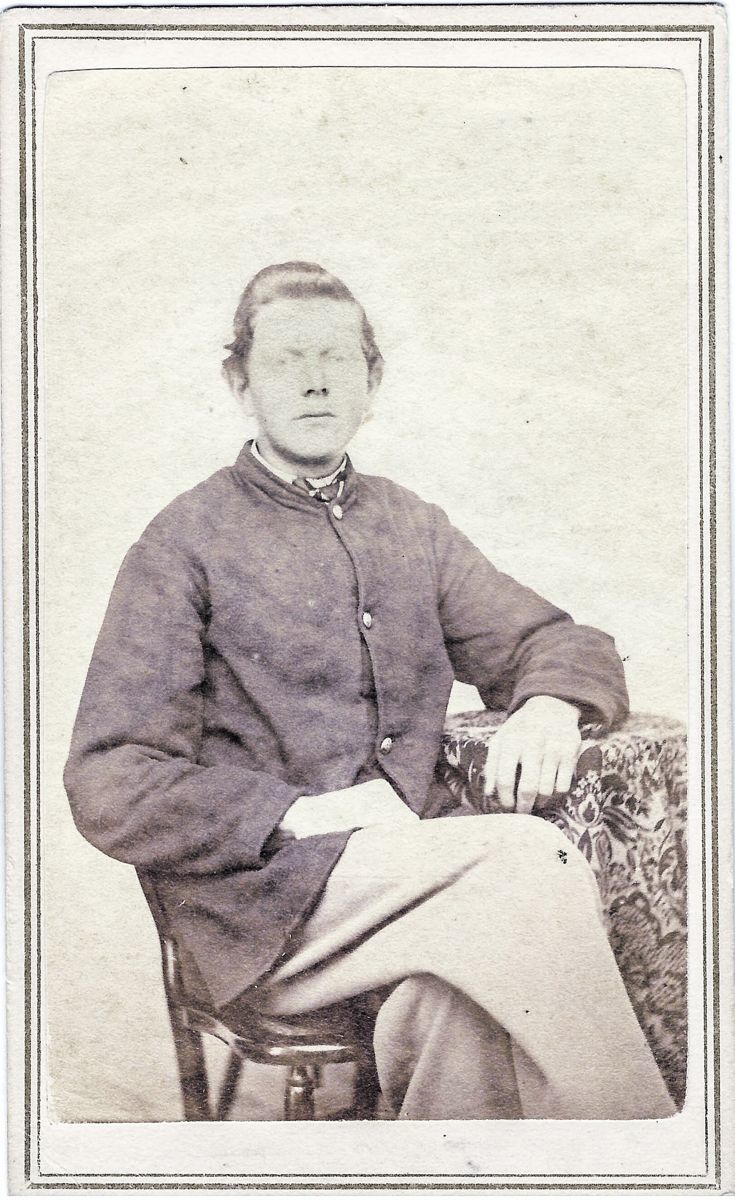
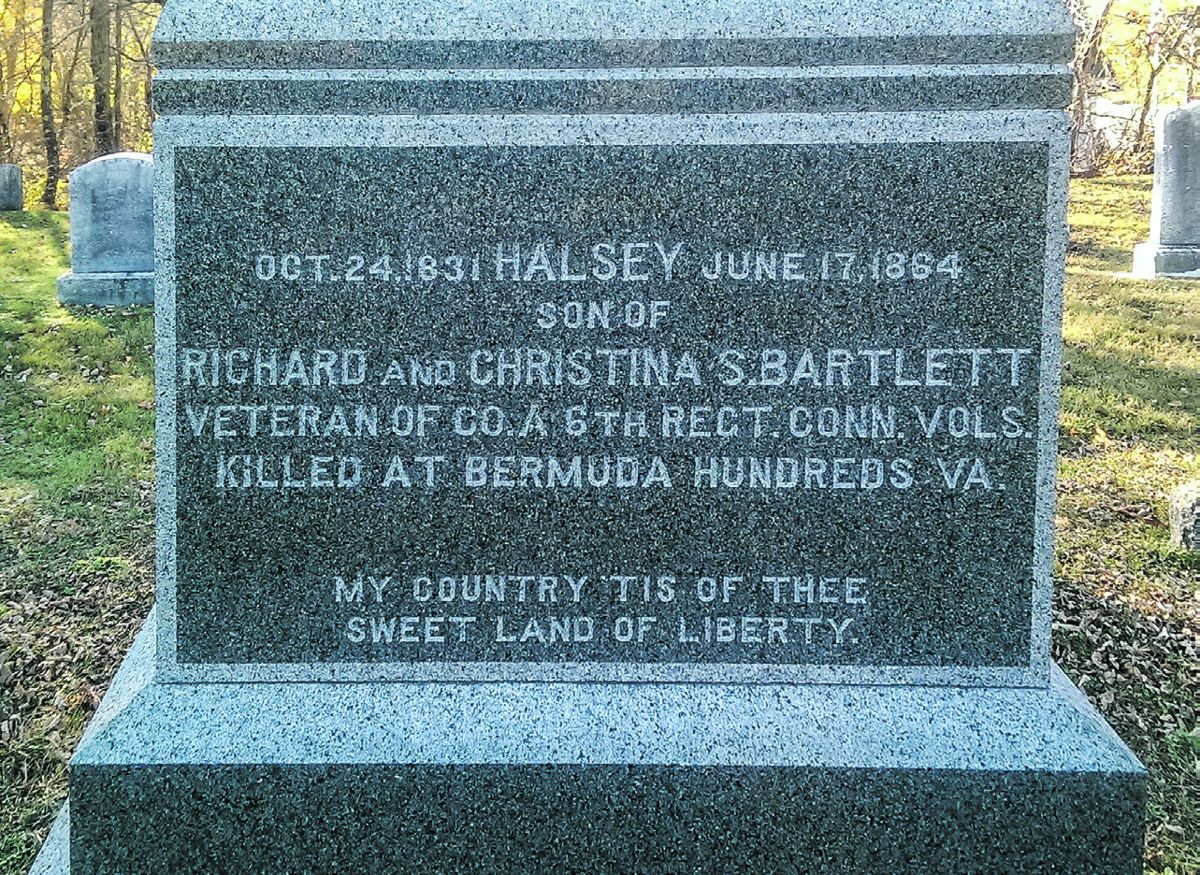
When he died at the hands of a Confederate sharpshooter on the picket line at Bermuda Hundred, Va., on June 17, 1864, Private Halsey M. Bartlett of East Killingly, Conn., and the 6th Connecticut Volunteers, could not have imagined that intimate letters he exchanged with his mother and sister Christina between August 1861 and June 1864 would become a continuing part of a thriving Civil War commodities market more than 150 years later. Since at least 1995, when I purchased 92 of Halsey’s letters at the Annual Civil War Collector’s Show in Gettysburg, Penn., portions of his correspondence have appeared frequently, alone or in groupings, on the collector’s market. When I made my purchase, I had a group of letters that began in August 1861 and continued through June 14, 1863, but none that covered the remaining year of Halsey’s service with the 6th Conn., and conspicuously absent were any letters that referenced his participation in the attack on Battery Wagner, S.C., on July 18, 1863. The past five years have seen a veritable flood of Halsey’s letters, with three auctions and at least two dealer listings of one or more letters and documents being offered including a group of 13 by an Illinois based eBay seller. Transcripts and photographs of those letters appeared on May 29, 2015, on the blog “Spared & Shared,” www.sparedshared9. wordpress.com. Civil War collectors might well ask “What is so unusual about this?” Nothing, in fact, but what caught my attention, and prompted me to dig further, was coming across a listing for 109 letters offered by Cowan’s Auctions in their June 21, 2013, sale. This lot [#446] was described as “clearly the definitive collection for this exceptional, average soldier.” The number of letters, close in size to the collection I once owned (and sold in 1998), forced me to come to terms with how often I have been haunted by my resale, and made me wonder if this might be substantially the same collection, now back on the market. As I looked carefully at the auction catalogue description, I realized that about half the letters had been part of my earlier collection but the remaining portion were not. A subsequent listing of 57 letters in Catalog 331 by the William Reese Company of New Haven, Conn., provided references to even more, including correspondence written in September 1863 and late May 1864, just a few weeks before Halsey’s death. A thorough internet search revealed two letters in the collections of the University of South Carolina, and one each at Navarro College, Corsicana, Texas, and The Filson Historical Society in Lexington, Ky. From what I could discern at that point, the vast majority remained in private, undisclosed collections. More recently, however, I discovered that the Library of Congress had purchased a collection of 120 letters in 2016. How many came from the sales noted above I have not yet been able to determine. I think anyone passionate about the Civil War can identify with the journey that accompanies the discovery, through purchase or archival research, of a soldier’s letters, and how quickly the story they reveal becomes so meaningful that we get emotionally attached. We feel compelled to learn more, and more often than not, fall into the habit of becoming almost obsessed with trying to locate and own everything we can connect with that soldier’s career. If we have an ancestral connection, of course, the quest can be even more compelling, and coming across personal items, such as photos or uniforms, adds immense personal and financial value to the pursuit. My “pursuit” of Halsey has been on again, off again over the years, and I can’t say how many times I have pulled out two large notebooks entitled “A Connecticut Soldier Goes to War” to look at the transcripts of the letters I once owned, or the copies of letters now in private collections that I have since located. I am reminded that not long after I obtained the collection, and transcribed the letters, I wrote to the Killingly Historical Society to ask if they might have more information. I had a quick response from Margaret Weaver, then Town Historian, who made the effort to visit Halsey’s grave and take pictures, as well as forward to me some useful information about several families referenced in the letters. A year later I made a personal visit to the Bugbee Library in Danielson, Conn., examined some newspapers and other files, and put together a more detailed profile. Then in 1998, I faced a difficult choice; hold on to the collection or sell it to help finance a trip to England to accompany a dear friend, a WWII 8th Air Force B-17 pilot, back to his old air base in Suffolk. You can guess my decision with no regrets. In the more than 20 years since then, Halsey keeps beckoning! My story, and fascination with these Civil War letters, is really no different than thousands of other dedicated Civil War enthusiasts, and yet also points to a dilemma that both dealers and collectors share; how far do we go and how much do we spend to obtain these items. What is the impact of every decision to break up a collection in order to maximize profit? Halsey Bartlett’s life and military career was to a large extent no more remarkable than countless other soldiers who served the Union and the Confederacy. Yet the number of his letters now clearly extant, especially those at the Library of Congress, do not likely constitute more than a third of those he must have written. With many more still missing, there is the larger question of just how much more valuable this collection could be if all together, and available to the public for research?
Halsey Bartlett’s Connecticut enlistment dated Dec. 24, 1863. He was 5 feet 3 inches high. Halsey’s letter to his sister Christina dated April 2, 1864. He was stationed on Hilton Head, S.C.
Transcript of letter from Pvt. Thomas W. Stevensen to the Bartletts.
Envelope addressed by Christina Bartlett to her brother Halsey Postmarked “KILLINGLY, Jun 17 CT”, with a 3 cent stamp.
Dr. Walter Powell is the former Director of Planning and Historic Preservation for the Borough of Gettysburg, Penn., where he directed the restoration of the Gettysburg Railroad Station (built 1858) and served as the historian on the National Park Service Project team that completed the restoration and exhibit plan for the historic David Wills House, where President Abraham Lincoln completed the Gettysburg Address. He lives in Plymouth, Mass.