Silver Linings: The Beauregard Monument Time Capsule
By Jessica Hack · Originally published October 2018 · pp. 4–5
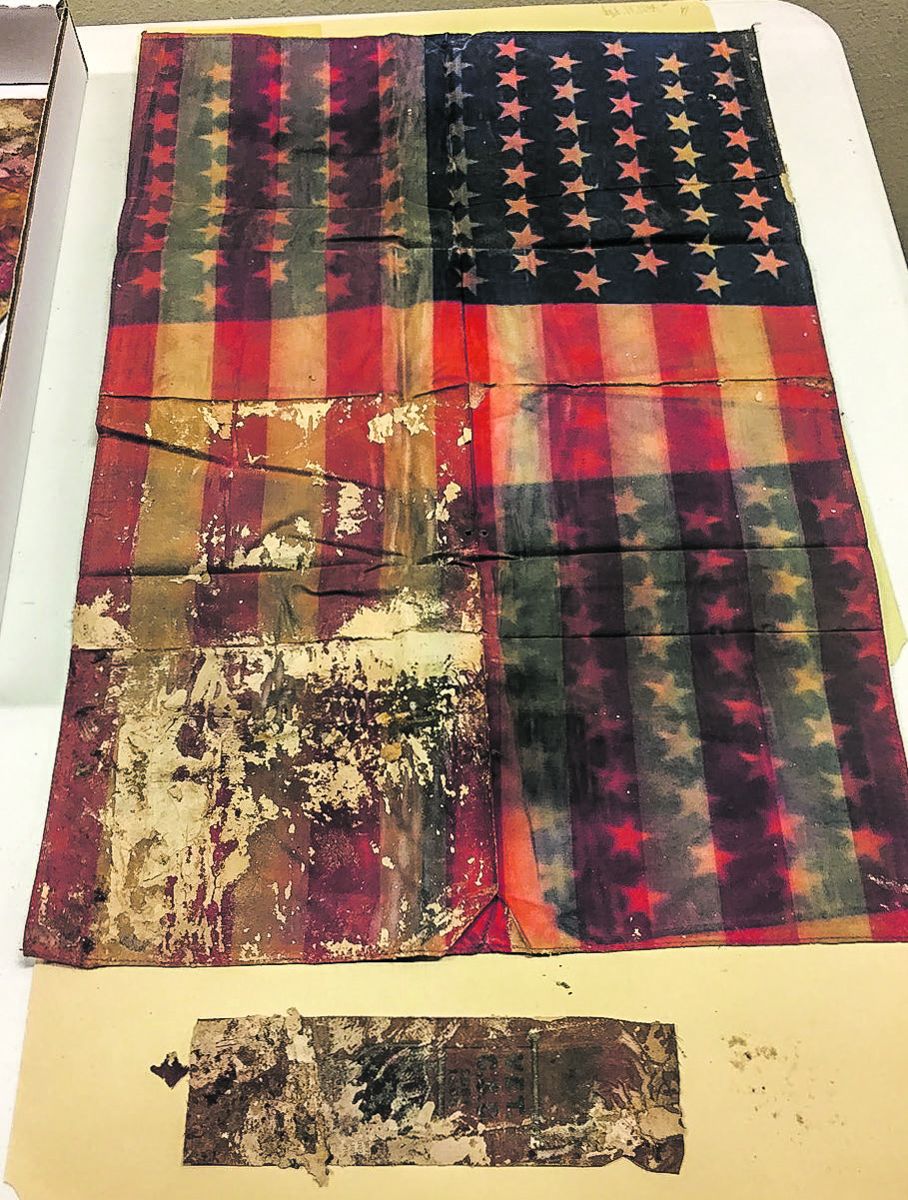
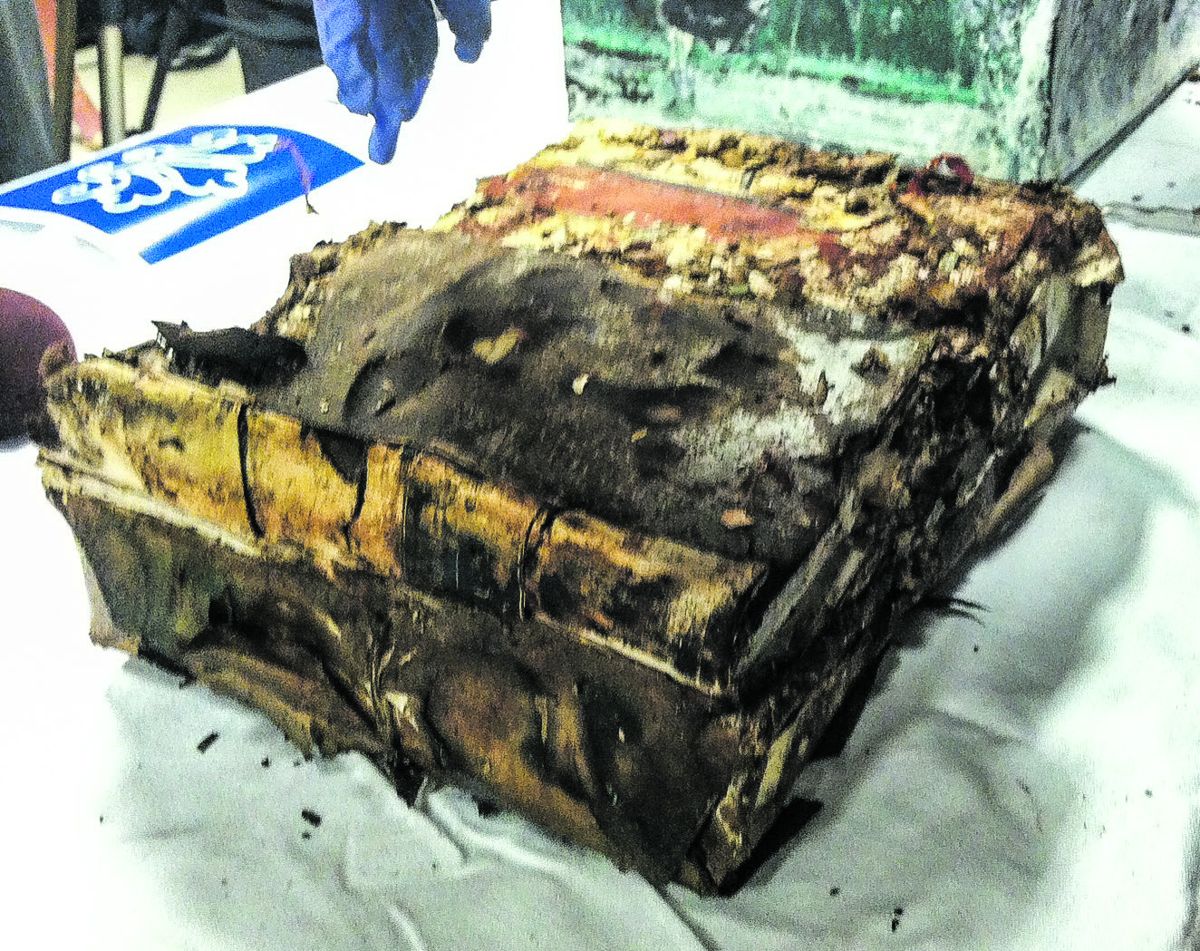
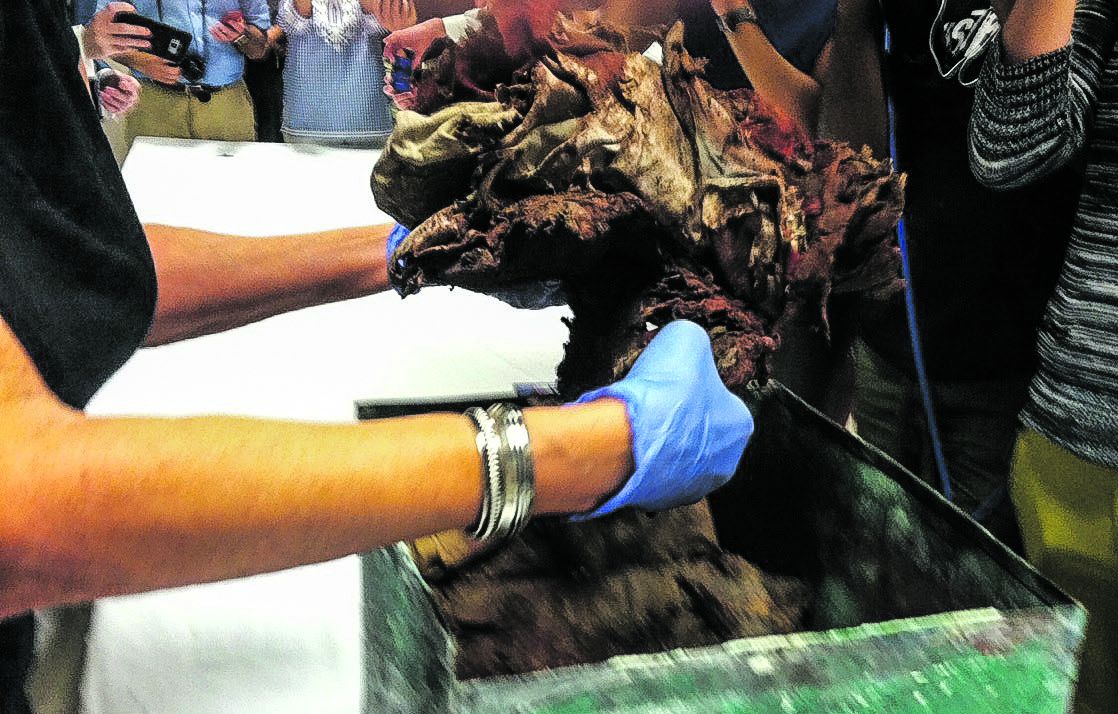
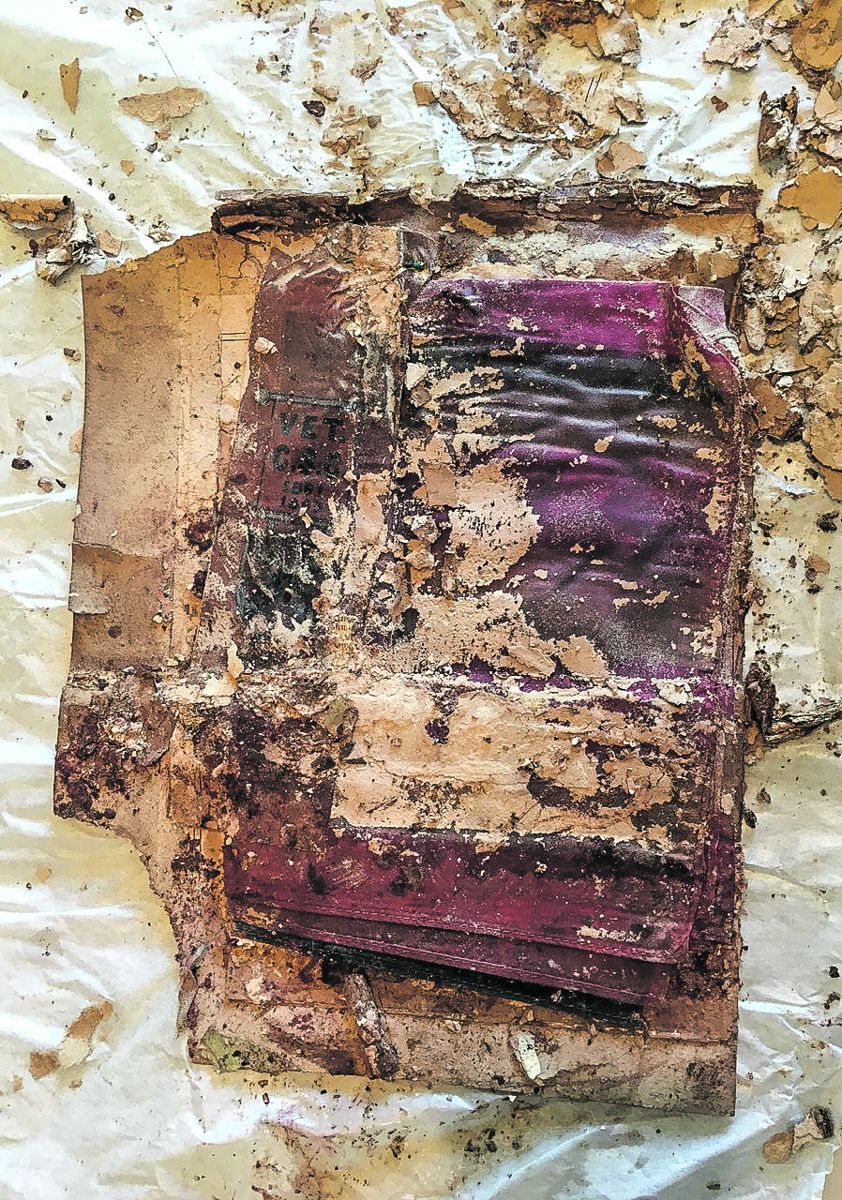
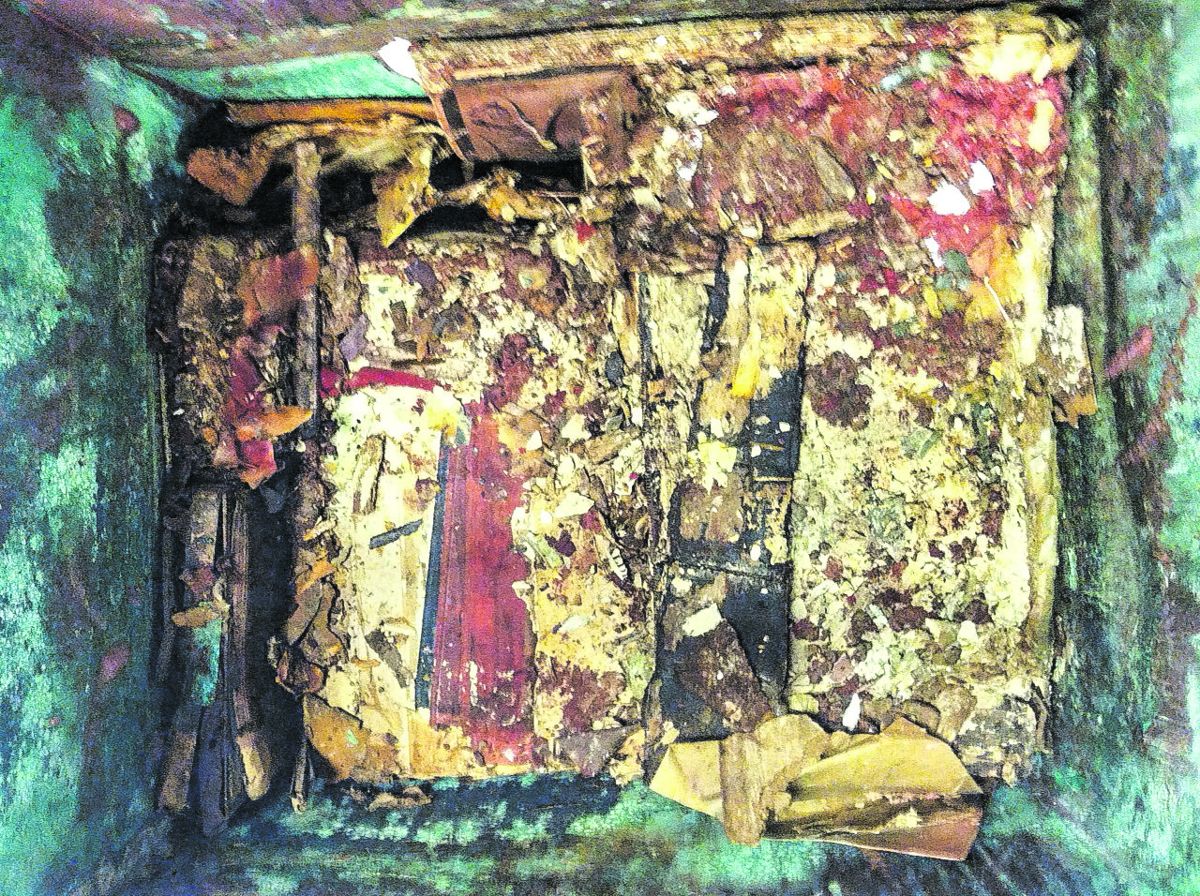
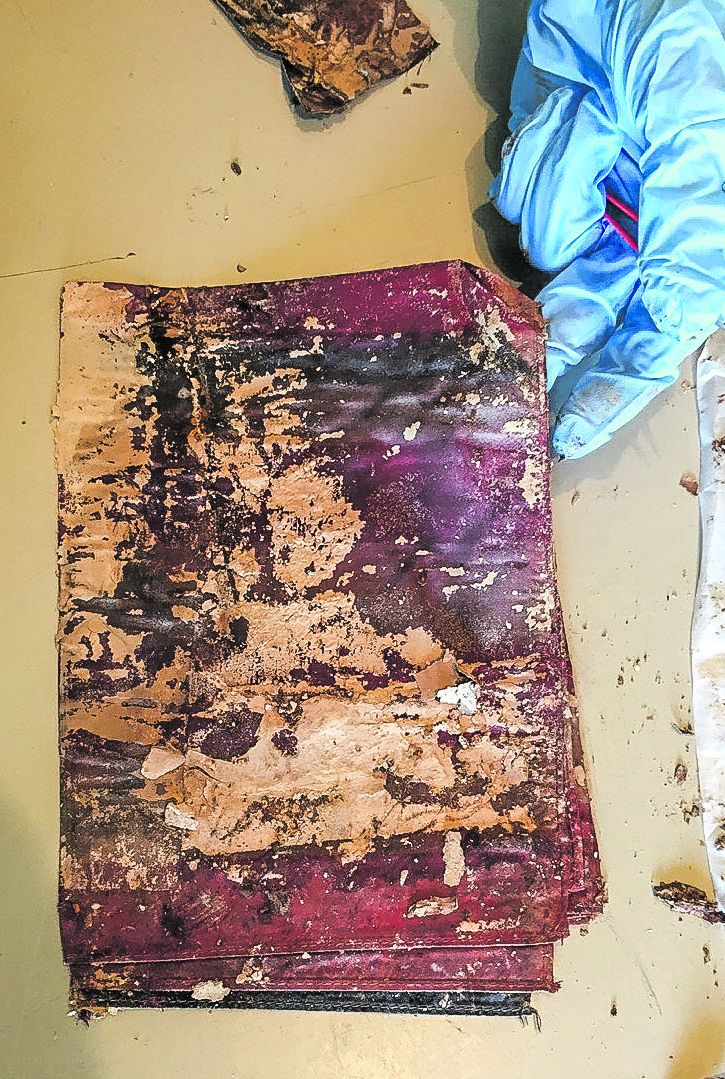
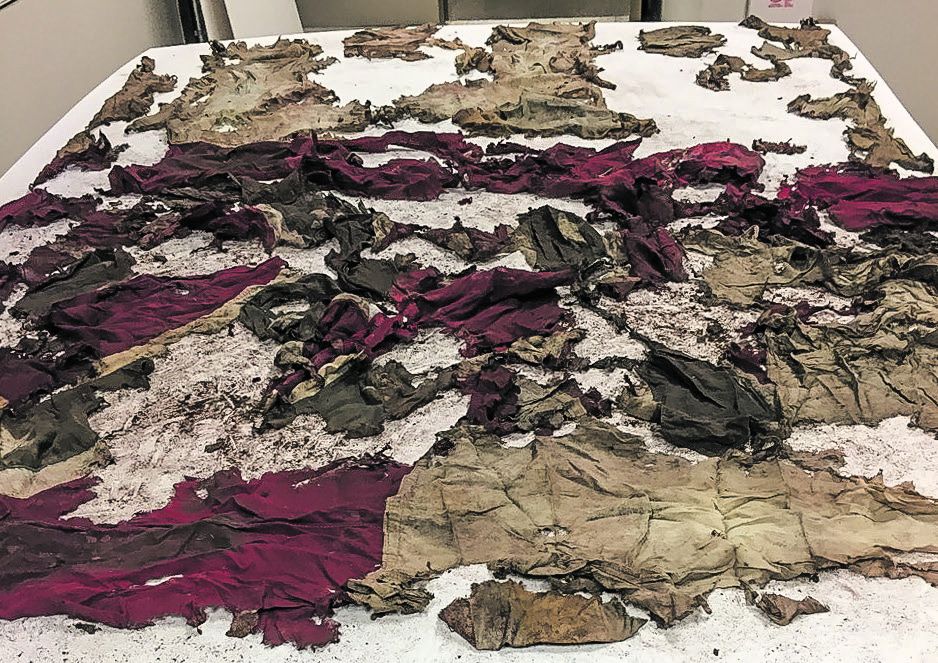
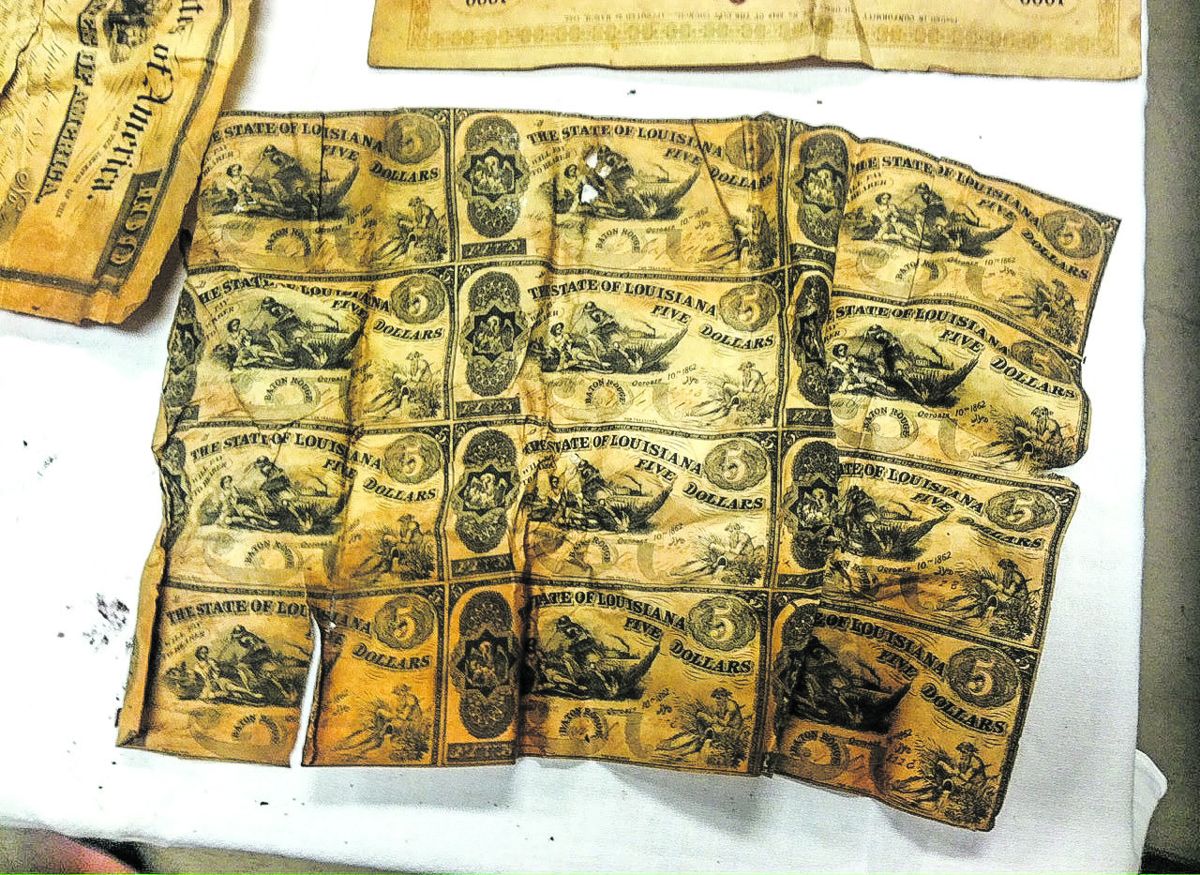
I suppose if there could said to have been anything positive regarding the recent removal of the Beauregard monument just outside New Orleans City Park (May 2018), it might be the discovery of a time capsule embedded in the statue’s pedestal. The capsule was removed from the pedestal when it was dismantled in July. At the end of July, I was contacted by Steven Maklansky, Acting Director of the Louisiana State Museum in New Orleans, informing me that the museum had accepted custodial responsibility for the Beauregard time capsule for the time being, and inviting me (given that there were textiles in the box) to participate in opening the capsule, and removing the artifacts it held. On Friday, August 3, Lt. Governor Billy Nungesser of Louisiana officially unveiled the capsule to a crowded room of officials, museum personnel, reporters, and conservators. I don’t think I have ever seen a group of reporters more excited about an interview. The capsule itself is a copper box, measuring approximately 16 inches in height, width and depth. The top of the capsule had been previously removed, though when it was removed is unclear. As far as I can tell, removal of the box from the pedestal was undertaken by the construction crew, not archaeologically trained workers. The items in the capsule were wet, especially those nearer the bottom of the box. After the official unveiling, Beth Antoine, a paper conservator (New Orleans Book and Paper Lab), and I began the work of removing artifacts from the box. A Beauregard Monument Association reserved seating ticket for Friday, Nov. 14, 1913, for laying the Beauregard monument’s cornerstone, lay on top of the remains of a Second National Confederate Flag. A variety of damp items were removed, layer by layer. These (as listed in the Daily Picayune newspaper article) included: a copy of the Confederate States seal; photographs of Lee, Davis, Johnston, and Moorman; copies of daily newspapers, a Confederate flag, a United States flag, and a great number of badges). Most of the paper items were in deteriorated condition. Many paper items were compressed and wet to such a degree that they could not be identified at the time. They were wrapped and placed in a freezer so that in time, as they dried out, the pages could be separated. Other papers in better condition included newspapers (Times Democrat Nov.11,1913, and Nov. 14, 1913); Confederate currency, as well as Louisiana and Mississippi currency, and New Orleans bank notes. The day of the unveiling I removed fragments of the Confederate flag and 30 Reunion Medal Ribbons, many with medals or pins attached. The top of the flag had begun to air dry since its removal from the pedestal, so I was able to partially unfold it. The remainder of the flag was wet and folded in several layers, making it impossible to unfold until a later time. The 48 star silk United States flag was embedded in a large compressed block of papers. The block was temporarily frozen. Hoping we could detach the flag from the papers, the following week I returned with Beth Antoine to the State Museum. We were able to remove papers from on top of the flag, and then remove the flag and another ribbon from the wet pile of paper, which was then returned to the freezer. I was able to open out the wet flag. Dye from the canton had bled onto all four sections of the folded flag. It was otherwise intact. The same could not be said for the cotton bunting Confederate flag. Portions of it were completely crumbled away. I arranged the remaining pieces in order to try to determine the flag’s dimensions. Small clues, like the selvedge (woven edge) fabric fragments indicated a top or bottom edge. There were only 2 small bits of the canvas heading that remained. Most of the ribbons had suffered dye bleed or fading. Many were torn and had bits of paper attached. For now, the artifacts and capsule will be housed at the Louisiana State Museum. Ownership of the time capsule has yet to be determined. The Beauregard Monument Association, responsible for the funding and establishment of the monument, is no longer an official entity. Additional conservation treatment of the artifacts would appropriately be undertaken by their owner.
Jessica Hack founded her company, Jessica Hack Textile Restoration in 1979. A 1972 graduate of Newcomb College of Tulane University in New Orleans, with post graduate studies in dye chemistry (Louisiana State University) and Textile Conservation (University of London; London, England), Ms. Hack was awarded Professional Associate status with AIC (The American Institute of Conservation) in 1995.
Capsule, before removal of artifacts.
Removing U.S. bundle of paper.
flag from
Great Seal of the Confederate States of America with case.
Reunion medals and ribbons.
Reunion medals and ribbons.